Portrét Auguste Rodin

100 najznámejších obrazov od umelca Auguste Rodin, každý jedinečný

Aktualizované november 2026 · zoradené podľa našej miery popularity (vyhľadávanie, návštevy a objednávky pre každou prácu) · 205 dielov umelca Auguste Rodin v našom katalógu

Stručne povedané

The Temptation of Saint Anthony (back) (1900) je obrazom umelca Auguste Rodin, ktorý priťahuje najviac pohľadov; originál sa nachádza v múzeu Museum of Fine Arts, Lyon. Potom sa pohľad presunie na The three shades (1973) a The Thinker (1910). Z 205 diel umelca Auguste Rodin v našom katalógu je týchto 100 najznámejších; každá z nich je jedinečným originálom prezentovaným s jeho rokom vzniku, múzeom a dôvodom, prečo pretrváva.

1840 – 1917, Paríž Najviac diel: Legion of Honor

Top 10 obrazov umelca Auguste Rodin podľa výberu galérie

1
The Temptation of Saint Anthony (back) (1900) od Auguste Rodin

The Temptation of Saint Anthony (back)

1900 · Marble · Museum of Fine Arts, Lyon

François Auguste René Rodin’s “The Temptation of Saint Anthony (back)” is not merely a sculpture; it's an immersive experience, a visceral portrayal of the internal struggle between faith and desire. Completed around 1900, this powerful marble work transcends its religious subject matter to become a universal meditation on human vulnerability and the seductive pull of temptation. Rodin, already a revolutionary figure in sculpting the emotional landscape of his time, masterfully…

2
The three shades (1973) od Auguste Rodin

The three shades

1973 · Oil On Canvas · Art Gallery of South Australia, Adelaide

WahooArt presents a meticulously crafted hand-painted reproduction of François Auguste René Rodin's iconic sculpture, "The Three Shades," a work that transcends mere representation to embody profound human emotion and connection. Executed in 1973, this piece captures the essence of Rodin’s genius – his ability to translate psychological depth into enduring sculptural form. The photograph itself reveals three nude male figures intertwined in a poignant tableau, their postures suggesting both vulnerability…

3
The Thinker (1910) od Auguste Rodin

The Thinker

1910 · Bronze · Metropolitné múzeum umenia, New York

The bronze sculpture known as The Thinker by Auguste Rodin emerged from a larger vision. It was commissioned in 1880 as a component of The Gates of Hell. This figure was not always known by its current name. In its early stages, the work was called The Poet. The bronze captures a nude male figure of heroic size. He sits upon a large rock.

4
Man and his Thought (1900) od Auguste Rodin

Man and his Thought

1900 · Marble · Alte Nationalgalerie, Berlín

François Auguste Rodin's "Man and His Thought," completed in 1900, is not merely a sculpture; it’s a profound meditation on the very act of artistic creation. This arresting work, housed within the Musée Rodin in Paris, captures a pivotal moment – the genesis of an idea struggling to manifest into physical form. The scene depicts a bearded artist, rendered with remarkable anatomical detail and a palpable sense of intensity, kneeling…

5
Man with the Broken Nose (1864) od Auguste Rodin

Man with the Broken Nose

1864 · Sculpture Bronze · Legion of Honor, San Francisco

Man with the Broken Nose: A Study in Grief and Resilience The sculpture “Man with the Broken Nose,” created by Auguste Rodin in 1864, stands as a haunting testament to human vulnerability and an enduring symbol of contemplation. More than just a depiction of physical injury—a fractured nose—the piece delves into profound psychological themes, capturing the essence of sorrow and striving for inner peace within a meticulously crafted bronze form.…

6
The Fallen Angel (1890) od Auguste Rodin

The Fallen Angel

1890 · Bronze · Legion of Honor, San Francisco

A Portrait of Sorrow: Examining Rodin’s “The Fallen Angel” François Auguste René Rodin's "The Fallen Angel," completed in 1890, stands as a cornerstone of Romantic sculpture and an enduring testament to the artist’s ability to convey profound emotion through form. More than just a depiction of a biblical figure—the angel Gabriel wrestling with despair—it embodies a complex tapestry of themes exploring grief, compassion, and the confrontation with mortality. The sculpture…

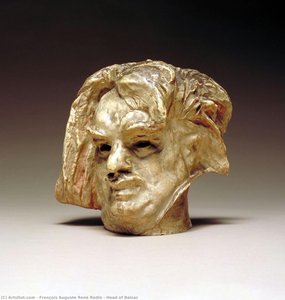
7
Victor Hugo (1917) od Auguste Rodin

Victor Hugo

1917 · Marble · Legion of Honor, San Francisco

In the quiet, hallowed halls of sculptural history, few encounters are as visceral as witnessing Auguste Rodin’s “Victor Hugo.” Completed in 1917, during the twilight of the master sculptor's life, this marble masterpiece is far more than a mere anatomical likeness of France’s most luminous literary titan. It is an arresting testament to Rodin’s profound ability to translate the intangible weight of human thought into the permanence of stone. As…

8
Danaide (1885) od Auguste Rodin

Danaide

1885 · Sculpture Bronze · Cantor Arts Center na Stanford University, Stanford

To stand before this sculpture is to encounter a moment suspended in time—a profound meditation on repose, perhaps even oblivion. The piece, titled Danaide, presents a breathtakingly intimate close-up study of the human head and shoulders. Rendered in a deeply textured, dark material suggestive of aged bronze, the surface whispers tales of oxidation and the passage of years. It is not merely a likeness; it is an emotional echo captured…

9
The Prodigal Son (1970) od Auguste Rodin

The Prodigal Son

1970 · Sculpture Bronze · Art Gallery of New South Wales, Sydney

To stand before The Prodigal Son is not merely to observe bronze; it is to encounter a raw, visceral outpouring of the human spirit. François Auguste René Rodin captured in this magnificent sculpture something far more ephemeral than metal—he has rendered the very moment of profound reckoning. The figure seems caught mid-exhalation, arms flung upward as if reaching for an impossible grace or perhaps embracing the weight of years of…

10
Minotaur (1886) od Auguste Rodin

Minotaur

1886 · Sculpture · Cantor Arts Center na Stanford University, Stanford

To stand before Rodin’s Minotaur is not merely to observe stone; it is to confront a raw, visceral moment wrested from the depths of myth and human emotion. This monumental sculpture, born in 1886, captures an entanglement so charged with unspoken narrative that it seems to breathe its own history into the cool, dark material. Rodin, ever the master of the psychological portrait rendered in durable stone, has gifted us…

Slávne obrazy umelca Auguste Rodin, čísla 11 až 100

11Seated Female Nude (1887) od Auguste RodinSeated Female Nude1887 · Cantor Arts Center na Stanford University 12La femme accroupie (The Crouching Woman) od Auguste RodinLa femme accroupie (The Crouching Woman)Museum Folkwang 13Monumental Head of Jean d (1971) od Auguste RodinMonumental Head of Jean d1971 · Los Angeles County Museum of Art 14Torso of a man (Study for (1979) od Auguste RodinTorso of a man (Study for1979 · Art Gallery of South Australia 15The Thinker od Auguste RodinThe ThinkerThe Baltimore Museum of Art 16Brány Pekla od Auguste RodinBrány PeklaShizuoka Prefectural Museum of Art 17The Hand of God od Auguste RodinThe Hand of GodMaryhill Museum of Art 18Balzac Nude with his Arms Crossed (1892) od Auguste RodinBalzac Nude with his Arms Crossed1892 19The Age of Bronze (1876) od Auguste RodinThe Age of Bronze1876 · Museu Nacional d'Art de Catalunya 20Torso of a Young Woman (1886) od Auguste RodinTorso of a Young Woman1886 · Cantor Arts Center na Stanford University 21The Call to Arms (1879) od Auguste RodinThe Call to Arms1879 · Legion of Honor 22The Age of Bronze (1876) od Auguste RodinThe Age of Bronze1876 · Kunsthaus Zürich 23Small head of Jean de Fiennes with hand (1985) od Auguste RodinSmall head of Jean de Fiennes with hand1985 · Art Gallery of South Australia 24Danaid (The spring) (1800) od Auguste RodinDanaid (The spring)1800 · Národné múzeum starého umenia 25Eternal Springtime (L’Eternel Printemps) (1898) od Auguste RodinEternal Springtime (L’Eternel Printemps)1898 · Calouste Gulbenkian Foundation 26The age of bronze (1876) od Auguste RodinThe age of bronze1876 · Kunstmuseum 27Pens (1895) od Auguste RodinPens1895 · Musée d'Orsay 28Eternal Springtime (1901) od Auguste RodinEternal Springtime1901 · Szépművészeti Múzeum 29Saint John the Baptist (1880) od Auguste RodinSaint John the Baptist1880 · Kunsthalle Bremen 30Head of Jean de Fiennes (1984) od Auguste RodinHead of Jean de Fiennes1984 · Art Gallery of South Australia 31The Thinker od Auguste RodinThe ThinkerMaryhill Museum of Art 32The Thinker (1888) od Auguste RodinThe Thinker1888 · Legion of Honor 33St. John the Baptist - Sant Jean - Babtiste préchant (1878) od Auguste RodinSt. John the Baptist - Sant Jean - Babtiste préchant1878 · Národní galerie Praha 34Iris, Messenger of the Gods (1891) od Auguste RodinIris, Messenger of the Gods1891 · Kunsthaus Zürich 35Pierre de Wiessant (1895) od Auguste RodinPierre de Wiessant1895 · Kitakyushu Municipal Museum of Art 36Christ and the Magdalene (1894) od Auguste RodinChrist and the Magdalene1894 · Legion of Honor 37Head of Balzac (1897) od Auguste RodinHead of Balzac1897 · Nasher Sculpture Center 38Striding Man (1900) od Auguste RodinStriding Man1900 · Staatliche Kunsthalle Karlsruhe 39The Thinker (1888) od Auguste RodinThe Thinker1888 · Legion of Honor 40Hanako (1908) od Auguste RodinHanako1908 · Nasher Sculpture Center 41Balzac (1898) od Auguste RodinBalzac1898 42Portrait bust of Victor Hugo (1886) od Auguste RodinPortrait bust of Victor Hugo1886 · Calouste Gulbenkian Foundation 43Pierre de Wissant nude (1985) od Auguste RodinPierre de Wissant nude1985 · Art Gallery of South Australia 44The Sculptor and His Muse od Auguste RodinThe Sculptor and His MuseLegion of Honor 45The Bronze Age (1875) od Auguste RodinThe Bronze Age1875 · Kunsthalle Bremen 46Squatting woman (1882) od Auguste RodinSquatting woman1882 · Kröller-Müller Museum 47Ève od Auguste RodinÈveMuseum Folkwang 48The Kiss od Auguste RodinThe KissLegion of Honor 49Nude od Auguste RodinNudeColección de Arte Amalia Lacroze de Fortabat 50Pierre de Wiessant (1912) od Auguste RodinPierre de Wiessant1912 · Metropolitné múzeum umenia 51The Age of Bronze (1876) od Auguste RodinThe Age of Bronze1876 · Nasher Sculpture Center 52Pomník Victora Hugóa od Auguste RodinPomník Victora HugóaShimane Art Museum 53The Walking Man (1900) od Auguste RodinThe Walking Man1900 · Aichi Prefectural Museum of Art 54Jean de Fiennes od Auguste RodinJean de FiennesMaryhill Museum of Art 55Registration form from Auguste Rodin for the 9th exhibition (1901) od Auguste RodinRegistration form from Auguste Rodin for the 9th exhibition1901 · Secession 56Head of Eustache de Saint-Pierre od Auguste RodinHead of Eustache de Saint-Pierre 57The Thinker od Auguste RodinThe ThinkerCa' Pesaro - Medzinárodná galéria moderného umenia 58Bust of Victor Hugo (1883) od Auguste RodinBust of Victor Hugo1883 · Cleveland Museum of Art 59The Gates of Hell (1917) od Auguste RodinThe Gates of Hell1917 · Kunsthaus Zürich 60Spirit of Eternal Rest (Head no.33) (1984) od Auguste RodinSpirit of Eternal Rest (Head no.33)1984 · Art Gallery of South Australia 61Toilet of Venus and Andromeda (1987) od Auguste RodinToilet of Venus and Andromeda1987 · Art Gallery of South Australia 62Eve od Auguste RodinEveDetroit Institute of Arts 63L od Auguste RodinLMuseum Folkwang 64The Age of Bronze (L od Auguste RodinThe Age of Bronze (LLegion of Honor 65First Maquette for the Monument to the Burghers of Calais (1884) od Auguste RodinFirst Maquette for the Monument to the Burghers of Calais1884 · Cantor Arts Center na Stanford University 66Iris, messenger of the gods (with head) (1970) od Auguste RodinIris, messenger of the gods (with head)1970 · Art Gallery of South Australia 67Minotaur od Auguste RodinMinotaurMaryhill Museum of Art 68The Kiss od Auguste RodinThe KissNárodné múzeum v Varšave 69Bust of Victor Hugo od Auguste RodinBust of Victor Hugo 70Le Minotaure (Faune et nymphe) od Auguste RodinLe Minotaure (Faune et nymphe)Museum Folkwang 71The Burghers of Calais od Auguste RodinThe Burghers of CalaisCa' Pesaro - Medzinárodná galéria moderného umenia 72Eternal Idol (1889) od Auguste RodinEternal Idol1889 73Cupid and Psyche (1905) od Auguste RodinCupid and Psyche1905 74Bust of Helene von Nostitz od Auguste RodinBust of Helene von Nostitz 75Eternal Springtime od Auguste RodinEternal SpringtimeHuntington Museum of Art 76Bust of Gustav Mahler od Auguste RodinBust of Gustav Mahler 77One of the Danaides (1889) od Auguste RodinOne of the Danaides1889 · Ateneum Art Museum 78Age of Bronze (1876) od Auguste RodinAge of Bronze1876 79Fugitive Love od Auguste RodinFugitive LoveShizuoka Prefectural Museum of Art 80Eve (1881) od Auguste RodinEve1881 · Nasher Sculpture Center 81Adam (1881) od Auguste RodinAdam1881 82Minotaur or Faun and Nymph (1886) od Auguste RodinMinotaur or Faun and Nymph1886 83Andromeda (1886) od Auguste RodinAndromeda1886 84Psyche (1886) od Auguste RodinPsyche1886 85The Prodigal Son (1889) od Auguste RodinThe Prodigal Son1889 86Portrait Mask of Rose Beuret (1890) od Auguste RodinPortrait Mask of Rose Beuret1890 · Lehmbruck Museum 87Pallas with the Parthenon (1896) od Auguste RodinPallas with the Parthenon1896 88Assemblage: Mask of Camille Claudel and Left Hand of Pierre de Wissant (1895) od Auguste RodinAssemblage: Mask of Camille Claudel and Left Hand of Pierre de Wissant1895 89Balzac (1897) od Auguste RodinBalzac1897 90Youth Triumphant (La jeneusse triomphante) (1894) od Auguste RodinYouth Triumphant (La jeneusse triomphante)1894 · Reading Public Museum 91Miss Jean Simpson, Seated (1903) od Auguste RodinMiss Jean Simpson, Seated1903 · Brooklyn Museum 92Romeo and Juliet (1905) od Auguste RodinRomeo and Juliet1905 93Assembly: Female nude Slavic woman's head emerging from a Vase (1910) od Auguste RodinAssembly: Female nude Slavic woman's head emerging from a Vase1910 94Mask of Hanako, the Japanese Actress (1911) od Auguste RodinMask of Hanako, the Japanese Actress1911 95Portrait Of The Japanese Dancer Hanako (1908) od Auguste RodinPortrait Of The Japanese Dancer Hanako1908 96The female model (1917) od Auguste RodinThe female model1917 · Národná galéria Arménska 97Man with Broken Nose (1863) od Auguste RodinMan with Broken Nose1863 · Kunsthalle Bremen 98Reclining man, back arched (1985) od Auguste RodinReclining man, back arched1985 · Art Gallery of South Australia 99Bathing Woman (1902) od Auguste RodinBathing Woman1902 · Národní galerie Praha 100Eve (view 2) (2000) od Auguste RodinEve (view 2)2000

Slávne obrazy umelca Auguste Rodin podľa jednotlivých období

Motívy, ktoré zaujali Auguste Rodin

Štyri témy, ktoré sa v týchto origináloch najčastejšie vracajú, každá s jej najvychybenejším príkladom.

Múzeá, ktoré uchovávajú originály umelca Auguste Rodin

8 múzeá, v ktorých sa nachádza najviac obrazov z tejto stránky.

Múzeá Mesto Diela umelca Auguste Rodin Obrazy z tohto zoznamu
Legion of Honor, San FranciscoLegion of Honor San Francisco 10 Man with the Broken Nose, The Fallen Angel, Victor Hugo
Art Gallery of South Australia, AdelaideArt Gallery of South Australia Adelaide 11 The three shades, Torso of a man (Study for, Small head of Jean de Fiennes with hand
Cantor Arts Center na Stanford University, StanfordCantor Arts Center na Stanford University Stanford 6 Danaide, Minotaur, Seated Female Nude
Museum Folkwang, EssenMuseum Folkwang Essen 5 La femme accroupie (The Crouching Woman), Ève, L
Maryhill Museum of Art, GoldendaleMaryhill Museum of Art Goldendale 5 The Hand of God, The Thinker, Jean de Fiennes
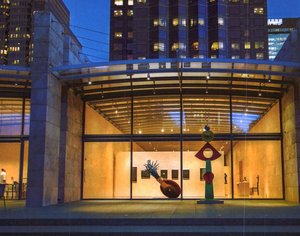
Nasher Sculpture Center, DallasNasher Sculpture Center Dallas 4 Head of Balzac, Hanako, The Age of Bronze
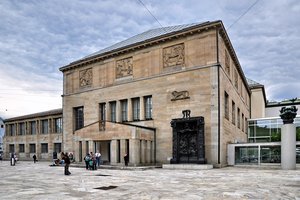
Kunsthaus Zürich, ZürichKunsthaus Zürich Zürich 3 The Age of Bronze, Iris, Messenger of the Gods, The Gates of Hell
Kunsthalle Bremen, BremenKunsthalle Bremen Bremen 3 Saint John the Baptist, The Bronze Age, Man with Broken Nose

Auguste Rodin naprieč dekádami: jeden jedinečný originál pre každý

Diela podľa dekád

Vyberte si dekádu a pozrite si originál, ktorý ju definuje.

Obrazy umelca Auguste Rodin: otázky pre galériu

Akým najznámejším dielom sa pýta Auguste Rodin?Odhaľte odpoveď

The Temptation of Saint Anthony (back) (1900), Museum of Fine Arts, Lyon. Nasledujú The three shades (1973) a The Thinker (1910).

V akom veku vytvoril/a Auguste Rodin dielo The Temptation of Saint Anthony (back)?Odhaľte odpoveď

60 rokov: The Temptation of Saint Anthony (back) vzniklo v roku 1900 a Auguste Rodin sa narodil/a v roku 1840.

Ktorých desať obrazov Auguste Rodin je najznámejších?Odhaľte odpoveď

The Temptation of Saint Anthony (back), The three shades, The Thinker, Man and his Thought, Man with the Broken Nose, The Fallen Angel, Victor Hugo, Danaide, The Prodigal Son a Minotaur. Vyššie uvedené hodnotenie uvádza rok a múzeu pre každé z nich.

Koľko je známych diel umelca Auguste Rodin?Odhaľte odpoveď

Náš katalóg obsahuje 205 diel od umelca Auguste Rodin z perioda od 1863 do 1917.

Kde možno vidieť najznámejšie originály od Auguste Rodin?Odhaľte odpoveď

Väčšinou v Legion of Honor (San Francisco), Art Gallery of South Australia (Adelaide) a Cantor Arts Center na Stanford University (Stanford). Tabuľka múzeí vyššie ich všetky uvádza.

V akom období vytvoril/a Auguste Rodin svoje najznámejšie obrazy?Odhaľte odpoveď

V období 1880s: 19 z 100 diel na tejto stránke bolo vytvorených vtedy, pričom Danaide z nich.

Ktorý z najslávnejších obrazov autora Auguste Rodin je najstarší a ktorý najnovší?Odhaľte odpoveď

Na tejto stránke je najstaršie dielo z Man with Broken Nose (1863) a najnovšie z Victor Hugo (1917).

Aké témy obľúbené Auguste Rodin?Odhaľte odpoveď

Sculpture (47), Bronze (29) a Bronze sculpture (16), v rámci 100 diel na tejto stránke.

S akými materiálmi mal(a) Auguste Rodin najčastejšie pracuje?Odhaľte odpoveď

Bronze, pre 40 z 100 diel na tejto stránke.

Aké originály od Auguste Rodin môžem vidieť v Legion of Honor?Odhaľte odpoveď

Man with the Broken Nose, The Fallen Angel a Victor Hugo: múzeá Legion of Honor, San Francisco uchovávajú 10 z diel na tejto stránke.

Auguste Rodin: portrét umelca

François Auguste René Rodin: The Sculptor of Souls

François Auguste René Rodin, známy ako Auguste Rodin, bol bezpochybnou jednou z najvýznamnejších figúr v dejine francúzskej a svetovej scény. Jeho diela, plné hĺbky emócií a dynamiky, prelomili tradičné konvencie sochaŕstva a otvorili cestu k modernému umeniu. Narodil sa 12. novembra 1840 v Paríži, v prostredí, ktoré mu nedalovaľké predpoklady na umeleckú kariéru, no Rodin si svojou neochabujúcou snahou a talentom vybojoval miesto medzi najväčšími umelcami svojej doby. Jeho život bol plný výziev, osobnej bolesti a nesmierneho kreatívneho potenciálu, ktoré sa odrazili v jeho unikátnom umeleckom jazyku.

Ranné roky a formovanie talentu

Rodinovo detstvo bolo poznačené smútkom – už v trinástich rokoch stratil sestru, čo ho hlboko zasiahlo a ovplyvnilo jeho životný smer. Počas štúdia na École Spéciale de Dessin et de Mathématiques sa snažil o prijatie do prestížnej École des Beaux-Arts, no tri razy neúspešne. Tento prvý odmietavý zážitok ho však nezlomil, ale spomedzi ďalších možností si vybral cestu dekoratívneho kamenného remesla, kde získal praktické zručnosti a hlbšie porozumenie materiálu – kameňu. Práca v dielni bola pre Rodina neoceniteľná prípoveďou na jeho budúcu tvorbu, umožnila mu precítenosť tvarov a rozvoj jemnej techniky. Jeho prvé diela, ako *Muž s zlomeným nosom* (1864), už naznačovali jeho odlišný prístup k sochaŕstvu – zameranie sa na realitu a ľudské emócie, čo bolo vtedy prelomové.

Rozchod s tradíciou: Nový jazyk v kameni

Rodinovo umelecké dielo sa vyznačuje radikálnym odklonom od akademických konvencií, ktoré dominovali sochaŕstvu jeho času. Zatiaľ čo bol vyštudovaný podľa klasických princípov, odmietol idealizované formy a naratívnu strmplnosť, ktoré boli typické pre tradičné sochy. Hľadal skôr spôsob, ako zachytiť plytké nuansy ľudských emócií, váhu myšlienok a komplexity vnútornej duše. Jeho prvé diela, ako *The Age of Bronze* (1877), prvýkrát vyprovokovali kontroverziu pre ich realistický prístup a absenciu náboženských alebo mytologických motívov. Kritici boli zmätení jeho dielom, ktoré sa zdali príliš živé a prirodzené. Rodin však neprestávala vierať vo svoj umelecký názor a pokračoval v experimentovaní s novými formami a technikami. Začal skúmať fragmentované tvary, hrubé povrchy a dynamické kompozície, ktoré vyjadrovali pocit pohybu a psychologickej intenzity. Jeho schopnosť modelovať komplexné, chaotické povrchy z hliny bola bezkonkurenčná, čo mu umožnilo zachytiť hru svetla a tieňa s pozoruhodnou citlivosťou.

Ikony umenia: Pripútavajúci myšlienky, objímanie lásky a ďalšie

Rodinovo dielo je pevne zakorenené v ikonických sochách, ktoré dodnes rezonujú s publikom po celom svete. *Pripútavajúce myšlienky* (1880-1882), pôvodne súčasť *Brány pekla*, sa stali symbolom filozofického úvah a existenciálnej otázky, ich silná forma vyjadruje váhu ľudského myslenia. *Objímanie* (1886-1898) je oslavou vášnivého milovania, známy pre svoju zmyselnú krásu a emocionálnu intimitáciu. A *Branciaci občania Calaisu* (1884-1895), monumentálna pamiatka na odvahu a obete, ukazuje Rodinovú schopnosť vyjadriť hlboké ľudské dramá prostredníctvom sochaŕskeho umenia. Jeho diela neboli len reprezentáciou fyzických tiel; boli to skúmania ľudského stavu, nabité psychologickou hĺbkou a emocionálnym dopadom. Rodin sa nebojil zobrazovať nedokonalosti a utrpenie, pretože veril, že tieto aspekty sú neoddeliteľnou súčasťou ľudského života. Jeho sochy často obsahovali nezakrytú textúru, odkazujúcu na proces tvorby samotného umelca.

Vplyv a dedičstvo

K prvému stredku 20. storočia sa Rodin stal najvýznamnejším sochárom svojej doby. Jeho diela výrazne ovplyvnili ďalšie generácie umelcov, ktorí sa odvážili prekračovať tradičné obmedzenia a skúmať nové cesty umeleckej tvorby. Je všeobecne uznávaný ako kľúčová postava v prechodnom období medzi renesančným realizmom a moderným sochaŕstvom. Jeho dôraz na emocionálnu intenzitu, psychologickú hĺbku a inovatívne využitie tvarov položil základy pre trendy ako expresionizmus a kubizmus. Dnes sa Rodinove sochy nachádzajú v múzeách a zbierkach po celom svete, najmä v Musée Rodin v Paríži – dedikovanom priestore, ktorý prezentuje rozsah jeho umeleckého diela. Jeho vplyv presahuje samotné sochaŕstvo a ovplyvňuje literatúru, film a ďalšie oblasti umenia.

Doporučené miesta na návštevu

* **Musée Rodin, Paríž:** Nezbytná zastávka pre všetkých, ktorí chcú objaviť celkový umelecký rozsah Rodina. * **Národná galéria umenia, Washington D.C.:** Obsahuje významnú zbierku jeho diel a ponúka prehľad o jeho tvorivom procese. * **Cantor Arts Center na univerzite Stanford:** Prezentuje známe diela ako bustu Alberta-Ernest Carrier-Belleuse. Rodinovo dedičstvo nie je len výsledkom umeleckej inovácie, ale aj dôkazom síl umenia spájať nás s našou spoločnou ľudskou skúsenosťou. Jeho sochy sú viac než len objekty na obdiv – sú okno do duše, ktoré nás pozývajú zamyslieť sa nad zložitostiami života, lásky, straty a všetkým, čo leží medzi nimi.