Portrét Peter Jacob Horemans

58 najznámejších obrazov od Peter Jacob Horemans, výber z galérie

Aktualizované november 2026 · zoradené podľa našej miery popularity (vyhľadávanie, návštevy a objednávky pre každou prácu) · 60 dielov umelca Peter Jacob Horemans v našom katalógu

Stručne povedané

Z všetkých originálov, ktoré Peter Jacob Horemans zanechal, je najznámejší Portrait of Frau Heigl (1738), ktorý sa nachádza v zbierkach Bavarské štátne múzeá výtvarného umenia v meste Mních. Hneď za ním nasledujú Kitchen Still Life with Coffee Drinker (1765) a Musical Still Life with Horn Player (1765). Náš katalóg obsahuje 60 diel od Peter Jacob Horemans; galéria si zachovala tých 58, ktoré obdivuje celý svet, pričom každý z nich je prezentovaný spolu s jeho dátumom, múzeou a príbehom.

1700 – 1776, Antwerp Najviac diel: Bavarské štátne múzeá výtvarného umenia

Top 10 obrazov umelca Peter Jacob Horemans: výber galérie

Výber umelcov Peter Jacob Horemans pokračuje, od 11 do 58

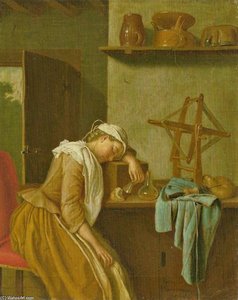
11The Smoker (1764) od Peter Jacob HoremansThe Smoker1764 · Bavarské štátne múzeá výtvarného umenia 12Hunting Still Life with Hunter (1765) od Peter Jacob HoremansHunting Still Life with Hunter1765 · Bavarské štátne múzeá výtvarného umenia 13Hunting Still Life with Hunter (1765) od Peter Jacob HoremansHunting Still Life with Hunter1765 · Bavarské štátne múzeá výtvarného umenia 14Kitchen Interior with Beer Drinker (1765) od Peter Jacob HoremansKitchen Interior with Beer Drinker1765 · Bavarské štátne múzeá výtvarného umenia 15Kitchen Still Life with Female Figure Counting Money and Parrot (1760) od Peter Jacob HoremansKitchen Still Life with Female Figure Counting Money and Parrot1760 · Bavarské štátne múzeá výtvarného umenia 16Still Life with Violinist (1763) od Peter Jacob HoremansStill Life with Violinist1763 · Bavarské štátne múzeá výtvarného umenia 17The Tailor's Workshop (1759) od Peter Jacob HoremansThe Tailor's Workshop1759 18Still life with a distinguished gentleman (1762) od Peter Jacob HoremansStill life with a distinguished gentleman1762 · Bavarské štátne múzeá výtvarného umenia 19Fruit still life with a female figure drinking wine (1764) od Peter Jacob HoremansFruit still life with a female figure drinking wine1764 · Bavarské štátne múzeá výtvarného umenia 20Kitchen still life with female figure and parrot (An allegory of feeling) (1760) od Peter Jacob HoremansKitchen still life with female figure and parrot (An allegory of feeling)1760 · Bavarské štátne múzeá výtvarného umenia 21Shoemakers-shop (1759) od Peter Jacob HoremansShoemakers-shop1759 22Still Life with Female Figure (1770) od Peter Jacob HoremansStill Life with Female Figure1770 · Bavarské štátne múzeá výtvarného umenia 23Kitchen Still Life with Female Figure and Parrot (1771) od Peter Jacob HoremansKitchen Still Life with Female Figure and Parrot1771 · Bavarské štátne múzeá výtvarného umenia 24Court Musician Felix Reiner with Bassoon (1774) od Peter Jacob HoremansCourt Musician Felix Reiner with Bassoon1774 · Bavarské štátne múzeá výtvarného umenia 25Court Musician with Violin (Johann Georg Holzbogen) (1774) od Peter Jacob HoremansCourt Musician with Violin (Johann Georg Holzbogen)1774 · Bavarské štátne múzeá výtvarného umenia 26Still Life "The Treasurer" (1773) od Peter Jacob HoremansStill Life "The Treasurer"1773 · Bavarské štátne múzeá výtvarného umenia 27Kitchen Still Life with Female Figure and Parrot (1771) od Peter Jacob HoremansKitchen Still Life with Female Figure and Parrot1771 · Bavarské štátne múzeá výtvarného umenia 28Portrait of District Administrator Josef Heigl (1768) od Peter Jacob HoremansPortrait of District Administrator Josef Heigl1768 · Bavarské štátne múzeá výtvarného umenia 29Spring (Johanna de Lasence Having Coffee in the Garden) (1767) od Peter Jacob HoremansSpring (Johanna de Lasence Having Coffee in the Garden)1767 · Bavarské štátne múzeá výtvarného umenia 30Self-portrait in the artist's atelier (1766) od Peter Jacob HoremansSelf-portrait in the artist's atelier1766 · Bavarské štátne múzeá výtvarného umenia 31Bildnis eines Silberdieners (1772) od Peter Jacob HoremansBildnis eines Silberdieners1772 · Bavarské štátne múzeá výtvarného umenia 32Portrait of court sculptor Roman Anton Boos (1730-1810) in his studio next to a bust of elector Maximilian III (1766) od Peter Jacob HoremansPortrait of court sculptor Roman Anton Boos (1730-1810) in his studio next to a bust of elector Maximilian III1766 · Bavarské štátne múzeá výtvarného umenia 33Hunting a wild boar (1773) od Peter Jacob HoremansHunting a wild boar1773 · Národné múzeum vo Varšave 34Hunting with falcons (1773) od Peter Jacob HoremansHunting with falcons1773 · Národné múzeum vo Varšave 35Picnic in the park (1776) od Peter Jacob HoremansPicnic in the park1776 · Lenbachhaus 36Concert in the garden (1776) od Peter Jacob HoremansConcert in the garden1776 · Lenbachhaus 37Still Life with Plucked Chicken (1764) od Peter Jacob HoremansStill Life with Plucked Chicken1764 · Bavarské štátne múzeá výtvarného umenia 38Still Life with Pork Knuckle and Squirrel (1765) od Peter Jacob HoremansStill Life with Pork Knuckle and Squirrel1765 · Bavarské štátne múzeá výtvarného umenia 39Still Life with Dead Partridge (1764) od Peter Jacob HoremansStill Life with Dead Partridge1764 · Bavarské štátne múzeá výtvarného umenia 40Still Life with Fish (1765) od Peter Jacob HoremansStill Life with Fish1765 · Bavarské štátne múzeá výtvarného umenia 41Still Life with Pork Knuckle and Parrot (1765) od Peter Jacob HoremansStill Life with Pork Knuckle and Parrot1765 · Bavarské štátne múzeá výtvarného umenia 42Still Life with Fruit (1765) od Peter Jacob HoremansStill Life with Fruit1765 · Bavarské štátne múzeá výtvarného umenia 43Still Life with Dead Lamb (1765) od Peter Jacob HoremansStill Life with Dead Lamb1765 · Bavarské štátne múzeá výtvarného umenia 44Still Life with Dead Hare (1764) od Peter Jacob HoremansStill Life with Dead Hare1764 · Bavarské štátne múzeá výtvarného umenia 45Still Life with Fruit (1765) od Peter Jacob HoremansStill Life with Fruit1765 · Bavarské štátne múzeá výtvarného umenia 46Still Life with Kitchen Utensils and Plucked Chicken (1765) od Peter Jacob HoremansStill Life with Kitchen Utensils and Plucked Chicken1765 · Bavarské štátne múzeá výtvarného umenia 47Still Life with Kitchen Utensils and Dead Partridge (1765) od Peter Jacob HoremansStill Life with Kitchen Utensils and Dead Partridge1765 · Bavarské štátne múzeá výtvarného umenia 48Still Life with Lobster (1765) od Peter Jacob HoremansStill Life with Lobster1765 · Bavarské štátne múzeá výtvarného umenia 49Still Life with Lobster (1766) od Peter Jacob HoremansStill Life with Lobster1766 · Bavarské štátne múzeá výtvarného umenia 50Still Life with Grapes and Apples (1768) od Peter Jacob HoremansStill Life with Grapes and Apples1768 · Bavarské štátne múzeá výtvarného umenia 51Fruit Still Life (1770) od Peter Jacob HoremansFruit Still Life1770 · Bavarské štátne múzeá výtvarného umenia 52Still Life with Crabs (1766) od Peter Jacob HoremansStill Life with Crabs1766 · Bavarské štátne múzeá výtvarného umenia 53Fruit Still Life (1768) od Peter Jacob HoremansFruit Still Life1768 · Bavarské štátne múzeá výtvarného umenia 54Fruit Snack (1770) od Peter Jacob HoremansFruit Snack1770 · Bavarské štátne múzeá výtvarného umenia 55Still Life with Fruit and Dead Birds (1771) od Peter Jacob HoremansStill Life with Fruit and Dead Birds1771 · Bavarské štátne múzeá výtvarného umenia 56Still Life with Fruit and Dead Birds (1771) od Peter Jacob HoremansStill Life with Fruit and Dead Birds1771 · Bavarské štátne múzeá výtvarného umenia 57A Musical Gathering at the Court of the Elector Karl Albrecht of Bavaria (1730) od Peter Jacob HoremansA Musical Gathering at the Court of the Elector Karl Albrecht of Bavaria1730 · Metropolitné múzeum umenia 58Schlafendes Küchenmädchen od Peter Jacob HoremansSchlafendes KüchenmädchenBavarské štátne múzeá výtvarného umenia

Múzeá, ktoré uchovávajú originály umelca Peter Jacob Horemans

4 múzeá, v ktorých sa nachádza najviac obrazov z tejto stránky.

Múzeá Mesto Diela umelca Peter Jacob Horemans Obrazy z tohto zoznamu
Bavarské štátne múzeá výtvarného umenia, MníchBavarské štátne múzeá výtvarného umenia Mních 51 Portrait of Frau Heigl, Kitchen Still Life with Coffee Drinker, Musical Still Life with Horn Player
Národné múzeum vo Varšave, VaršavaNárodné múzeum vo Varšave Varšava 2 Hunting a wild boar, Hunting with falcons
Lenbachhaus, MníchovLenbachhaus Mníchov 2 Picnic in the park, Concert in the garden
Metropolitné múzeum umenia, New YorkMetropolitné múzeum umenia New York 1 A Musical Gathering at the Court of the Elector Karl Albrecht of Bavaria

Peter Jacob Horemans dekáda po dekáde: originál, ktorý definuje každú z nich

Diela podľa dekád

Vyberte si dekádu a pozrite si originál, ktorý ju definuje.

Otázky zberateľov o obrazoch od Peter Jacob Horemans

Ktorým dielom je Peter Jacob Horemans najznámejší/najznámejšia?Odhaľte odpoveď

Portrait of Frau Heigl (1738), Bavarské štátne múzeá výtvarného umenia, Mních. Nasledujú Kitchen Still Life with Coffee Drinker (1765) a Musical Still Life with Horn Player (1765).

V akom veku bol/a Peter Jacob Horemans, keď vzniklo dielo Portrait of Frau Heigl?Odhaľte odpoveď

38 rokov: Portrait of Frau Heigl vzniklo v roku 1738 a Peter Jacob Horemans sa narodil/a v roku 1700.

Ktorých desať najznámejších obrazov má Peter Jacob Horemans?Odhaľte odpoveď

Portrait of Frau Heigl, Kitchen Still Life with Coffee Drinker, Musical Still Life with Horn Player, Still Life with Female Figure with Flowers, Still Life with Elegant Lady, Still Life with Fruit and Female Figure, The Soup Eater, Still Life with Female Figure with Beer Glass, Still Life with Female Figure a Musical Still Life with Male Figure. Vyššie uvedené hodnotenie uvádza rok a múzeu pre každé z nich.

Koľko obrazov zanechal umenec Peter Jacob Horemans?Odhaľte odpoveď

Náš katalóg obsahuje 60 diel od umelca Peter Jacob Horemans z perioda od 1730 do 1776.

V ktorých múzeách visia majstrovské diela umelca Peter Jacob Horemans?Odhaľte odpoveď

Väčšinou v Bavarské štátne múzeá výtvarného umenia (Mních), Národné múzeum vo Varšave (Varšava) a Lenbachhaus (Mníchov). Tabuľka múzeí vyššie ich všetky uvádza.

V ktorých rokoch vytvoril Peter Jacob Horemans svoje najznámejšie diela?Odhaľte odpoveď

V období 1760s: 36 z 58 diel na tejto stránke bolo vytvorených vtedy, pričom Kitchen Still Life with Coffee Drinker z nich.

Aké sú prvé a posledné známe originály od Peter Jacob Horemans?Odhaľte odpoveď

Na tejto stránke je najstaršie dielo z A Musical Gathering at the Court of the Elector Karl Albrecht of Bavaria (1730) a najnovšie z Picnic in the park (1776).

Aké diela umelca Peter Jacob Horemans sa nachádzajú v múzeu Bavarské štátne múzeá výtvarného umenia?Odhaľte odpoveď

Portrait of Frau Heigl, Kitchen Still Life with Coffee Drinker a Musical Still Life with Horn Player: múzeá Bavarské štátne múzeá výtvarného umenia, Mních uchovávajú 51 z diel na tejto stránke.

Peter Jacob Horemans: život a dielo

A Life Immersed in the Courts of Europe: Peter Jacob Horemans

Peter Jacob Horemans, a name perhaps less immediately recognizable than some of his contemporaries, nevertheless occupies a fascinating and important niche within 18th-century European painting. Born in Antwerp, likely around 1709 – precise dates remain elusive – Horemans dedicated his artistic life to capturing the vibrant, often frivolous, world of aristocratic society. He wasn’t a painter of grand historical narratives or religious allegories; instead, he meticulously documented the intimate moments of courtly existence: balls, musical gatherings, conversations in gardens, and the subtle dramas unfolding within opulent interiors. His work offers a unique window into the customs, fashions, and social dynamics of an era teetering between Baroque extravagance and Rococo refinement. While his early life remains shrouded in some mystery, it’s clear he received a solid artistic training, likely within the Antwerp guild system, which fostered a strong tradition of genre painting. He wasn't merely replicating scenes; he was crafting narratives about social interaction, status, and the pursuit of pleasure.

From Flemish Roots to Bavarian Patronage

Horemans’ early career unfolded primarily in Flanders, where he established himself as a skilled painter of *genre* scenes – everyday life depictions that were increasingly popular among the burgeoning merchant class and lower nobility. However, his fortunes took a significant turn when he entered the service of the Bavarian court in Munich around 1745. This move proved pivotal, shaping both the subject matter and style of his mature work. He became a favored artist of Empress Maria Amalia of Austria, wife of Emperor Charles VII, who commissioned numerous paintings depicting scenes from her own life and those of the Bavarian court. These weren’t official portraits in the traditional sense; rather, they were intimate *vedute* – views of everyday life – rendered with remarkable detail and a keen eye for character. The patronage allowed Horemans to flourish, providing him with access to exclusive settings and subjects unavailable elsewhere. He wasn't simply an observer but a participant, subtly embedded within the world he portrayed. This proximity lent his paintings an authenticity that distinguished them from more formulaic courtly depictions.

A Master of Detail and Narrative

Horemans’ artistic style is characterized by its meticulous attention to detail, delicate brushwork, and subtle use of color. He possessed a remarkable ability to render textures – the sheen of silk gowns, the gleam of polished furniture, the intricate patterns of wallpaper – with astonishing realism. However, his paintings are more than just technical exercises; they’re imbued with a sense of narrative and psychological insight. He excelled at capturing fleeting expressions, gestures, and interactions that reveal the personalities and relationships of his subjects. His compositions often feature numerous figures engaged in various activities, creating a lively and dynamic atmosphere.
  • Compositional Skill: Horemans masterfully arranged groups within complex interiors, guiding the viewer’s eye through the scene.
  • Color Palette: He favored a soft, harmonious color palette, often employing muted tones and subtle gradations of light and shadow.
  • Psychological Depth: His figures are not merely decorative elements; they possess individual personalities and engage in believable interactions.
He wasn’t interested in heroic grandeur but in the quiet moments that defined aristocratic life. This focus on intimacy and realism sets him apart from many of his contemporaries who favored more idealized or theatrical depictions.

Themes and Symbolism within Courtly Life

While seemingly straightforward depictions of everyday life, Horemans' paintings are often rich with subtle symbolism and social commentary. The objects depicted – musical instruments, books, flowers, games – frequently carried specific meanings that would have been understood by his aristocratic patrons. For example, a lute might symbolize courtship or romantic love, while a book could represent learning or intellectual pursuits. He also subtly alluded to the status and wealth of his subjects through their clothing, furnishings, and surroundings. The paintings are not simply records of events but carefully constructed statements about social identity and cultural values. Furthermore, Horemans often depicted scenes of leisure and entertainment, reflecting the aristocratic ideal of *l’art de vivre* – the art of living well. These paintings weren't necessarily critiques of courtly life; rather, they were celebrations of its pleasures and refinements. However, a closer examination reveals a certain degree of irony and detachment, suggesting that Horemans was not entirely uncritical of the society he portrayed.

Legacy and Historical Significance

Peter Jacob Horemans died in Munich in 1776, leaving behind a substantial body of work that provides invaluable insights into the world of 18th-century European aristocracy. While his paintings were highly sought after by collectors during his lifetime, his reputation waned somewhat in the 19th and early 20th centuries. However, recent scholarship has brought renewed attention to his artistic achievements, recognizing him as a master of genre painting and a keen observer of social life. His work stands as a testament to the power of art to capture not just *what* people did but *how* they lived – their customs, values, and aspirations. He offers a unique perspective on an era often romanticized or idealized, providing a more nuanced and realistic portrayal of courtly existence. Today, his paintings are held in major museums and private collections around the world, continuing to captivate audiences with their beauty, detail, and historical significance. His legacy lies not in grand pronouncements but in the quiet eloquence of everyday life, meticulously rendered for posterity.