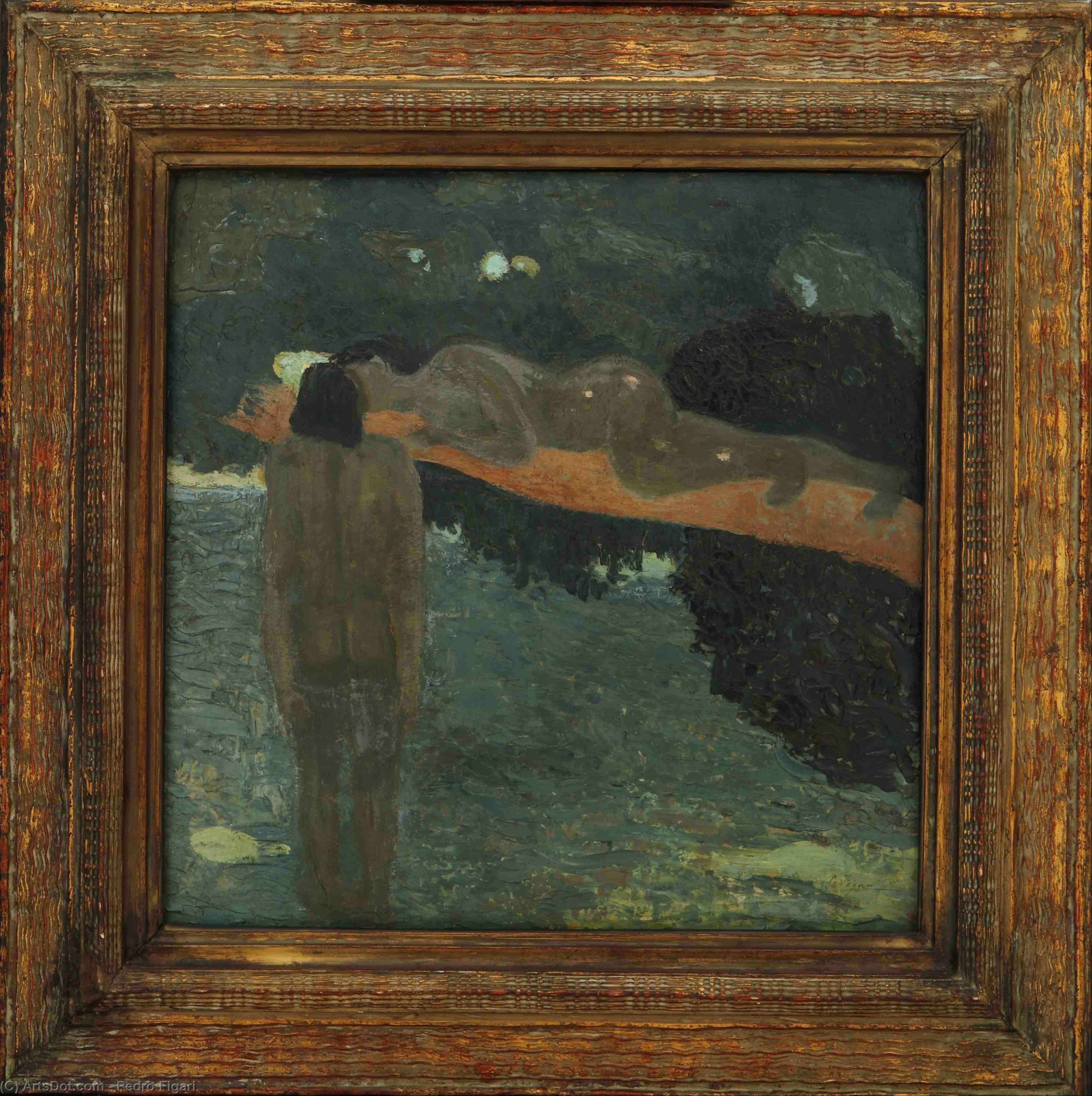
Portrét Pedro Figari

56 najznámejších obrazov od umelca Pedro Figari, každý jedinečný

Aktualizované november 2026 · zoradené podľa našej miery popularity (vyhľadávanie, návštevy a objednávky pre každou prácu) · 56 dielov umelca Pedro Figari v našom katalógu

Stručne povedané

Tertulia at the inn before eating. The inn (1919) je obrazom umelca Pedro Figari, ktorý priťahuje najviac pohľadov; originál sa nachádza v múzeu Národné múzeum krásnych umení, Buenos Aires. Potom sa pohľad presunie na Candombe carnival (1932) a Lavanderas En Los Medanos O Los Amigos. Z 56 diel umelca Pedro Figari v našom katalógu je týchto 56 najznámejších; každá z nich je jedinečným originálom prezentovaným s jeho rokom vzniku, múzeom a dôvodom, prečo pretrváva.

1861 – 1938, Montevideo Impressionism Najviac diel: Národné múzeum krásnych umení

Top 10 obrazov umelca Pedro Figari podľa výberu galérie

1
Tertulia at the inn before eating. The inn (1919) od Pedro Figari

Tertulia at the inn before eating. The inn

1919 · Oil · Národné múzeum krásnych umení, Buenos Aires

In "Tertulia at the inn before eating. The inn" by Pedro Figari, a social gathering unfolds within a crowded indoor setting. The scene captures a moment of conviviality, where a group of figures gathers in a shared space. These people are arranged across the foreground and the middle ground, creating a dense atmosphere that pulls the viewer into the center of the communal experience. The composition feels packed, as if…

2
Candombe carnival (1932) od Pedro Figari

Candombe carnival

1932 · Oil On Canvas · Národné múzeum krásnych umení, Buenos Aires

In Candombe carnival, Pedro Figari captures a rhythmic pulse of movement. The scene focuses on the celebrations of the local black community, a subject rooted in the traditions of Uruguay. This work, created about 1932, distills the energy of a dance that emerged from the descendants of liberated African slaves. The figures move through a crowded space, their forms defined by the spirit of the ritual rather than strict anatomical…

4
El Beso od Pedro Figari

El Beso

Oil On Canvas · Národné múzeum krásnych umení, Buenos Aires

El Beso is an oil painting on canvas by Pedro Figari. Born in Montevideo in 1861, the artist lived until 1938, a period that saw him transition from a career in law and politics to a dedicated practice in the visual arts. His later years were defined by a shift toward a unique, intuitive approach to painting, often reconstructing scenes from memory rather than direct observation.

Slávne obrazy umelca Pedro Figari, čísla 11 až 56

11La Vida od Pedro FigariLa Vida 12El Requiebro od Pedro FigariEl Requiebro 13El Patio O Patio Unitario od Pedro FigariEl Patio O Patio UnitarioNárodné múzeum krásnych umení 14El Gaucho Candioti od Pedro FigariEl Gaucho CandiotiNárodné múzeum krásnych umení 15Negras En La Puerta O Negras En Zaguán od Pedro FigariNegras En La Puerta O Negras En ZaguánNárodné múzeum krásnych umení 16The Dance (Bailongo) (1925) od Pedro FigariThe Dance (Bailongo)1925 17Creole Dance (1925) od Pedro FigariCreole Dance1925 18Peeling the pava (1925) od Pedro FigariPeeling the pava1925 · Národné múzeum krásnych umení 19Off for the Honeymoon (1925) od Pedro FigariOff for the Honeymoon1925 20Double Wedding (1930) od Pedro FigariDouble Wedding1930 21Idilio campero (1935) od Pedro FigariIdilio campero1935 · Inter-American Development Bank 22Nocturne (1918) od Pedro FigariNocturne1918 · Colección de Arte Amalia Lacroze de Fortabat 23A Request to Rosas od Pedro FigariA Request to Rosas 24Mass departure od Pedro FigariMass departureNárodné múzeum krásnych umení 25The pampas or return of the dance od Pedro FigariThe pampas or return of the danceNárodné múzeum krásnych umení 26Injuria od Pedro FigariInjuria 27La Diligancia od Pedro FigariLa Diligancia 28Damas Antiguas od Pedro FigariDamas Antiguas 29Rincón De Negros od Pedro FigariRincón De Negros 30Las Visitas od Pedro FigariLas Visitas 31La Media Caña od Pedro FigariLa Media Caña 32Pericón - od Pedro FigariPericón -Národné múzeum krásnych umení 33Jardín Bajo La Luna O Quietud En La Quinta od Pedro FigariJardín Bajo La Luna O Quietud En La QuintaNárodné múzeum krásnych umení 34El Pericón od Pedro FigariEl Pericón 35Negros Y Mulatas od Pedro FigariNegros Y Mulatas 36Patio od Pedro FigariPatioNárodné múzeum krásnych umení 37Cuestión De Razas od Pedro FigariCuestión De Razas 38Alevosía od Pedro FigariAlevosía 39Works Of Pedro Figari od Pedro FigariWorks Of Pedro Figari 40Los miriñaques od Pedro FigariLos miriñaques 41Reunión Colonial od Pedro FigariReunión Colonial 42Pampa od Pedro FigariPampaNárodné múzeum krásnych umení 43Deliberando od Pedro FigariDeliberando 44Hacia La Fiesta od Pedro FigariHacia La Fiesta 45Cuarteleras od Pedro FigariCuartelerasNárodné múzeum krásnych umení 46Confidencia od Pedro FigariConfidenciaNárodné múzeum krásnych umení 47Camelias Blancas od Pedro FigariCamelias Blancas 48Las Vecinas od Pedro FigariLas VecinasNárodné múzeum krásnych umení 49Candombe od Pedro FigariCandombeNárodné múzeum krásnych umení 50Candombe O Candombe Bajo La Luna od Pedro FigariCandombe O Candombe Bajo La LunaNárodné múzeum krásnych umení 51Lamento od Pedro FigariLamentoNárodné múzeum krásnych umení 52Cancha De Bochas od Pedro FigariCancha De BochasNárodné múzeum krásnych umení 53Pericón od Pedro FigariPericónNárodné múzeum krásnych umení 54Baile En El Rancho od Pedro FigariBaile En El RanchoNárodné múzeum krásnych umení 55Una Diligencia od Pedro FigariUna DiligenciaNárodné múzeum krásnych umení 56Tertulia od Pedro FigariTertuliaNárodné múzeum krásnych umení

Slávne obrazy umelca Pedro Figari podľa jednotlivých období

Motívy, ktoré zaujali Pedro Figari

Štyri témy, ktoré sa v týchto origináloch najčastejšie vracajú, každá s jej najvychybenejším príkladom.

Múzeá, ktoré uchovávajú originály umelca Pedro Figari

3 múzeá, v ktorých sa nachádza najviac obrazov z tejto stránky.

Múzeá Mesto Diela umelca Pedro Figari Obrazy z tohto zoznamu
Národné múzeum krásnych umení, Buenos AiresNárodné múzeum krásnych umení Buenos Aires 25 Tertulia at the inn before eating. The inn, Candombe carnival, Lavanderas En Los Medanos O Los Amigos
Inter-American Development Bank, Washington, D.C.Inter-American Development Bank Washington, D.C. 1 Idilio campero
Colección de Arte Amalia Lacroze de Fortabat, Buenos AiresColección de Arte Amalia Lacroze de Fortabat Buenos Aires 1 Nocturne

Pedro Figari naprieč dekádami: jeden jedinečný originál pre každý

Diela podľa dekád

Vyberte si dekádu a pozrite si originál, ktorý ju definuje.

Obrazy umelca Pedro Figari: otázky pre galériu

Akým najznámejším dielom sa pýta Pedro Figari?Odhaľte odpoveď

Tertulia at the inn before eating. The inn (1919), Národné múzeum krásnych umení, Buenos Aires. Nasledujú Candombe carnival (1932) a Lavanderas En Los Medanos O Los Amigos.

V akom veku vytvoril/a Pedro Figari dielo Tertulia at the inn before eating. The inn?Odhaľte odpoveď

58 rokov: Tertulia at the inn before eating. The inn vzniklo v roku 1919 a Pedro Figari sa narodil/a v roku 1861.

Ktorých desať obrazov Pedro Figari je najznámejších?Odhaľte odpoveď

Tertulia at the inn before eating. The inn, Candombe carnival, Lavanderas En Los Medanos O Los Amigos, El Beso, While the Ball Rolls, El Maturrango, Encuentro En El Camino, Carreta, La Amita a Preparando El Candombe. Vyššie uvedené hodnotenie uvádza rok a múzeu pre každé z nich.

Koľko je známych diel umelca Pedro Figari?Odhaľte odpoveď

Náš katalóg obsahuje 56 diel od umelca Pedro Figari z perioda od 1918 do 1935.

Kde možno vidieť najznámejšie originály od Pedro Figari?Odhaľte odpoveď

Väčšinou v Národné múzeum krásnych umení (Buenos Aires), Inter-American Development Bank (Washington, D.C.) a Colección de Arte Amalia Lacroze de Fortabat (Buenos Aires). Tabuľka múzeí vyššie ich všetky uvádza.

V akom období vytvoril/a Pedro Figari svoje najznámejšie obrazy?Odhaľte odpoveď

V období 1920s: 4 z 56 diel na tejto stránke bolo vytvorených vtedy, pričom The Dance (Bailongo) z nich.

Ktorý z najslávnejších obrazov autora Pedro Figari je najstarší a ktorý najnovší?Odhaľte odpoveď

Na tejto stránke je najstaršie dielo z Nocturne (1918) a najnovšie z Idilio campero (1935).

Aké témy obľúbené Pedro Figari?Odhaľte odpoveď

Social gathering (4), People (3) a Uruguayan culture (3), v rámci 56 diel na tejto stránke.

S akými materiálmi mal(a) Pedro Figari najčastejšie pracuje?Odhaľte odpoveď

Oil, pre 2 z 56 diel na tejto stránke.

Do ktorého smeru patrí tvorba umelca Pedro Figari?Odhaľte odpoveď

Impressionism a Modernism, podľa originálov na tejto stránke.

Aké originály od Pedro Figari môžem vidieť v Národné múzeum krásnych umení?Odhaľte odpoveď

Tertulia at the inn before eating. The inn, Candombe carnival a Lavanderas En Los Medanos O Los Amigos: múzeá Národné múzeum krásnych umení, Buenos Aires uchovávajú 25 z diel na tejto stránke.

Pedro Figari: portrét umelca

A Life Imbued with Uruguayan Essence

Pedro Figari, a name that echoes through the halls of Latin American art history, was far more than simply a painter; he was a complex and deeply felt embodiment of his nation’s soul. Born in Montevideo in 1861, his life unfolded as a remarkable confluence of legal practice, political engagement, literary pursuits, and ultimately, an artistic journey that irrevocably shaped the landscape of modernism in South America. Figari's path wasn’t one of immediate artistic inclination; initially drawn to the structured world of law, he earned his degree in 1886, a profession that provided him with a keen understanding of human nature and the intricacies of social dynamics – insights that would profoundly inform his later work. His early career as a defense attorney, representing often marginalized individuals, exposed him to the raw realities of poverty and injustice, experiences that simmered beneath the surface until they found vibrant expression on canvas decades later. A marriage in 1886 brought him into a family life, but it was also a catalyst for travel – specifically, a sojourn to France, where he encountered the revolutionary currents of post-impressionism. This encounter proved pivotal, subtly influencing his artistic direction and introducing him to new ways of seeing and representing the world. However, it wasn’t until 1921, at the venerable age of sixty, that Figari fully embraced painting as his primary vocation – a dramatic shift that unleashed a torrent of creativity and established him as a leading voice in Latin American art.

From Legal Chambers to Artistic Visions

For decades prior to this transformative year, Figari skillfully balanced his legal commitments with intermittent artistic endeavors. He was deeply involved in Uruguayan public life, serving as a respected member of Parliament, directing the Escuela Nacional de Artes y Oficios (National School of Arts and Crafts), and contributing significantly to intellectual discourse through his writings on law, education, aesthetics, and even utopian ideals. This diverse background wasn’t a distraction from his art; rather, it served as a rich source of inspiration, informing his perspective and deepening the emotional resonance of his paintings. His legal training instilled in him an acute observational skill – the ability to dissect social situations and understand human motivations – while his literary pursuits honed his capacity for nuanced expression and articulate communication. The move to Buenos Aires in 1921 proved to be a crucial turning point, providing him with a fresh start and a new environment conducive to artistic exploration. It was here that he shed the constraints of earlier, academically-influenced styles and began to forge a truly unique artistic voice, one rooted in memory and deeply connected to his Uruguayan heritage. He abandoned meticulous realism, opting instead for a more intuitive approach – painting not what he *saw*, but what he *remembered*. This reliance on memory wasn’t simply a technical choice; it allowed him to distill the essence of his experiences, imbuing his work with a deeply personal and nostalgic quality.

A Pioneer's Palette: Style and Subject Matter

Figari’s artistic style is immediately recognizable for its vibrant color palettes, bold brushstrokes, and seemingly naïve simplicity. He wasn’t interested in creating illusions of depth or photographic accuracy; instead, he treated his canvases as studies in color and form, reconstructing Uruguayan scenes from the fragments of his memory. His subjects were drawn almost exclusively from the world he knew intimately – the gauchos roaming the pampas, lively carnival celebrations, the rituals and daily life of Montevideo’s black community, and the quiet intimacy of colonial patios. These weren't merely picturesque depictions; they were poignant reflections on Uruguayan identity, social customs, and a disappearing way of life. He captured fleeting moments – a dance, a gathering, a street scene – with an immediacy that felt both timeless and deeply rooted in place. His technique, often employing impasto with visible brushwork, further emphasized the expressive power of color and texture, creating paintings that pulsated with energy and emotion. The influence of post-impressionism is evident in his use of color and his focus on capturing emotional responses rather than precise representation, but he ultimately developed a distinctly personal style—one characterized by its warmth, sincerity, and profound connection to the Uruguayan landscape and people.

Breaking with Tradition: A Latin American Voice

Pedro Figari emerged during a crucial period in Latin American art history – a time when artists were actively seeking to break free from European artistic dominance and define their own unique aesthetic identities. Traditional academic painting often focused on historical or religious subjects, prioritizing technical skill over genuine expression. Figari challenged this convention by embracing a more direct, unpretentious style that allowed him to subtly critique social norms and celebrate the vibrancy of Uruguayan culture. He believed in the power of art to connect with the everyday experiences of ordinary people, rejecting elitism in favor of authenticity. His work resonated with a growing sense of national pride and a desire to reclaim indigenous roots. He wasn’t alone in this endeavor—artists like Diego Rivera and Tarsila do Amaral were also forging new paths—but Figari's unique blend of memory, color, and social commentary established him as a pivotal figure in the development of Latin American modernism. He anticipated later modernist developments with his expressive brushwork and rejection of mechanistic representation. His paintings weren’t simply representations of Uruguayan life; they *were* Uruguay – its colors, its rhythms, its soul—preserved on canvas for generations to come.

Legacy and Enduring Influence

Pedro Figari's legacy extends far beyond his individual artistic achievements. He is remembered as one of the first Latin American painters to successfully forge a distinctly regional style, prioritizing feeling and essence over strict realism. His work continues to inspire artists and art lovers alike with its vibrant energy, emotional depth, and unwavering commitment to capturing the spirit of Uruguay. He demonstrated that true modernity wasn’t about imitating European trends but about finding one's own voice—a lesson that resonated throughout Latin America and beyond. He died in 1938, leaving behind a body of work that stands as a testament to his artistic vision, intellectual curiosity, and enduring love for his homeland. His paintings are not merely representations of Uruguayan life; they *are* Uruguay – its colors, its rhythms, its soul—preserved on canvas for generations to come.