

1


Aktualizované november 2026 · zoradené podľa našej miery popularity (vyhľadávanie, návštevy a objednávky pre každú prácu) · 7 dielov umelca Oswald Moser v našom katalógu
Stručne povedané
Z všetkých originálov, ktoré Oswald Moser zanechal, je najznámejší Christ and the Woman with Issue of Blood (1915), ktorý sa nachádza v zbierkach st Bartholomew’s Hospital Museum And Archive v meste Londín. Hneď za ním nasledujú First World War Wounded Sailors Listening to Musicians Playing on Board a Ship (1918) a Self Portrait (1928). Náš katalóg obsahuje 7 diel od Oswald Moser; galéria si zachovala tých 7, ktoré obdivuje celý svet, pričom každý z nich je prezentovaný spolu s jeho dátumom, múzeou a príbehom.




4 múzeá, v ktorých sa nachádza najviac obrazov z tejto stránky.
| Múzeum | Mesto | Diela umelca Oswald Moser | Obrazy z tohto zoznamu |
|---|---|---|---|
 Rye Art Gallery |
Rye | 2 | Portrait of the Artist's Wife (later Madame Durand), Lady Dorothy D'Oyly Carte |
 st Bartholomew’s Hospital Museum And Archive |
Londín | 1 | Christ and the Woman with Issue of Blood |
 Barber Institute of Fine Arts |
Birmingham | 1 | Girl in Red |
 National Watch - Clock Museum |
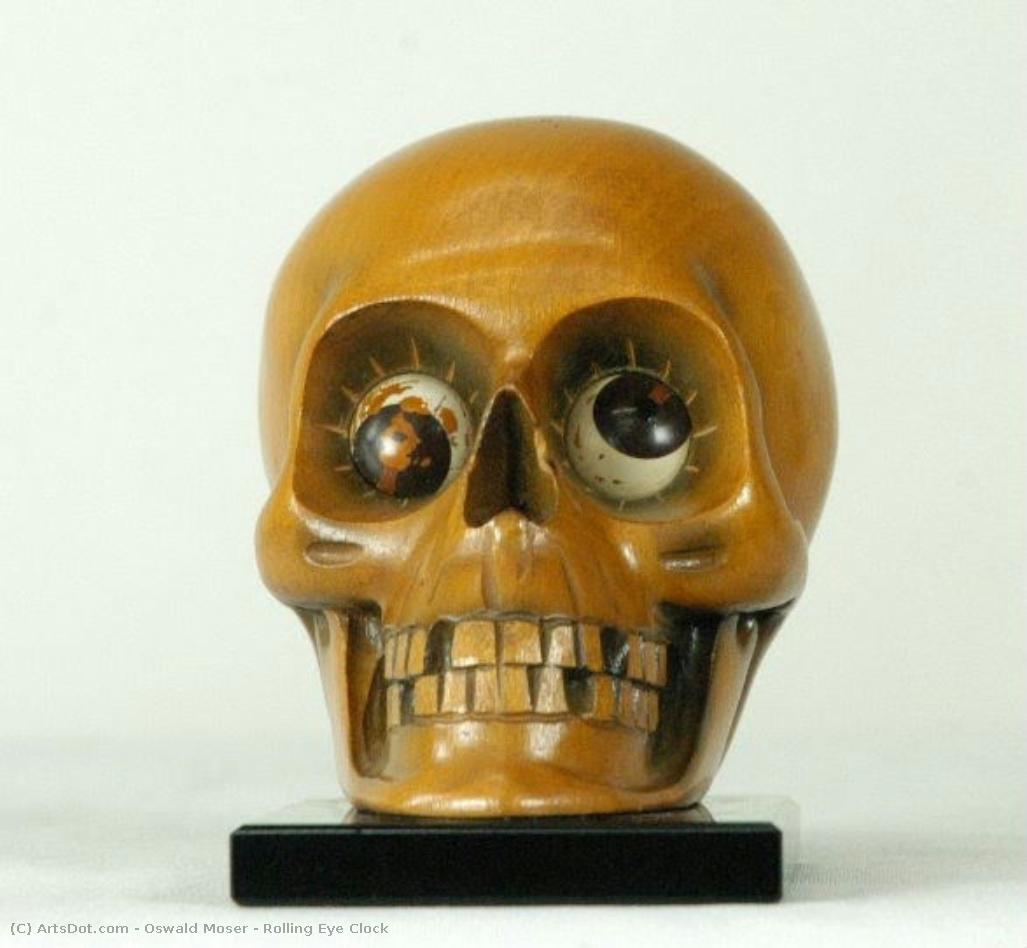
Colombia | 1 | Rolling Eye Clock |
Vyberte si dekádu a pozrite si originál, ktorý ju definuje.
Christ and the Woman with Issue of Blood (1915), st Bartholomew’s Hospital Museum And Archive, Londín. Nasledujú First World War Wounded Sailors Listening to Musicians Playing on Board a Ship (1918) a Self Portrait (1928).
Náš katalóg obsahuje 7 diel od umelca Oswald Moser z perioda od 1915 do 1930.
Väčšinou v Rye Art Gallery (Rye), st Bartholomew’s Hospital Museum And Archive (Londín) a Barber Institute of Fine Arts (Birmingham). Tabuľka múzeí vyššie ich všetky uvádza.
V období 1910s: 2 z 7 diel na tejto stránke bolo vytvorených vtedy, pričom Christ and the Woman with Issue of Blood z nich.
Na tejto stránke je najstaršie dielo z Christ and the Woman with Issue of Blood (1915) a najnovšie z Girl in Red (1930).
Portrait of the Artist's Wife (later Madame Durand) a Lady Dorothy D'Oyly Carte: múzeá Rye Art Gallery, Rye uchovávajú 2 z diel na tejto stránke.
Oswald Moser (1874-1953) wasn’t merely an artist; he was a chronicler of the unsettling, a painter who wrestled with mortality and decay, translating their spectral presence onto canvas and into haunting sculptures. Born in London amidst personal tragedy – the early deaths of his brothers casting a long shadow over his childhood – Moser’s artistic journey became inextricably linked to themes of loss, memory, and the inevitable decline of Western civilization. His work, often described as surrealist before the term fully coalesced, possesses an arresting power that continues to resonate with viewers drawn to its melancholic beauty and unsettling realism.
Moser’s early life was marked by a rigorous classical education, culminating in studies at St John's Wood Art School. However, it wasn’t within the confines of traditional academic training that his distinctive style truly took root. Instead, he found himself profoundly influenced by the writings of Friedrich Nietzsche and the philosophical currents of his time, particularly the burgeoning interest in the cyclical nature of history – a concept that would later inform his grand, sweeping theories about the decline of Western culture. His military service during World War I, witnessing firsthand the horrors of conflict and the suffering of wounded soldiers, undoubtedly shaped his artistic sensibility, imbuing his work with a palpable sense of grief and disillusionment.
Moser’s artistic style is immediately recognizable for its meticulous realism combined with an unsettling undercurrent of the macabre. He was a master of capturing subtle details – the wrinkles on a face, the texture of decaying fabric, the glint in a single eye – yet he employed these observations not to celebrate life but to expose its fragility and transience. His use of color is particularly noteworthy; he favored muted tones—ochres, browns, grays, and deep blues—creating an atmosphere of somber contemplation. He often utilized a technique reminiscent of Impressionism, employing broken brushstrokes and layering colors to suggest depth and movement, but always with a deliberate sense of unease.
His sculptures, most famously the “Rolling Eye Clock,” exemplify this duality perfectly. The clock itself is rendered in painstaking detail, yet its single, perpetually rolling eye evokes a profound sense of surveillance and paranoia. The work isn’t simply a mechanical device; it's a meditation on time, memory, and the ever-present gaze of observation. Similarly, his paintings frequently feature recurring motifs: decaying figures, solitary landscapes, and symbolic objects—a broken mirror, a wilting flower, a skeletal hand—each laden with layers of meaning.
Moser’s artistic vision was deeply informed by his philosophical explorations, particularly his development of the concept of “cultural cycles.” Drawing heavily from the ideas of Oswald Spengler, a German philosopher who posited that all civilizations inevitably rise and fall in predictable patterns, Moser believed that Western civilization was approaching its terminal phase. This belief permeated his art, manifesting as a recurring preoccupation with themes of decline, decay, and the loss of spiritual values. His paintings and sculptures weren’t merely depictions of physical reality; they were allegorical representations of a larger historical process.
Spengler's theories, which predicted the emergence of “Caesars” – powerful, authoritarian figures who would attempt to halt the inevitable decline—found a visual echo in Moser’s work. The "Rolling Eye Clock," for instance, can be interpreted as a symbol of this impending Caesarism, constantly watching and controlling, yet ultimately unable to prevent the inexorable march of time. Moser's art served as both a warning and a lament – a poignant reflection on the beauty and tragedy of a civilization nearing its end.
Despite his considerable talent and distinctive vision, Oswald Moser’s work remained largely outside the mainstream during his lifetime. He exhibited primarily in smaller galleries and institutions, and his art was often viewed as unsettling or even disturbing. However, in recent decades, there has been a growing appreciation for his unique contribution to 20th-century art. His works are now held by prestigious collections such as the Wellcome Collection, the Imperial War Museum, and Rye Art Gallery, testament to their enduring power and significance.
Moser’s legacy extends beyond his individual artworks; he represents a pivotal figure in the development of surrealism and a profound observer of the human condition. His haunting images continue to challenge viewers to confront uncomfortable truths about mortality, memory, and the cyclical nature of history—a testament to the enduring relevance of an artist who dared to explore the darkest corners of the human psyche.