Portrét Morris Graves

Obrazy umelca Morris Graves: 30 najznámejších výtvarných diel prostretých pohľadom galérie

Aktualizované november 2026 · zoradené podľa našej miery popularity (vyhľadávanie, návštevy a objednávky pre každou prácu) · 32 dielov umelca Morris Graves v našom katalógu

Stručne povedané

Z hľadiska galérie je najznámejším obrazom umelca Morris Graves dielo Bird Singing in the Moonlight (1938). Crow, Surf and Moon (1943) a Logged Mountains (1943) dopĺňajú trojicu, ktorú pozná každé oko. Z 32 diel umelca Morris Graves v našom katalógu prezentuje galéria nižšie 30 najznámejších, z ktorých je každá originál s uvedeným rokom vzniku, múzeom a unikátnosťou.

1910 – 2001, Fox Najviac diel: Art Museum

Top 10 obrazov umelca Morris Graves v galérii

3
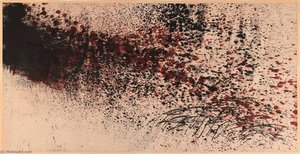
Logged Mountains (1943) od Morris Graves

Logged Mountains

1943 · Smithsonian American Art Museum, Washington, D.C.

The Logged Mountains painting by Morris Graves is a thought-provoking artwork that showcases the artist's skill in combining natural elements with artistic expression. Created in 1943, this oil on canvas painting measures 66 x 92 cm and is currently housed at the Smithsonian American Art Museum in the United States. Artist Background Morris Graves was an American artist known for his delicate and contemplative drawings that capture the essence of…

Obrazy umelca Morris Graves, usporiadané od 11 do 30

Múzeá, ktoré uchovávajú originály umelca Morris Graves

3 múzeá, v ktorých sa nachádza najviac obrazov z tejto stránky.

Múzeá Mesto Diela umelca Morris Graves Obrazy z tohto zoznamu
Art Museum, SeattleArt Museum Seattle 6 Crow, Surf and Moon, Bird in the Night, Sea, Fish and Constellation
The Phillips Collection, Washington, D.C.The Phillips Collection Washington, D.C. 3 Surf and Bird, Young Gander Ready for Flight, August Still Life
Smithsonian American Art Museum, Washington, D.C.Smithsonian American Art Museum Washington, D.C. 1 Logged Mountains

Morris Graves, jeden ikonický obraz na každé desaťročie

Diela podľa dekád

Vyberte si dekádu a pozrite si originál, ktorý ju definuje.

Obrazy umelca Morris Graves: odpovede galérie

Ktorý obraz od Morris Graves je najznámejší zo všetkých?Odhaľte odpoveď

Bird Singing in the Moonlight (1938). Nasledujú Crow, Surf and Moon (1943) a Logged Mountains (1943).

Koľko rokov mal/a Morris Graves pri dokončeni diela Bird Singing in the Moonlight?Odhaľte odpoveď

28 rokov: Bird Singing in the Moonlight vzniklo v roku 1938 a Morris Graves sa narodil/a v roku 1910.

Ktorých 10 najlepších obrazov má Morris Graves?Odhaľte odpoveď

Bird Singing in the Moonlight, Crow, Surf and Moon, Logged Mountains, Surf and Bird, Snake and Moon, Wheelbarrow, Bird in the Night, Sea, Fish and Constellation, Bird in the Spirit a Nestling. Vyššie uvedené hodnotenie uvádza rok a múzeu pre každé z nich.

Koľko diel vytvoril/a Morris Graves?Odhaľte odpoveď

Náš katalóg obsahuje 32 diel od umelca Morris Graves z perioda od 1934 do 1988.

Kde visia najznámejšie originály umelca Morris Graves?Odhaľte odpoveď

Väčšinou v Art Museum (Seattle), The Phillips Collection (Washington, D.C.) a Smithsonian American Art Museum (Washington, D.C.). Tabuľka múzeí vyššie ich všetky uvádza.

Kedy vytvoril/a Morris Graves svoje najznámejšie obrazy?Odhaľte odpoveď

V období 1940s: 11 z 30 diel na tejto stránke bolo vytvorených vtedy, pričom Crow, Surf and Moon z nich.

Aké sú najskoršie a najneskoršie známe diela umelca Morris Graves?Odhaľte odpoveď

Na tejto stránke je najstaršie dielo z Wheelbarrow (1934) a najnovšie z Summer Still Life (1988).

Aké originály umelca Morris Graves má v zbierkach Art Museum?Odhaľte odpoveď

Crow, Surf and Moon, Bird in the Night a Sea, Fish and Constellation: múzeá Art Museum, Seattle uchovávajú 6 z diel na tejto stránke.

Morris Graves: umelec

The Visionary of the Pacific Northwest

In the mist-shrouded landscapes where the rugged beauty of Oregon meets the contemplative stillness of the Puget Sound, the spirit of Morris Graves found its eternal home. Born in 1910, Graves was an artist who did not merely observe the world but sought to pierce through its physical veil to reveal the consciousness beneath. As a cornerstone of the Northwest School, his work emerged from a profound intimacy with nature—a landscape steeped in both wild resilience and a quiet, almost spiritual, grace. His journey was one of self-directed discovery, eschewing traditional academic rigor for a life lived in deep conversation with the elements: the flight of a bird, the delicate curve of a petal, and the shifting light of a coastal morning.

Eastern Echoes and the Mystic's Eye

The essence of Graves’s artistry was deeply intertwined with his fascination with Eastern aesthetics and Zen Buddhism. A formative voyage to Japan in the early 1930s left an indelible mark on his soul, instilling a reverence for simplicity, suggestion, and the beauty of the ephemeral. This influence manifested in a unique symbolic vocabulary where animals—most notably birds—served not as mere biological subjects but as metaphors for the human psyche and the fragility of existence. Through his mastery of texture and light, he developed a language that was both intimate and universal, characterized by:

  • Symbolic Motifs: The recurring use of birds, flowers, and chalices to represent spiritual vessels and the essence of life.
  • Atmospheric Depth: A technique that captures the ethereal, misty quality of the Northwest through delicate washes and shadows.
  • Philosophical Resonance: An integration of Eastern meditative principles into the very structure of his compositions.

His ability to blend these elements allowed him to create works like Folded Wings Memory the Moon Weeping, which haunt the viewer with their sense of isolation and transcendence.

A Legacy of Light and Shadow

Throughout his prolific career, Graves’s evolution was marked by a transition from delicate, contemplative drawings to more complex, abstract expressions. His breakthrough in 1942 at New York's Museum of Modern Art cemented his position as a leading figure of American Modernism, standing alongside contemporaries such as Mark Tobey. Even as he moved toward the abstractions of the machine age in later years, his work remained anchored in a deep-seated respect for quietude and the natural order. Pieces such as Hibernation and Logged Mountains stand as testaments to his ability to capture the tension between the organic world and the encroaching modern era. His legacy remains that of a true mystic, an artist who transformed the damp, grey atmosphere of the Pacific Northwest into a luminous window onto the infinite.