

1


Aktualizované november 2026 · zoradené podľa našej miery popularity (vyhľadávanie, návštevy a objednávky pre každou prácu) · 21 dielov umelca Michele Cascella v našom katalógu
Stručne povedané
Untitled (166) je obrazom od Michele Cascella, ktorý priťahuje najviac pohľadov. Potom sa pohľad presunie na Untitled (346) a Large plate (1923). Z 21 diel umelca Michele Cascella v našom katalógu je týchto 21 najznámejších; každá z nich je jedinečným originálom prezentovaným s jeho rokom vzniku, múzeom a dôvodom, prečo pretrváva.


 Untitled (125)
12
 Untitled (938)
13
 Untitled (446)
14
 Portofino
15
 House by the Sea
16
 Little Girl in Green, (1972)
17
 A House in Italy
18
 On the Naviglio Canal1929 · Gallerie d'Italia – Milano
19
 London1929 · Gallerie d'Italia – Milano
20
 Open window; View of Portofino; Portofino1956 · Gallerie d'Italia – Milano
21
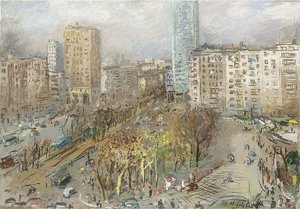
 Via San Calimero in Milan1966 · Gallerie d'Italia – Milano
Štyri témy, ktoré sa v týchto origináloch najčastejšie vracajú, každá s jej najvychybenejším príkladom.
2 múzeá, v ktorých sa nachádza najviac obrazov z tejto stránky.
| Múzeá | Mesto | Diela umelca Michele Cascella | Obrazy z tohto zoznamu |
|---|---|---|---|
 Gallerie d'Italia – Milano |
Milan | 4 | On the Naviglio Canal, London, Open window; View of Portofino; Portofino |
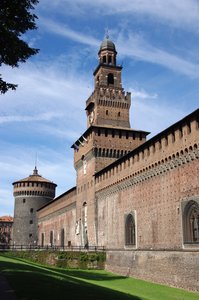 Sforza Castle |
Miláno | 3 | Large plate, Plate, Tile |
Vyberte si dekádu a pozrite si originál, ktorý ju definuje.
Untitled (166). Nasledujú Untitled (346) a Large plate (1923).
Untitled (166), Untitled (346), Large plate, Plate, Tile, Untitled (290), Untitled (857), Untitled (856), Untitled (270) a Untitled (973). Vyššie uvedené hodnotenie uvádza rok a múzeu pre každé z nich.
Náš katalóg obsahuje 21 diel od umelca Michele Cascella z perioda od 1923 do 1966.
Väčšinou v Gallerie d'Italia – Milano (Milan) a Sforza Castle (Miláno). Tabuľka múzeí vyššie ich všetky uvádza.
V období 1920s: 3 z 21 diel na tejto stránke bolo vytvorených vtedy, pričom Large plate z nich.
Na tejto stránke je najstaršie dielo z Large plate (1923) a najnovšie z Via San Calimero in Milan (1966).
Italian art (2) a Buildings (2), v rámci 21 diel na tejto stránke.
Contemporary realism, podľa originálov na tejto stránke.
On the Naviglio Canal, London a Open window; View of Portofino; Portofino: múzeá Gallerie d'Italia – Milano, Milan uchovávajú 4 z diel na tejto stránke.
To wander through the works of Michele Cascella is to embark on a sensory journey through the sun-drenched landscapes of Italy, where every brushstroke breathes with the warmth of the Adriatic coast. Born in 1892 in the seaside town of Ortona, Cascella was destined for a life steeped in color and creativity. His artistic soul was nurtured within a profound familial lineage, shaped primarily by the mentorship of his father, Basilio Cascella. This relationship was more than mere instruction; it was an immersion into a shared visual language that blended the boundaries between painting, ceramics, and lithography. Growing up in an environment where art was both a vocation and a way of life, Michele learned to observe the subtle nuances of light as it danced across the rural Abruzzo countryside, a theme that would become the heartbeat of his lifelong oeuvre.
The development of Cascella’s style was a masterful evolution of technique and medium. While he is most celebrated for his evocative oil paintings and delicate watercolors, his versatility allowed him to leave an indelible mark on various artistic disciplines. His early years were marked by a nomadic education, absorbing the diverse aesthetic atmospheres of Naples, Milan, Turin, Venice, London, and Palermo. This exposure to different European sensibilities infused his work with a cosmopolitan elegance, even as his subject matter remained deeply rooted in the rustic charm of his homeland. Whether he was working on a sprawling canvas or a fine lithographic print, Cascella possessed a unique ability to capture the essence of everyday life—the quiet dignity of rural landscapes and the vibrant spirit of the Italian people—with a keen eye for detail and an unmistakable sense of warmth.
Cascella’s career was defined by a consistent pursuit of excellence that earned him a prestigious place on the international stage. His talent was recognized by the most significant art institutions of his era, most notably through his repeated invitations to exhibit at the Venice Biennale from 1924 until 1942. These exhibitions served as a platform for him to showcase a style that blended traditional naturalism with a modern, almost lyrical, sensibility. His works do not merely depict scenes; they evoke emotions, inviting the viewer to feel the breeze of an Italian summer or the stillness of a forest at dusk.
The historical significance of his work is cemented by its presence in some of the world's most renowned collections. The enduring legacy of Michele Cascella can be traced through several key achievements:
As we reflect on the life of Michele Cascella, we see an artist who successfully bridged the gap between the intimate and the monumental. He took the humble elements of his surroundings—a simple village street, a tranquil castle landscape, or a blooming garden—and elevated them through a sophisticated use of color and light. His art remains a testament to the enduring power of the natural world and the profound beauty found in the quiet corners of our existence.


