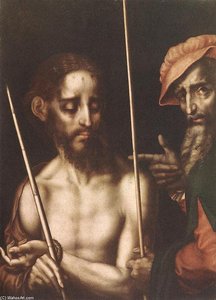
Portrét Luis De Morales

50 najznámejších obrazov od umelca Luis De Morales, každý jedinečný

Aktualizované november 2026 · zoradené podľa našej miery popularity (vyhľadávanie, návštevy a objednávky pre každú prácu) · 51 dielov umelca Luis De Morales v našom katalógu

Stručne povedané

Virgin and Child with the Infant St John the Baptist (1550) je obrazom umelca Luis De Morales, ktorý priťahuje najviac pohľadov; originál sa nachádza v múzeu Museo del Prado, Madrid. Potom sa pohľad presunie na The Crucifixion (1566) a The Annuncation (1565). Z 51 diel umelca Luis De Morales v našom katalógu je týchto 50 najznámejších; každá z nich je jedinečným originálom prezentovaným s jeho rokom vzniku, múzeom a dôvodom, prečo pretrváva.

1509 – 1586, Badajoz Spanish renaissance Najviac diel: Museo del Prado

Top 10 obrazov umelca Luis De Morales podľa výberu galérie

1
Virgin and Child with the Infant St John the Baptist (1550) od Luis De Morales

Virgin and Child with the Infant St John the Baptist

1550 · Oil On Canvas · Museo del Prado, Madrid

In this 1550 portrait, the Virgin Mary holds the infant Jesus in a close, physical embrace. The child is depicted nursing, a detail that grounds the religious scene in a moment of biological necessity and maternal intimacy. To the left and right of the central figures, two winged beings—angels or saints—occupy the periphery of the frame. These figures are positioned against a backdrop of dense trees, which provides a sense…

2
The Crucifixion (1566) od Luis De Morales

The Crucifixion

1566 · Oil On Panel · Museo del Prado, Madrid

The heavy silence of the scene is held within The Crucifixion, a profound work of religious art created by the Spanish painter Luis de Morales. Dating to 1566, this piece captures a moment of intense spiritual weight. The central focus remains fixed upon the Crucifixion of Jesus Christ, a subject that demands the viewer's immediate and solemn attention.

3
The Annuncation (1565) od Luis De Morales

The Annuncation

1565 · Oil On Panel · Museo del Prado, Madrid

The Annunciation by Luis de Morales captures a moment of divine stillness. Painted about 1565, the work presents a quiet encounter between the celestial and the earthly. The Archangel Gabriel and the Virgin Mary occupy a shared, intimate space, separated by a single white lily in a slender vase. A white dove descends through soft light, marking the presence of the Holy Spirit above the figures.

4
The Resurrection of Christ (1566) od Luis De Morales

The Resurrection of Christ

1566 · Oil · Museo del Prado, Madrid

A sudden, vertical force breaks the stillness of the tomb. Christ rises from the heavy stone sarcophagus, his body caught in a moment of divine momentum. The light is not merely a glow; it is a weightless, golden flood that carves the musculature of his torso out of the surrounding shadows. Behind him, a shroud of reddish-pink fabric billows like a sudden flame, tracing the path of his upward movement.…

5
The Birth of the Virgin (1562) od Luis De Morales

The Birth of the Virgin

1562 · Oil · Museo del Prado, Madrid

The air in the room feels heavy, thick with the quiet gravity of a life beginning. Within this shallow, intimate space, four women gather, their forms tightly grouped as if to shield the profound miracle unfolding before them. A woman reclines in the bed, her presence marked by the soft contours of her face and the weight of the linens surrounding her. Nearby, another figure holds a newborn infant, the…

6
The Virgin and Child with a Spindle (1566) od Luis De Morales

The Virgin and Child with a Spindle

1566 · Oil · Museo del Prado, Madrid

The composition is a vertical portrait set against a dark, undifferentiated background. In the center, the Virgin Mary holds the Christ Child. She wears a red gown beneath a heavy blue mantle, while a translucent veil rests upon her head. The skin of both figures appears pale and luminous against the deep shadows. The child holds a wooden spindle, its straight, thin lines cutting through the soft folds of the…

7
Saint John the Baptist (1566) od Luis De Morales

Saint John the Baptist

1566 · Oil On Panel · Museo del Prado, Madrid

The portrait presents a close-up, bust-length view of Saint John the Baptist, positioned slightly off-center. He gazes toward the left with an expression defined by weariness and contemplation. The composition utilizes a chiaroscuro technique, where a strong directional light source illuminates one side of the face, carving out the hollows of the eyes and the texture of the beard against deep, shadowy recesses. This interplay of light and dark creates…

8
Virgin and Child-Morales (1586) od Luis De Morales

Virgin and Child-Morales

1586 · Oil On Canvas · Machado de Castro National Museum, Coimbra

The Virgin gently cradles her son within a space defined by shadow and soft light. A newborn hand tucks through the folds of a red gown, searching for milk. This small gesture anchors the composition, pulling the viewer into a quiet, domestic moment of care. The faces of mother and child lean toward one another, their gazes interlocking with a tender, silent weight. Behind them, a pitch-dark background swallows the…

9
Ecce Homo (1565) od Luis De Morales

Ecce Homo

1565 · Oil On Canvas · Museo del Prado, Madrid

The shadows press closely against the figure, creating a void that seems to swallow everything but the man himself. In this vertical portrait, the upper torso and head of Jesus Christ emerge from a near-black background, caught in a heavy, dramatic chiaroscuro. A soft light descends from the upper left, catching the smooth, porcelain-like texture of his skin and casting gentle shadows across the musculature of his chest and arms.…

10
Pietà od Luis De Morales

Pietà

Oil On Panel · Louvre, Paríž

In the quiet, somber depths of Luis de Morales’s Pietà, one encounters more than just a religious scene; one enters a profound meditation on human suffering and divine grace. Executed between 1565 and 1570, this masterpiece serves as a cornerstone of the Spanish Renaissance, capturing the exact moment when the weight of mortality meets the infinite strength of maternal love. The painting depicts the Virgin Mary cradling the lifeless, broken…

Slávne obrazy umelca Luis De Morales, čísla 11 až 50

11Christ Justifying his Passion (1565) od Luis De MoralesChrist Justifying his Passion1565 · Museo del Prado 12Christ, Man of Sorrows (1566) od Luis De MoralesChrist, Man of Sorrows1566 · Museo del Prado 13Pietà (1567) od Luis De MoralesPietà1567 · Museo del Prado 14Saint Juan de Ribera (1566) od Luis De MoralesSaint Juan de Ribera1566 · Museo del Prado 15Ecce Homo (1547) od Luis De MoralesEcce Homo1547 · Staatliche Kunstsammlungen Dresden 16The Adoration of the Shepherds (1567) od Luis De MoralesThe Adoration of the Shepherds1567 · Museo del Prado 17Man of Sorrows (1560) od Luis De MoralesMan of Sorrows1560 · Minneapolis Institute of Art 18The Lamentation (1560) od Luis De MoralesThe Lamentation1560 · Metropolitné múzeum umenia 19The Purification of the Virgin or The Presentation in the Temple (1562) od Luis De MoralesThe Purification of the Virgin or The Presentation in the Temple1562 · Museo del Prado 20Pietà (1560) od Luis De MoralesPietà1560 · Kráľovská akadémia krásnych umení San Fernando 21Ecce Homo (1570) od Luis De MoralesEcce Homo1570 · Museu Nacional d'Art de Catalunya 22The Virgin and Child with the Infant Saint John the Baptist (1570) od Luis De MoralesThe Virgin and Child with the Infant Saint John the Baptist1570 · Museo del Prado 23The Virgin Dolorosa (1565) od Luis De MoralesThe Virgin Dolorosa1565 · Museo del Prado 24The Adoration of the Magi (1567) od Luis De MoralesThe Adoration of the Magi1567 · Museo del Prado 25Christ Carrying the Cross (1547) od Luis De MoralesChrist Carrying the Cross1547 · Bavarské štátne múzeá výtvarného umenia 26Christ Carrying the Cro (1546) od Luis De MoralesChrist Carrying the Cro1546 · Yale University Art Gallery 27Triptych of the Pietà, St John and St Mary Magdalene (1567) od Luis De MoralesTriptych of the Pietà, St John and St Mary Magdalene1567 · Museo del Prado 28Holy Family (1557) od Luis De MoralesHoly Family1557 · Hispanic Society Museum - Library 29Saint Jerome in the Wilderness (1570) od Luis De MoralesSaint Jerome in the Wilderness1570 · National Gallery of Ireland 30Ecce Homo (1565) od Luis De MoralesEcce Homo1565 · Fundación Banco Santander 31Christ before Pilate (1570) od Luis De MoralesChrist before Pilate1570 · Kráľovská akadémia krásnych umení San Fernando 32Christ Carrying the Cross (1566) od Luis De MoralesChrist Carrying the Cross1566 · Museo del Patriarca 33The Agony in the Garden (1545) od Luis De MoralesThe Agony in the Garden1545 · Museo del Prado 34Madonna and Child od Luis De MoralesMadonna and ChildBowes Museum 35The Virgin and Child (1567) od Luis De MoralesThe Virgin and Child1567 · The Ashmolean Museum of Art And Archaeology 36Virgin and Child (1520) od Luis De MoralesVirgin and Child1520 · Museu do Caramulo 37Virgin and Child with a Spindle (1567) od Luis De MoralesVirgin and Child with a Spindle1567 · Staatliche Museen zu Berlin 38Christ at the Column od Luis De MoralesChrist at the ColumnNárodné múzeum krásnych umení 39Virgin and Child od Luis De MoralesVirgin and ChildMuseum of Fine Arts 40Madonna and Child od Luis De MoralesMadonna and ChildCampion Hall 41Pietà 1724 od Luis De MoralesPietà 1724 42Christ at the Column od Luis De MoralesChrist at the ColumnKingston Lacy 43Triptych of Bishop Juan de Ribera od Luis De MoralesTriptych of Bishop Juan de RiberaMúzeum v Cádiz 44The Virgin and Child od Luis De MoralesThe Virgin and ChildNational Gallery 45Ecce Homo od Luis De MoralesEcce HomoHispanic Society Museum - Library 46Christ as the Man of Sorrows od Luis De MoralesChrist as the Man of Sorrows 47St Stephen od Luis De MoralesSt StephenMuseo del Prado 48Madonna with the Child (1570) od Luis De MoralesMadonna with the Child1570 · Museo del Prado 49Mater Dolorosa (1570) od Luis De MoralesMater Dolorosa1570 · Hermitáž 50Madonna with the Child (1570) od Luis De MoralesMadonna with the Child1570 · Hermitáž

Slávne obrazy umelca Luis De Morales podľa jednotlivých období

Motívy, ktoré zaujali Luis De Morales

Štyri témy, ktoré sa v týchto origináloch najčastejšie vracajú, každá s jej najvychybenejším príkladom.

Múzeá, ktoré uchovávajú originály umelca Luis De Morales

8 múzeá, v ktorých sa nachádza najviac obrazov z tejto stránky.

Múzeum Mesto Diela umelca Luis De Morales Obrazy z tohto zoznamu
Museo del Prado, MadridMuseo del Prado Madrid 21 Virgin and Child with the Infant St John the Baptist, The Crucifixion, The Annuncation
Kráľovská akadémia krásnych umení San Fernando, MadridKráľovská akadémia krásnych umení San Fernando Madrid 2 Pietà, Christ before Pilate
Hispanic Society Museum - Library, New YorkHispanic Society Museum - Library New York 2 Holy Family, Ecce Homo
Hermitáž, PetrohradHermitáž Petrohrad 2 Mater Dolorosa, Madonna with the Child
Machado de Castro National Museum, CoimbraMachado de Castro National Museum Coimbra 1 Virgin and Child-Morales
Louvre, ParížLouvre Paríž 1 Pietà
Staatliche Kunstsammlungen Dresden, DresnoStaatliche Kunstsammlungen Dresden Dresno 1 Ecce Homo
Minneapolis Institute of Art, MinneapolisMinneapolis Institute of Art Minneapolis 1 Man of Sorrows

Luis De Morales naprieč dekádami: jeden jedinečný originál pre každý

Diela podľa dekád

Vyberte si dekádu a pozrite si originál, ktorý ju definuje.

Obrazy umelca Luis De Morales: otázky pre galériu

Akým najznámejším dielom sa pýta Luis De Morales?Odhaľte odpoveď

Virgin and Child with the Infant St John the Baptist (1550), Museo del Prado, Madrid. Nasledujú The Crucifixion (1566) a The Annuncation (1565).

V akom veku vytvoril/a Luis De Morales dielo Virgin and Child with the Infant St John the Baptist?Odhaľte odpoveď

41 rokov: Virgin and Child with the Infant St John the Baptist vzniklo v roku 1550 a Luis De Morales sa narodil/a v roku 1509.

Ktorých desať obrazov Luis De Morales je najznámejších?Odhaľte odpoveď

Virgin and Child with the Infant St John the Baptist, The Crucifixion, The Annuncation, The Resurrection of Christ, The Birth of the Virgin, The Virgin and Child with a Spindle, Saint John the Baptist, Virgin and Child-Morales, Ecce Homo a Pietà. Vyššie uvedené hodnotenie uvádza rok a múzeu pre každé z nich.

Koľko je známych diel umelca Luis De Morales?Odhaľte odpoveď

Náš katalóg obsahuje 51 diel od umelca Luis De Morales z perioda od 1520 do 1586.

Kde možno vidieť najznámejšie originály od Luis De Morales?Odhaľte odpoveď

Väčšinou v Museo del Prado (Madrid), Kráľovská akadémia krásnych umení San Fernando (Madrid) a Hispanic Society Museum - Library (New York). Tabuľka múzeí vyššie ich všetky uvádza.

V akom období vytvoril/a Luis De Morales svoje najznámejšie obrazy?Odhaľte odpoveď

V období 1560s: 23 z 50 diel na tejto stránke bolo vytvorených vtedy, pričom The Crucifixion z nich.

Ktorý z najslávnejších obrazov autora Luis De Morales je najstarší a ktorý najnovší?Odhaľte odpoveď

Na tejto stránke je najstaršie dielo z Virgin and Child (1520) a najnovšie z Virgin and Child-Morales (1586).

Aké témy obľúbené Luis De Morales?Odhaľte odpoveď

Man (22), Woman (20) a Dark background (18), v rámci 50 diel na tejto stránke.

S akými materiálmi mal(a) Luis De Morales najčastejšie pracuje?Odhaľte odpoveď

Oil On Panel, pre 27 z 50 diel na tejto stránke.

Do ktorého smeru patrí tvorba umelca Luis De Morales?Odhaľte odpoveď

Spanish renaissance, podľa originálov na tejto stránke.

Aké originály od Luis De Morales môžem vidieť v Museo del Prado?Odhaľte odpoveď

Virgin and Child with the Infant St John the Baptist, The Crucifixion a The Annuncation: múzeá Museo del Prado, Madrid uchovávajú 21 z diel na tejto stránke.

Luis De Morales: portrét umelca

Luis de Morales: Božský maliar z Badajoz

Luis de Morales (okolo 1509 – 9. mája 1586), s láskou prezývaný „El Divino“, predstavuje jednu z najuctievanejších postáv španielskeho renesančného umenia. Bol to maliar, ktorého hlboká duchovnosť a ohromujúci realizmus fascinovali divákov počas celého jeho života a aj stáročia neskôr naďalej vzbudzujú obdiv. Narodený v Badajoz v regióne Extremadura, Moralesova umelecká cesta sa rozvíjala na pozadí rozmachajúcich sa humanistických ideálov a náboženského zapaľovania, čo ho formovalo do bezprecedentného majstra devócyjnej ikonografie a upevnilo jeho odkaz ako kľúčového umelca svojej éry.
  • Raný život a vplyvy: O Moralesových formujúcich rokoch sa vie len málo, okrem dokumentovaných záznamov naznačujcia, že sa okolo roku 1509 narodil v Badajoz. Jeho umelecké vzdelávanie pravdepodobne začalo pod vedením Hernanda Sturmia, flamandského maliara, ktorý si v Badajoz upevnil svoje miesto, a možno aj pod Dušanom Pedro de Campaña, významného umelca pôsobiaceho v Seville – miest, ktoré boli počas renesancie známe svojimi živými umeleckými tradíciami.
  • Lombardská škola a florentské echa: Moralesove rané diela nesú nezamiteľné znaky lombardskej školy Leonarda da Vinci, vyznačujúcej sa jemným sfumatom (rozmazané kontúry) a atmosférickou perspektívou. Súčasne absorboval vplyvy od Mikela Angela, ktorého monumentálne sochy mu vpieli majstrovské pochopenie anatómie a expresívneho gesta. Tieto formujúce skúsenosti hlboko ovplyvnili jeho umeleckú citlivosť.

Obdobie definované anatomickou presnosťou a duchovnou hĺbkou

Moralesova umelecká tvorba sa môže byť široko rozdelená do dvoch odlišných období, ktoré odrážajú evolúciu štylistických trendov a intelektuálnych prúdov. Prvá fáza, trvajúca približne od roku 1539 do roku 1560, svedčila o pokračujúcom zapojení do florentskej estetiky – najmä Mikelaangelovej anatomickej prísnosti – čo viedlo k vzniku obrazov preplnených hmatateľnými emóciami a dramatickým napätím. Práca ako La Virgen del Pajarito je príkladom tohto raného štýlu, ktorý ukazuje precízny detail a vyjadruje hlbokú duchovnú kontempláciu.
  • Druhý rozkvet: Po svojom manželstve s Leonor de Chaves a následnom presťahovaní sa do Alcántary zažil Morales pozoruhodnú umeleckú renesanciu. V tomto období vytvoril majstrovské diela, ktoré posunuli hranice renesančnej techniky – najmä v smere anatomickej presnosti – čerpajúc inšpiráciu z nemeckých a flamandských maliarov, ktorí presadzovali chiaroscuro (kontrast medzi svetlom a tieňom) a dôsledné pozorovanie prírody.
  • Významné úspechy: Medzi jeho najslávnejšie diela patria La Piedad (1560), uložená v katedrále v Badajoz, ktorá je dychberúcim zobrazením Márie žalujúcej smrť Ježiša – svedectvom Moralesovej bezkonkurencnej schopnosti vyjadriť smutnú emóciu; San Juan de Ribera (1564), nachádzajúca sa v múzeu Prado v Madride; a Ecce Homo, vystavená v Hispanic Society of America. Tieto diela stoja ako trvajúce symboly renesančnej pobožnosti a umeleckej vynikavosti.

Odkaz a uznanie

Vplyv Luisa de Moralesa presiahol daleko za hranice jeho vlastného života, čím sa stal pilierom španielskej renesančnej umeleckej scény a zabezpečil si svoje miesto medzi najväčšími maliarmi svojej generácie. Jeho neochvejná oddanosť náboženským témam – vyjadrená dychberúcim realizmom a preplnená hmatateľnými emóciami – hlboko rezonovala s diváckym publikom v celej Európe. Dnes sú jeho obrazy uložené v prestížnych inštitúciách po celom svete – vrátane múzea Prado v Madride a Kingston Lacy House v Dorset – čo potvrdzuje ich trvajúcu umeleckú hodnotu a historický význam. Moralesov odkaz naďalej inšpiruje umelcov aj vedcov a zabezpečuje, že „El Divino“ zostane majákom duchovného umenia pre budúce generácie.

Vybrané diela

  • La Virgen del Pajarito (Panienka s vtáčikom) (1546), uchovávaná v kostole San Agustín v Madride.
  • La Piedad (1560), uchovávaná v katedrále v Badajoz.
  • San Juan de Ribera (156
  • Ecce Homo, v Kingston Lacy House (National Trust), Dorset, Spojené kráľovstvo.
  • Virgen de la leche (Prudná Panienka), v múzeu Prado.
  • St. Jerome in the Wilderness (Svätý Jeroným v divočine), v Národnej galérii v Írsku, Dublin.