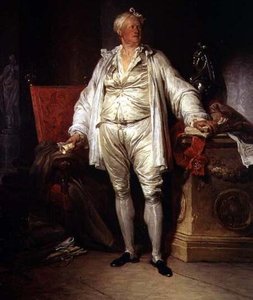
Portrét François-André Vincent

Obrazy umelca François-André Vincent: 64 najznámejších výtvarných diel prostretých pohľadom galérie

Aktualizované november 2026 · zoradené podľa našej miery popularity (vyhľadávanie, návštevy a objednávky pre každou prácu) · 65 dielov umelca François-André Vincent v našom katalógu

Stručne povedané

Z hľadiska galérie je najznámejším obrazom umelca François-André Vincent dielo Alcibiades being taught by Socrates (1777), ktorého originál visí v Národné múzeum v meste Stockholm. La Mélancolie a Saint John the Evangelist (1793) dopĺňajú trojicu, ktorú pozná každé oko. Z 65 diel umelca François-André Vincent v našom katalógu prezentuje galéria nižšie 64 najznámejších, z ktorých je každá originál s uvedeným rokom vzniku, múzeom a unikátnosťou.

1746 – 1816, Paríž Neoclassicism Najviac diel: Louvre

Top 10 obrazov umelca François-André Vincent v galérii

1
Alcibiades being taught by Socrates (1777) od François-André Vincent

Alcibiades being taught by Socrates

1777 · Oil On Canvas · Národné múzeum, Stockholm

A single finger points toward the heavens, cutting through the heavy shadows of an interior room. This gesture from the seated philosopher, Socrates, anchors the entire composition. He sits in a blue cloak, his body leaning forward with the quiet gravity of a man who deals in truths rather than steel. Opposite him, Alcibiades stands poised for action. The young man is encased in a metallic cuirass and an ornate…

2
La Mélancolie od François-André Vincent

La Mélancolie

Oil On Canvas

La Mélancolie is a painting by the French neoclassical artist François André Vincent. The work focuses on a solitary female figure positioned within a shadowy, overgrown landscape. This woman sits dejectedly upon a stone ledge, her head bowed and her hands clasped in a pose that conveys profound sadness. The subject matter centers on a woman in mourning or despair, appearing consumed by sorrow.

3
Saint John the Evangelist (1793) od François-André Vincent

Saint John the Evangelist

1793 · Oil On Canvas · Detroit Institute of Arts, Detroit

In this Neoclassical portrait by François André Vincent, titled Saint John the Evangelist, the viewer is presented with a close-up, three-quarter view of the subject. The composition focuses intently on the torso, head, and hands of the young man. By positioning the perspective slightly from below, Vincent emphasizes the saintly, upward-looking gaze of the figure. This angle directs our attention to an expression of spiritual rapture or divine inspiration, as…

4
Portrait de Pierre Adrien Pâris od François-André Vincent

Portrait de Pierre Adrien Pâris

Drawing

A man sits caught in a moment of quiet contemplation. Pierre Adrien Pâris, an architect of his era, gazes toward an unseen point beyond the frame. His presence is defined by the soft weight of a white shirt and the delicate ruffles of a collar that catch the light. A mustache traces his upper lip, adding a layer of maturity to a face rendered with precise, searching lines. The drawing…

5
Self-portrait with palette (1769) od François-André Vincent

Self-portrait with palette

1769 · Oil On Canvas

A young man emerges from a dark, indistinct void, framed by the soft curve of an oval. He wears a wide-brimmed hat, its dark felt topped with a single white plume that catches the light. A ruffled lace collar rests against his neck, its delicate folds rendered with a tactile, painterly touch. He holds the tools of his trade: a wooden palette and several brushes, his fingers poised with a…

6
Henry IV Meeting Wounded Sully (1784) od François-André Vincent

Henry IV Meeting Wounded Sully

1784 · Oil On Canvas · Musée national du château de Pau, Pau

In this 1784 oil on canvas, we find ourselves drawn into a crowded, emotionally charged military camp. The scene captures a profound human interaction: the meeting between Henry IV and the wounded Sully. There is a palpable sense of gravity in the way the figures are arranged, pulling our attention toward the central dialogue between the two men. The composition uses a dynamic, diagonal movement, particularly in the posture of…

7
Portrait of a Painter (1781) od François-André Vincent

Portrait of a Painter

1781 · Oil On Canvas · Musée des Beaux-Arts de Strasbourg, Štrasburg

A young man is positioned in a three-quarter view, shown from the waist up against a dark, indistinct background. He is oriented slightly off-center, creating a sense of natural poise. His gaze is directed toward the viewer, accompanied by a slight, enigmatic smile. He wears an ornate grey coat featuring a prominent white fur collar and a white cravat. The textures of the fabric and fur are rendered with light-catching…

8
President Mole Manhandled by Insurgents (1778) od François-André Vincent

President Mole Manhandled by Insurgents

1778 · Oil On Canvas · Detroit Institute of Arts, Detroit

In this oil on canvas, we find ourselves thrust into the chaotic streets of Paris during the Fronde of 1648. The scene captures the precise moment the statesman Mathieu Molé is confronted by an angry mob. There is a palpable sense of movement here, a sudden eruption of violence that disrupts the order of the urban setting. The composition relies on a pyramidal arrangement of figures, drawing our attention immediately…

9
The Greek Priest (1782) od François-André Vincent

The Greek Priest

1782 · Oil On Canvas · Bavarské štátne múzeá výtvarného umenia, Mních

is an oil on canvas portrait by the French neoclassical painter François André Vincent. Executed about 1782, the work emerged during a period when Vincent was establishing his reputation within the academic traditions of Paris. Born in Paris in 1746, the artist would become a central figure in the transition toward Neoclassicism, bridging the gap between the elegance of the Rococo and the disciplined rigor of the new era.

10
William Tell Overturning the Boat on Which Governor Gessler Was Crossing Lake Lucerne (1791) od François-André Vincent

William Tell Overturning the Boat on Which Governor Gessler Was Crossing Lake Lucerne

1791 · Oil On Canvas · Musée des Augustins, Toulouse

The oil on canvas work titled William Tell Overturning the Boat on Which Governor Gessler Was Crossing Lake Lucerne was executed by the French artist François André Vincent. Created about 1791, this large-scale historical painting captures a specific moment of conflict within a mountain landscape. The composition focuses on the physical struggle between the central figures as the vessel tilts into the water.

Obrazy umelca François-André Vincent, usporiadané od 11 do 64

11The Farewells of Henri IV and Gabrielle d'Estrées (1786) od François-André VincentThe Farewells of Henri IV and Gabrielle d'Estrées1786 · Musée national du château de Pau 12Portrait of Pierre-Jean-Baptiste Choudard (called Desforges) (1789) od François-André VincentPortrait of Pierre-Jean-Baptiste Choudard (called Desforges)1789 · Dallas Museum of Art 13The French Actor Joseph-Jean-Baptiste Albouy, stage name Dazincourt (1792) od François-André VincentThe French Actor Joseph-Jean-Baptiste Albouy, stage name Dazincourt1792 · Musée des Beaux-Arts de Marseille 14The ploughing lesson (1796) od François-André VincentThe ploughing lesson1796 · Staatliche Kunsthalle Karlsruhe 15Poetry (1811) od François-André VincentPoetry1811 · Bavarské štátne múzeá výtvarného umenia 16Astrology (1811) od François-André VincentAstrology1811 · Bavarské štátne múzeá výtvarného umenia 17Allegory of Freedom for Ransomed Barbary Captives, in Gratitude to Jerome Bonaparte (1806) od François-André VincentAllegory of Freedom for Ransomed Barbary Captives, in Gratitude to Jerome Bonaparte1806 · Gemäldegalerie Alte Meister im Schloss Wilhelmshöhe 18Portrait of a Man, François André Vincent, c. 1795 (1795) od François-André VincentPortrait of a Man, François André Vincent, c. 17951795 · Rijksmuseum 19Henry IV Meets Wounded Sully Following the Battle of Ivry, after Les Mémoires de Sully (1875) od François-André VincentHenry IV Meets Wounded Sully Following the Battle of Ivry, after Les Mémoires de Sully1875 · Musée de Picardie 20The Count de La Forest with his Wife and Daughter (1804) od François-André VincentThe Count de La Forest with his Wife and Daughter1804 · Staatliche Kunsthalle Karlsruhe 21Portrait of Mademoiselle Duplant (1793) od François-André VincentPortrait of Mademoiselle Duplant1793 · Calouste Gulbenkian Foundation 22Portrait de Marie de Broutin, baronne de Chalvet Souville od François-André VincentPortrait de Marie de Broutin, baronne de Chalvet SouvilleLouvre 23LA BATAILLE DES PYRAMIDES od François-André VincentLA BATAILLE DES PYRAMIDESLouvre 24Portrait of a Man (1774) od François-André VincentPortrait of a Man1774 25Gentleman in his Study od François-André VincentGentleman in his StudyDetroit Institute of Arts 26Zeuxis Choosing his Models for the Image of Helen from among the Girls of Croton (1789) od François-André VincentZeuxis Choosing his Models for the Image of Helen from among the Girls of Croton1789 · Cantor Arts Center na Stanford University 27Head of Cicero, in profile, from an antique bust (1810) od François-André VincentHead of Cicero, in profile, from an antique bust1810 28Gabrielle d'Estrées Fainting in the Presence of Threatening Henry IV and Sully od François-André VincentGabrielle d'Estrées Fainting in the Presence of Threatening Henry IV and Sully 29Pietà with Saint Francis and Saint Mary Magdalene or The Dead Christ od François-André VincentPietà with Saint Francis and Saint Mary Magdalene or The Dead Christ 30Henry IV and Sully at Fontainebleau od François-André VincentHenry IV and Sully at Fontainebleau 31PORTRAIT DIT DE MONSIEUR HORTUS od François-André VincentPORTRAIT DIT DE MONSIEUR HORTUS 32Portrait of Pierre Rousseau od François-André VincentPortrait of Pierre Rousseau 33FRANCOIS GUILLAUME ANDRIEUX (1759 1833) od François-André VincentFRANCOIS GUILLAUME ANDRIEUX (1759 1833) 34Henri IV à Lieusaint chez le meunier Michau od François-André VincentHenri IV à Lieusaint chez le meunier Michau 35David vainqueur de Goliath od François-André VincentDavid vainqueur de Goliath 36FRANCOIS BERNARD BOYER FONFREDE, ET SA FAMILLE od François-André VincentFRANCOIS BERNARD BOYER FONFREDE, ET SA FAMILLE 37Portrait de femme Portrait de Madame Houel od François-André VincentPortrait de femme Portrait de Madame Houel 38HENRI IV QUITTE GABRIELLE D'ESTREES od François-André VincentHENRI IV QUITTE GABRIELLE D'ESTREES 39Henri IV et Sully à Fontainebleau od François-André VincentHenri IV et Sully à Fontainebleau 40Henri IV rencontrant Sully blessé od François-André VincentHenri IV rencontrant Sully blessé 41Buste de vieillard od François-André VincentBuste de vieillard 42Guillaume Tell renversant la barque sur laquelle le gouverneur Gessler traversait le lac de Lucerne od François-André VincentGuillaume Tell renversant la barque sur laquelle le gouverneur Gessler traversait le lac de Lucerne 43ANTOINE VINCENT ARNAULT, SECRETAIRE PERPETUEL DE L'ACADEMIE FRANCAISE (1766 1834) od François-André VincentANTOINE VINCENT ARNAULT, SECRETAIRE PERPETUEL DE L'ACADEMIE FRANCAISE (1766 1834)Opera House 44L'ENLEVEMENT D'ORYTHIE od François-André VincentL'ENLEVEMENT D'ORYTHIE 45Gabrielle d'Estrées évanouie en présence d'Henri IV menaçant et de Sully od François-André VincentGabrielle d'Estrées évanouie en présence d'Henri IV menaçant et de Sully 46Henri IV rencontrant Sully blessé à la suite de la bataille d'Ivry od François-André VincentHenri IV rencontrant Sully blessé à la suite de la bataille d'Ivry 47HENRI IV FAISANT ENTRER DES VIVRES DANS PARIS od François-André VincentHENRI IV FAISANT ENTRER DES VIVRES DANS PARISLouvre 48L'ASSOMPTION DE LA VIERGE od François-André VincentL'ASSOMPTION DE LA VIERGELouvre 49PORTRAIT DE TROIS HOMMES (l'artiste, l'architecte Rousseau et un inconnu) od François-André VincentPORTRAIT DE TROIS HOMMES (l'artiste, l'architecte Rousseau et un inconnu)Louvre 50MADAME BOYER FONFREDE ET SON FILS HENRI od François-André VincentMADAME BOYER FONFREDE ET SON FILS HENRILouvre 51The death of Cato od François-André VincentThe death of CatoMusée Fabre 52Portrait of Monsieur Bergeret de Grancourt od François-André VincentPortrait of Monsieur Bergeret de GrancourtMusée des Beaux-Arts et d'Archéologie 53Portrait of François-André Vincent od François-André VincentPortrait of François-André Vincent 54Portrait du peintre Jean Pierre Houel od François-André VincentPortrait du peintre Jean Pierre Houel 55Scène de forge. Esquisse od François-André VincentScène de forge. Esquisse 56Vieillard lisant od François-André VincentVieillard lisant 57Germanicus Calms Sedition in his Camp (1768) od François-André VincentGermanicus Calms Sedition in his Camp1768 58Alcibiades Receiving the Lessons of Socrates (1777) od François-André VincentAlcibiades Receiving the Lessons of Socrates1777 · Musée Fabre 59La leçon de labourage od François-André VincentLa leçon de labourageMusée des Beaux-Arts de Bordeaux 60Arria and Paetus (1784) od François-André VincentArria and Paetus1784 · Saint Louis Art Museum 61President Molé Confronted by Insurgents (1779) od François-André VincentPresident Molé Confronted by Insurgents1779 · Palais Bourbon 62Democritus among the Abderitans od François-André VincentDemocritus among the AbderitansLos Angeles County Museum of Art 63ZEUXIS CHOISISSANT POUR MODELES LES PLUS BELLES FILLES DE CROTONE od François-André VincentZEUXIS CHOISISSANT POUR MODELES LES PLUS BELLES FILLES DE CROTONELouvre 64Belisarius (1776) od François-André VincentBelisarius1776 · Musée Fabre

Motívy, ktoré zaujali François-André Vincent

Štyri témy, ktoré sa v týchto origináloch najčastejšie vracajú, každá s jej najvychybenejším príkladom.

Múzeá, ktoré uchovávajú originály umelca François-André Vincent

8 múzeá, v ktorých sa nachádza najviac obrazov z tejto stránky.

Múzeá Mesto Diela umelca François-André Vincent Obrazy z tohto zoznamu
Louvre, ParížLouvre Paríž 7 Portrait de Marie de Broutin, baronne de Chalvet Souville, LA BATAILLE DES PYRAMIDES, HENRI IV FAISANT ENTRER DES VIVRES DANS PARIS
Detroit Institute of Arts, DetroitDetroit Institute of Arts Detroit 3 Saint John the Evangelist, President Mole Manhandled by Insurgents, Gentleman in his Study
Bavarské štátne múzeá výtvarného umenia, MníchBavarské štátne múzeá výtvarného umenia Mních 3 The Greek Priest, Poetry, Astrology
Musée Fabre, MontpellierMusée Fabre Montpellier 3 The death of Cato, Alcibiades Receiving the Lessons of Socrates, Belisarius
Musée national du château de Pau, PauMusée national du château de Pau Pau 2 Henry IV Meeting Wounded Sully, The Farewells of Henri IV and Gabrielle d'Estrées
Staatliche Kunsthalle Karlsruhe, KarlsruheStaatliche Kunsthalle Karlsruhe Karlsruhe 2 The ploughing lesson, The Count de La Forest with his Wife and Daughter
Národné múzeum, StockholmNárodné múzeum Stockholm 1 Alcibiades being taught by Socrates
Musée des Beaux-Arts de Strasbourg, ŠtrasburgMusée des Beaux-Arts de Strasbourg Štrasburg 1 Portrait of a Painter

François-André Vincent, jeden ikonický obraz na každé desaťročie

Diela podľa dekád

Vyberte si dekádu a pozrite si originál, ktorý ju definuje.

Obrazy umelca François-André Vincent: odpovede galérie

Ktorý obraz od François-André Vincent je najznámejší zo všetkých?Odhaľte odpoveď

Alcibiades being taught by Socrates (1777), Národné múzeum, Stockholm. Nasledujú La Mélancolie a Saint John the Evangelist (1793).

Koľko rokov mal/a François-André Vincent pri dokončeni diela Alcibiades being taught by Socrates?Odhaľte odpoveď

31 rokov: Alcibiades being taught by Socrates vzniklo v roku 1777 a François-André Vincent sa narodil/a v roku 1746.

Ktorých 10 najlepších obrazov má François-André Vincent?Odhaľte odpoveď

Alcibiades being taught by Socrates, La Mélancolie, Saint John the Evangelist, Portrait de Pierre Adrien Pâris, Self-portrait with palette, Henry IV Meeting Wounded Sully, Portrait of a Painter, President Mole Manhandled by Insurgents, The Greek Priest a William Tell Overturning the Boat on Which Governor Gessler Was Crossing Lake Lucerne. Vyššie uvedené hodnotenie uvádza rok a múzeu pre každé z nich.

Koľko diel vytvoril/a François-André Vincent?Odhaľte odpoveď

Náš katalóg obsahuje 65 diel od umelca François-André Vincent z perioda od 1768 do 1811.

Kde visia najznámejšie originály umelca François-André Vincent?Odhaľte odpoveď

Väčšinou v Louvre (Paríž), Detroit Institute of Arts (Detroit) a Bavarské štátne múzeá výtvarného umenia (Mních). Tabuľka múzeí vyššie ich všetky uvádza.

Kedy vytvoril/a François-André Vincent svoje najznámejšie obrazy?Odhaľte odpoveď

V období 1780s: 7 z 64 diel na tejto stránke bolo vytvorených vtedy, pričom Henry IV Meeting Wounded Sully z nich.

Aké sú najskoršie a najneskoršie známe diela umelca François-André Vincent?Odhaľte odpoveď

Na tejto stránke je najstaršie dielo z Germanicus Calms Sedition in his Camp (1768) a najnovšie z Poetry (1811).

K akým témamam sa François-André Vincent najčastejšie vracia?Odhaľte odpoveď

Man (15), Portraiture (5) a Woman (4), v rámci 64 diel na tejto stránke.

V akom médiu tvoril/a François-André Vincent najčastejšie?Odhaľte odpoveď

Oil On Canvas, pre 26 z 64 diel na tejto stránke.

S ktorým smerom je spojený/á umenec François-André Vincent?Odhaľte odpoveď

Neoclassicism, podľa originálov na tejto stránke.

Aké originály umelca François-André Vincent má v zbierkach Louvre?Odhaľte odpoveď

Portrait de Marie de Broutin, baronne de Chalvet Souville, LA BATAILLE DES PYRAMIDES a HENRI IV FAISANT ENTRER DES VIVRES DANS PARIS: múzeá Louvre, Paríž uchovávajú 7 z diel na tejto stránke.

François-André Vincent: umelec

Neoklasicistická vízia François-Andrého Vincenta

V živobudnom a búrlivom prostredí Francúzska konca osiemnástého storočia dokázalo len málo umelcov zachytiť prechod od aristokratickej elegancie k revolučnej vznešenejšosti tak majstrovsky ako François-André Vincent. Narodený v Paríži v roku 1746 do línie umeleckej význačnosti – jeho otec, François-Elie Vincent, bol uznávaným miniatúristom – bol Vincent osudom určený na život definovaný štetcom a plátnom. Jeho rané vzdelávanie pod ctiteľným Joseph-Marieom Vienom mu poskytlo prísne základy v akademickej tradícii, no práve jeho vrodená schopnosť premostiť priepast medzi rafinovanou gráciou rokoka a rodiacou sa disciplínou neoklasicizmu by nakoniec zabezpečila jeho miesto v umeleckých dejinách.

Vincentova umelecká duša bola hlboko formovaná jeho transformatívnou cestou do Ríma. Po získaní prestížnej Prix de Rome za svoje pôsobivé dielo Germanicus Calms Sedition získal nepredchádzajúci prístup k nadčasovým pokladom klasickej antiky. Žijúc a pracujúc v historickom Palazzo Mancini, Vincent sa ponorel do štúdia Rafaela a sochárskej presnosti starých majstrov. Toto obdobie nebolo len akademickou cvičnosťou, ale duchovným prebudením; umožnilo mu preliaty do svojich kompozícií pocit monumentálnej dôstojnosti a harmonického vyváženosti, čo sa stalo jeho vlastným znakom. Hoci čerpal hlbokú inšpiráciu z klasickej minulosti, zostával v plnom povedomí o živom svete okolo seba, pričom často spájal historickú veľkoleposť s jemnými nuansami súčasného života.

Majster portrétnej maľby a historického naratívu

Šírka Vincentovho diela je dôkazom jeho všestrannosti ako rozprávača. Bol rovnako schopný zachytiť intímnu psychologickú hĺbku jednotlivca, ako aj vykresliť šíry chaos historického konfliktu. V jeho portrétnej tvorbe možno nájsť pozoruhodnú schopnosť vyjadriť charakter prostredníctvom hladkých ťahov štetcom a jemných tónových gradácií. Jeho portréty súčasníkov, vrátane legendárneho Jean-Honorého Fragonarda, odrážajú určitý dynamizmus a eleganciu, ktoré naznačujú hlboké spojenie so stylistickou plynulosťou jeho éry. Tieto práce slúžia ako okná do sociálnej tkaniny predrevolučného Francúzska, zachytujúc vyrovnanosť a prítomnosť najvýznamnejších postáv tej doby.

Avšak práve v oblasti historickej maľby Vincent skutočne potvrdil svoju nadvládu nad neoklasicistickým jazykom. Jeho schopnosť preložiť komplexné historické príbehy do vizuálne pútavých scén mu umožnila participovať na najvýznamnejších dialógoch svojho času. Striktný príklad nájdeme v diele La Bataille des Pyramides, pôvabnom olej na plátne, ktoré oslavuje Napoleonovo rozhodujúce víťazstvo v roku 1798. V tomto díle sa Vincent vzdáva statickej kompozície a namiesto toho využíva voľnejšie ťahy štetcom a zemité tóny, aby vyvolal prach, pohyb a atmosférické napätie bojoviska, ktoré je zasadené do pozadia starovekých egyptských monumentov. Táto schopnosť skombinovať epický rozmer histórie s takmer zmyslovým pocitom atmosféry ho odlišuje od jeho prísnejších súčasníkov.

Odkaz a historický význam

Počas celej svojej kariéry zohral Vincent unikátnu úlohu v hierarchii francúzskeho umenia. Často vnímaný ako sofistikovaná rivalka Jacquesa-Louisa Davida, ponúkal štylistickú alternatívu, ktorá bola možno menej dogmatická a viac naladená na jemnú hru svetla a života. Zatiaľ čo David smeroval k prísnejšiemu, strohejšiemu neoklasicizmu, Vincent si udržal spojenie s gráciou a plynulosťou, ktorú odzdedil od svojich predchádzajúcich majstrov, čím vytvoril most medzi starým svetom a novým. Jeho príspevky k institucionalizácii umenia boli rovnako významné, keďže vystupoval ako zakladateľská postava Académie des Beaux-Arts, pričom pomáhal formovať pedagogické štandardy pre generácie francúzskych maliarov.

Trvalý odkaz François-Andrého Vincenta spočíva v jeho schopnosti harmonizovať protiklady: antiku a modernosť, monumentálnosť a intimitu, disciplínu a expresivitu. Jeho práca zostáva dôležitým referenčným bodom pre pochopenie vývoja francúzskeho umenia počas jednej z jeho najtransformatívnejších ére. Prostredníctvom svojej dôslednej techniky a hlbokého historického vhľadu Vincent len neфиксиoval históriu; on do nej vdechoval život, čím zabezpečil, že duch neoklasickej éry bude rezonovať dlho po tom, čo revolúcia prešla.