The Visionary Eye of Nelly: Capturing the Soul of Greece
Elli Sougioultzoglou-Seraidari, known to the world by her evocative professional moniker Nelly, was far more than a mere documentarian of landscapes; she was a poet of light and shadow who sculpted the visual identity of a nation. Born in Adana, Turkey, in 1899, her early life was shaped by the rich cultural tapestries of the era, providing her with a unique perspective that bridged the gap between Eastern sensibilities and Western artistic traditions. As she matured, her lens became the primary instrument through which the grandeur of ancient Greece was rediscovered and reimagined for a modern global audience. Her work does not simply record history; it breathes life into the silent stones of antiquity, imbuing them with a timeless, almost mythical vitality.
The artistic evolution of Nelly was deeply rooted in the aesthetic movements of her time, drawing subtle yet profound inspiration from the masters of Impressionism. While her medium was photography, her approach mirrored the emotive power found in the works of Claude Monet and Eugène Delacroix. She possessed an uncanny ability to manipulate light, using dramatic contrasts and soft, atmospheric textures to evoke a sense of nostalgia and reverence. This mastery allowed her to transcend the boundaries of traditional landscape photography, moving into a realm where the physical geography of Greece—its rugged cliffs, sun-drenched temples, and azure seas—became a stage for a deeper, spiritual narrative.
A Symphony of Stone and Sea
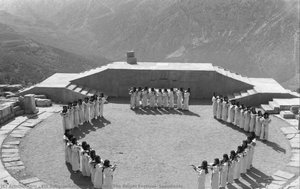
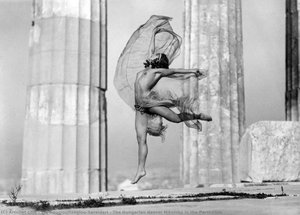
The hallmark of Nelly’s oeuvre lies in her breathtaking compositions that juxtapose the enduring strength of Hellenic architecture against the ephemeral beauty of the natural world. Her most celebrated works often feature the majestic temples of the Greek landscape, captured with a precision that highlights their classical elegance while simultaneously integrating them into the wild, untamed environment. Through her lens, a temple is not an isolated relic of the past but a living participant in the eternal dialogue between earth and sky. This technique created a sense of monumental scale, making the viewer feel both the weight of history and the vastness of the Mediterranean spirit.
Beyond the grand architectural vistas, Nelly’s versatility allowed her to explore the intimate nuances of Greek life and culture. Her portfolio is remarkably diverse, ranging from the solemnity of religious portraiture to the vibrant energy of rural traditions:
- Classical Sculpture: Her exquisite black and white studies, such as the Head of a female Lapith from the temple of Zeus at Olympia, utilize dramatic lighting to emphasize the Hellenistic beauty and sculptural depth of ancient artifacts.
- Humanity and Piety: In works like Portrait of a country, she captured the profound solemnity of Greek life, using sepia tones and grainy textures to portray subjects, such as nuns, with an air of timeless devotion.
- Documentary Realism: Her ability to capture the pulse of daily existence is evident in pieces like Fair, where she documented the bustling interactions of rural markets, preserving the nostalgic essence of a disappearing way of life.
Legacy and Historical Significance
The historical significance of Elli Sougioultzoglou-Seraidari cannot be overstated. During a period when Greece was seeking to define its place in the modern world, her imagery provided a powerful tool for cultural diplomacy and tourism. Her photographs became the definitive visual ambassadors of the Greek landscape, shaping how the international community perceived the beauty and heritage of the Hellenic world. By blending the precision of documentary photography with the soul of fine art, she created an enduring archive that serves as both a historical record and a work of high art.
As we look back on her life, which concluded in Athens in 1998, we see an artist who successfully bridged the gap between the ancient and the modern. Her legacy lives on in museums and collections worldwide, reminding us that photography, at its best, is not just about seeing, but about feeling the heartbeat of history. Through her eyes, the stones of Greece were never truly silent; they were waiting to be told their own story.