Portrét Edward Bird

54 najznámejších obrazov od Edward Bird, výber z galérie

Aktualizované november 2026 · zoradené podľa našej miery popularity (vyhľadávanie, návštevy a objednávky pre každou prácu) · 54 dielov umelca Edward Bird v našom katalógu

Stručne povedané

Z všetkých originálov, ktoré Edward Bird zanechal, je najznámejší The Scavengers (1800), ktorý sa nachádza v zbierkach Musée Cognacq-Jay v meste Paríž. Hneď za ním nasledujú Village Choristers Rehearsing an Anthem for Sunday (1810) a Mr Ricketts' Return From Shooting. Náš katalóg obsahuje 54 diel od Edward Bird; galéria si zachovala tých 54, ktoré obdivuje celý svet, pričom každý z nich je prezentovaný spolu s jeho dátumom, múzeou a príbehom.

1772 – 1819, Wolverhampton Najviac diel: Sunnycroft

Top 10 obrazov umelca Edward Bird: výber galérie

1
The Scavengers (1800) od Edward Bird

The Scavengers

1800 · Oil On Canvas · Musée Cognacq-Jay, Paríž

Two small figures occupy the center of a shadowed world. They are children, caught in a quiet act of discovery amidst the heavy, dark foliage of a large tree. A strong light descends from the upper left, carving their pale faces out of the gloom and catching the light-colored fabric of a girl's apron. The scene is a study in contrast, where the soft skin of youth meets the rough,…

2
Village Choristers Rehearsing an Anthem for Sunday (1810) od Edward Bird

Village Choristers Rehearsing an Anthem for Sunday

1810 · Oil On Canvas · Royal Collection, Londýn

The scene unfolds within a crowded, dimly lit room where a group of villagers has assembled for a musical rehearsal. The composition is dense, with figures arranged in a semi-circle around a central wooden table. To the left, seated musicians anchor the group, while standing figures occupy the right side of the frame. Light enters from a window on the far left, casting directional beams that illuminate faces and hands…

3
Mr Ricketts' Return From Shooting od Edward Bird

Mr Ricketts' Return From Shooting

Oil

The room is heavy with the scent of roasted meat and the warmth of a low fire. At the head of the table, a man sits in a green coat, his yellow waistcoat catching the light as he turns his gaze toward the viewer. He has returned from the field, his presence anchoring the domestic scene. Beside him, a woman in a blue dress looks upward, her posture a silent…

4
The Reading Of The Will Concluded od Edward Bird

The Reading Of The Will Concluded

Oil On Panel

The air in the room feels heavy, thick with the unspoken expectations of those gathered. A man stands at the center of the composition, his posture firm as he holds a document that holds the power to shift fortunes. He reads aloud, his voice cutting through the stillness of the drawing room. Around him, the figures are frozen in a state of intense observation. Some sit in chairs, their bodies…

5
Proclaiming Joash King od Edward Bird

Proclaiming Joash King

Oil

Proclaiming Joash King is an oil painting by the English artist Edward Bird. Created about 1815, the work depicts a specific narrative from the Old Testament of the Bible. The scene focuses on the anointing of the young Joash as the king of Judah. This historical and religious subject matter reflects the artist's transition toward large-scale historical and religious themes during this period of his career.

6
Princess Caraboo of Javasu , (1817) od Edward Bird

Princess Caraboo of Javasu ,

1817 · Oil

Edward Bird painted Princess Caraboo of Javasu , in 1817. The portrait presents Mary Baker in exotic attire, presenting her as the fictional Princess Caraboo of Javasu. This identity was a fabrication used by Baker, an English impostor, to claim royal lineage from a non-existent island in the Indian Ocean.

Výber umelcov Edward Bird pokračuje, od 11 do 54

Slávne obrazy umelca Edward Bird podľa jednotlivých období

Motívy, ktoré zaujali Edward Bird

Štyri témy, ktoré sa v týchto origináloch najčastejšie vracajú, každá s jej najvychybenejším príkladom.

Múzeá, ktoré uchovávajú originály umelca Edward Bird

4 múzeá, v ktorých sa nachádza najviac obrazov z tejto stránky.

Múzeá Mesto Diela umelca Edward Bird Obrazy z tohto zoznamu
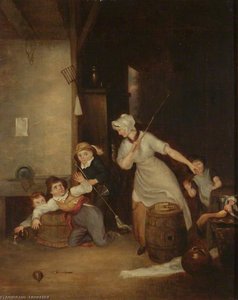
Sunnycroft, WellingtonSunnycroft Wellington 2 A Dame Scolding Naughty Children, The Toy Prisoner Being Shot In The School Room
Musée Cognacq-Jay, ParížMusée Cognacq-Jay Paríž 1 The Scavengers
Royal Collection, LondýnRoyal Collection Londýn 1 Village Choristers Rehearsing an Anthem for Sunday
Anglesey AbbeyAnglesey Abbey 1 The Life Guards In A Guardroom

Edward Bird rok po roku: originály, ktoré definujú každú éru

Od 1800 do 1817, Edward Bird tvoril po dobu 18 rokov: výber sleduje túto dlhú kariéru rok po roku prostredníctvom jeho najlepších originálnych diel.

Diela podľa roku

Vyberte si rok a pozrite si originály.

Otázky zberateľov o obrazoch od Edward Bird

Ktorým dielom je Edward Bird najznámejší/najznámejšia?Odhaľte odpoveď

The Scavengers (1800), Musée Cognacq-Jay, Paríž. Nasledujú Village Choristers Rehearsing an Anthem for Sunday (1810) a Mr Ricketts' Return From Shooting.

V akom veku bol/a Edward Bird, keď vzniklo dielo The Scavengers?Odhaľte odpoveď

28 rokov: The Scavengers vzniklo v roku 1800 a Edward Bird sa narodil/a v roku 1772.

Ktorých desať najznámejších obrazov má Edward Bird?Odhaľte odpoveď

The Scavengers, Village Choristers Rehearsing an Anthem for Sunday, Mr Ricketts' Return From Shooting, The Reading Of The Will Concluded, Proclaiming Joash King, Princess Caraboo of Javasu ,, The Arrival of Louis XVIII at Calais, The Birth, The Duet a The Life Guards In A Guardroom. Vyššie uvedené hodnotenie uvádza rok a múzeu pre každé z nich.

Koľko obrazov zanechal umenec Edward Bird?Odhaľte odpoveď

Náš katalóg obsahuje 54 diel od umelca Edward Bird z perioda od 1800 do 1817.

V ktorých múzeách visia majstrovské diela umelca Edward Bird?Odhaľte odpoveď

Väčšinou v Sunnycroft (Wellington), Musée Cognacq-Jay (Paríž) a Royal Collection (Londýn). Tabuľka múzeí vyššie ich všetky uvádza.

Aké sú prvé a posledné známe originály od Edward Bird?Odhaľte odpoveď

Na tejto stránke je najstaršie dielo z The Scavengers (1800) a najnovšie z Princess Caraboo of Javasu , (1817).

Aké témy si Edward Bird najčastejšie vyberal/a?Odhaľte odpoveď

Children (5), Man (3) a Royalty (3), v rámci 54 diel na tejto stránke.

Ktorú techniku používal(a) Edward Bird najčastejšie?Odhaľte odpoveď

Oil, pre 3 z 54 diel na tejto stránke.

Aké diela umelca Edward Bird sa nachádzajú v múzeu Sunnycroft?Odhaľte odpoveď

A Dame Scolding Naughty Children a The Toy Prisoner Being Shot In The School Room: múzeá Sunnycroft, Wellington uchovávajú 2 z diel na tejto stránke.

Edward Bird: život a dielo

Edward Bird (1772–1819): A Life Rooted in Craft

  • Early Years and Apprenticeship
  • The Bristol School and Artistic Flourishing
  • Recognition in London and a Shift to Historical Themes
  • Later Years, Legacy, and Artistic Style

Early Years and Apprenticeship

Edward Bird was born in Wolverhampton, Staffordshire, England, on April 12th, 1772. His father, a carpenter, instilled in him an early appreciation for craftsmanship—a skill that would profoundly shape his artistic trajectory. Unlike many artists of his time who pursued formal training, Bird’s education stemmed from practical experience gained as an apprentice to a japanning artist. This occupation demanded meticulous attention to detail and a mastery of decorative techniques, equipping him with foundational skills that transcended mere aesthetic sensibility. The process of applying intricate designs onto tea trays—a painstaking endeavor requiring precision and artistic vision—became more than just a trade; it was the crucible where Bird’s innate talent began to coalesce into something truly remarkable. This grounding in craftsmanship would prove unexpectedly formative, informing his later work with an unwavering commitment to realism and textural richness.

The Bristol School and Artistic Flourishing

Seeking broader horizons beyond Wolverhampton, Bird relocated to Bristol in 1794—a burgeoning port city brimming with cultural dynamism. There, he married Martha Dodrell and embarked on a career as an independent artist, accepting commissions ranging from intimate portraiture to expansive illustrative works for books and grand decorative paintings adorning local churches. It was within the vibrant milieu of Bristol that Bird discovered his artistic kindred spirits—fellow artists who shared a fervent passion for experimentation and mutual encouragement. This wasn’t a rigidly structured academy but rather a dynamic network where ideas circulated freely, pushing the boundaries of artistic convention. Among these influential figures was George Cumberland, an art collector and connoisseur whose extensive library served as an invaluable source of inspiration. Cumberland's patronage opened doors to study masterpieces from the Old Masters—a formative experience that instilled in Bird’s aesthetic sensibilities a deep respect for tradition while simultaneously fostering a desire to forge new paths. Regular evening sketching sessions conducted amidst Bristol’s picturesque landscapes nurtured both technical prowess and a shared artistic vision. The Bristol School championed a naturalistic style, prioritizing fresh color palettes and an acute observation of everyday life—qualities that would become hallmarks of Bird’s oeuvre and profoundly influence artists like Francis Danby.

Recognition in London and a Shift to Historical Themes

A pivotal moment arrived in 1809 when Bird submitted his painting ‘Good News’ to the Royal Academy—a daring undertaking that immediately garnered critical acclaim and captivated the patronage of influential figures. The artwork's compelling narrative and masterful execution resonated deeply with both critics and collectors alike, establishing Bird’s reputation as a significant talent within the artistic landscape. This success brought royal recognition; His Majesty bestowed upon him the honor of appointment as historical painter to Princess Charlotte—a prestigious commission that underscored his growing stature in London society. Furthermore, he was elected Associate of the Royal Academy in 1812 and Full Member in 1815—affirming his position among Britain’s most celebrated artists. Recognizing the potential for greater artistic ambition, Bird transitioned towards history painting—a genre demanding both technical virtuosity and a profound understanding of dramatic storytelling. He undertook ambitious projects depicting pivotal battles and historical events—capturing their intensity and emotional weight with unparalleled skill. Works like ‘The Field of Chevy Chase’ and ‘The Day After the Battle’ showcased his burgeoning ability to convey the visceral experience of warfare, cementing his legacy as one of Britain's foremost history painters.

Later Years, Legacy, and Artistic Style

Despite achieving considerable acclaim during his lifetime, Bird’s later years were marked by persistent health challenges—a sobering reminder that artistic genius is often accompanied by personal vulnerability. His attempts to tackle monumental historical canvases proved particularly demanding, reflecting the difficulties inherent in translating grand narratives onto canvas. Tragically, he succumbed to illness on November 2nd, 1819—leaving behind a diverse body of work celebrated posthumously at a retrospective exhibition held shortly thereafter in Bristol. Edward Bird’s enduring influence extends beyond his artistic output; he stands as a pivotal figure in British art history—a testament to the transformative power of collaboration and the timeless appeal of naturalistic representation. His meticulous attention to detail, combined with his masterful blending of genre and historical styles, continues to inspire artists today—solidifying his place among the giants of 19th-century British painting.