Portrét Bernardo Bellotto

100 najznámejších obrazov od Bernardo Bellotto, výber z galérie

Aktualizované november 2026 · zoradené podľa našej miery popularity (vyhľadávanie, návštevy a objednávky pre každou prácu) · 230 dielov umelca Bernardo Bellotto v našom katalógu

Stručne povedané

Z všetkých originálov, ktoré Bernardo Bellotto zanechal, je najznámejší Zrúiny Starého Krížového Kostola v Drážďanoch (1765), ktorý sa nachádza v zbierkach Gemäldegalerie v meste Dresno. Hneď za ním nasledujú Dresden, the Frauenkirche and the Rampische Gasse (1749) a The Moat of the Zwinger in Dresden (1749). Náš katalóg obsahuje 230 diel od Bernardo Bellotto; galéria si zachovala tých 100, ktoré obdivuje celý svet, pričom každý z nich je prezentovaný spolu s jeho dátumom, múzeou a príbehom.

1722 – 1780, Benátky Rococo Najviac diel: Staatliche Kunstsammlungen Dresden

Top 10 obrazov umelca Bernardo Bellotto: výber galérie

1
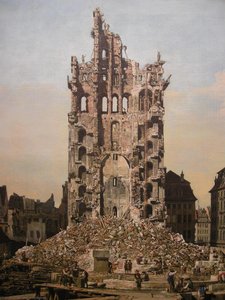
Zrúiny Starého Krížového Kostola v Drážďanoch (1765) od Bernardo Bellotto

Zrúiny Starého Krížového Kostola v Drážďanoch

1765 · Olej na plátne · Gemäldegalerie, Dresno

Bernardo Bellottoho fascinujúci panoramatický výhľad ponúka dojemný pohľad na poľutovaniahodné Drážďany po katastrofe, okolo roku 1765. Je to viac ako len zobrazenie ničoho; je to silná meditácia nad stratou, obnovou a trvalým duchom ľudstva. Pred nami sa odvíja precízne vyobrazenie, ktoré ukazuje skazené zvyšky starého Kreuzkirche (Svetecrkvy) spojené s stále stojacimi stavbami, zachytávajúce kľúčový okamih v dejinách tohto mesta. Bellotto, syn a študent Canaletta, posúva architektonickú maľbu – známu ako…

2
Dresden, the Frauenkirche and the Rampische Gasse (1749) od Bernardo Bellotto

Dresden, the Frauenkirche and the Rampische Gasse

1749 · Oil On Canvas · Gemäldegalerie, Dresno

In the quiet, luminous depths of Bernardo Bellotto’s 1749 masterpiece, Dresden, the Frauenkirche and the Rampische Gasse, we are invited to step through a portal into the eighteenth century. This breathtaking oil on canvas is far more than a mere topographical record; it is a soulful meditation on a city at its zenith. As the eye wanders across the panoramic vista, one is immediately struck by the imposing presence of…

3
The Moat of the Zwinger in Dresden (1749) od Bernardo Bellotto

The Moat of the Zwinger in Dresden

1749 · Oil On Canvas · Gemäldegalerie, Dresno

To look upon The Moat of the Zwinger in Dresden is to witness a moment of profound stillness from 1749. This canvas captures the Zwinger complex not as a mere fortification, but as a serene reflection of royal life during the reign of Augustus III. The water in the moat acts as a liquid mirror, its surface broken only by the gentle movement of small boats and the soft ripples…

4
The Moat of the Zwinger in Dresden (detail) (1749) od Bernardo Bellotto

The Moat of the Zwinger in Dresden (detail)

1749 · Oil On Canvas · Gemäldegalerie, Dresno

In the heart of 18th-century Saxony, amidst the burgeoning prosperity of the Enlightenment, Bernardo Bellotto captured a moment of profound serenity and architectural splendor. His masterpiece, The Moat of the Zwinger in Dresden, is far more than a mere topographical record; it is a luminous window into a vanished world. Painted in 1749, this work invites the viewer to step onto the banks of the Zwinger Palace’s moat, where the…

5
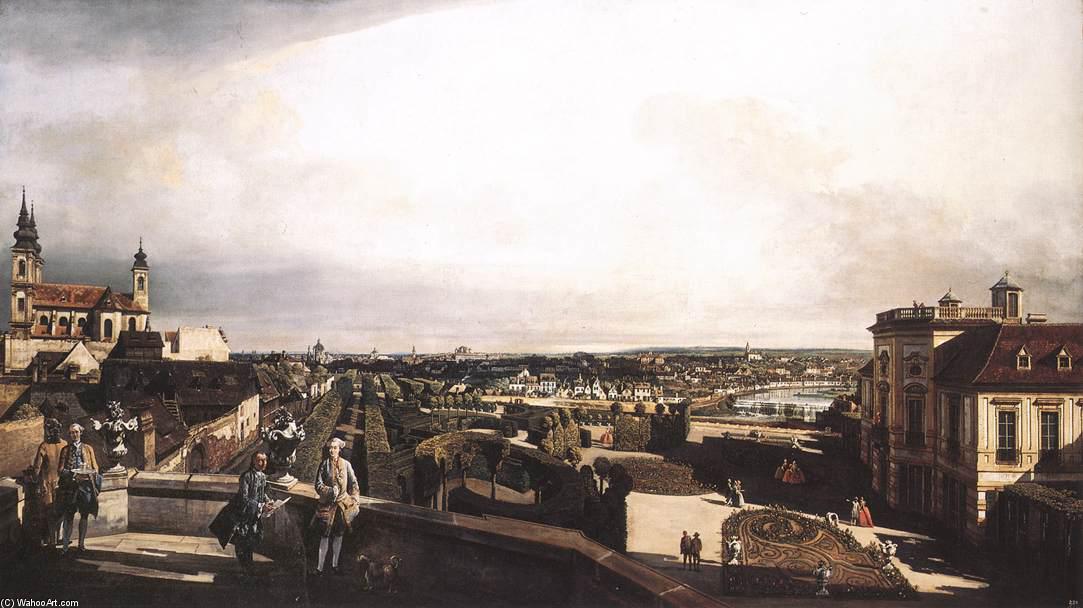
Vídeňské panoróma z Palais Kaunitz (1759) od Bernardo Bellotto

Vídeňské panoróma z Palais Kaunitz

1759 · Olej na plátne · Szépművészeti Múzeum, Budapešť

Bernardo Bellotto – Vídeň, panoráma z Palais Kaunitz Vídeňská panoráma od Bernardo Bellotta je fascinujúci umelecký zážitok, ktorý prináša do priestorov odborníkov aj milovníkov výtvarnej tvorby obrazový záznam obdobia svetla a slobody. Tento rozsiahly obraz vytvorený v roku 1759 predstavuje nezabudateľný pohľad na hlavné mesto Rakúska – Vídeň – z perspektivy Palais Kaunitz, čoho výsledkom je umelecká štúdia architektúry, krajiny a ľudských aktivít. Bellotto, nasledník a žiak svetového talentovaného Giovanni…

6
Grand canal, view from north (1738) od Bernardo Bellotto

Grand canal, view from north

1738 · Oil On Canvas · National Gallery of Victoria, Melbourne

In this work, titled Grand canal, view from north, the artist Bernardo Bellotto captures a specific moment within the Venetian cityscape. Painted about 1738, the scene focuses on the activity along the water, where several boats float upon the river. Some vessels occupy the foreground, while others drift toward the distance, creating a sense of depth across the waterway.

7
The Fortress of Konigstein (1758) od Bernardo Bellotto

The Fortress of Konigstein

1758 · Oil On Canvas · National Gallery of Art, Washington

The painting titled The Fortress of Konigstein was executed by the Italian artist Bernardo Bellotto in 1758. Bellotto was an urban landscape painter and printmaker who specialized in the veduta style. He was the nephew and pupil of Giovanni Antonio Canal. This specific work was part of a series of views commissioned by the Elector of Saxony, Augustus III.

8
Allegory Inclinata Resurgit (1762) od Bernardo Bellotto

Allegory Inclinata Resurgit

1762 · Oil On Canvas · Staatliche Kunstsammlungen Dresden, Dresno

The scene unfolds within the allegorical realm of Allegory Inclinata Resurgit, a painting that captures a moment of profound symbolic weight. Created by the hand of Bernardo Bellotto, this work invites the viewer into a staged, theatrical space where figures and architecture converge. The piece emerges from about 1762, a time when the artist was deeply engaged with the visual language of his era. Every element within the frame works…

9
Venetian Capriccio, View of Santa Maria dei Miracoli (1740) od Bernardo Bellotto

Venetian Capriccio, View of Santa Maria dei Miracoli

1740 · Oil On Canvas · Niedersächsisches Landesmuseum, Hanover

In this work, titled Venetian Capriccio, View of Santa Maria dei Miracoli, the artist Bernardo Bellotto presents a detailed cityscape of Venice. Painted about 1740, the scene focuses on the architecture of the Santa Maria dei Miracoli church. It is a capriccio, a composition that uses a fanciful or imagined arrangement of real-world elements to create a specific atmosphere.

10
Pirna Seen from the Right Bank of the Elbe (1750) od Bernardo Bellotto

Pirna Seen from the Right Bank of the Elbe

1750 · Oil On Canvas

The river flows with a quiet, steady purpose, its surface catching the soft, diffused light of a hazy sky. Along the sandy banks, life unfolds in small, unhurried movements. Children play near the water's edge, their laughter seemingly carried away by the gentle breeze, while adults find repose on boats that bob softly upon the current. In the distance, the skyline of Pirna rises against the horizon, a silhouette of…

Výber umelcov Bernardo Bellotto pokračuje, od 11 do 100

11A Capriccio River Landscape with a Church to the Left (1765) od Bernardo BellottoA Capriccio River Landscape with a Church to the Left1765 12Allegory Ex Arduis Immortalitas (1762) od Bernardo BellottoAllegory Ex Arduis Immortalitas1762 · Staatliche Kunstsammlungen Dresden 13Fantastic architecture with portrait of Franciszek Salezy Potocki and his son Stanisław Szczęsny (1763) od Bernardo BellottoFantastic architecture with portrait of Franciszek Salezy Potocki and his son Stanisław Szczęsny1763 · El Paso Museum of Art 14The Fortress of Königstein: Courtyard with the Magdalenenburg (1758) od Bernardo BellottoThe Fortress of Königstein: Courtyard with the Magdalenenburg1758 · National Gallery of Art 15The Fortress of Königstein (1756) od Bernardo BellottoThe Fortress of Königstein1756 16The Election of the King Stanislaus Augustus (1764) od Bernardo BellottoThe Election of the King Stanislaus Augustus1764 17View of Wilanów meadows (1775) od Bernardo BellottoView of Wilanów meadows1775 · Kráľovský zámok v Varšave 18Groom leading a horse (1773) od Bernardo BellottoGroom leading a horse1773 · Národné múzeum vo Varšave 19The Elbe between Pirna and Pillnitz (1766) od Bernardo BellottoThe Elbe between Pirna and Pillnitz1766 · Staatliche Kunstsammlungen Dresden 20Dresden, the Ruins of the Pirnaische Vorstadt (1766) od Bernardo BellottoDresden, the Ruins of the Pirnaische Vorstadt1766 21View of Ujazdów from the Royal Baths (1776) od Bernardo BellottoView of Ujazdów from the Royal Baths1776 · Národné múzeum vo Varšave 22Stable boy leading a horse (1773) od Bernardo BellottoStable boy leading a horse1773 · Národné múzeum vo Varšave 23Rio dei Mendicanti with the Scuola di San Marco (detail) (1738) od Bernardo BellottoRio dei Mendicanti with the Scuola di San Marco (detail)1738 · Gallerie dell'Accademia di Venezia 24The Imperial Palace Schönbrunn, Garden Side (1758) od Bernardo BellottoThe Imperial Palace Schönbrunn, Garden Side1758 · Kunsthistorisches Museum 25View of Pirna from the Sonnenstein Castle (1750) od Bernardo BellottoView of Pirna from the Sonnenstein Castle1750 · Hermitáž 26View of Pirna from the Right Bank of the Elba above the Town (1753) od Bernardo BellottoView of Pirna from the Right Bank of the Elba above the Town1753 · Hermitáž 27The Kreuzkirche in Dresden (1747) od Bernardo BellottoThe Kreuzkirche in Dresden1747 · Gemäldegalerie 28Stairs Leading to the Colonnade of a Palace (1762) od Bernardo BellottoStairs Leading to the Colonnade of a Palace1762 · Staatliche Kunstsammlungen Dresden 29Lagoon landscape (1741) od Bernardo BellottoLagoon landscape1741 30Venice (Marriage of the Doge with the Sea) (1727) od Bernardo BellottoVenice (Marriage of the Doge with the Sea)1727 31The Grand Canal from the Campo San Vio, Venice (1727) od Bernardo BellottoThe Grand Canal from the Campo San Vio, Venice1727 · Scottish National Gallery 32The Pantheon (1742) od Bernardo BellottoThe Pantheon1742 · Dayton Art Institute 33View of the Tiber in Rome with the Castel Sant'Angelo (1743) od Bernardo BellottoView of the Tiber in Rome with the Castel Sant'Angelo1743 · Detroit Institute of Arts 34Piazza San Marco, Venice (1740) od Bernardo BellottoPiazza San Marco, Venice1740 · Cleveland Museum of Art 35Piazza del Campidoglio with Santa Maria d'Aracoeli, Rome (1742) od Bernardo BellottoPiazza del Campidoglio with Santa Maria d'Aracoeli, Rome1742 · Petworth House 36A View at the Entrance of the Grand Canal, Venice (1741) od Bernardo BellottoA View at the Entrance of the Grand Canal, Venice1741 · Fitzwilliam Museum 37The Piazza San Martino, Lucca (1742) od Bernardo BellottoThe Piazza San Martino, Lucca1742 · York Art Gallery 38Painting of the Church of Santa Maria Formosa, Venice (1742) od Bernardo BellottoPainting of the Church of Santa Maria Formosa, Venice1742 39The Campo di SS. Giovanni e Paolo, Venice (1743) od Bernardo BellottoThe Campo di SS. Giovanni e Paolo, Venice1743 · National Gallery of Art 40View of Via di Ripetta in Rome (1742) od Bernardo BellottoView of Via di Ripetta in Rome1742 · Museum Kunstpalast 41View of the Grand Canal: Santa Maria della Salute and the Dogana from Campo Santa Maria Zobenigo (1743) od Bernardo BellottoView of the Grand Canal: Santa Maria della Salute and the Dogana from Campo Santa Maria Zobenigo1743 · J. Paul Getty Museum 42View of Grand Canal with the Palazzi Foscari and Moro Lin (1734) od Bernardo BellottoView of Grand Canal with the Palazzi Foscari and Moro Lin1734 · Národné múzeum 43The harbor basin of San Marco on Ascension Day, Venice (1739) od Bernardo BellottoThe harbor basin of San Marco on Ascension Day, Venice1739 44Colosseum and Arch of Constantine (Rome) (1742) od Bernardo BellottoColosseum and Arch of Constantine (Rome)1742 45The Arch of Constantine (1742) od Bernardo BellottoThe Arch of Constantine1742 · Royal Collection 46Signoria Square in Florence (1741) od Bernardo BellottoSignoria Square in Florence1741 47View of the Grand Canal at San Stae (1738) od Bernardo BellottoView of the Grand Canal at San Stae1738 48Arno in Florence (1742) od Bernardo BellottoArno in Florence1742 49Capriccio Padovano (1740) od Bernardo BellottoCapriccio Padovano1740 · Thyssen-Bornemisza Museum 50Pirna with the Dohna Gate (1754) od Bernardo BellottoPirna with the Dohna Gate1754 · Staatliche Kunstsammlungen Dresden 51The Arno in Florence with the Ponte Vecchio (1745) od Bernardo BellottoThe Arno in Florence with the Ponte Vecchio1745 · Fitzwilliam Museum 52The Arno in Florence with the Ponte Alla Carraia (1745) od Bernardo BellottoThe Arno in Florence with the Ponte Alla Carraia1745 · Fitzwilliam Museum 53Capriccio with the Dolo lock (1748) od Bernardo BellottoCapriccio with the Dolo lock1748 · Staatliche Kunstsammlungen Dresden 54The Lock at Dolo (1745) od Bernardo BellottoThe Lock at Dolo1745 · Yale University Art Gallery 55The Grand Canal: Santa Lucia and the Church of the Scalzi, Venice (1750) od Bernardo BellottoThe Grand Canal: Santa Lucia and the Church of the Scalzi, Venice1750 · Scottish National Gallery 56View of Pirna from the West, from the Corner of Wide Street (1755) od Bernardo BellottoView of Pirna from the West, from the Corner of Wide Street1755 · Hermitáž 57View of Pirna, from Sonnestein Castle (1753) od Bernardo BellottoView of Pirna, from Sonnestein Castle1753 · Pushkin State Museum 58View of Verona with the Castelvecchio and Ponte Scaligero (1745) od Bernardo BellottoView of Verona with the Castelvecchio and Ponte Scaligero1745 · Philadelphia Museum of Art 59Dresden from the Right Bank of the Elbe, below the Augustus Bridge (1750) od Bernardo BellottoDresden from the Right Bank of the Elbe, below the Augustus Bridge1750 · National Gallery of Ireland 60Dresden from the Right Bank of the Elbe above the Augustus Bridge (1750) od Bernardo BellottoDresden from the Right Bank of the Elbe above the Augustus Bridge1750 · National Gallery of Ireland 61View of Pirna from the Right Bank of the Elba (1753) od Bernardo BellottoView of Pirna from the Right Bank of the Elba1753 · Hermitáž 62The Moat of Zwinger in Dresden (1750) od Bernardo BellottoThe Moat of Zwinger in Dresden1750 · Hermitáž 63Old Fortifications of Dresden (1749) od Bernardo BellottoOld Fortifications of Dresden1749 · Hermitáž 64Market-Place of the Neustadt in Dresden (1751) od Bernardo BellottoMarket-Place of the Neustadt in Dresden1751 · Hermitáž 65View of Pirna, from Sonnenstein Castle (1755) od Bernardo BellottoView of Pirna, from Sonnenstein Castle1755 · Staatliche Kunstsammlungen Dresden 66Pirna from Kopitz (1753) od Bernardo BellottoPirna from Kopitz1753 · Staatliche Kunstsammlungen Dresden 67The Zwinger in Dresden (1751) od Bernardo BellottoThe Zwinger in Dresden1751 · Staatliche Kunstsammlungen Dresden 68The Old Ponte delle Navi in Verona (1746) od Bernardo BellottoThe Old Ponte delle Navi in Verona1746 · Staatliche Kunstsammlungen Dresden 69The Old Market in Dresden from Schlossgasse (1750) od Bernardo BellottoThe Old Market in Dresden from Schlossgasse1750 · Staatliche Kunstsammlungen Dresden 70The Old Fortifications in Dresden (1750) od Bernardo BellottoThe Old Fortifications in Dresden1750 · Staatliche Kunstsammlungen Dresden 71Pirna from Posta (1753) od Bernardo BellottoPirna from Posta1753 · Staatliche Kunstsammlungen Dresden 72Dresden from the left Bank of the Elbe above the Bridgehead of the Old Town (1748) od Bernardo BellottoDresden from the left Bank of the Elbe above the Bridgehead of the Old Town1748 · Staatliche Kunstsammlungen Dresden 73View from the Bridge of Dresden on the Elbe (1749) od Bernardo BellottoView from the Bridge of Dresden on the Elbe1749 · Fine Arts Museums of San Francisco 74Abbruch der Kreuzkirche, Dresden (1746) od Bernardo BellottoAbbruch der Kreuzkirche, Dresden1746 75Piazza S. Marco, Venice (1746) od Bernardo BellottoPiazza S. Marco, Venice1746 76The Old Market Square in Dresden (1750) od Bernardo BellottoThe Old Market Square in Dresden1750 · Staatliche Kunstsammlungen Dresden 77The New Market Square in Dresden (1750) od Bernardo BellottoThe New Market Square in Dresden1750 78Verona Veduta (1746) od Bernardo BellottoVerona Veduta1746 · Powys Castle Museum 79View of Turin near the Royal Palace (1745) od Bernardo BellottoView of Turin near the Royal Palace1745 · Galleria Sabauda 80New Market Square in Dresden (1750) od Bernardo BellottoNew Market Square in Dresden1750 · Gemäldegalerie 81Dresden from the Left Bank of the Elbe, below the Fortifications (1748) od Bernardo BellottoDresden from the Left Bank of the Elbe, below the Fortifications1748 · Gemäldegalerie 82Pirna Seen from the Harbour Town (1753) od Bernardo BellottoPirna Seen from the Harbour Town1753 · Gemäldegalerie 83View of an Old Bridge Over the River Po, Turin (1745) od Bernardo BellottoView of an Old Bridge Over the River Po, Turin1745 · Galleria Sabauda 84The Neuer Marktplatz in Dresden (1747) od Bernardo BellottoThe Neuer Marktplatz in Dresden1747 · Hermitáž 85Venice (Rio di S. Fosca and S. Maria dei Servil) (1758) od Bernardo BellottoVenice (Rio di S. Fosca and S. Maria dei Servil)1758 86View of München (1758) od Bernardo BellottoView of München1758 87Saint Mark's Square, Venice (1756) od Bernardo BellottoSaint Mark's Square, Venice1756 · National Gallery of Ireland 88Campo San Stin, Venice (1760) od Bernardo BellottoCampo San Stin, Venice1760 89Old town of Dresden (1765) od Bernardo BellottoOld town of Dresden1765 · Staatliche Kunsthalle Karlsruhe 90Pirna seen from the right bank of the Elbe (1756) od Bernardo BellottoPirna seen from the right bank of the Elbe1756 · San Diego Museum of Art 91Architectural Capriccio (1765) od Bernardo BellottoArchitectural Capriccio1765 · San Diego Museum of Art 92Nymphenburg Castle (1761) od Bernardo BellottoNymphenburg Castle1761 93Architectural Caprice with a Palace (1765) od Bernardo BellottoArchitectural Caprice with a Palace1765 · Museo de Bellas Artes de Bilbao 94Venice: Canale Grande (1758) od Bernardo BellottoVenice: Canale Grande1758 95View of Vienna with St. Charles's Church (1758) od Bernardo BellottoView of Vienna with St. Charles's Church1758 · Museum Kunstpalast 96Schloss Schonbrunn (1760) od Bernardo BellottoSchloss Schonbrunn1760 97Freyung in Vienna, View from the southeast (1758) od Bernardo BellottoFreyung in Vienna, View from the southeast1758 98The ruins of Thebes on the River March (1758) od Bernardo BellottoThe ruins of Thebes on the River March1758 · Kunsthistorisches Museum 99A view of the Lobkowicz Palace in Vienna (1761) od Bernardo BellottoA view of the Lobkowicz Palace in Vienna1761 100Ruins of Dresden's Kreuzkirche (1765) od Bernardo BellottoRuins of Dresden's Kreuzkirche1765

Slávne obrazy umelca Bernardo Bellotto podľa jednotlivých období

Motívy, ktoré zaujali Bernardo Bellotto

Štyri témy, ktoré sa v týchto origináloch najčastejšie vracajú, každá s jej najvychybenejším príkladom.

Múzeá, ktoré uchovávajú originály umelca Bernardo Bellotto

8 múzeá, v ktorých sa nachádza najviac obrazov z tejto stránky.

Múzeá Mesto Diela umelca Bernardo Bellotto Obrazy z tohto zoznamu
Staatliche Kunstsammlungen Dresden, DresnoStaatliche Kunstsammlungen Dresden Dresno 19 Allegory Inclinata Resurgit, Allegory Ex Arduis Immortalitas, The Elbe between Pirna and Pillnitz
Gemäldegalerie, DresnoGemäldegalerie Dresno 12 Zrúiny Starého Krížového Kostola v Drážďanoch, Dresden, the Frauenkirche and the Rampische Gasse, The Moat of the Zwinger in Dresden
Hermitáž, PetrohradHermitáž Petrohrad 11 View of Pirna from the Sonnenstein Castle, View of Pirna from the Right Bank of the Elba above the Town, View of Pirna from the West, from the Corner of Wide Street
Národné múzeum vo Varšave, VaršavaNárodné múzeum vo Varšave Varšava 8 Groom leading a horse, View of Ujazdów from the Royal Baths, Stable boy leading a horse
National Gallery of Art, WashingtonNational Gallery of Art Washington 5 The Fortress of Konigstein, The Fortress of Königstein: Courtyard with the Magdalenenburg, The Campo di SS. Giovanni e Paolo, Venice
Fitzwilliam MuseumFitzwilliam Museum 3 A View at the Entrance of the Grand Canal, Venice, The Arno in Florence with the Ponte Vecchio, The Arno in Florence with the Ponte Alla Carraia
National Gallery of Ireland, DublinNational Gallery of Ireland Dublin 3 Dresden from the Right Bank of the Elbe, below the Augustus Bridge, Dresden from the Right Bank of the Elbe above the Augustus Bridge, Saint Mark's Square, Venice
Kunsthistorisches Museum, ViedeňKunsthistorisches Museum Viedeň 12 The Imperial Palace Schönbrunn, Garden Side, The ruins of Thebes on the River March

Bernardo Bellotto dekáda po dekáde: originál, ktorý definuje každú z nich

Diela podľa dekád

Vyberte si dekádu a pozrite si originál, ktorý ju definuje.

Otázky zberateľov o obrazoch od Bernardo Bellotto

Ktorým dielom je Bernardo Bellotto najznámejší/najznámejšia?Odhaľte odpoveď

Zrúiny Starého Krížového Kostola v Drážďanoch (1765), Gemäldegalerie, Dresno. Nasledujú Dresden, the Frauenkirche and the Rampische Gasse (1749) a The Moat of the Zwinger in Dresden (1749).

V akom veku bol/a Bernardo Bellotto, keď vzniklo dielo Zrúiny Starého Krížového Kostola v Drážďanoch?Odhaľte odpoveď

43 rokov: Zrúiny Starého Krížového Kostola v Drážďanoch vzniklo v roku 1765 a Bernardo Bellotto sa narodil/a v roku 1722.

Ktorých desať najznámejších obrazov má Bernardo Bellotto?Odhaľte odpoveď

Zrúiny Starého Krížového Kostola v Drážďanoch, Dresden, the Frauenkirche and the Rampische Gasse, The Moat of the Zwinger in Dresden, The Moat of the Zwinger in Dresden (detail), Vídeňské panoróma z Palais Kaunitz, Grand canal, view from north, The Fortress of Konigstein, Allegory Inclinata Resurgit, Venetian Capriccio, View of Santa Maria dei Miracoli a Pirna Seen from the Right Bank of the Elbe. Vyššie uvedené hodnotenie uvádza rok a múzeu pre každé z nich.

Koľko obrazov zanechal umenec Bernardo Bellotto?Odhaľte odpoveď

Náš katalóg obsahuje 230 diel od umelca Bernardo Bellotto z perioda od 1734 do 1776.

V ktorých múzeách visia majstrovské diela umelca Bernardo Bellotto?Odhaľte odpoveď

Väčšinou v Staatliche Kunstsammlungen Dresden (Dresno), Gemäldegalerie (Dresno) a Hermitáž (Petrohrad). Tabuľka múzeí vyššie ich všetky uvádza.

V ktorých rokoch vytvoril Bernardo Bellotto svoje najznámejšie diela?Odhaľte odpoveď

V období 1740s: 37 z 100 diel na tejto stránke bolo vytvorených vtedy, pričom Dresden, the Frauenkirche and the Rampische Gasse z nich.

Aké sú prvé a posledné známe originály od Bernardo Bellotto?Odhaľte odpoveď

Na tejto stránke je najstaršie dielo z View of Grand Canal with the Palazzi Foscari and Moro Lin (1734) a najnovšie z View of Ujazdów from the Royal Baths (1776).

Aké témy si Bernardo Bellotto najčastejšie vyberal/a?Odhaľte odpoveď

Sky (69), Architecture (67) a Water (42), v rámci 100 diel na tejto stránke.

Ktorú techniku používal(a) Bernardo Bellotto najčastejšie?Odhaľte odpoveď

Oil On Canvas, pre 79 z 100 diel na tejto stránke.

Do ktorého umeleckého smeru patrí Bernardo Bellotto?Odhaľte odpoveď

Rococo, podľa originálov na tejto stránke.

Aké diela umelca Bernardo Bellotto sa nachádzajú v múzeu Staatliche Kunstsammlungen Dresden?Odhaľte odpoveď

Allegory Inclinata Resurgit, Allegory Ex Arduis Immortalitas a The Elbe between Pirna and Pillnitz: múzeá Staatliche Kunstsammlungen Dresden, Dresno uchovávajú 15 z diel na tejto stránke.

Bernardo Bellotto: život a dielo

Raný život, rodina a vzdelanie

Bernardo Bellotto prišiel na svet v Benátkach vo'){Itálii' okolo roku 1721 alebo 1722. Niektoré záznamy naznačujú konkrétnejší dátum, 30. január 1721. Narodil sa do rodiny, v ktorej umenie tvorilo dominantnú súčasť života, ako syn Lorenza Antonia Bellotta a Fiorenzy Canal. Cez svoju mater sa stal súčasťou významnej umeleckej línie, keďže bola sestrou slávneho umelca menom Canaletto. Toto spojenie znamenalo, že už od najranších rokov bola atmosféra jeho domova formovaná tradíciami benátskej maľby.

Jeho formálne vzdelanie sa odohrávalo v ateliéri jeho strýka, Giovannia Antonia Canala. Ako učenec muža známeho ako Canaletto sa Bernardo Bellotto naučil zložitosti perspektívy a precízne detaily potrebné na zachytenie podstaty mesta. Toto učenectvo nebolo len obyčajným vzdelávaním; bolo to hlboké ponorenie do špecifického spôsobu vnímania sveta. Neštudoval len u svojho strýka, ale stal sa súčasťou rodinnej légacie, ktorá nakoniec nesie jeho meno po celej Európe. V určitých regiónoch, ako sú Nemecko či Poľsko, sa o ňom často hovorilo ako o Bernardovi Canalettovi, čo bol názov odzvedajúci sa od jeho hlbokých väzieb s jeho mentorom aj príbuznými.

Jeho rané roky v Benátkach položili základy pre kariéru, ktorú strávil dokumentovaním architektúry a svetla mnohých rôznych miest. Hoci jeho rané diela ukazovali, že kráča po ceste vytyčenej jeho strýkom, začal si budovať vlastnú identitu prostredníctvom svojho unikátneho prístupu k práci so svetlom a tieňom. Výchova v benátskej škole zabezpečila, že jeho technické zručnosti boli zakorenenné v hlbokom porozumení mestských krajín a spôsobu, akým svetlo interaguje s kameňom a vodou.

Umelecký štýl a technika

Bernardo Bellotto mal mesto spôsobom, ktorý pôsobil zároveň precízne a hlboko atmosférične. Hoci si základy perspektívy a kompozície osvojil v ateliéri svojho strýka, jeho vlastná tvorba sa neskôr posunula smerom k jemnejšiemu a stíšenejšiemu vnímaniu reality. Odklonil sa od jasných, vysoko kontrastných palet, ktoré sú typické pre benátske scény, a namiesto toho sa rozhodol pracovať s obmedzenou, však nesmierne vyváženou farebnou škálou. Jeho plátna často relyali na zemité odtlážky hnedých, šedých, okrových a vybledlých červených tónov, ktoré mu pomáhali budovať svoje výhľady. Tento zámer mu umožnil sústrediť sa na špecifickú kvalitu svetla, ktorá definuje konkrétne miesto, a zachytiť spôsob, akým sa slnečné svetlo a tieň usádzajú na kameň a tehlu.

Jeho oblohy majú zvláštnu váhu a hĺbku. Spôsob, akým pracoval s mrakmi a tieňmi, vykazuje jasný vplyv holandskej maľby, pričom sa vzdal od čisto dekoratívnych prvkov smerom k niečomu hlbšie zakorenenému a prirodzenejšímu. Mal výnimočný talent pre detailnú reprezentáciu architektonických a prírodných panorám, čím zabezpečil, že každá budova aj vodná páteľ pôsobili pevne a autenticky. Aby dosiahol takúto úroveň detailu, pravdepodobne využíval pomôcky ako camera obscura alebo camera lucida, ktoré mu pomáhali zachovať vysokú mieru presnosti v jeho mestských krajinách.

Cesty a európske mandáty

Bellottova umelecká dráha ho vyviedla ďaleko za obzory známych kanálov jeho rodného mesta. V roku 1742 sa presunul do Ríma, kde začal vytvárať fascinujúce veduty tejto antickej metróly. Jeho putovanie pokračovalo cez severné Taliansko v rokoch 1744 a 1745, čo bol čas, kedy pracoval pre Charlesa Emanuela III. Savovského. Tieto roky neustálého pohybu mu umožnili pozorovať špecifické svetlo a architektúru rôznych regiónov, čím si budoval prestížné meno medzi majstromi urbanistických scenérií.

Jeho profesionálny život sa stal neoddeliteľnou súčasťou európských dvorov. Na príkaz kráľa Augusta III. Poľského žil Bernardo Bellotto v Drážďanoch v období od roku 1747 do 1758. Tento éterický čas bol poznačený stabilnou tvorbou v rámci saksonského dvora. Následne, v roku 1758, dostal pozvánku od cisárovny Márie Terezie, aby pracoval vo Viedni. Jeho schopnosť zachytiť pravdivý vzhľad mesta ho urobila žiadanou osobnosťou pre monarchov, ktorí si chceli uľahčiť cestu k dokumentácii svojich hlavných miest.

V roku 1764 sa otvorila nová kapitola jeho života, keď ho kráľ Stanislav August Poniatowski pozval, aby sa stal jeho dvorským maliarom v Varšave. V poľskej hlavnom meste zostal mnoho rokov, pričom trvalo dokumentoval mesto aj jeho okolie. Tento posledný veľký mandát mu umožnil usadiť sa v úlohe, ktorá mu mala sprevádzať väčšinu zvyšku jeho života.

Významné diela a mestské panorámy

Bellottovo pero zachytilo unikátne svetlo miest, v ktorých žil, a premenilo kameň a vodu do trvalých historických záznamov. V roku 1738 nakreslil Rio dei Mendicanti s kostolom Scuola di San Marco (detail), dielo, ktoré demonštruje jeho ranú schopnosť pracovať s precízními detailmi venetiánskej architektúry. Ako sa pohyboval cez Itáliu, jeho zameranie sa posúvalo smerom k grandióznejškemu rozmeru mestského života. V roku 1747 vytvoril Pohľad na Veronu a rieku Adige z mostu Ponte Nuovo, čím zachytil spôsob, akým rieka protérazuje mestom. Jeho schopnosť dokumentovať miesta s takou presnosťou sa stala kľúčovým znakom jeho kariéry, či už maletí ruchné ulice hlavného mesta alebo tiché zákutia provinčných mestečiek.

Čas strávený v Drážďane a Viedni mu umožnil zdokumentovať architektonické srdce Európy. V roku 1748 vytvoril Pohľad na Drážďany z pravého brehu Elbe s Augustovým mostom, scénu, ktorá zachytila rozloženie mesta s pozorovateľnou jasnosťou. Neskôr jeho umelecká činnosť vo Viedni zahŕňala Dominikánsky kostol v roku 1758 a Viedeň, Panoráma z Palais Kaunitz v roku 1759. Tieto obrazy neboli len obyčajnými výhľadmi; boli to presné pozorovanie pamiatok a palácov, ktoré definovali imperiálnu atmosféru tej doby.

V neskorších rokoch našiel Bernardo Bellotto domov v Poľsku, kde jeho tvorba získala novú úroveň historického významu. V roku 1773 dokončil Pohľad na Varšavu z Kráľovského paláca (detail), čím poskytol detailný pohľad na poľskú hlavu. Tieto pohľady na Varšavu sa v konečnom dôsledku stali nevyhnutnými referenčnými bodmi pre tých, ktorí mali za úlohu obnoviť historické centrum mesta dlho po tom, čo samotné budovy zanikli.

Dedičstvo a urbánna obnovná činnosť

Bellottove obrazy slúhili často ako tichá, vizuálna pamäť pre mestá, ktoré čelili úplnej devastácii. V Drážďanoch jeho detailné pohľady zachránili vzhľad predvojnovskej krásy mesta a zachytili architektonické detaily, ktoré neskôr zanikli v pożiarených kráľovských uliciach. Jeho schopnosť dokumentovať presné rozloženie ulíc a monumentov spôsobila, že jeho plátna sa stali niečím oveľa viac než len umelaním; pre ľudí z taskedých s obnovou sa stali nevyhnutnými plánmi a presnými mapami minulosti.

Táto praktická využiteľnosť sa stala najvýraznejšou v Varšave. Po tom, čo bolo mesto masívne poškodené počas druhej svetovej vojny, vystupuje týchto málo, ale nesmierne cenných tridsať pohľadov na poľskú hlavu ako nevyhnutný sprievodca obnovou. Architekti využili jeho diela na to, aby obnovili vzhľad mesta a pomohli tak vrátiť dušu jeho urbánnej krajine. Tento dôsledný restauračný proces bol taký úspešný, že historické centrum Varšavy bolo v roku 1980 uznané UNESCO za objekt svetového kultúrneho dziedzstva.

Kde dnes uvidieť jeho diela

Ak chceme vystúpiť na stopy Bernardo Bellotto, musíme pocetovať mestami, ktoré kedysi dokumentoval s takou neálsnou presnosť. V Drážďanoch uchráva významnú časť jeho tvorby galéria Gemäldegalerie, vrátane pohľadov na mesto, ktoré zachytili jeho architektonický život ešte pred devastáciou vojny. Jeho prítomnosť v nemeckej metrópole je vnítať prostredníctvom týchto detailných záznamov urbánneho života a toho tichého, smútňavého svetla, ktoré tak veľmi obľúbil.

Jeho spojenie s koreňmi zostáva viditeľné vo Venedíci, kde Gallerie dell'Accademia di Venezia uchráva jeho rané perspektívy. Tieto diela často odzrkadľujú mienivé vodné plochy a špecifickú atmosféru vénetských lagún. Okvenok mimo Taliachsko sa jeho pôsobenie rozprestiera do veľkých kolekcií východnej a stredoeurópskej časti kontinentu. Hermitážny múzeál v Petrogradove aj Szépművészeti Múzeum v Budapešti abes uchrávajú jeho obrazy, ktoré ponúkajú pohľady na krajiny a mestské scenérie, ktoré namaloval počas svojich ciest po Európe.

Vo Viedni si Liechtenstein Museum uchráva diela, ktoré demonštrujú jeho schopnosť zachytiť veľkoleposť imperiálnej architektúry. Jeho schopnosť vykresliť pevnosť kameňa a pohyb mrakov robí z jeho prítomnosti v týchto múzeách dôležitý spojovací člen s 18. storočím. Zberatelia a historici môžu nájsť konkrétne príklady jeho majstrovstva na týchto miestach:

  • View of Verona and the River Adige from the Ponte Nuovo (1747)
  • The Ruins of the Old Kreuzkirche in Dresden (1765)
  • Vienna, Panorama from Palais Kaunitz (1759)
  • Rio dei Mendicanti with the Scuola di San Marco (detail) (1738)