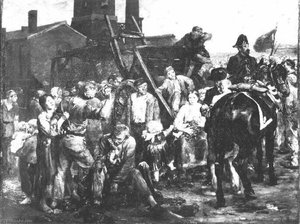
Portrét Alfred Philippe Roll

50 najznámejších obrazov od Alfred Philippe Roll, výber z galérie

Aktualizované november 2026 · zoradené podľa našej miery popularity (vyhľadávanie, návštevy a objednávky pre každou prácu) · 50 dielov umelca Alfred Philippe Roll v našom katalógu

Stručne povedané

Z všetkých originálov, ktoré Alfred Philippe Roll zanechal, je najznámejší Portrait de Mme Roll. Hneď za ním nasledujú Retour du bal a The feast of Silenus (1871). Náš katalóg obsahuje 50 diel od Alfred Philippe Roll; galéria si zachovala tých 50, ktoré obdivuje celý svet, pričom každý z nich je prezentovaný spolu s jeho dátumom, múzeou a príbehom.

1845 – 1919, Paríž Najviac diel: Petit Palais

Top 10 obrazov umelca Alfred Philippe Roll: výber galérie

1
Portrait de Mme Roll od Alfred Philippe Roll

Portrait de Mme Roll

Oil On Canvas

The portrait depicts a woman, identified as Madame Roll, positioned in a vertical orientation. She is situated slightly off-center within a domestic interior, appearing to stand near a window. The figure is rendered with a muted color palette, primarily composed of blacks, grays, and browns. Subtle ochre and muted red tones appear in the highlights and the background. Her attire is formal, and her expression remains serene with a slight…

2
Retour du bal od Alfred Philippe Roll

Retour du bal

Oil On Canvas · Musée d'Arts de Nantes, Nantes

The air in the room feels heavy with the scent of perfume and the soft rustle of silk as two women move through an opulent interior. We watch them from behind, catching only the graceful curve of their backs and the sweeping lines of their attire. They are poised, perhaps caught in a moment of transition between the excitement of a social gathering and the quietude of their private quarters.…

3
The feast of Silenus (1871) od Alfred Philippe Roll

The feast of Silenus

1871 · Oil On Canvas · Museum of Fine Arts Ghent (MSK), Ghent

The feast of Silenus emerges from the brush of Alfred Philippe Roll, a painter whose life spanned the transformative decades of the late nineteenth century. Born in the former 8th arrondissement of Paris, France, in 1845, Roll carries the weight of a changing era within his lineage. He remains a figure of the French tradition, having departed this world in 1919. This specific work, The feast of Silenus, captures a…

4
Marianne Orfrey, Green Crier (1880) od Alfred Philippe Roll

Marianne Orfrey, Green Crier

1880 · Oil On Canvas · Musée des Beaux-Arts de Pau, Pau

In this 1880 oil on canvas, we find ourselves standing at eye-level with a solitary woman, a street vendor whose presence commands a quiet, stoic dignity. She is positioned slightly off-center, a choice that lends a sense of naturalism to the vertical composition. There is a certain weight to her figure, anchored by the heavy folds of her skirt and the rounded, organic form of the basket she carries. The…

5
July 14, 1880, Inauguration of the Monument to the République (1882) od Alfred Philippe Roll

July 14, 1880, Inauguration of the Monument to the République

1882 · Oil · Petit Palais, Paríž

The canvas depicts a dense, wide-angle view of a Parisian square during a large-scale public celebration. In the center of the composition, a monument rises toward a sky filled with fluttering flags. The scene is populated by a vast, diverse crowd of figures that extend from the immediate foreground into the distance. These people are rendered with varied postures, some standing in groups and others moving through the space. The…

6
Henri Rochefort (Victor-Henri, marquis de Rochefort-Luçay, 1831-1913), journalist, politician and writer (1879) od Alfred Philippe Roll

Henri Rochefort (Victor-Henri, marquis de Rochefort-Luçay, 1831-1913), journalist, politician and writer

1879 · Oil On Canvas · Carnavalet Museum, Paríž

The portrait emerges from a period of transition in French art, moving away from the rigid constraints of academic tradition toward a more grounded, empathetic realism. The visible layering of paint suggests a preoccupation with the authentic human form rather than an idealized version of it. There is a palpable sense of the man's internal life, a quiet intensity that lingers in the way the light interacts with his features.…

7
Woman and bull (1885) od Alfred Philippe Roll

Woman and bull

1885 · Oil · Národné múzeum krásnych umení, Buenos Aires

The air feels heavy and still within this shadowed woodland, where the light filters through a dense canopy in soft, dappled patches. A nude woman rests in an intimate, quiet moment, her pale skin glowing against the deep, earthy tones of the surrounding meadow. Beside her, the muscular form of a bull emerges from the darkness, its presence a powerful counterpoint to her vulnerability. There is a profound sense of…

8
Alsatian and Lorrainer (1891) od Alfred Philippe Roll

Alsatian and Lorrainer

1891 · Oil · Museum of the French Revolution, Vizille

In the work Alsatian and Lorrainer by Alfred Philippe Roll, the composition is structured as a tight, intimate close-up of two female figures. The primary subject is positioned in the foreground, presented in a sharp profile facing toward the left side of the frame. Behind her, a second woman is partially visible, also oriented toward the left. This overlapping arrangement creates a sense of depth within the narrow field of…

9
Portrait of Thaulow and His Wife (1890) od Alfred Philippe Roll

Portrait of Thaulow and His Wife

1890 · Oil On Canvas · Petit Palais, Paríž

In this intimate oil on canvas, Alfred Philippe Roll presents Portrait of Thaulow and His Wife. Painted about 1890, the work captures a quiet moment between a man and a woman. The subjects are likely the artist's acquaintances, Thaulow and his wife, rendered with a sense of naturalism that suggests a close proximity to the figures. There is a palpable sense of companionship in the way they are positioned together.

10
Portrait of Jane Hading (1890) od Alfred Philippe Roll

Portrait of Jane Hading

1890 · Oil On Canvas · Petit Palais, Paríž

The portrait presents a woman seated centrally within a luxurious interior. She is positioned in a vertical orientation, wearing a sleeveless black gown that features shimmering, light-colored patterns suggestive of sequins or embroidery. A large, dark, textured element, resembling a fur mantle or heavy drapery, surrounds the upper portion of her chair. Her skin is rendered with smooth, luminous textures, and her reddish-brown hair is styled softly around her face.…

Výber umelcov Alfred Philippe Roll pokračuje, od 11 do 50

11André Manaut (1890) od Alfred Philippe RollAndré Manaut1890 · Municipal museum (Saverne) 12Au trot (1888) od Alfred Philippe RollAu trot1888 · Municipal museum (Saverne) 13Adolphe Alphand (1888) od Alfred Philippe RollAdolphe Alphand1888 · Petit Palais 14Centenary of the Estates General at the Neptune Basin (May 3, 1889) (1889) od Alfred Philippe RollCentenary of the Estates General at the Neptune Basin (May 3, 1889)1889 15Exodus (1893) od Alfred Philippe RollExodus1893 · Petit Palais 16Louise Cattel, wet nurse (1894) od Alfred Philippe RollLouise Cattel, wet nurse1894 · Palais des Beaux-Arts de Lille 17Alexandre Dumas fils (1895) od Alfred Philippe RollAlexandre Dumas fils1895 · Musée des Beaux-Arts 18Roll Painting (1900) od Alfred Philippe RollRoll Painting1900 · Petit Palais 19Portrait de Mme Henriette Roll (1900) od Alfred Philippe RollPortrait de Mme Henriette Roll1900 · Municipal museum (Saverne) 20Nu couché (1900) od Alfred Philippe RollNu couché1900 · Musée d'Art Moderne et Contemporain de Strasbourg 21In Summer, Woman with Dog (1909) od Alfred Philippe RollIn Summer, Woman with Dog1909 · Petit Palais 22Sketch for the Petit Palais, south gallery: Apotheosis (central ceiling) (1909) od Alfred Philippe RollSketch for the Petit Palais, south gallery: Apotheosis (central ceiling)1909 · Petit Palais 23Sketch for the Petit Palais, south gallery: Poetry - Drama (1910) od Alfred Philippe RollSketch for the Petit Palais, south gallery: Poetry - Drama1910 · Petit Palais 24Sketch for the Petit Palais, south gallery: Fantastic Music (1911) od Alfred Philippe RollSketch for the Petit Palais, south gallery: Fantastic Music1911 · Petit Palais 25Sketch for the South Gallery of the Petit Palais: Apotheosis (central ceiling) (1913) od Alfred Philippe RollSketch for the South Gallery of the Petit Palais: Apotheosis (central ceiling)1913 · Petit Palais 26The Big Bed (1912) od Alfred Philippe RollThe Big Bed1912 · Municipal museum (Saverne) 27Bourgeoisie (1913) od Alfred Philippe RollBourgeoisie1913 · Municipal museum (Saverne) 28Portrait of Miss Amélie Diéterle, in 1913. Title : In June, Amélie Diéterle. (1913) od Alfred Philippe RollPortrait of Miss Amélie Diéterle, in 1913. Title : In June, Amélie Diéterle.1913 · Petit Palais 29The Tea Cup (1918) od Alfred Philippe RollThe Tea Cup1918 · Municipal museum (Saverne) 30CHEMIN SOUS BOIS od Alfred Philippe RollCHEMIN SOUS BOIS 31July 14, 1880, Inauguration of the Monument to the Republic (1881) od Alfred Philippe RollJuly 14, 1880, Inauguration of the Monument to the Republic1881 · Petit Palais 32Esquisse pour La fête nationale du 14 juillet 1880 (1881) od Alfred Philippe RollEsquisse pour La fête nationale du 14 juillet 18801881 · Municipal museum (Saverne) 33Sketch for the Hôtel de Ville de Paris: Art, Movement, Work, Lights (1897) od Alfred Philippe RollSketch for the Hôtel de Ville de Paris: Art, Movement, Work, Lights1897 · Petit Palais 34The Vigil under the Arc de Triomphe (1903) od Alfred Philippe RollThe Vigil under the Arc de Triomphe1903 · Musée Victor Hugo 35The Wave (1911) od Alfred Philippe RollThe Wave1911 · Petit Palais 36Sketch for the Petit Palais, south gallery: Fantastic Music (1911) od Alfred Philippe RollSketch for the Petit Palais, south gallery: Fantastic Music1911 · Petit Palais 37Peder Severin Kröyer (1851-1909) od Alfred Philippe RollPeder Severin Kröyer (1851-1909)Národné múzeum 38Female nude sitting od Alfred Philippe RollFemale nude sitting 39Petite République (1907) od Alfred Philippe RollPetite République1907 · Municipal museum (Saverne) 40La grève de mineurs od Alfred Philippe RollLa grève de mineurs 41Portrait de Léon Bourgeois od Alfred Philippe RollPortrait de Léon Bourgeois 42PORTRAIT DE JEUNE FILLE od Alfred Philippe RollPORTRAIT DE JEUNE FILLE 43Portrait de jeune femme od Alfred Philippe RollPortrait de jeune femme 44L'Exécution d'un trompette sous la Commune od Alfred Philippe RollL'Exécution d'un trompette sous la CommuneCarnavalet Museum 45Les baigneuses Panneau décoratif (Ancien titre) od Alfred Philippe RollLes baigneuses Panneau décoratif (Ancien titre) 46Bathers od Alfred Philippe RollBathersMusée des Beaux-Arts de Dijon 47Chevaux à l'écurie od Alfred Philippe RollChevaux à l'écurie 48Manda Lamétrie, fermière (1887) od Alfred Philippe RollManda Lamétrie, fermière1887 · Musée d'Orsay 49The Young Republic (1908) od Alfred Philippe RollThe Young Republic1908 · Musée d'Orsay 50The Striker's Wife od Alfred Philippe RollThe Striker's WifeMusee Baron Martin

Slávne obrazy umelca Alfred Philippe Roll podľa jednotlivých období

Motívy, ktoré zaujali Alfred Philippe Roll

Štyri témy, ktoré sa v týchto origináloch najčastejšie vracajú, každá s jej najvychybenejším príkladom.

Múzeá, ktoré uchovávajú originály umelca Alfred Philippe Roll

8 múzeá, v ktorých sa nachádza najviac obrazov z tejto stránky.

Múzeá Mesto Diela umelca Alfred Philippe Roll Obrazy z tohto zoznamu
Petit Palais, ParížPetit Palais Paríž 16 July 14, 1880, Inauguration of the Monument to the République, Portrait of Thaulow and His Wife, Portrait of Jane Hading
Municipal museum (Saverne), SaverneMunicipal museum (Saverne) Saverne 8 André Manaut, Au trot, Portrait de Mme Henriette Roll
Carnavalet Museum, ParížCarnavalet Museum Paríž 2 Henri Rochefort (Victor-Henri, marquis de Rochefort-Luçay, 1831-1913), journalist, politician and writer, L'Exécution d'un trompette sous la Commune
Musée d'Orsay, ParížMusée d'Orsay Paríž 2 Manda Lamétrie, fermière, The Young Republic
Musée d'Arts de Nantes, NantesMusée d'Arts de Nantes Nantes 1 Retour du bal
Museum of Fine Arts Ghent (MSK), GhentMuseum of Fine Arts Ghent (MSK) Ghent 1 The feast of Silenus
Musée des Beaux-Arts de Pau, PauMusée des Beaux-Arts de Pau Pau 1 Marianne Orfrey, Green Crier
Národné múzeum krásnych umení, Buenos AiresNárodné múzeum krásnych umení Buenos Aires 1 Woman and bull

Alfred Philippe Roll dekáda po dekáde: originál, ktorý definuje každú z nich

Diela podľa dekád

Vyberte si dekádu a pozrite si originál, ktorý ju definuje.

Otázky zberateľov o obrazoch od Alfred Philippe Roll

Ktorým dielom je Alfred Philippe Roll najznámejší/najznámejšia?Odhaľte odpoveď

Portrait de Mme Roll. Nasledujú Retour du bal a The feast of Silenus (1871).

Ktorých desať najznámejších obrazov má Alfred Philippe Roll?Odhaľte odpoveď

Portrait de Mme Roll, Retour du bal, The feast of Silenus, Marianne Orfrey, Green Crier, July 14, 1880, Inauguration of the Monument to the République, Henri Rochefort (Victor-Henri, marquis de Rochefort-Luçay, 1831-1913), journalist, politician and writer, Woman and bull, Alsatian and Lorrainer, Portrait of Thaulow and His Wife a Portrait of Jane Hading. Vyššie uvedené hodnotenie uvádza rok a múzeu pre každé z nich.

Koľko obrazov zanechal umenec Alfred Philippe Roll?Odhaľte odpoveď

Náš katalóg obsahuje 50 diel od umelca Alfred Philippe Roll z perioda od 1871 do 1918.

V ktorých múzeách visia majstrovské diela umelca Alfred Philippe Roll?Odhaľte odpoveď

Väčšinou v Petit Palais (Paríž), Municipal museum (Saverne) (Saverne) a Carnavalet Museum (Paríž). Tabuľka múzeí vyššie ich všetky uvádza.

V ktorých rokoch vytvoril Alfred Philippe Roll svoje najznámejšie diela?Odhaľte odpoveď

V období 1880s: 9 z 50 diel na tejto stránke bolo vytvorených vtedy, pričom Marianne Orfrey, Green Crier z nich.

Aké sú prvé a posledné známe originály od Alfred Philippe Roll?Odhaľte odpoveď

Na tejto stránke je najstaršie dielo z The feast of Silenus (1871) a najnovšie z The Tea Cup (1918).

Aké témy si Alfred Philippe Roll najčastejšie vyberal/a?Odhaľte odpoveď

Woman (19), Man (8) a Skin tones (5), v rámci 50 diel na tejto stránke.

Ktorú techniku používal(a) Alfred Philippe Roll najčastejšie?Odhaľte odpoveď

Oil On Canvas, pre 17 z 50 diel na tejto stránke.

Aké diela umelca Alfred Philippe Roll sa nachádzajú v múzeu Petit Palais?Odhaľte odpoveď

July 14, 1880, Inauguration of the Monument to the République, Portrait of Thaulow and His Wife a Portrait of Jane Hading: múzeá Petit Palais, Paríž uchovávajú 16 z diel na tejto stránke.

Alfred Philippe Roll: život a dielo

Duša Tretieho republikánskeho obdobia: Umelecká cesta Alfred Philippe Roll

V živobnom, neustále sa meniacom prostredí konca 19. storočia vo Francúzsku málo umelcov zachytilo pulzujúci rytmus meniaceného národa tak dojmovito ako Alfred Philippe Roll. Narodený v Paríži v roku 1846, Roll vystúpil z prestížných síň École des Beaux-Arts ako študent formovaný prísnymi akademickými tradíciami takých majstrov, ako boli Jean-Léon Gérôme, Léon Bonnat a Charles-François Daubigny. Jeho rané roky boli poznačené romantickou citlivosťou, štýlovým obdobím, v ktorom jeho plátna dýchali veľkolepnosťou a obrazovosťou charakteristickou pre túto éru. Počas tohto formatívneho štádia jeho diela často odzvedávala šírku emócií boloňskej tradície a rodiacu sa realismus Gustave Courbeta, čím vytvárala jemné napätie medzi klasickou krásou a surovým pozorovaním reality.

Trajektóriu Rollovej kariéry nezvratne zmenili turbulentné vetry histórie. Francúzsko-pruská vojna, počas ktorej slúžil ako poručík milície, vniesla do jeho perspektívy hlboké porozumenie ľudskej odolnosti a spoločenským nepokoja. Toto obdobie konfliktov pôsobilo ako tavná nátežka, ktorá prefinovala jeho pohľad od čisto romantického smerom k pozemkujejšiemu, empatickému realizmu. Jeho majstrovské dielo z roku 1875, Povodeň v Toulouse, stojí ako strašidelné svedectie tohto prechodu; zachytením okamžitého utrpenia a krehkosti života počas prírodnej katastrofy sa posunul od čistej dekoratívnosti k zapojeniu do kolektívnej psychiky francúzskeho národa. Toto dielo, ktoré dnes sídli v Musée Malraux, oznámilo jeho príchod ako umelca schopného hlbokého vizuálneho rozprávania.

Od romantizmu k surovosti realismu

S postupujúcimi dekádami Rollove ťahy pędzla začali odhadzovať svoje romantizované hrany a namiesto toho prijali drsnosť a pravdu naturalistického hnutia. Stal sa maliarom ľudu, ktorý obrátil svoju pozornosť na socio-politickú dynamiku Tretieho republikánskeho obdobia. Tento evolučný proces nebol len štýlový, ale hlboko ideologický. Snažil sa dokumentovať autentický ľudský zážitok, najmä zápasy a triumfy robotníckej triedy. Jeho historické plátno, Stávka baníkov (1880), zostáva jedným z jeho najvýznamnejších úspechov, ktorý ho catapultoval do vyšších sfér francúzskeho umeleckého sveta. V tomto diele nezobrazil len pracovné nepokoje; humanizoval boj a v postavách vdechl dôstojnosť, ktorá rezonovala daleko za stenami galérií.

Toto oddanie sa sociálnemu realizmu umožnilo Rollovi zvládať komplexnosť jeho éry s neuveriteľnou obratnosťou. Jeho repertoár sa rozšíril o:

  • Urbanistické krajiny: dôsledné zachytávanie parížskeho života a meniacej sa tváre mesta.
  • Intímne portréty: štúdie odzvedávajúce nuansy buržoáznej a robotníckej identity.
  • Sociálne naratívy: veľkos scale kompozície, ktoré riešili súčasné politické a sociálne otázky.

Jeho schopnosť skombinovať technickú precíznosť, ktorú sa naučil od svojich akademických mentorov, s progresívnym, takmer dokumentárnym prístupom k téme, z neho urobila vitalnú hlas v prácu francúzskeho umenia. Nebol len pozorovateľom života, ale kronikárom jeho najnaliehavějších transformácií.

Odkaz a historický význam

Odkaz Alfred Philippe Roll je definovaný jeho úlohou ako mostu medzi starým svetom akademickej tradície a novým svetom sociálneho zaangažovania. Ako spoluzakladateľ Société Nationale des Beaux-Arts zohral kľúčovú úlohu pri reformovaní inštitucionálnej krajiny francúzskeho umenia, pričom sa presvedčivo presvedčoval za priestor, kde môžu koexistovať rôzne štýly. Jeho práca zostáva vitalným historickým záznamom, ktorý zachytáva podstatu Francúzska uviaznutého medzi ozvukmi romantizmu a krutou realitou industrializácie a sociálnych reform.

Vďaka svojej majstrovnosti v práci so svetlom, textúrou a kompozíciou Roll zabezpečil, že zápasy a krása každodenného života zostali nesmrteľné. Či už prostredníctvom rozletochých panorám regiónu Champagne alebo temných tónov robotníckej stávky, jeho umenie pokračuje v pozývaniu divákov do hlbokého dialógu s minulosťou. Zostáva významnou postavou pre každého, kto sa chce pokúsiť pochopiť srdce Francúzska v 19. storočí — umelcom, ktorý sa na svet pozrel nielen tak, ako sa zdal, ale tak, ako sa vnímal.