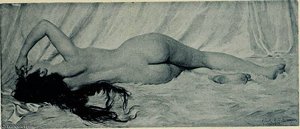
Portrét Albert Aublet

28 najznámejších obrazov od Albert Aublet, výber z galérie

Aktualizované november 2026 · zoradené podľa našej miery popularity (vyhľadávanie, návštevy a objednávky pre každú prácu) · 28 dielov umelca Albert Aublet v našom katalógu

Stručne povedané

Z všetkých originálov, ktoré Albert Aublet zanechal, je najznámejší On the Shingle (1883). Hneď za ním nasledujú Selene (1880) a Reading on the garden path (1883). Náš katalóg obsahuje 28 diel od Albert Aublet; galéria si zachovala tých 28, ktoré obdivuje celý svet, pričom každý z nich je prezentovaný spolu s jeho dátumom, múzeou a príbehom.

1851 – 1938, 5. obvod Paríža Academic art Najviac diel: Petit Palais

Top 10 obrazov umelca Albert Aublet: výber galérie

1
On the Shingle (1883) od Albert Aublet

On the Shingle

1883 · Oil

The composition is defined by a strong horizontal orientation, placing the horizon line high to emphasize the vastness of the sea and the shoreline. Under a bright, hazy sky, the scene captures a crowded beach populated by numerous figures. Some individuals stand, some sit, and others walk near the water's edge, their forms rendered with varying degrees of detail. Those in the foreground appear more defined, while the figures in…

2
Selene (1880) od Albert Aublet

Selene

1880 · Oil

In this vertical oil painting from 1880, a nude female figure occupies the center of a celestial scene. The subject is positioned in an S-shaped curve, appearing to drift through a pale, translucent moon that dominates the background. Her limbs are rendered with smooth textures and subtle shading to define the anatomical form. Her hair flows upward, merging into the edges of the lunar disc. The color palette consists of…

3
Reading on the garden path (1883) od Albert Aublet

Reading on the garden path

1883 · Oil On Canvas

A solitary woman occupies the center of a lush garden, her attention fixed entirely upon a book. She is framed by a dense arrangement of flora, where the soft white of her dress provides a focal point against the surrounding greenery. The scene captures a fleeting instance of stillness, where the subject is lost in thought amidst the natural world. Sunlight filters through the canopy, illuminating the textures of the…

5
Sketch for the Hall of Festivities of the Hôtel de Ville: Lights (1892) od Albert Aublet

Sketch for the Hall of Festivities of the Hôtel de Ville: Lights

1892 · Gouache · Petit Palais, Paríž

Three small, nude figures move through a pale, hazy space. They are putti, caught in a rhythmic, circular dance that suggests a celebration of light. The composition is shallow, like a carving in stone or a relief on a wall. Their bodies are defined not by hard lines, but by the gentle meeting of shadow and glow. A muted palette of dusty rose, mauve, and lavender wraps around their rounded…

6
Sketch for the Hall of Festivities of the Hôtel de Ville: Fruits (1892) od Albert Aublet

Sketch for the Hall of Festivities of the Hôtel de Ville: Fruits

1892 · Pastel · Petit Palais, Paríž

In this preparatory study, a group of five nude figures moves through a shallow, frieze-like space, their bodies caught in a graceful, circular motion. They gather around large bowls and baskets, their limbs reaching and twisting as they handle a bounty of fruit. The scene feels less like a static pose and more like a captured moment of rhythmic labor, intended to decorate the grand Hall of Festivities of the…

7
Sketch for the Salle des Fêtes of the Hôtel de Ville: Flowers (1892) od Albert Aublet

Sketch for the Salle des Fêtes of the Hôtel de Ville: Flowers

1892 · Gouache · Petit Palais, Paríž

This preparatory sketch, titled Sketch for the Salle des Fêtes of the Hôtel de Ville: Flowers, presents a composition of four nude human figures arranged in a circular, dance-like procession. The figures are rendered with soft, gestural lines that define their contours without the use of heavy shading or anatomical precision. They appear to move in a rhythmic sequence, interacting with a garland of flowers that loops through the center…

9
Sketch for the Hall of Festivities of the Hôtel de Ville: Drinks (1892) od Albert Aublet

Sketch for the Hall of Festivities of the Hôtel de Ville: Drinks

1892 · Pastel · Petit Palais, Paríž

A sense of rhythmic movement fills the space as a group of cherubic, nude figures, known as putti, engage in a spirited scene. They gather around a small cart or wheel, their bodies caught in a moment of playful celebration. The composition stretches horizontally, creating a frieze-like arrangement that pulls the eye across the page. Soft, rounded shapes define their limbs, giving the figures a voluminous, fleshy quality that suggests…

10
Une Beaute Orientale od Albert Aublet

Une Beaute Orientale

Oil

In this composition, we find ourselves in a private, shadowed space where a single figure commands the viewer's attention. The woman is captured in a moment of transition, her hands lifting a light blue drape over her head. There is a certain poise in her stance, a subtle bend at the knee that suggests a movement caught in mid-breath. The lighting is soft, falling from above to trace the gentle…

Výber umelcov Albert Aublet pokračuje, od 11 do 28

Motívy, ktoré zaujali Albert Aublet

Štyri témy, ktoré sa v týchto origináloch najčastejšie vracajú, každá s jej najvychybenejším príkladom.

Múzeá, ktoré uchovávajú originály umelca Albert Aublet

2 múzeá, v ktorých sa nachádza najviac obrazov z tejto stránky.

Múzeum Mesto Diela umelca Albert Aublet Obrazy z tohto zoznamu
Petit Palais, ParížPetit Palais Paríž 6 Sketch for the Salle des Fêtes of the Hôtel de Ville: Music, Sketch for the Hall of Festivities of the Hôtel de Ville: Lights, Sketch for the Hall of Festivities of the Hôtel de Ville: Fruits
Musée d'art et d'histoire de Narbonne, NarbonneMusée d'art et d'histoire de Narbonne Narbonne 3 Interior of the Rüstem Pacha Mosque of Constantinople, Les toits de Tunis, Devant la mosquée

Albert Aublet dekáda po dekáde: originál, ktorý definuje každú z nich

Diela podľa dekád

Vyberte si dekádu a pozrite si originál, ktorý ju definuje.

Otázky zberateľov o obrazoch od Albert Aublet

Ktorým dielom je Albert Aublet najznámejší/najznámejšia?Odhaľte odpoveď

On the Shingle (1883). Nasledujú Selene (1880) a Reading on the garden path (1883).

V akom veku bol/a Albert Aublet, keď vzniklo dielo On the Shingle?Odhaľte odpoveď

32 rokov: On the Shingle vzniklo v roku 1883 a Albert Aublet sa narodil/a v roku 1851.

Ktorých desať najznámejších obrazov má Albert Aublet?Odhaľte odpoveď

On the Shingle, Selene, Reading on the garden path, Sketch for the Salle des Fêtes of the Hôtel de Ville: Music, Sketch for the Hall of Festivities of the Hôtel de Ville: Lights, Sketch for the Hall of Festivities of the Hôtel de Ville: Fruits, Sketch for the Salle des Fêtes of the Hôtel de Ville: Flowers, Sketch for the Hall of Festivities of the Hôtel de Ville: Cotillons, Sketch for the Hall of Festivities of the Hôtel de Ville: Drinks a Une Beaute Orientale. Vyššie uvedené hodnotenie uvádza rok a múzeu pre každé z nich.

Koľko obrazov zanechal umenec Albert Aublet?Odhaľte odpoveď

Náš katalóg obsahuje 28 diel od umelca Albert Aublet z perioda od 1880 do 1912.

V ktorých múzeách visia majstrovské diela umelca Albert Aublet?Odhaľte odpoveď

Väčšinou v Petit Palais (Paríž) a Musée d'art et d'histoire de Narbonne (Narbonne). Tabuľka múzeí vyššie ich všetky uvádza.

V ktorých rokoch vytvoril Albert Aublet svoje najznámejšie diela?Odhaľte odpoveď

V období 1890s: 6 z 28 diel na tejto stránke bolo vytvorených vtedy, pričom Sketch for the Salle des Fêtes of the Hôtel de Ville: Music z nich.

Aké sú prvé a posledné známe originály od Albert Aublet?Odhaľte odpoveď

Na tejto stránke je najstaršie dielo z Selene (1880) a najnovšie z Les toits de Tunis (1912).

Aké témy si Albert Aublet najčastejšie vyberal/a?Odhaľte odpoveď

Lavender (6), People (5) a Woman (5), v rámci 28 diel na tejto stránke.

Ktorú techniku používal(a) Albert Aublet najčastejšie?Odhaľte odpoveď

Oil, pre 3 z 28 diel na tejto stránke.

Do ktorého umeleckého smeru patrí Albert Aublet?Odhaľte odpoveď

Academic art, podľa originálov na tejto stránke.

Aké diela umelca Albert Aublet sa nachádzajú v múzeu Petit Palais?Odhaľte odpoveď

Sketch for the Salle des Fêtes of the Hôtel de Ville: Music, Sketch for the Hall of Festivities of the Hôtel de Ville: Lights a Sketch for the Hall of Festivities of the Hôtel de Ville: Fruits: múzeá Petit Palais, Paríž uchovávajú 6 z diel na tejto stránke.

Albert Aublet: život a dielo

Luminózny odkaz Alberta Aubleta

Narodený v srdci Paríža v roku 1851, Albert Aublet vystúpil z pulzujúcich, neustále sa meniacich prúdov francúzskeho umenia počas éry Belle Époque. Jeho cesta sa začala v prestížnych sálach École des Beaux-Arts, kde si pod bdelným dohľadom majstrov ako Claudius Jacquand a uznávaného Jean-Léon Gérôme precvičoval svoj umelecký ruch. Táto prísna akademická základňa mu poskytla technickú precíznosť, ktorá mu neskôr poslúžila ako základ pre jeho expresívnejšie skúšania. Jeho skorý debut na Salóne v roku 1873 označil príchod významného talentu a priniesol okamžitú uznanie, keď diela ako Intérieur de Boucherie au Tréport boli zakúpené významnými osobnosťami, ako bol Alexandre Dumas Fils. V týchto formatívnych rokoch zachytil Aubletov štítek tichú dôstojnosť vidieckeho života a drsnú krásu Normandie, čím si vybudoval reputáciu v oblasti realizmu, ktorý rezonoval s vtedajšou fascináciou nefalšovanou pravdou.

Ako sa jeho kariéra dozrievala, umelecký pohľad Alberta Aubleta sa vzdal ďaleko za hranice Francúzska, kde hľadal luminóznu príťažlivosť Orientu. Transformujúca cesta do Konštantínopola v roku 1881 zapálila celoživotnú vášeň pre orientalistické témy, čím navždy zmenila trajektóriu jeho celkového diela. Táto fascinácia nebola len prostým pogoňom za exotikou, ale hlbokým, vedeckým engagedmentom s novým svetlom a kultúrou. V spoločnosti súčasníkov ako Jean-Léon Gérôme a Alberto Pasini preskúmal živé krajiny Alžíriku a Turecka, pričom na plátno preložil rušné trhy, architektrónu veľkolebosť a atmosférnu jemnosť Východu. Jeho prácu stala mostom medzi európskou akademickou tradíciou a zmyslovnou bohatosťou Severnej Afriky a Osmanského impéria, vyznačenou ostrou citlivosťou k svetlu a majstrovským využitím tónových gradácií, ktoré do každej scény vdechovali život.

Majstrovstvo svetla a predmetu

Evolúcia Aubletovej techniky videla jeho plynulý prechod medzi štruktúrovanými nárokmi akademického umenia a plynnejšími, emotívnymi kvalitami, ktoré nachádzame v jeho vodovkách a gouážach. Posiadal vzácnu schopnosť zachytiť prchavé okamihy—spôsob, akým sa slnečné svetlo filtruje cez závoj alebo jemný žiiar v západe nad tuniským nádvorím. Táto maestria sa rozšírila aj do jeho zobrazení ľudských postav, kde skúmal tak gráciu aktov, ako aj intímne charakterové štúdie miestnych dignitárov a obyvateľov bežného života. Jeho neskoršie roky boli hlboko prepojené s kultúrou Tunisu; po zakúpení nádherného Palais Dar Ben Abdalah v roku 1905 sa stal centrálnou postavou miestnej umeleckej komunity a dokonca pôsobil ako prezident prvého miestneho umeleckého salónu. Táto hlboká imersia umožnila jeho tvorbe prekročiť rámec pouhého pozorovania a stať sa dôsoulnou dokumentáciou sveta v prechode.

Aubletove úspechy sa stretli s významným medzinárodným uznaním, ktoré odrážalo jeho status skutočne globálneho umelca. Jeho prínos do sveta umenia bol poznačený prestížnými poctami, ktoré upevnili jeho postavenie medzi elitou jeho doby:

  • Medaľ z Salónu z roku 1880: Rané uznanie jeho rozkvitajúcej zručnosti a rastúcej významnosti v Paríži.
  • Zlatá medaľ z Parížskej svetovdej výstavy v roku 1889: Vyvrcholený úspech, ktorý oslávil jeho schopnosť očariť svetové publikum počas vrcholu Expozície Universelle.
  • <Légion d'honneur (1890): Hlboký dôkaz jeho kultúrneho vplyvu a jeho služby francúzskej umeleckej tradícii.

Dnes spočíva historický význam Alberta Aubleta v jeho schopnosti syntetizovať precíznosť Académie s evokatívnym duchom impresionizmu. Jeho obrazy zostávajú vitalnými oknami do uplynutej éry, zachránené v prestížnych zbirkách, ako je Musée National des Beaux-Arts de Québec a Philadelphia Museum of Art. Cez jeho oči pokračujeme v obdivovaní trvalého čaru Orientu a nadčasovej elegancie francúzskej tradície, vykreslenej rukou, ktorá porozumela tak niečomu ako váha histórie, ako aj ľahkosti prechádzajúceho tieňa.