The Florentine Origins of Luca della Robbia: A Sculptor’s Early Life & Influences
Luca della Robbia, a name synonymous with the radiant charm and enduring beauty of Renaissance sculpture, emerged from the vibrant artistic milieu of Florence in the early 15th century. Born sometime between 1399 and 1400 – precise dates remain elusive – he inherited a city already blossoming under the patronage of powerful families like the Medici, a climate that fostered innovation and celebrated human ingenuity. While details of his initial training are somewhat obscured by historical accounts, it’s widely believed he began as a goldsmith, honing skills in meticulous detail and refined craftsmanship—qualities that would later define his sculptural work. This early exposure to precious materials likely instilled within him an appreciation for surface texture and the subtle interplay of light, foreshadowing his groundbreaking experiments with terracotta.
The influence of Lorenzo Ghiberti, whose bronze doors for the Florence Baptistery captivated a generation, is undeniable. Della Robbia is thought to have worked in Ghiberti’s workshop, absorbing the master’s understanding of classical forms and narrative composition. However, it was Donatello who exerted perhaps the most profound impact on the young sculptor. Donatello's revolutionary realism, his ability to imbue stone with psychological depth and emotional resonance, served as a crucial catalyst for Della Robbia’s own artistic development. Early works in marble, such as sections of the choir gallery at Florence Cathedral (1431-1438), demonstrate this clear debt to Donatello's powerful style – yet even then, hints of a unique sensibility begin to emerge, a preference for grace and lyrical beauty that would become hallmarks of his mature work. He wasn’t merely replicating the achievements of his predecessors; he was forging a new path, one that sought to democratize art through innovative materials and techniques.
Revolutionizing Terracotta: The Invention of Glazing Techniques
While Della Robbia initially excelled in marble sculpture, it was his pioneering work with terracotta – literally “baked earth” – that secured his lasting fame. Terracotta had been used for centuries, but its inherent fragility and susceptibility to the elements limited its application, particularly for outdoor display. Della Robbia’s genius lay in developing a unique glazing technique that transformed this humble material into something remarkably durable and visually striking. The precise formula remained a closely guarded family secret, passed down through generations of Robbias, but it involved multiple layers of tin-based enamel applied over the fired clay.
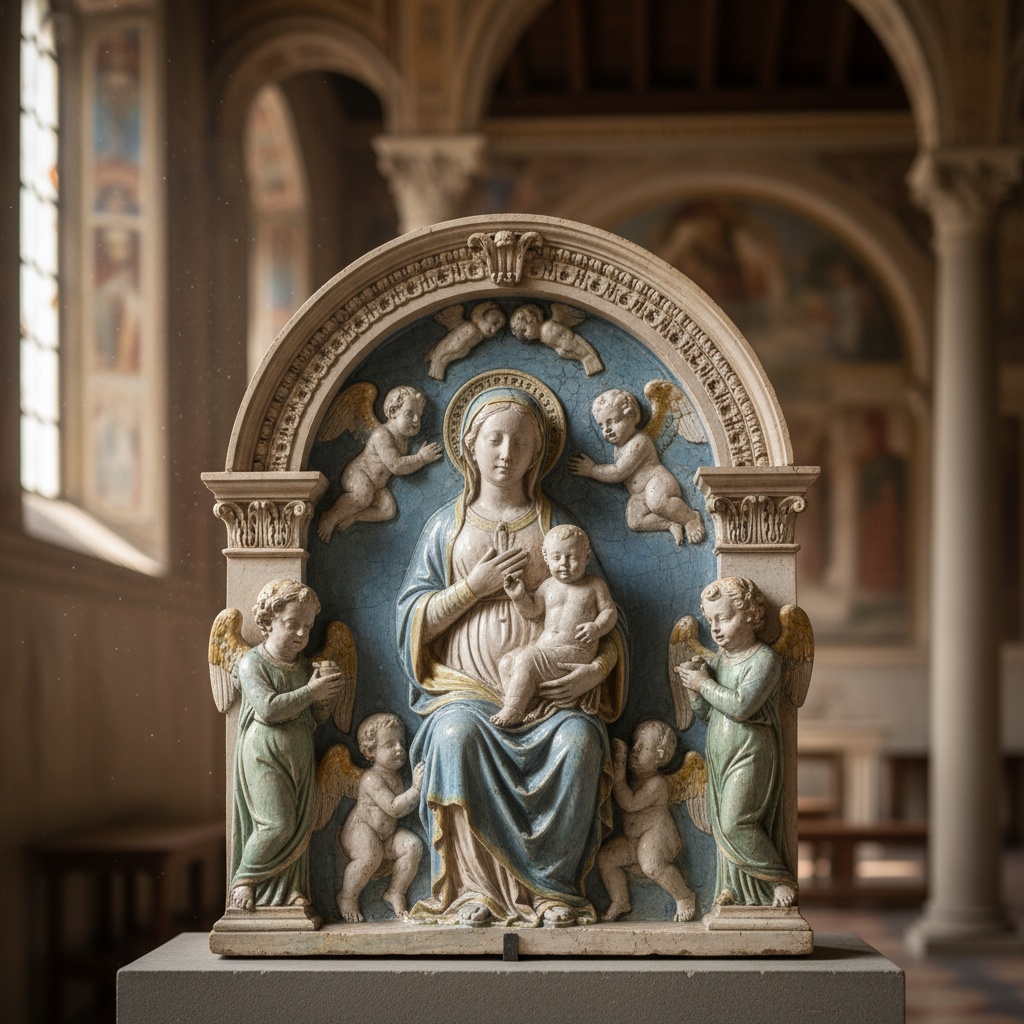
This process resulted in surfaces characterized by brilliant opaque whites and deep cerulean blues – colors that not only protected the terracotta from weathering but also imbued it with an ethereal luminosity. The glazing wasn’t merely a protective coating; it was integral to the aesthetic effect, creating a sense of depth and vibrancy rarely seen in other sculptural mediums. The technique allowed for intricate details and delicate modeling, while simultaneously ensuring the longevity of the artwork. It's important to note that this innovation wasn’t simply about aesthetics; it addressed a practical need – providing affordable, durable religious imagery for a wider audience. The workshop could produce multiples of devotional objects, making art accessible beyond the elite circles traditionally served by marble and bronze sculpture.
Masterpieces in Clay: Exploring Key Works by Luca and the Della Robbia Workshop
The output of the Della Robbia workshop was prolific and diverse, encompassing reliefs, portraits, architectural decorations, household statuettes, and even full-scale figures. One of the most celebrated examples is the Madonna and Child between Two Angels (c. 1450), a circular relief that exemplifies the grace and serenity characteristic of Della Robbia’s style. The composition is beautifully balanced, with the Virgin Mary depicted as a tender mother, her gaze radiating compassion and devotion. The vibrant blue halos and the delicate modeling of the figures create a sense of otherworldly beauty.
Another significant work is the stunning terracotta ceiling decoration commissioned for the Florence Cathedral in 1461. This ambitious project showcases the workshop’s mastery of complex compositions and intricate detail. The panels depict scenes from the life of Christ, rendered with remarkable clarity and expressive power. Beyond these iconic pieces, numerous smaller works – tondos depicting saints, reliefs adorning tabernacles, and decorative friezes – demonstrate the versatility and enduring appeal of the Della Robbia style. Following Luca’s death in 1482, his nephew Andrea continued the workshop's traditions, further refining the glazing techniques and expanding its repertoire. Andrea’s sons, Giovanni and Girolamo, also played key roles, ensuring the continuation of this remarkable artistic legacy.
Beyond Aesthetics: Functionality, Religious Symbolism, and Patronage
The success of the Della Robbia workshop wasn't solely attributable to technical innovation. Their works resonated deeply with contemporary audiences because they fulfilled a specific cultural need – providing affordable and accessible religious imagery. In an era of fervent piety, devotional objects like Madonnas and reliefs depicting scenes from the Bible were highly sought after by families seeking to adorn their homes and express their faith. The glazed terracotta allowed for mass production without sacrificing quality or aesthetic appeal.
Religious symbolism permeated every aspect of their work, from the choice of subject matter to the use of color and composition. The blue halos, for example, represented divine grace, while the serene expressions of the figures conveyed a sense of spiritual tranquility. The patronage system also played a crucial role in shaping the workshop’s output. Wealthy families like the Medici commissioned numerous works, not only as acts of religious devotion but also as displays of their own status and piety. The Della Robbia workshop skillfully catered to these demands, producing pieces that were both aesthetically pleasing and symbolically resonant.
The Legacy of the Della Robbias: Impact on Renaissance Art & Subsequent Generations
Luca della Robbia’s influence extended far beyond his own lifetime. His glazing techniques revolutionized terracotta sculpture, transforming it from a humble craft into a respected art form. His emphasis on grace, serenity, and lyrical beauty inspired generations of artists, influencing sculptors, painters, and ceramicists alike. The workshop's output also had a significant impact on the decorative arts, with Della Robbia reliefs adorning churches, palaces, and private homes throughout Italy and beyond.
While the secrets of the glazing process were eventually lost, the enduring appeal of Della Robbia’s work continues to captivate audiences today. His sculptures represent a unique blend of technical innovation, artistic skill, and religious devotion – a testament to the power of human creativity and the enduring beauty of Renaissance art. The workshop's legacy is visible in countless examples of ceramic sculpture produced throughout Europe, demonstrating the lasting impact of this Florentine master.
Collecting Della Robbia Today: Authenticity, Restoration, and Appreciation
Acquiring a genuine Della Robbia sculpture is a pursuit that requires careful consideration and expert guidance. Due to their popularity and historical significance, forgeries are unfortunately common. Authenticating these works involves meticulous examination of the clay composition, glazing technique, and stylistic details. Consulting with reputable art historians and appraisers is essential.
Restoration can also be a complex undertaking, requiring specialized knowledge and expertise. Improper cleaning or repair can damage the delicate glaze and diminish the artwork’s value. When considering a purchase, it's crucial to inquire about the sculpture’s provenance – its documented history of ownership – and any previous restoration work. Today, Della Robbia sculptures are highly prized by collectors worldwide, representing not only artistic masterpieces but also tangible links to the rich cultural heritage of the Renaissance. OriginalUniqueArt offers a curated selection of high-quality reproductions, allowing art enthusiasts to experience the beauty and charm of these iconic works in their own homes.