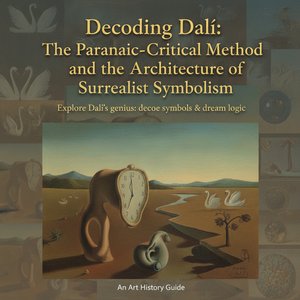
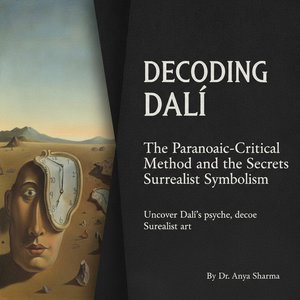
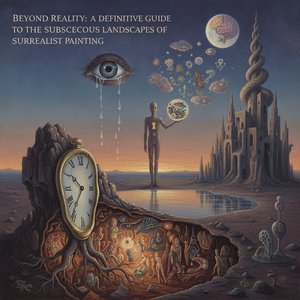
Decoding Dalí: The Paranoiac-Critical Method and Surrealist Symbols Explained
Master the surreal with our deep dive into Salvador Dalí’s Paranoiac-Critical Method. Explore the psychological symbols and dream logic that revolutionized modern art history. Perfect for students and collectors seeking to decode the genius behind the melting clocks.
A Life Submerged in Dreams: The World of Salvador Dalí Salvador Domingo Felipe Jacinto Dalí i Domènech, a name synonymous with surrealism, was born on May 11, 1904, in the sun-drenched town of Figueres, Spain. His existence was destined to be anythin...
To step into the world of Salvador Dalí is to abandon the safety of the waking mind and surrender to a landscape where logic dissolves like wax under a summer sun. Born in 1904 in the sun-drenched, evocative town of Figueres, Spain, Dalí emerged not merely as a painter but as a provocateur of the subconscious, a figure whose very name became synonymous with the radical disruptions of the Surrealist movement. His existence was meticulously crafted as a performance, an exploration of the subconscious rendered visible through startling imagery and unparalleled technical brilliance. While his early training at the San Fernando Academy of Fine Arts in Madrid introduced him to the precision of Renaissance masters and the textures of Impressionism, it was his journey to Paris that ignited a transformative fire. In the heart of the avant-garde, Dalí found himself drawn to the rebellious spirit of Dadaism—a movement that rejected logic in favor of absurdity. However, he did not simply join this revolution; he revolutionized it by merging the precision of classical draftsmanship with the irrationality of the dream state, creating a visual language that remains as high-impact and visually arresting today as it was during the interwar period.
Mastering the Irrational: The Mechanics of the Paranoiac-Critical Method
The paranoiac-critical method is a surrealist technique developed by Salvador Dalí in the early 1930s. He employed it in the production of paintings and other artworks, especially those that involved optical illusions and other multiple images. The t...
At the core of Dalí’s technical mastery lies a groundbreaking psychological tool known as the paranoiac-critical method. Developed in the early 1930s, this technique was far more than a mere stylistic choice; it was a deliberate cultivation of a hallucinatory state designed to unlock and translate the hidden imagery of the subconscious onto canvas with astonishing precision. Unlike the random chaos often associated with surrealist experimentation, Dalí’s method was a structured attempt to capture profound psychological depth through a lens that challenged our very perceptions of time, space, and identity. He described it as a spontaneous method of irrational knowledge, based on the systematic objectivity of interpreting delirious phenomena. By invoking a state of paranoia—the fear of being manipulated or targeted by external forces—Dalí was able to perceive links between objects that are rationally disconnected. This process allowed him to create works filled with optical illusions and multiple images, where one form might simultaneously represent another, forcing the viewer to participate in the construction of meaning. It is a technique of controlled madness, where the artist uses the precision of his brush to document the fluidity of a fever dream.
Visual Glitches in Reality: Decoding Iconic Surrealist Symbols
A Surrealist Echo: Decoding Dali’s ‘Figure with Flag’ Salvador Dalí's “Figure with Flag,” an illustration for André Breton’s seminal 1968 publication, *Mad Mad Mad Minerva*, stands as a testament to the enduring legacy of Surrealism and its profound ...
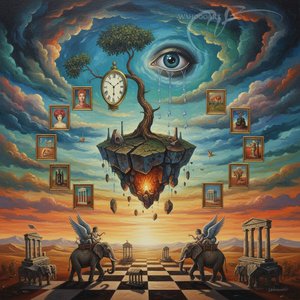
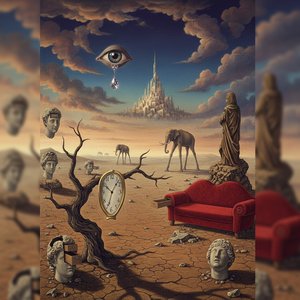
To decode a Dalí masterpiece is to navigate a complex semiotic web where every object serves as a portal into the psyche. His canvases are populated by recurring motifs that act as visual anchors within the sea of distortion. Consider, for instance, the starfish, which appears in works like Figure with Flag, symbolizing regeneration and the blurring of boundaries between organic and inorganic life. Then there are the iconic melting clocks, perhaps his most famous contribution to the global visual lexicon, which challenge our rigid, Newtonian understanding of time by rendering it as something soft, decaying, and subject to the whims of temperature and emotion. We also encounter the frequent use of crutches, which support limp, heavy forms, suggesting the fragility of human ego and the necessity of external structures to maintain a semblance of stability. Even the desolate Catalan landscapes, often bathed in muted, melancholic light, serve as more than mere backdrops; they are psychological arenas where the textures of the earth mirror the fractured state of the mind. Through these symbols, Dalí achieves a deconstruction of identity, making subjectivity the primary inhabitant of his art.
From Trauma to Technique: The Psychological Roots of Dalí's Imagery
A Surreal Echo of Loss and Transformation Salvador Dalí’s “Untitled (Stereoscopic Painting),” created in 1972, stands as a testament to the artist's unwavering commitment to exploring the subconscious mind through meticulously crafted visual represen...
The unsettling beauty of Dalí’s work is deeply rooted in the shadows of his early life, specifically the profound trauma of loss that permeated his formative years. Born nine months after the death of his older brother, also named Salvador, Dalí lived under the heavy shadow of duality and replacement. This early experience of being a "successor" to a deceased sibling infused his oeuvre with themes of metamorphosis, death, and the fluid boundaries between life and the void. His art became a laboratory for exploring these anxieties, heavily influenced by the burgeoning field of Freudian psychoanalysis. The Surrealists, led by André Breton, sought to resolve the contradictory conditions of dream and reality into an absolute "surreality," and Dalí was their most skilled practitioner. He utilized his technical skill to render repressed desires and deep-seated fears with a clarity that made them undeniable. His work reflects a period of intense cultural upheaval—the aftermath of World War I and the rise of industrialization—where traditional values were crumbling, leaving behind a fragmented reality that Dalí was uniquely equipped to document through his lens of beautiful, calculated neurosis.
The Legacy of the Subconscious: How Dalí Redefined Modern Perception
A Surreal Labyrinth: Stepping into Dalí’s Living Dream To enter the Dalí Theatre and Museum in Figueres is not merely to visit an exhibition, but to surrender oneself to a meticulously crafted hallucination. Located in the heart of the Spanish town w...
The enduring power of Salvador Dalí lies in his ability to transform the irrational into something monumental and permanent. His legacy is not found merely in museums like the Dalí Theatre and Museum in Figueres—a structure that serves as a self-portrait in stone and glass—but in the way he fundamentally altered the trajectory of modern visual culture. He taught us that art could be a tool for psychological exploration, a way to confront the hidden corners of our own minds with courage and aesthetic grace. By bridging the gap between the meticulous detail of the Old Masters and the wild, uninhibited energy of the avant-garde, he created a blueprint for much of the contemporary graphic and surrealist movements that followed. Today, when we encounter imagery that plays with perspective, identity, or the distortion of reality in digital media, street art, or high-concept design, we are seeing the echoes of Dalí’s revolution. He remains the ultimate architect of dreams, reminding us that beneath the surface of our structured, logical world lies a boundless landscape of infinite, breathtaking possibility.
This article was originally published as part of an educational series on OriginalUniqueArt.com.
Master the complexities of Salvador Dalí’s genius. Explore an expert analysis of the Paranoiac-Critical Method and the profound symbolism within his Surrealist masterpieces for art students and discerning collectors.
Master the complexities of Salvador Dalí’s genius. Explore an expert analysis of the Paranoiac-Critical Method and the profound symbolism within his Surrealist masterpieces for the discerning art collector.
Ponorte sa do sveta snov a podvedomia! Objavte top 10 surrealistických majstrovských diel od Dalího, Magritta a Miró. Kvalitné art reprodukcie pre váš domov na OriginalUniqueArt.com. Preskúmajte plnú kolekciu online.
Explore the captivating world of Salvador Dalí! Discover his surrealist masterpieces, profound connection to Freud's theories, and lasting impact on art & culture. A deep dive into a visionary artist.
Explore the profound depths of Surrealism with our expert guide. Discover the history, symbolism, and psychological mastery behind iconic works by Dalí and others. Perfect for art historians and collectors seeking a deep understanding of the dreamlike subconscious in fine art.


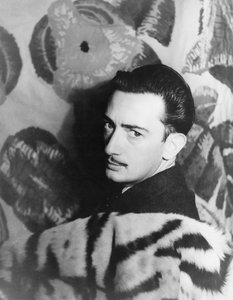 Salvador Dalí
 Figure with Flag. Illustration for 'Memories of Surrealism', circa 1971
 Untitled (Stereoscopic Painting), 1972
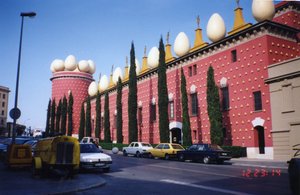 Dalí Theatre and Museum