The Twilight Revolution: How Impressionism Redefined the Night Sky Capturing Light: A Masterclass in the Ethereal Beauty of Impressionistic Landscapes The Ephemeral Moment: Understanding the Impressionist Philosophy of Light To gaze upon an Impressio...
The transition from day to night is rarely a sudden shuttering of light; rather, it is a gradual dissolution of boundaries. As the sun descends below the horizon, the world enters that liminal state known as twilight, where civil and astronomical dusk slowly strip the landscape of its sharp edges. For the observer, this period offers a shifting palette—the golden hour surrendering to deep violets and indigo. In the realm of fine art, capturing this specific atmospheric weight requires more than mere observation; it demands an understanding of how light behaves when it is no longer direct, but scattered and filtered through the thickening atmosphere.
This movement toward the nocturnal was a rebellion against the predictable. The revolutionaries of the late nineteenth century saw the night not as a void or a simple absence of light, but as a living entity. They understood that the transition from twilight to deep indigo is a shift in energy, a moment when the familiar world loses its edges and becomes something more mysterious. When we look at these nocturnal landscapes, we witness a movement toward an art that captures the pulse of the universe itself.
The Threshold of Twilight: Entering the Nocturnal Landscape Beyond the Horizon: 10 Masterpieces That Redefine Landscape Art Introduction To gaze upon a landscape is to witness the silent dialogue between the earth and the sky, a conversation captured...
The true architecture of the night sky in painting is built not from light, but from the strategic use of shadow. The technical term chiaroscuro—literally meaning "light-dark"—refers to the use of strong contrasts to achieve volume and three-dimensional form. During the Renaissance, this technique allowed artists to model figures and landscapes with a newfound sense of weight and presence. When pushed to its extreme, we encounter tenebrism, where darkness becomes the dominant force, swallowing much of the composition to focus the viewer on a singular, luminous point.
This mastery of shadow finds a profound echo in the way later artists approached the nocturnal landscape. While the Renaissance masters used shadow to define the physical weight of bodies, the Impressionists and Post-Impressionists used it to define the weight of the atmosphere. They moved away from rigid, studio-bound rules to chase the ephemeral dance of light across water and meadow. By manipulating the relationship between deep shadows and sudden highlights, they created a sense of depth that invited the viewer to step into the darkness rather than merely observe it from a distance.
Post-Impressionist Vibrations: The Pulse of the Cosmos
The Enchanting Night Sky Vincent van Gogh's "The Starry Night" is an iconic masterpiece that captures the mesmerizing beauty of a night sky swirling with energy and emotion. Painted in June 1889 during his stay at the Saint-Paul-de-Mausole asylum in ...
If Impressionism captured the light, then Post-Impressionism captured the very heartbeat of the cosmos. There is a certain intimacy in revisiting these nocturnal visions, a sense of walking alongside an artist who saw the universe as an extension of their own spirit. Vincent van Gogh, particularly during his time at the Saint-Paul-de-Mausole asylum in 1889, moved beyond the focus on fleeting moments to explore subjective emotion and symbolic meaning. His work is not a quiet observation; it is an explosion of movement.
In works such as The Starry Night, the sky is dominated by intense, swirling patterns that roll across the surface like waves in a storm. This is achieved through a thick, textured impasto technique that gives the heavens a physical, tactile presence. Using ultramarine and cobalt blue for the sky, contrasted against the indian yellow and zinc yellow of the stars, Van Gogh created a vibrating, pulsating effect. The stars are not merely points of light; they are rendered with concentric dotted circles that suggest a rhythmic, celestial energy. This technique allows the canvas to breathe, turning the night sky into a dynamic force that moves with the viewer.
Pioneering American photographer & inventor John Adams Whipple captured stunning moon & star images, plus early daguerreotypes. Explore his legacy!
The intersection of art and science provides a lens through which to view these nocturnal works. The night sky has always been a subject of both aesthetic wonder and rigorous study. In the mid-nineteenth century, figures like John Adams Whipple pushed the boundaries of what could be seen, using the powerful Great Refractor telescope at Harvard College Observatory to produce detailed images of the moon. His work in astronomical photography demonstrated that the night held details far more complex than the naked eye could perceive.
This scientific curiosity often informed the canvas. Van Gogh’s interest in astronomy was well-documented, and his paintings reflect an engagement with the celestial bodies of his era. In The Starry Night, the presence of Venus—the morning star—is a nod to the actual sky visible at the time. Similarly, in Starry Night Over the Rhône, the depiction of the Ursa Major constellation connects the terrestrial plane to the celestial. While some elements prioritize emotional truth over astronomical accuracy, the tension between what is observed through a lens and what is felt through a brushstroke remains a central theme in the history of nocturnal art.
The Emotional Landscape: Night as a Mirror of the Soul
A Life Painted in Passion: Vincent van Gogh Vincent Willem van Gogh, a name synonymous with vibrant color and raw emotion, remains one of the most recognizable and beloved figures in art history. Born on March 30, 1853, in Zundert, Netherlands, his j...
To gaze upon a nocturnal landscape is to witness a conversation between the earth and the sky, a silent dialogue that has preoccupied the human soul for centuries. For many artists, the night was a canvas for their deepest fears and wildest dreams. The cypress tree, often appearing in these works as a dark, flame-like silhouette, frequently serves as a link between the earth and the sky, symbolizing both death and eternal life. It acts as a sentinel, grounding the composition while reaching toward the restless heavens.
This emotional intensity is what allows these paintings to resonate across generations. The night is not a void; it is a space of introspection. In the quietude of a painted night, we find reflections of our own internal states—the turbulence of a storm or the profound stillness of a moonlit river. Whether through the swirling vortices of Saint-Rémy or the tranquil blue waters of the Rhône, these artists used the nocturnal palette to communicate truths that the bright, clear light of day often obscures.
Entering the Nocturnal Arena Celestial Shadows: Mastering the Nuance of Night Skies and Chiaroscuro in Fine Art The Threshold of Twilight: Entering the Nocturnal Landscape Beyond the Horizon: 10 Masterpieces That Redefine Landscape Art Introduction T...
Integrating the depth and mood of nocturnal art into a contemporary living space requires a thoughtful approach to color and scale. The deep indigos, rich blues, and warm yellows found in these historical works can transform a room into a sanctuary of contemplation. For those looking to honor this tradition, a high-quality reproduction offers a way to connect with the masters without the need for an institutional gallery.
When selecting a piece, consider the architectural impact of the composition. A large-format canvas featuring the sweeping movement of a Van Gogh sky can serve as a focal point in a modern living area, much like a mural. For more complex spaces, such as staircases or long hallways, we often recommend multi-panel layouts that allow the brushstrokes to flow seamlessly across several surfaces, creating a cohesive, immersive experience. Whether through a hand-painted oil reproduction that captures the tactile impasto of the original or a carefully curated print, bringing the magic of the night sky into your home allows for a permanent connection to the infinite.
At OriginalUniqueArt.com, we specialize in helping you discover and bring these profound moments of art history into your personal environment. From custom commissions that reimagine your own memories in the style of the masters to museum-quality reproductions, our goal is to make the beauty of the cosmos accessible to every collector.
Journey through the Kröller-Müller Museum's finest treasures. From Van Gogh’s vibrant post-impressionism to Monet’s luminous landscapes, explore 25 iconic masterpieces and find museum-quality art reproductions for your decor. Discover all masterpieces on OriginalUniqueArt.com.
Immerse yourself in the vibrant world of Vincent van Gogh. Explore 25 iconic Post-Impressionist masterpieces, from Starry Night to Sunflowers, and discover the stories behind his emotive brushstrokes. Find museum-quality art reproductions at OriginalUniqueArt.com. Explore the full collection online.

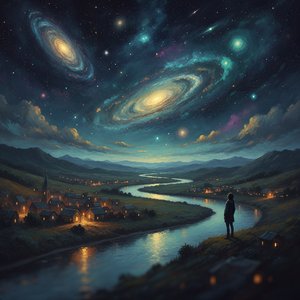 Celestial Dreams: Capturing the Cosmic Magic and Emotional Depth of Impressionist Nightscapes
 Celestial Shadows: Mastering the Nuance of Night Skies and Chiaroscuro in Fine Art
 The Starry Night
 John Adams Whipple
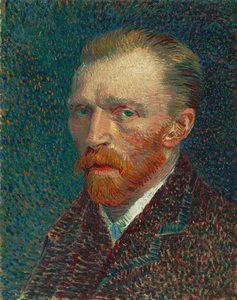 Vincent Willem Van Gogh
 Electric Skies: The Most Visually Powerful Night Sky Artworks in History


