Contemporary Realism · 1898
Taking the Count (Thomas Eakins, 1898)
Thomas Eakins (1844–1916) vytvoril Taking the Count. Pochádza z roku 1898. Patrí k umeleckému smeru Contemporary Realism. Je vyrobené z Oil On Canvas. Nachádza sa v Yale University Art Gallery v Hartford, Spojené štáty Ameriky.
- 1898
- Oil On Canvas
- Yale University Art Gallery, Hartford

 Náhľad v interiéri

 Ručne maľovaná olejná reprodukcia
 Odoslať ako digitálnu kartu
 Zdieľať
 Informačný list


 Stiahnuť obraz
 Podobné položky
 RTG skúška
 Prehliadanie diapozoje
 Otázky a odpovede

 Štatistiky
Taking the Count v krátkosti
- Názov
- Taking the Count
- Umelec
- Thomas Eakins (1844–1916)
- Narodený v roku
- Philadelphia, Spojené štáty americké
- Dátum
- 1898
- Technika
- Oil On Canvas
- Kde si ho pozrieť
- Yale University Art Gallery, Hartford, Spojené štáty Ameriky
- Pohyb
- Contemporary Realism
- Obdobie
- 19th Century
- Motív
- boxing match, anatomy, crowd spectators, referee, philadelphia, realism
Čo zobrazuje Taking the Count?
The Raw Pulse of Philadelphia: A Masterclass in Realism
In the dim, electric atmosphere of Philadelphia’s Arena in 1898, a moment of profound human vulnerability is frozen in time. Thomas Eakins, a titan of American Realism, does not merely paint a boxing match; he dissects the very essence of endurance and physical struggle. In Taking the Count, we are thrust into the center of the ring, where the sweat, the tension, and the heavy breathing of the combatants feel almost palpable. This is not the romanticized, heroic athleticism often found in sporting art; instead, Eakins presents a gritty, unvarnished truth. The scene captures a fallen fighter at his most precarious moment, caught in the agonizing interval between a devastating blow and the referee's decisive count. It is a study of the human body under duress, rendered with a scientific precision that reflects Eakins’ lifelong obsession with anatomy.
The composition draws the eye through a complex web of gazes and physical postures. At the heart of the drama, the kneeling figure embodies a desperate struggle for recovery, his muscles taut and his spirit tested. Surrounding him, the referee and the standing opponent create a triangular tension that anchors the viewer within the ring. Beyond the immediate combatants, the presence of the crowd—a shadowy, watchful collective—adds a layer of psychological depth, reminding us that this private agony is being consumed as public spectacle. For the collector or the lover of fine art, this painting offers more than just a depiction of sport; it provides a window into the late 19th-century urban experience, where the boundaries between physical prowess and human frailty are perpetually blurred.
Anatomy of a Masterpiece: Technique and Light
Eakins’s technical mastery is most evident in his ability to marry scientific rigor with emotional resonance. Having spent years studying the intricacies of musculature and bone structure through dissection, he approaches the canvas with the eye of an anatomist. Every sinew and strained limb in Taking the Count is rendered with an uncompromising accuracy that makes the figures appear to possess weight and volume. His use of light does not serve to beautify the scene but to illuminate its harsh realities. The lighting within the arena creates deep, dramatic shadows that sculpt the bodies of the boxers, emphasizing the physical toll of the fight and adding a sense of cinematic gravity to the composition.
The palette, while grounded in the earthy, somber tones characteristic of Eakins’s realism, is used to direct the viewer's emotional journey. The muted colors of the background allow the pale, strained skin of the athletes to emerge from the gloom, focusing our attention on the visceral reality of the struggle. For interior designers seeking a centerpiece for a sophisticated space, this work offers a profound sense of gravitas. A high-quality reproduction of this masterpiece brings with it an air of intellectual depth and historical weight, making it an ideal choice for galleries, studies, or living spaces that value art which challenges the eye and stirs the soul.
A Legacy of Unflinching Honesty
To understand Taking the Count is to understand the rebellious spirit of Thomas Eakins himself. At a time when many of his contemporaries were retreating into the soft, fleeting impressions of light or the idealized myths of history, Eakins stood firm in his commitment to the real. He found beauty not in perfection, but in the truth of the human condition—in the grit of the city, the precision of science, and the raw intensity of life lived on the edge. This painting remains a testament to that courage.
Owning or displaying a reproduction of this work is an invitation to contemplate the themes of resilience and the cyclical nature of struggle. It serves as a powerful reminder that even in moments of defeat, there is a profound dignity in the attempt to rise again. Whether viewed as a historical document of Philadelphia’s sporting culture or as a timeless exploration of human anatomy, Taking the Count continues to captivate, offering an enduring source of inspiration for those who find beauty in the authentic and the unadorned.
V ktorom múzeu sa nachádza Taking the Count?
Yale University Art Gallery
Hartford, Spojené štáty Ameriky
Pôvody a história galérie Yale University Art Gallery vznikla v roku 1832. Jej základmi je dar z kolekcie, ktorú odovzdal John Trumbull. V týchto raných rokoch sa stredníctvo galérie sústredilo predovšetkým na obrazy zachytávajúce Americkú revolúciu.


Vysoko rozlíšené fotografie diela Taking the Count
Thomas Eakins, Taking the Count (1898), Yale University Art Gallery. Verejné vlastníctvo
Otázky k dielu Taking the Count, odpovede
Kde môžem vidieť originál diela „Taking the Count“ od Thomas Eakins?
Dielo „Taking the Count“ od Thomas Eakins je vystavené v múzeu Yale University Art Gallery, Hartford, Spojené štáty Ameriky. Uvedená informácia o múzeu sa vzťahuje na originál, nie na reprodukcie.
Kedy bolo vytvorené dielo „Taking the Count“ od Thomas Eakins?
Dielo „Taking the Count“ pochádza z roku 1898, čo umožňuje zaradiť ho do tvorby umelca Thomas Eakins aj do jeho éry.
V akom médiu je vytvorené dielo „Taking the Count“ od Thomas Eakins?
Thomas Eakins pre dielo „Taking the Count“ použil/a techniku Oil On Canvas. Táto technika definuje materiálnu podstatu originálneho diela.
Čo zobrazuje dielo "Taking the Count"?
„Taking the Count“ od Thomas Eakins zobrazuje: boxing match, anatomy, crowd spectators, referee, philadelphia, realism, athlete.
Je „Taking the Count“ vo voľnom dostupe?
Stav autorských práv pre „Taking the Count“ od Thomas Eakins: dielo je v stave v slobodnom prostredí – autorské práva vypršali. To určuje, či je možné voľne vytvárať reprodukcie tohto obrazu.
Kto vytvoril "Taking the Count"?
Dielo „Taking the Count“ vytvoril/a Thomas Eakins. Informácie na tejto stránke opisujú originálne dielo umelca/ky Thomas Eakins.
Do ktorého umeleckého smeru patrí „Taking the Count“ od Thomas Eakins?
„Taking the Count“ od Thomas Eakins patrí do smeru Contemporary Realism. Tento smer poskytuje štylistický kontext diela.
Do ktorej obdobia tvorby Thomas Eakins spadá dielo "Taking the Count"?
V rámci kariéry umelca Thomas Eakins spadá dielo „Taking the Count“ do obdobia Mature Period, čo umožňuje jeho porovnanie s ostatnými prácami tohto umelca.
V akom veku vytvoril/a Thomas Eakins dielo „Taking the Count“?
Thomas Eakins mal/a 54 rokov, keď v roku 1898 vytvoril/a dielo „Taking the Count“. Vek bol vypočítaný na základe roku narodenia umelca, 1844.
O umelcovi, Thomas Eakins

1844–1916, Spojené štáty americké
Thomas Eakins
Thomas Eakins: Majstrovstvo Realizmu a Hlbokého Pozorovanie Thomas Cowperthwait Eakins, narodený 25. júla 1844 v Philadelphii, je považovaný za jednu z najvýznamnejších figúr amerického umenia – maľára neúprosného realizmu, ktorý sa zaviazal zachytiť esenciu ľudskej skúsenosti. Jeho cieľom nebolo len *prejavovať* svet; hnal ho záujem o jeho rozloženie, pochopenie jeho anatómie, a či už fyzickej alebo psychologickej, a následne ho rekonstruovať na plátne s úprimnosťou, ktorá často prechádzala do provokácie. Jeho cesta nebola priamomom uznaním, ale pomalým, ale istým rozvojom, kontroverziami a nakoniec trvalým uznaním ako jeden z najhlbších realistov 19.
Aj od Thomas Eakins
 Klinika Grossa1875
 Plávanie1885
 Max Schmitt v Jednej Člnovej Štartovacej Lodi1871
 Portrait of Samuel Murray1889
Eseje k dielu Taking the Count
 Precision in Portraiture: The Technical Rigor of Anatomical Mastery and Hyper-RealismMaster the technical rigor of hyper-realism and anatomical precision. Explore the evolution of portraiture mastery now.
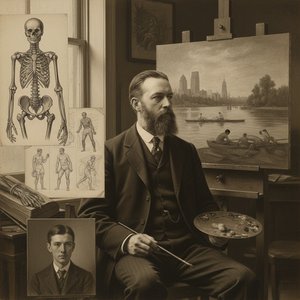 Thomas Eakins: Realism, Anatomy & the American Spirit – A Comprehensive Exploration of Life and LegacyExplore the life & legacy of Thomas Eakins, a pivotal American Realist painter. Discover his groundbreaking techniques, anatomical precisio…
 Romantic Realism's Finest: 10 Masterpieces for Your Home | OriginalUniqueArtExplore 10 defining masterpieces of Romantic Realism! Discover Courbet, Millet & Daumier's powerful paintings—capturing emotion and social …