Vrcholná renesancia · 1507
Teologické hodnoty (Raffael, 1507)
Raffael (1483–1520) vytvoril Teologické hodnoty. Pochádza z roku 1507. Patrí k umeleckému smeru Vrcholná renesancia. Je vyrobené z Olej na paneli. Rozmery sú 44 × 16 cm.
- 1507
- Olej na paneli
- 44 × 16 cm

 Náhľad v interiéri

 Ručne maľovaná olejná reprodukcia
 Odoslať ako digitálnu kartu
 Zdieľať
 Informačný list


 Stiahnuť obraz
 Podobné položky
 RTG skúška
 Prehliadanie diapozoje
 Otázky a odpovede

 Štatistiky
Teologické hodnoty v krátkosti
- Názov
- Teologické hodnoty
- Umelec
- Raffael (1483–1520)
- Narodený v roku
- Urbino, Taliansko
- Dátum
- 1507
- Technika
- Olej na paneli
- Rozmery
- 44 × 16 cm
- Pohyb
- Vrcholná renesancia
- Obdobie
- Renesancia
- Motív
- teológia, hodnoty, verená, nádej, láska, rozumenie
Čo zobrazuje Teologické hodnoty?
Theological Virtues: A Renaissance Masterpiece by Raphael
- Title: Theological Virtues
- Artist: Raphael (Raffaello Sanzio Da Urbino)
- Date: 1507
- Style: High Renaissance
Composition and Symbolic Representation
“Theological Virtues” is a remarkable series of four panels painted by the celebrated Italian artist Raphael. This work, created in 1507, exemplifies the artistic ideals of the High Renaissance—a period characterized by balance, harmony, and meticulous detail. Each panel embodies one of the core theological virtues: Faith, Hope, Charity, and Wisdom. Raphael masterfully populates each scene with figures that eloquently represent these abstract concepts.
The panel representing Faith features two angels alongside a depiction of Christ, symbolizing unwavering belief. The Hope panel showcases an angel holding a cross and another bearing a book, conveying the promise of salvation and knowledge. Charity is portrayed with three angelic figures, one tenderly cradling a baby—a powerful symbol of selfless love and compassion. Finally, the Wisdom panel depicts an angel holding a scroll, representing divine understanding and guidance.
Artistic Techniques and Visual Harmony
Raphael’s exceptional skill in employing light and shadow is immediately apparent. He utilizes chiaroscuro—the dramatic contrast between light and dark—to create depth and dimensionality within the composition, drawing the viewer's eye through each scene. The subtle application of sfumato softens the figures, lending them an ethereal quality and enhancing their emotional resonance.
The color palette is carefully chosen to evoke a sense of serenity and spiritual elevation. Warm tones dominate, creating a welcoming atmosphere while highlighting the divine nature of the subjects. The meticulous attention to detail in rendering fabrics, facial expressions, and anatomical forms demonstrates Raphael’s mastery of technique and his commitment to realism within an idealized framework.
Historical Context and Influence
Painted during the Cinquecento Art Movement, a period of significant cultural and artistic flourishing in Italy, "Theological Virtues" reflects the era's embrace of humanism and classical ideals. Raphael’s work embodies these values through its balanced composition, harmonious proportions, and celebration of human potential within a spiritual context.
This masterpiece has had an enduring influence on subsequent art movements. Its principles of balance and harmony inspired Neoclassicism, while his innovative use of light and shadow influenced Baroque and Impressionist artists. Raphael’s legacy continues to inspire generations of artists and art enthusiasts alike.
Emotional Impact and Enduring Appeal
“Theological Virtues” is more than just a visually stunning work; it's an emotionally resonant exploration of fundamental human values. The serene expressions on the figures’ faces, combined with Raphael’s masterful use of light and color, evoke feelings of peace, hope, and spiritual contemplation.
This painting serves as a timeless reminder of the importance of faith, hope, charity, and wisdom—qualities that remain essential to human flourishing. Its enduring appeal lies in its ability to transcend time and culture, offering viewers a glimpse into the profound beauty and meaning of the human spirit.
Vysoko rozlíšené fotografie diela Teologické hodnoty

Raffael, Teologické hodnoty (1507). Verejné vlastníctvo
Otázky k dielu Teologické hodnoty, odpovede
Kedy bolo vytvorené dielo „Teologické hodnoty“ od Raffael?
Dielo „Teologické hodnoty“ pochádza z roku 1507, čo umožňuje zaradiť ho do tvorby umelca Raffael aj do jeho éry.
V akom médiu je vytvorené dielo „Teologické hodnoty“ od Raffael?
„Teologické hodnoty“ je realizované v technike Olej na paneli.
Aké sú reálne rozmery diela „Teologické hodnoty“ od Raffael?
Zaznamenané rozmery diela „Teologické hodnoty“ od Raffael sú 44 x 16 cm. Reprodukcie je možné objednať aj v iných rozmeroch pri zachovaní rovnakých pomerov.
Čo zobrazuje dielo "Teologické hodnoty"?
„Teologické hodnoty“ od Raffael zobrazuje: teológia, hodnoty, verená, nádej, láska, rozumenie, renesans, anjely.
Je „Teologické hodnoty“ vo voľnom dostupe?
Stav autorských práv pre „Teologické hodnoty“ od Raffael: dielo je v stave v slobodnom prostredí – autorské práva vypršali. To určuje, či je možné voľne vytvárať reprodukcie tohto obrazu.
K ktorému umelcovi sa pripisuje dielo "Teologické hodnoty"?
Dielo „Teologické hodnoty“ vytvoril/a Raffael. Informácie na tejto stránke opisujú originálne dielo umelca/ky Raffael.
K akému umeleckému smeru patrí „Teologické hodnoty“?
Uvedený umelecký smer spojený s dielom „Teologické hodnoty“ od Raffael je Vrcholná renesancia. Táto klasifikácia umiestňuje toto dielo medzi súvisiace umelcov a umelecké diela.
Do ktorej obdobia tvorby Raffael spadá dielo "Teologické hodnoty"?
"Teologické hodnoty" predstavuje Zrelý obdobie umelca Raffael.
Koľko rokov mal/a Raffael, keď vytvoril/a „Teologické hodnoty“ v roku 1507?
Raffael mal/a 24 rokov, keď v roku 1507 vytvoril/a dielo „Teologické hodnoty“. Vek bol vypočítaný na základe roku narodenia umelca, 1483.
O umelcovi, Raffael

1483–1520, Taliansko
Raffael
Ranné roky a formovanie v Urbine Raffaello Sanzio da Urbino, známy svetu ako Rafael, sa narodil v roku 1483 v malej, no intelektuálne pulzujúcej mestskej štáte Urbino. Jeho prvé roky boli hlboko ponorené do atmosféry, ktorá si cenila umeleckú zručnosť a humanistické vzdelanie. Jeho otec, Giovanni Santi, nebol len maliar zamestnaný vojvodom Federicom da Montefeltrom – bol to človek hlboko zapojený do prúdov renesančnej myšlienky, básnik, ktorý kronikoval život vojvodu a aktívne vyhľadával inovatívne umelecké nápady z celého Talianska. Toto ponorenie sa do dvorského prostredia, ktoré si cenilo rafinovanosť a intelektuálnu diskusiu, hlboko formovalo citlivosť mladého Rafaela.
Aj od Raffael
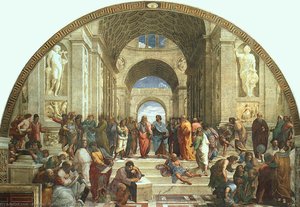 Aténska akadémia1511
 Sistinská Madona1513
 Transfigurácia1520
 Zväzovanie Panny Márie1504
Eseje k dielu Teologické hodnoty
 Raphaelove majstrovské diela: Top 25 obrazov pre váš domov | OriginalUniqueArt.skObjavte top 25 majstrovských diel Raffaela Sanzia! Pútavé príbehy, renesančné umenie a techniky slávnych obrazov. Reprodukcie pre luxusný i…
 Illuminating Belief: Faith & Symbolism Across Art History's CanvasExplore the rich history of faith through art! Discover religious symbolism, Renaissance masterpieces & iconic artists. Expert analysis for…
 Top 10 majstrovských diel renesancie: Umění, ktoré zmenilo svet | OriginalUniqueArt.skObjavte top 10 majstrovských diel renesancie – od Leonarda da Vinciho po Michelangela. Prežite príbehy umenia, techniky a nadčasnej krásy. …