Academic Realism
Flowers (Otto Eerelman)
Otto Eerelman (1839–1926) vytvoril Flowers. Patrí k umeleckému smeru Academic Realism. Je vyrobené z Oil On Canvas.
- Oil On Canvas

 Náhľad v interiéri

 Ručne maľovaná olejná reprodukcia
 Odoslať ako digitálnu kartu
 Zdieľať
 Informačný list pre študentov


 Stiahnuť obraz
 Podobné položky
 RTG skúška
 Prehliadanie diapozoje
 Otázky a odpovede

 Štatistiky
Flowers v krátkosti
- Názov
- Flowers
- Umelec
- Otto Eerelman (1839–1926)
- Narodený v roku
- Groningen, Holandsko
- Médium
- Oil On Canvas
- Pohyb
- Academic Realism
- Obdobie
- 19th Century
- Predmet
- floral arrangement, dutch golden age, botanical art, still life, roses, peonies
Čo zobrazuje Flowers?
The Subject and Artist of Flowers
Flowers is a painting by the Dutch artist Otto Erelman. This work focuses on a botanical arrangement, presenting a collection of blossoms and foliage. The subject matter consists of a central white peony surrounded by pink roses, pansies, and various smaller floral forms. These elements are positioned against a dark, textured grey-green background, which provides a tonal contrast to the lighter petals of the arrangement.
Otto Erelman was born in 1839 in Groningen, Netherlands. He remained connected to this region throughout his life, eventually passing away in Groningen in 1926. His training included studies at the Academie Minerva and the Royal Academy of Fine Arts in Antwerp. He also received private instruction from Lawrence Alma-Tadema, which influenced his approach to light and color in his various compositions.
While Erelman is frequently associated with the depiction of animals, specifically dogs and horses, this particular work demonstrates his ability to render still life subjects. The composition centers on the organic curves of the petals and the irregular shapes of the leaves. He utilized a layered application of paint to establish the volume and physical presence of the botanical elements within the frame.
Visual Composition and Subject Matter
This still life painting presents a botanical arrangement centered on a large, prominent white peony. The peony occupies the middle of the composition, acting as the primary focal point. Surrounding this central flower are pink roses, pansies, and various smaller blossoms. Green foliage and additional botanical elements are interspersed among the petals, filling the spaces between the larger blooms.
The arrangement is set against a dark, textured grey-green background. This muted backdrop provides a steady contrast to the lighter tones of the white peony and the pink hues of the roses. The composition remains focused on the immediate foreground, utilizing a relatively shallow perspective that emphasizes the physical presence of the floral grouping. The organic lines of the subject follow the natural curves of the petals and the irregular shapes of the leaves.
Artistic Technique and Materials
The work is executed in oil paints on canvas, utilizing a technique of meticulous layering to establish form and texture. This method builds volume within the petals and foliage, creating a sense of physical depth. The style adheres to academic realism, focusing on the precise rendering of botanical structures. Soft brushstrokes define the edges of the white peony and the surrounding pink roses, avoiding harsh lines in favor of gradual transitions.
A muted color palette governs the arrangement, relying on subtle shifts in tone rather than high-contrast hues. The background consists of a dark, textured grey-green surface that provides a steady contrast to the lighter floral elements. Lighting appears soft and diffused across the composition, suggesting an indoor setting where a single light source illuminates the arrangement from above. This controlled light creates gentle shading that defines the rounded shapes of the blossoms and the irregular forms of the leaves.
Vysoko rozlíšené fotografie diela Flowers
Otto Eerelman, Flowers. Doména verejného vlastníctva
Otázky k dielu Flowers a ich odpovede
V akom médiu je vytvorené dielo „Flowers“ od Otto Eerelman?
Otto Eerelman pre dielo „Flowers“ použil/a techniku Oil On Canvas. Táto technika definuje materiálnu podstatu originálneho diela.
Čo zobrazuje dielo "Flowers"?
Témy predstavované v díle „Flowers“ od Otto Eerelman zahŕňajú floral arrangement, dutch golden age, botanical art, still life, roses, peonies, muted colors, delicate beauty. Spolu zhrňujú predmet skladby.
Patrí „Flowers“ od Otto Eerelman do verejnej domény?
„Flowers“ od Otto Eerelman patrí do v slobodnom prostredí – autorské práva vypršali. Tento stav určuje pravidlá pre reprodukciu obrazu tohto diela.
Kto vytvoril "Flowers"?
Dielo „Flowers“ sa pripisuje autorovi Otto Eerelman.
K akému umeleckému smeru patrí „Flowers“?
„Flowers“ je dielo smeru Academic Realism. Tento smer odzrkadľuje umeleckú tradíciu, ktorej toto dielo súčasťou.
Do ktorého obdobia tvorby Otto Eerelman patrí dielo „Flowers“?
"Flowers" predstavuje Mature Period umelca Otto Eerelman.
Patrí dielo „Flowers“ od Otto Eerelman do verejnej vlastnícky sféry a prečo?
Autorské práva k dielu „Flowers“ – v slobodnom prostredí – autorské práva vypršali – vyplývajú zo smrti umelca v roku 1926.
Kde sa dielo „Flowers“ zaradí do doterajšieho tvoru umelca Otto Eerelman?
„Flowers“ patrí k dielu Otto Eerelman v rámci smeru Academic Realism, ktorého zachytané témy zahŕňajú eerelman's signature style, detailed botanical studies, refined academic technique, 18th-century still life, dutch golden age masters, classical composition, floral symbolism (love), vanitas elements (mortality).
Kde sa v rámci opakujúcich sa tém umelca Otto Eerelman umiestňuje dielo „Flowers“?
Medzi zaznamenané témy umelca Otto Eerelman – eerelman's signature style, detailed botanical studies, refined academic technique, 18th-century still life, dutch golden age masters, classical composition, floral symbolism (love), vanitas elements (mortality) – prináša dielo „Flowers“ vlastný dôraz na floral arrangement, dutch golden age, botanical art, still life, roses, peonies, muted colors, delicate beauty.
O umelcovi, Otto Eerelman
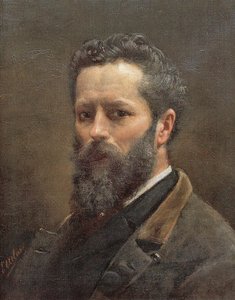
1839–1926, Holandsko
Otto Eerelman
Otto Eerelman: Holandský majster zvieracieho portrétu Otto Eerelman (1839-1926) je významnou postavičkou holandského umelí 19. storočia, najmä pre svoje maestrovské znázornenia psov a koni – tém, ktoré hlboko rezonovali s náladou jeho doby. Narodený v Groningen, Holandsko, mal prirodzený umelecký talent, ktorý bola kŕmená z roly jeho otca ako pekára na der aa-kerk. Odbojoval rodinné očakávania a v roku 1860 sa podrobným štúdiom v Academie Minerva.
Aj od Otto Eerelman
 Portrait of Cornelisje Eerelman-Pluimker, wife of Samuel Eerelman, mother of the painter1859
 Portrait of Anna Frederica Braak, wife of the painter1881
 Portrait of Fokje van Griffen, wife of Rudolph Jacob Schierbeek1869
 Portrait of Samuel Eerelman, husband of Cornelisje Eerelman-Pluimker, father of the artist1861
Eseje k dielu Flowers
 The Botanical Canvas: Precision and Poetics in Floral Still Life ArtExplore the technical mastery of floral still life from Dutch masters to Impressionism. Discover the art of botanical precision today.
 Botanical Precision: The Enduring Nuance of Floral Still LifeExplore the mastery of Dutch and Victorian floral still life through expert analysis. Discover the beauty of botanical art history today.
 Dutch realist paintersDutch realist painters like Jozef Israëls capture life's raw truth. Explore the full collection online at OriginalUniqueArt.com.