Expressionism · 1915
Marching (Marc Chagall, 1915)
Marc Chagall (1887–1985) vytvoril Marching. Pochádza z roku 1915. Patrí k umeleckému smeru Expressionism. Je vyrobené z Acrylic On Canvas.
- 1915
- Acrylic On Canvas

 Náhľad v interiéri

 Ručne maľovaná olejná reprodukcia
 Odoslať ako digitálnu kartu
 Zdieľať
 Informačný list


 Stiahnuť obraz
 Podobné položky
 RTG skúška
 Prehliadanie diapozoje
 Otázky a odpovede

 Štatistiky
Marching v krátkosti
- Názov
- Marching
- Umelec
- Marc Chagall (1887–1985)
- Narodený v roku
- Liozna, Bielorusko
- Dátum
- 1915
- Technika
- Acrylic On Canvas
- Pohyb
- Expressionism
- Motív
- uniform, roof, sky, clock, figures, folklore
Čo zobrazuje Marching?
A Symphony of Color and Memory: Exploring Marc Chagall's "I Am Alone"
Marc Chagall’s “I Am Alone,” painted in 1915, isn’t merely a depiction of solitude; it’s an embodiment of existential angst rendered in the breathtaking language of Expressionism. Created during the turbulent years preceding World War I—a period marked by anxieties about national identity and impending conflict—the painting transcends its immediate historical context to speak to universal themes of isolation and longing. It's housed in the Musée d'Orsay, Paris, a testament to Chagall’s enduring influence on modern art.- Subject Matter: The canvas portrays a man standing alone on a rooftop amidst a swirling panorama of fantastical figures—a woman with outstretched arms, a child perched precariously on the edge of the roof, and several other stylized individuals drifting upwards into the heavens.
- Style: Chagall’s style is unmistakably Expressionist. Rejecting representational accuracy in favor of emotional intensity, he employs bold colors—primarily yellows, blues, and reds—to convey mood and feeling rather than to faithfully reproduce reality. The figures themselves are distorted and stylized, imbued with a dreamlike quality that defies logical interpretation.
Technique: Bold Brushstrokes and Layered Color
Chagall’s technique is characterized by thick, impasto brushstrokes—meaning the paint is applied in layers so thickly that it stands up prominently from the surface of the canvas. This textural approach contributes significantly to the painting's dramatic impact, creating a palpable sense of movement and conveying the artist’s emotional state directly onto the artwork. The colors are blended strategically to create luminous washes and vibrant accents, enhancing the overall visual richness.- Color Palette: The dominant hues—golden yellows symbolizing warmth and optimism juxtaposed with deep blues representing melancholy and uncertainty—are deliberately chosen to evoke specific emotions. Chagall’s masterful use of color underscores the painting's psychological depth.
- Composition: The rooftop setting serves as a focal point, anchoring the swirling figures and emphasizing the man’s isolation. The upward trajectory of the figures symbolizes aspiration but also hints at vulnerability—a yearning for connection amidst overwhelming circumstances.
Symbolism: Folklore and Existential Concerns
“I Am Alone” is replete with symbolic references drawn from Jewish folklore and Kabbalah—the mystical tradition of Judaism. The woman with outstretched arms represents compassion and maternal care, while the child symbolizes innocence and vulnerability. The swirling figures embody the chaotic forces of fate and the anxieties surrounding impending war. More broadly, the painting explores profound existential questions about human existence—questions concerning identity, purpose, and the inevitability of suffering.Ultimately, Chagall’s “I Am Alone” transcends its historical origins to resonate with viewers across generations. It's a hauntingly beautiful meditation on solitude, loss, and the enduring quest for meaning—a masterpiece that continues to inspire awe and provoke contemplation decades after its creation.
Vysoko rozlíšené fotografie diela Marching

Chránené autorským zákonom: obrázok je zobrazený len na ilustračné účely.
Iné veľkosti, výrezy a citácie →Marc Chagall, Marching (1915).
Otázky k dielu Marching, odpovede
Kedy bolo vytvorené dielo „Marching“ od Marc Chagall?
Vznik diela „Marching“ od Marc Chagall sa datuje do roku 1915.
Aká technika bola použitá pre „Marching“ od Marc Chagall?
„Marching“ je realizované v technike Acrylic On Canvas.
Čo zobrazuje dielo „Marching“ od Marc Chagall?
„Marching“ od Marc Chagall zobrazuje: uniform, roof, sky, clock, figures, folklore, dreams.
Možno voľne reprodukovať obraz diela „Marching“ od Marc Chagall?
Stav autorských práv pre „Marching“ od Marc Chagall: dielo je v stave stále chránené autorským právom. To určuje, či je možné voľne vytvárať reprodukcie tohto obrazu.
Kto vytvoril "Marching"?
Autorom diela „Marching“ je Marc Chagall. Prácu nájdete v katalógu pod menom Marc Chagall.
K ktorému umeleckému smeru patrí „Marching“ od Marc Chagall?
Uvedený umelecký smer spojený s dielom „Marching“ od Marc Chagall je Expressionism. Táto klasifikácia umiestňuje toto dielo medzi súvisiace umelcov a umelecké diela.
Do ktorej obdobia tvorby Marc Chagall spadá dielo "Marching"?
Dielo „Marching“ pochádza z obdobia Mature Period v tvorbe umelca Marc Chagall. Táto klasifikácia spája toto dielo s vývojom umeleckej dráhy autora.
Koľko rokov mal/a Marc Chagall, keď vytvoril/a „Marching“ v roku 1915?
Marc Chagall vytvoril/a „Marching“ vo veku 28 rokov. Umenec sa narodil/a v roku 1887 a dielo pochádza z roku 1915.
Patrí dielo „Marching“ od Marc Chagall do verejnej vlastnícky sféry a prečo?
Autorské práva k dielu „Marching“ – stále chránené autorským právom – vyplývajú zo smrti umelca v roku 1985.
O umelcovi, Marc Chagall
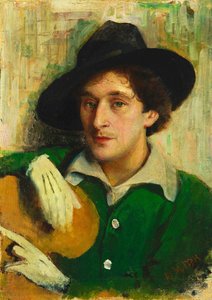
1887–1985, Bielorusko
Marc Chagall
A Life Painted in Dreams: The World of Marc Chagall Marc Chagall, born Moishe Shagal in 1887 in the small Belarussian town of Liozna near Vitebsk, wasn’t merely a painter; he was a poet of color, a weaver of dreams, and a chronicler of memory. His life, spanning nearly a century, mirrored the tumultuous currents of the 20th century, yet his art remained steadfastly rooted in a deeply personal vision—one infused with the folklore of his Hasidic Jewish upbringing and an unwavering belief in the power of imagination. Vitebsk itself was more than just a birthplace; it became the emotional core of his artistic universe, a recurring motif populated by flying figures, whimsical animals, and the vibrant hues of remembered landscapes. The town’s unique blend of cultures—Russian Orthodox churches alongside bustling Jewish marketplaces—forged an aesthetic sensibility that would defy easy categorization throughout his long career.
Aj od Marc Chagall
 Ja a dedina1911
 Biele ukrižovanie1938
 Narodeniny1915
 Nad mestom1918
Eseje k dielu Marching
 The Language of Brushstrokes: How Artistic Technique Expresses Emotion and EraExplore the profound connection between artistic technique and emotion. From the heavy impasto of Van Gogh to classical mastery, learn how …
 Dreaming in Color: The 25 Most Iconic Masterpieces by Marc ChagallStep into the dreamlike world of Marc Chagall. Explore 25 iconic masterpieces, from vibrant surrealist tales to soulful folklore. Find insp…
 Marc Chagall’s Masterpieces: Exploring the Magic, Color, and Surrealist Legacy of a Modernist IconEmbark on a journey through the dreamlike masterpieces of Marc Chagall. Explore the profound symbolism and vibrant colors of this Surrealis…