Neoclassicism · 1788
James Bleecker (John Ramage, 1788)
John Ramage (1748–1802) vytvoril James Bleecker. Pochádza z roku 1788. Patrí k umeleckému smeru Neoclassicism. Je vyrobené z Oil. Nachádza sa v Metropolitné múzeum umenia v New York, Spojené štáty Ameriky.

 Náhľad v interiéri

 Ručne maľovaná olejná reprodukcia
 Odoslať ako digitálnu kartu
 Zdieľať
 Príručka


 Stiahnuť obraz
 Podobné položky
 RTG skúška
 Prehliadanie diapozoje
 Otázky a odpovede

 Štatistiky
James Bleecker: základné informácie
- Názov
- James Bleecker
- Umelec
- John Ramage (1748–1802)
- Narodený v roku
- Dublin, Iránsko
- Dátum
- 1788
- Technika
- Oil
- Kde si ho pozrieť
- Metropolitné múzeum umenia, New York, Spojené štáty Ameriky
- Pohyb
- Neoclassicism
- Obdobie
- Early Modern
- Motív
- man, portrait, cravat, waistcoat, coat, hair
Čo zobrazuje James Bleecker?
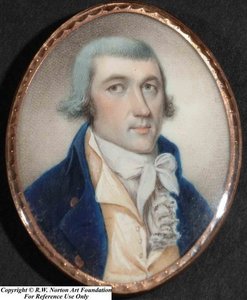
A Portrait of James Bleecker
This monochromatic portrait depicts James Bleecker, a gentleman from the late 18th century. The subject is presented in a formal, seated bust-length depiction, captured within an oval frame. He is positioned slightly off-center to the right, creating a balanced asymmetry. His attire, which includes a cravat, waistcoat, and coat, serves as an indication of his social status. The composition focuses attention solely on his likeness, isolating him from any background context.
The image is rendered in shades of gray, ranging from light to dark. Fine lines are used extensively to define the texture of Bleecker’s hair and clothing, while curved lines outline the oval frame and the contours of his face and neck. Straight lines appear in the details of his waistcoat and cravat. The lighting is diffused and even, creating subtle gradations across his face and clothing, with a gentle highlight on his forehead and nose.
Technical Details and Composition
The artwork is a photograph of an original painting by John Ramage from 1788. The original technique likely involved oil paints applied to canvas or panel. The visual elements include:
The perspective is relatively flat, typical of the period, with minimal depth perception. Depth is achieved through subtle tonal variations and the overlapping of elements, such as the waistcoat partially covering the shirt. The subject's expression is dignified, conveying a sense of seriousness and respectability.
V ktorom múzeu sa nachádza James Bleecker?
Metropolitné múzeum umenia
New York, Spojené štáty Ameriky
Pôvody a história Metropolitného múzea umenia Metropolitné múzeum umenia vzniklo z vizie, ktorú zdieľala skupina podnikateľov, finančníkov a významných umelcov i mysliteľov. Po jeho založení v roku 1870 sa inštitúcia začala vyhľadávať trvalý domov pre svoje čoraz rozsiahlejšie nábytok a umelnícke kúsky. Skôr než sa usadilo na svojom súčasnom mieste, múzeum krátkodobo sídelo v panstve Douglas Mansion na West 14th Street.


James Bleecker vo vysokom rozlíšení

John Ramage, James Bleecker (1788), Metropolitné múzeum umenia. Verejné vlastníctvo
Digitálny expert porovnáva farby s originálnym obrazom a retušuje súbor tak, aby verne odovzdal ťah pędzla umelca.
Kúpiť obraz vo vysokom rozlíšeníOtázky k James Bleecker
V ktorom roku bolo vytvorené dielo „James Bleecker“?
Dielo „James Bleecker“ od John Ramage vzniklo v roku 1788.
Sú farby diela „James Bleecker“ od John Ramage živé alebo tlmené?
„James Bleecker“ od John Ramage je zachytený s nasytením Muted a intenzitou Monochromatic.
Akú paletu a aký pocit spája dielo "James Bleecker"?
Neutrals paleta diela „James Bleecker“ od John Ramage sa harmonicky spája s jeho Somber emocionálnym tónom. Farba je jedným zo spôsobov, akými dielo vyjadruje emócie.
Je „James Bleecker“ vo voľnom dostupe?
Čo sa týka autorských práv, „James Bleecker“ je v v slobodnom prostredí – autorské práva vypršali.
Je „James Bleecker“ od John Ramage v portrétnej, krajinárskej alebo štvorcovej kompozícii?
„James Bleecker“ od John Ramage má formát Portrait. Tento formát určuje pomer strán kompozície.
Môžem si pozrieť "James Bleecker" ako celovoobrazovkovú diapozitívu?
Dielo „James Bleecker“ od John Ramage si môžete pozrieť v formie diaporama na stránke Prehliadanie diela.
Môžem si „James Bleecker“ od John Ramage pozrieť pod iným osvetlením?
X-ray pohľad na dielo „James Bleecker“ od John Ramage nájdete na jeho stránke RTG skenovanie: ide o interaktívne skúmanie obrazu prostredníctvom jedenástich optických vrstiev.
Aká je technika a dátum vytvorenia diela „James Bleecker“ od John Ramage?
Technikou diela „James Bleecker“ od John Ramage je Oil a vzniklo v roku 1788.
Je možné si stiahnuť obraz "James Bleecker"?
Pre dielo „James Bleecker“ je možné si zakúpiť digitálnu verziu: na stránke Stiahnuť digitálnu verziu pre toto dielo si môžete stiahnutie digitálneho obrázka vo vysokom rozlíšení.
O umelcovi, John Ramage
1748–1802, Iránsko
John Ramage
A Life Bridging Worlds: The Story of John Ramage Born in Dublin, Ireland, in 1748, John Ramage’s life was one of remarkable transition and artistic dedication, a journey that carried him from the refined world of Irish goldsmithing to the burgeoning art scene of colonial America. Details surrounding his early family life remain elusive, yet it is known he received formal training at the Dublin Society of Artists in 1763, laying a foundation in drawing and painting techniques that would serve as the bedrock for his future endeavors. Ramage’s initial career path was notably versatile; he skillfully combined the precision of a goldsmith with the delicate artistry of a miniaturist—a testament to his inherent talent for detail and decorative arts. This early period instilled within him not only technical proficiency but also an appreciation for craftsmanship that would distinguish his work throughout his life.
 Gilbert Van Cortlandt1785
 Governor George Clinton1785
 Major Greene, B.A1777
 Portrait of a Gentleman1780
