Cubism · 1924
Three Characters (Fernand Léger, 1924)
Three Characters je dielo od Fernand Léger (1881–1955). Pochádza z roku 1924. Patrí k umeleckému smeru Cubism. Je vyrobené z Acrylic On Canvas.
- 1924
- Acrylic On Canvas

 Náhľad v interiéri

 Ručne maľovaná olejná reprodukcia
 Odoslať ako digitálnu kartu
 Zdieľať
 Príručka


 Stiahnuť obraz
 Podobné položky
 RTG skúška
 Prehliadanie diapozoje
 Otázky a odpovede

 Štatistiky
Three Characters: the essentials
- Názov
- Three Characters
- Umelec
- Fernand Léger (1881–1955)
- Narodený v roku
- Argentan, Francúzsko
- Dátum
- 1924
- Technika
- Acrylic On Canvas
- Pohyb
- Cubism
- Obdobie
- Modern
- Motív
- geometric figures, modern composition, cubist style art, human interaction, bold color palette, everyday objects
Looking at Three Characters
A Symphony of Form and Feeling: Exploring Fernand Léger’s “Three Characters”
Fernand Léger's 1924 painting, *“Three Characters,”* is a pivotal work exemplifying his distinctive contribution to Cubism – a style he uniquely evolved into what became known as ‘Tubism.’ More than just an exercise in geometric abstraction, this piece offers a compelling glimpse into the artist’s vision of modern life and human connection amidst industrialization.Deconstructing the Composition: Style & Technique
Léger masterfully employs simplified, cylindrical forms to depict three figures positioned closely together. This isn't about realistic representation; it’s a deliberate fragmentation and reassembly of reality through a Cubist lens. The painting eschews traditional perspective, presenting multiple viewpoints simultaneously within a flattened picture plane. The technique is characterized by smooth brushstrokes and carefully blended colors, creating a polished surface despite the angularity of the forms. This creates a sense of solidity and monumentality, grounding the abstracted figures.A Palette of Modernity: Color & Symbolism
While rooted in Cubism’s analytical approach, *“Three Characters”* distinguishes itself through its vibrant color palette. Léger moves beyond the muted tones often associated with early Cubism, embracing bold hues that inject energy and warmth into the composition. The inclusion of symbolic objects – a baseball bat and a book – adds layers of meaning. These aren’t merely decorative elements; they represent facets of everyday life, leisure, and intellectual pursuit, hinting at Léger's interest in portraying the modern individual within their environment. The figures themselves are not portraits but archetypes, representing universal aspects of human experience.Historical Context: Cubism & Beyond
Created in the aftermath of World War I, *“Three Characters”* reflects a broader cultural shift towards embracing modernity and industrialization. Léger, alongside Picasso and Braque, was at the forefront of the Cubist revolution, challenging traditional artistic conventions. However, he diverged from his peers by incorporating elements of machine aesthetics and popular culture into his work. His style evolved toward “Crystal Cubism,” emphasizing large, overlapping geometric planes and a strong focus on surface activity. This painting stands as a testament to that evolution, bridging the gap between abstract experimentation and representational form.Emotional Resonance & Lasting Influence
*“Three Characters”* evokes a sense of quiet contemplation and interconnectedness. Despite their abstracted forms, the figures possess a palpable presence, suggesting a shared experience or unspoken dialogue. The painting’s enduring appeal lies in its ability to resonate with viewers on an emotional level, prompting reflection on themes of identity, community, and the human condition. Léger's work profoundly influenced subsequent art movements, including Futurism, Abstract Art, and Surrealism, solidifying his legacy as a visionary artist who redefined the possibilities of painting in the 20th century.Collecting & Interior Design Considerations
- Style Compatibility: This artwork complements modern, minimalist, or Art Deco interiors. Its geometric forms and bold colors create a striking focal point.
- Color Palette Integration: The painting’s color scheme can be echoed in accent furniture, textiles, or wall colors to create a cohesive design aesthetic.
- Placement Suggestions: Ideal for living rooms, dining areas, or home offices. Consider pairing it with contemporary sculptures or abstract artwork.
- Investment Potential: As a seminal work by a highly influential artist, a high-quality reproduction of *“Three Characters”* represents not only an aesthetic addition but also a potential investment in art history.
Three Characters in high resolution

Fernand Léger, Three Characters (1924). Verejné vlastníctvo
Digitálny expert porovnáva farby s originálnym obrazom a retušuje súbor tak, aby verne odovzdal ťah pędzla umelca.
Buy the high-resolution imageQuestions about Three Characters
Aká je odporúčaná veľkosť tlače pre „Three Characters“ od Fernand Léger?
Odporúčaná veľkosť tlače pre dielo „Three Characters“ od Fernand Léger je Large.
Kedy a v akom štýle vzniklo dielo „Three Characters“ od Fernand Léger?
Dielo „Three Characters“ vzniklo v roku 1924 v rámci smeru Cubism.
Pôsobia farby diela „Three Characters“ výrazne alebo jemne?
Farby v díle „Three Characters“ od Fernand Léger majú Monochromatic intenzitu.
Prečo je autorskoprávny status diela „Three Characters“ taký, aký je?
„Three Characters“ od Fernand Léger sa nachádza v oblasti v slobodnom prostredí – autorské práva vypršali. Doba trvania autorského práva sa začína dňom smrti umelca, ktorého smrť nastala v roku 1955.
Aká podkladová farba prechádza dielom „Three Characters“ od Fernand Léger?
„Three Characters“ skloní sa k Ochre to Sepia odtieňu.
Kde si môžem stiahnuť „Three Characters“ od Fernand Léger?
„Three Characters“ od Fernand Léger si môžete stiahnuť ako stiahnutie digitálneho obrázka vo vysokom rozlíšení na stránke pre dané dielo: Stiahnuť digitálnu verziu.
Kde sa v rámci opakujúcich sa tém umelca Fernand Léger umiestňuje dielo „Three Characters“?
Medzi opakujúce sa témy umelca Fernand Léger patrí exploration of flat planes, expansion of color usage, cubism's geometric forms, early 20th-century modernism, urban life & modernity, human connection & interaction; dielo „Three Characters“ sa zameriava na geometric figures, modern composition, cubist style art, human interaction, bold color palette, everyday objects, abstract forms.
Môžem si "Three Characters" pozrieť podrobnejšie?
Stránka RTG skenovanie diela „Three Characters“ od Fernand Léger predstavuje interaktívny prehliadač, ktorý vám umožňuje prechádzať jedenástimi optickými vrstvami obrazu, vrátane pohľadu v štýle RTG snímky.
Aký je historický kontext diela „Three Characters“?
Z historického hľadiska je „Three Characters“ dielo zastúpedobiteľné pre smer Cubism širšej éry Modern.
About the artist, Fernand Léger

1881–1955, Francúzsko
Fernand Léger
Fernand Léger: Život Vytvarovaný Formou Fernand Léger, narodený Joseph Fernand Henri Léger v roku 1881 v malej dedinke Argentan v Normandii, je zásadnou figúrou v evolúcii moderného umenia. Jeho cesta od poľnohospodárskych krajín detstva až po popredné miesto v parížskej avantgárdovej scéne je dôkazom neochrabného umeleckého zrakového zážitku a neustáleho úsilia o zachytenie ducha strojárstva. Na rozdiel od mnohých svojich kolegov, ktorí abstraktný um prispôsobili ako únik od reprezentácie, hľadal *integráciu* modernosti – jej dynamiku, mechanické formy, jej samotnú esenciu – do nového vizuálneho jazyka, ktorý bol zároveň silne abstraktný a hlboko zakorennený v pozoriteľnom svete. Jeho rané roky, sprevádzané fyzickou prácou na farmách, poskytli protiklad k priemyselnému budúcemu, ktorému sa tak vášnivým spôsobom venoval.
Also by Fernand Léger
 Mesto1919
 The Mechanic1920
 Tri ženy1921
 Nudy v lese1910

Essays around Three Characters
 Fernand Léger: Top 25 diel pre milovníkov moderného umenia a dizajnu interiéruObjavte top 25 diel Fernand Légera – priekopníka kubizmu a tubizmu. Prežite príbeh za ikonickými obrazmi, farebnou kompozíciou a strojovým …
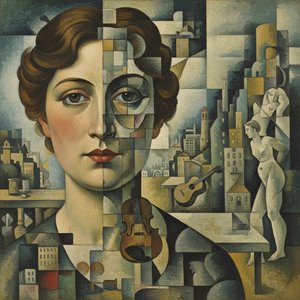 Deconstructing Reality: Cubism's Revolutionary Impact on 20th-Century ArtExplore the revolutionary world of Cubism with OriginalUniqueArt. Discover Picasso & Braque's groundbreaking techniques, its philosophical …
 Priemyselná estetika v umení: 10 diel pre moderný interiér | OriginalUniqueArtPonorte sa do sveta priemyselnej estetiky s 10 ikonickými dielami od Moneta po Pollocka. Objavte príbehy, techniky a farebné motívy industr…