Prepnúť na tlač
 Zobraziť viac







































 V prípade umeleckých diel alebo reprodukcií, ktorých ktorákoľvek strana je väčšia ako 105 cm (cca 41 palcov), sa rám dodáva v rozloženom stave ako sada. Táto metóda zabezpečuje bezpečnú доставu a chráni pred poškodením počas prepravy.


Edwin Edwards’s “High Street, Whitechapel”: A Window Into Victorian Urban Life
Edwin Edwards’s “High Street, Whitechapel,” painted circa 1869, isn't merely a depiction of a London street; it’s a carefully crafted snapshot of Victorian society grappling with rapid industrialization and social change. Executed in an Impressionistic style—a deliberate departure from the academic conventions of his time—the painting captures not just what the eye sees but also how light and atmosphere contribute to the overall mood.
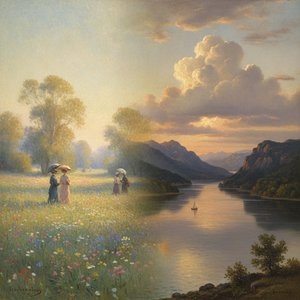
- Subject Matter: The canvas portrays a bustling thoroughfare, Whitechapel High Street, nestled within Tower Hamlets. Beyond the immediate street scene are glimpses of residential buildings—primarily brick structures—and a prominent church spire dominating the skyline. This composition speaks to the everyday realities of Victorian urban life, reflecting both commerce and faith.
- Style & Technique: Edwards’s Impressionistic approach is characterized by visible brushstrokes that prioritize capturing fleeting moments of light and color rather than precise detail. The muted palette—dominated by earthy tones—creates a sense of solemnity and reinforces the painting's melancholic atmosphere. This technique aligns with the broader aesthetic trends of the Hudson River School, where artists sought to convey the sublime beauty of nature.
- Historical Context: Painted during the reign of Queen Victoria, “High Street, Whitechapel” reflects the anxieties and aspirations of a nation undergoing transformative shifts. The Industrial Revolution was reshaping Britain’s economy and social fabric, prompting artists like Edwards to explore how these changes impacted human experience. Furthermore, the painting's location in Whitechapel—a district known for its poverty and crime—adds another layer of complexity to its narrative.
- Symbolism: The church spire serves as a visual anchor, symbolizing spiritual solace amidst the urban hustle. Its overcast sky reinforces this theme, suggesting contemplation and perhaps hinting at the challenges faced by Victorian society. Edwards’s deliberate use of color contributes to the painting's emotional impact—the subdued hues evoke feelings of quietude and introspection.
- Emotional Impact: “High Street, Whitechapel” succeeds in transporting viewers back to 1869, capturing not just a visual record but also an intangible sense of place. The artist’s masterful rendering of light and texture invites contemplation on the passage of time and the enduring beauty found within ordinary scenes.
The painting's quiet grandeur—a testament to Edwards’s skill in conveying atmosphere—continues to resonate with audiences today, offering a poignant glimpse into Victorian England and its artistic sensibilities. It stands as an exemplary piece of Hudson River School art, prioritizing emotional resonance over photographic accuracy.
Otázky a odpovede
V akom orientovaní je dielo „High Street, Whitechapel“ od Edwin Edwards?
„High Street, Whitechapel“ od Edwin Edwards je Landscape kompozícia. Pred výberom veľkosti tlače sa oplatí skontrolovať jej proporcie.
Ktorý priestor sa hodí k farbe diela „High Street, Whitechapel“ od Edwin Edwards?
Vďaka svojej palete v odtieňoch Earthy sa dielo „High Street, Whitechapel“ od Edwin Edwards odporúča do miestnosti typu Living Room. Práve farby sú jedným z dôvodov tohto odporúčania.
Aká sýta je paleta diela „High Street, Whitechapel“?
„High Street, Whitechapel“ od Edwin Edwards je zachytené s Balanced Soft saturáciou.
 Náhľad v interiéri
 Odoslať ako digitálnu kartu
 Zdieľať
 Podrobnosti o dielo
 Príručka

 Stiahnuť obraz
 Podobné položky
 RTG skúška
 Prehliadanie diapozoje
 Q&A
Q&A Štatistiky