Art Nouveau
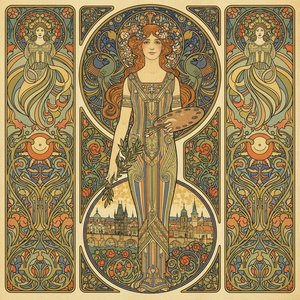
Muse (Alphonz Mucha)
Alphonz Mucha (1860–1939) vytvoril Muse. Patrí k umeleckému smeru Art Nouveau. Je vyrobené z Oil On Canvas.
- Oil On Canvas

 Náhľad v interiéri

 Ručne maľovaná olejná reprodukcia
 Odoslať ako digitálnu kartu
 Zdieľať
 Informačný list


 Stiahnuť obraz
 Podobné položky
 RTG skúška
 Prehliadanie diapozoje
 Otázky a odpovede

 Štatistiky
Muse v krátkosti
- Názov
- Muse
- Umelec
- Alphonz Mucha (1860–1939)
- Narodený v roku
- Ivančice, Česko
- Technika
- Oil On Canvas
- Pohyb
- Art Nouveau
- Obdobie
- 19th Century
- Motív
- portrait, muse, artnouveau, floral, melancholy, woman
Čo zobrazuje Muse?
A Whisper of Inspiration: Exploring Alphonse Mucha’s “Muse”
Alphonse Maria Mucha's "Muse" is more than just a portrait; it’s an immersion into the heart of Art Nouveau, a testament to the movement’s obsession with beauty, nature, and the idealized feminine form. Executed in Mucha’s signature style – characterized by sinuous lines, delicate ornamentation, and a profound sense of serenity – this artwork captures a moment of quiet contemplation, inviting the viewer to step into a world of graceful elegance and subtle emotion. The piece speaks volumes about Mucha's influence, his ability to translate decorative fantasy into enduring artistic statements.
Decoding the Visual Language: Composition & Technique
The composition immediately draws the eye towards the central figure, seated with an almost languid grace. Mucha employs a pyramidal structure, anchoring the viewer’s gaze to her head – framed by a breathtaking headdress overflowing with blossoms. This deliberate arrangement echoes classical portraiture while simultaneously embracing the Art Nouveau preference for organic forms. The artist's masterful technique is evident in the layering of colors and the seamless blending of tones, creating a luminous effect that seems to emanate from within. Notice the meticulous detail applied to her drapery and facial features – a hallmark of Mucha’s dedication to realism within his stylized aesthetic. The use of oil or pastel on canvas (or perhaps paper) allows for this incredible level of nuance, capturing both light and shadow with remarkable sensitivity.
A Symphony of Color & Symbolism
The color palette – a harmonious blend of creams, beiges, pale yellows, and muted oranges – evokes a sense of timelessness and tranquility. The strategic use of red-brown accents in the drapery adds depth and richness, while subtle blues and greens within the floral motifs subtly connect the figure to the natural world, a recurring theme in Mucha’s work. Beyond mere aesthetics, the headdress itself is laden with symbolism. Flowers have long represented beauty, fertility, and the influence of nature – concepts central to Art Nouveau's celebration of the organic. The woman’s direct gaze, imbued with a touch of melancholy, invites introspection and suggests a connection to the timeless themes explored by artists throughout history.
Contextualizing the Masterpiece: Mucha & the Art Nouveau Movement
Created during Mucha’s most prolific period (1887-1939), “Muse” exemplifies his pivotal role in shaping the Art Nouveau style. Born in Brno, Czech Republic, Mucha initially studied at the Academy of Fine Arts in Prague but quickly rejected its academic constraints, seeking a more expressive and decorative approach. He found success in Paris, creating iconic posters and illustrations for prominent clients like Sarah Bernhardt. His work reflects influences from artists such as Pierre-Auguste Renoir and Gustave Moreau, yet he forged his own distinct path – one defined by flowing lines, intricate patterns, and an unwavering commitment to portraying idealized female figures. “Muse” stands as a prime example of this legacy, solidifying Mucha’s place as one of the most significant artists of the Art Nouveau movement.
Vysoko rozlíšené fotografie diela Muse
Alphonz Mucha, Muse. Verejné vlastníctvo
Otázky k dielu Muse, odpovede
Akou technikou je vytvorené „Muse“?
Alphonz Mucha pre dielo „Muse“ použil/a techniku Oil On Canvas. Táto technika definuje materiálnu podstatu originálneho diela.
Čo zobrazuje dielo „Muse“ od Alphonz Mucha?
„Muse“ od Alphonz Mucha zobrazuje: portrait, muse, artnouveau, floral, melancholy, woman, decorative.
Patrí „Muse“ od Alphonz Mucha do verejnej domény?
„Muse“ od Alphonz Mucha patrí do v slobodnom prostredí – autorské práva vypršali. Tento stav určuje pravidlá pre reprodukciu obrazu tohto diela.
K ktorému umelcovi sa pripisuje dielo "Muse"?
Autorom diela „Muse“ je Alphonz Mucha. Prácu nájdete v katalógu pod menom Alphonz Mucha.
Do ktorého umeleckého smeru patrí „Muse“ od Alphonz Mucha?
„Muse“ od Alphonz Mucha patrí do smeru Art Nouveau. Tento smer poskytuje štylistický kontext diela.
K ktorej fáze tvorivého rozvoja Alphonz Mucha patrí dielo „Muse“?
V rámci kariéry umelca Alphonz Mucha spadá dielo „Muse“ do obdobia Mature Period, čo umožňuje jeho porovnanie s ostatnými prácami tohto umelca.
Prečo je autorskoprávny status diela „Muse“ taký, aký je?
„Muse“ od Alphonz Mucha sa nachádza v oblasti v slobodnom prostredí – autorské práva vypršali. Doba trvania autorského práva sa začína dňom smrti umelca, ktorého smrť nastala v roku 1939.
Ako sa dielo „Muse“ zapísalo do tém a štýlu umelca Alphonz Mucha?
„Muse“ patrí k dielu Alphonz Mucha v rámci smeru Art Nouveau, ktorého zachytané témy zahŕňajú renoir, moreau influences, czech motifs, idealized beauty, feminine grace, symbolic nature, decorative art, mucha’s signature style established”.
Kde sa v rámci opakujúcich sa tém umelca Alphonz Mucha umiestňuje dielo „Muse“?
Medzi zaznamenané témy umelca Alphonz Mucha – renoir, moreau influences, czech motifs, idealized beauty, feminine grace, symbolic nature, decorative art, mucha’s signature style established” – prináša dielo „Muse“ vlastný dôraz na portrait, muse, artnouveau, floral, melancholy, woman, decorative.
O umelcovi, Alphonz Mucha

1860–1939, Česko
Alphonz Mucha
Early Life and Artistic Beginnings Alphonse Maria Mucha, známy ako Alfons Mucha, sa narodil 15. júla 1860 v malebnom meste Ivanačice v južomoravskej oblasti Českej republiky – dnes už súčasť Slovenska. Jeho detstvo bolo poznačené skromnými prostrediami; jeho otec Ondřej bol súdny úradník, a matka Amálie bola roľnícka mlýnarka. Mucha bol najstarší zo šiestich detí, všetci s menami začínajúcimi na “A”, čo naznačuje rodinnú tradíciu a možný vplyv jeho otca na jeho budúcu kariéru.
Aj od Alphonz Mucha
 The Moon
 Nude
 The Apotheosis of the Slavs1926
 Stained-Glass Window in St. Vitus Cathedral
Eseje k dielu Muse
 Alphonse Mucha: A Comprehensive Exploration of Art Nouveau's Master of Decorative SymbolismExplore the life & art of Alphonse Mucha, master of Art Nouveau! Discover his iconic posters, stunning illustrations, and the monumental Sl…
 The Elegance of Art Nouveau: Embracing Nature's Fluid Beauty and the Belle Époque SpiritDiscover the enchanting world of Art Nouveau. Explore the organic beauty, flowing lines, and Belle Époque elegance that defined an era of u…
 The Language of Brushstrokes: How Texture and Technique Reveal the Soul of ArtDiscover the profound connection between texture and emotion in Impressionist art. Explore how masterful brushstrokes by Renoir and Monet c…