Portrét Nicolai Abraham Abildgaard

100 najznámejších obrazov od Nicolai Abraham Abildgaard, výber z galérie

Aktualizované október 2026 · zoradené podľa našej miery popularity (vyhľadávanie, návštevy a objednávky pre každou prácu) · 106 dielov umelca Nicolai Abraham Abildgaard v našom katalógu

Stručne povedané

Z všetkých originálov, ktoré Nicolai Abraham Abildgaard zanechal, je najznámejší The Greek Poet Sappho and the Girl from Mytilene (1809), ktorý sa nachádza v zbierkach Statens Museum For Kunst v meste Kodaň. Hneď za ním nasledujú Cupid Playing the Lyre. (1782) a Christian V Presents Danish Law 1683 (1784). Náš katalóg obsahuje 106 diel od Nicolai Abraham Abildgaard; galéria si zachovala tých 100, ktoré obdivuje celý svet, pričom každý z nich je prezentovaný spolu s jeho dátumom, múzeou a príbehom.

1743 – 1809, Kodaň Neoclassicism Najviac diel: Statens Museum For Kunst

Top 10 obrazov umelca Nicolai Abraham Abildgaard: výber galérie

1
The Greek Poet Sappho and the Girl from Mytilene (1809) od Nicolai Abraham Abildgaard

The Greek Poet Sappho and the Girl from Mytilene

1809 · Acrylic On Canvas · Statens Museum For Kunst, Kodaň

Nicolai Abildgaard’s Sappho and Mytilene: A Vision of Romantic Idealism The painting “The Greek Poet Sappho and the Girl from Mytilene,” created by Nicolai Abraham Abildgaard in 1809, stands as a cornerstone of Danish neoclassical art and embodies the fervent spirit of Romantic idealism. More than just a depiction of two figures, it’s an exploration of beauty, longing, and the sublime—themes central to the artistic sensibilities of the era. Housed…

2
Cupid Playing the Lyre. (1782) od Nicolai Abraham Abildgaard

Cupid Playing the Lyre.

1782 · Oil On Canvas · Thorvaldsen Museum, Kodaň

In the quiet stillness of a mythological moment, Cupid Playing the Lyre. emerges from the shadows. This oil on canvas work, created by Nicolai Abildgaard around 1782, captures a solitary figure caught in a private, celestial act. The scene centers on a youthful, winged Cupid, whose presence brings a sense of soft grace to the composition. He leans toward a lyre that rests upon a stone pedestal, his delicate form…

3
Christian V Presents Danish Law 1683 (1784) od Nicolai Abraham Abildgaard

Christian V Presents Danish Law 1683

1784 · Oil On Canvas · Statens Museum For Kunst, Kodaň

Christian V Presents Danish Law 1683 is an oil painting by Nicolai Abildgaard. Created in 1784, this work functions as a history scene depicting a specific real event. The subject matter focuses on a Danish king presenting a body of law, capturing a moment of official legal or political significance. The scene is rendered in a documentary style that emphasizes the gravity of the proceedings.

4
Julia and Fulvia (1803) od Nicolai Abraham Abildgaard

Julia and Fulvia

1803 · Oil On Canvas · Statens Museum For Kunst, Kodaň

The oil on canvas painting titled Julia and Fulvia was executed by the artist Nicolai Abildgaard. This work depicts a literary scene or figure, focusing on the physical interaction between two female subjects. The composition centers on the tension between these figures within a classical setting.

6
Frederik II Builds Kronborg Castle at Elsinore (1782) od Nicolai Abraham Abildgaard

Frederik II Builds Kronborg Castle at Elsinore

1782 · Oil On Canvas · Statens Museum For Kunst, Kodaň

In this significant work of Danish history, Frederik II Builds Kronborg Castle at Elsinore, the artist Nicolai Abildgaard captures a moment of profound national construction. The painting centers on Frederick II of Denmark, depicted during the foundational stages of the Kronborg Castle at Elsinore. It is a scene that looks back at the 18th century through a lens of historical narrative, focusing on the architectural ambitions of the Danish monarchy.

7
Kulturens herredømme (1796) od Nicolai Abraham Abildgaard

Kulturens herredømme

1796 · Oil · Statens Museum For Kunst, Kodaň

The oil painting titled Kulturens herredømme, known in English as The supremacy of culture, was executed by the artist Nicolai Abildgaard. This work is identified by the accession number KMS1836. The composition features a monochromatic, black-and-white palette that emphasizes the play of light and shadow across the figures.

8
Christian VII Uniting the Ducal with the Royal Part of Holstein in 1767 (1790) od Nicolai Abraham Abildgaard

Christian VII Uniting the Ducal with the Royal Part of Holstein in 1767

1790 · Oil On Canvas · Statens Museum For Kunst, Kodaň

The composition centers on a seated male figure, identified as King Christian VII, positioned on the right side of the canvas. He is dressed in white and gold regalia, wearing a crown and holding a scepter. To his left, two female figures are positioned; one faces the viewer directly, while the other is seen in profile, gesturing toward the king. Above the central group, a dark eagle flies through a…

9
Magnus Stenbock Surrenders the Fortress of Tønningen to Frederik IV in 1714 (1785) od Nicolai Abraham Abildgaard

Magnus Stenbock Surrenders the Fortress of Tønningen to Frederik IV in 1714

1785 · Oil On Canvas · Statens Museum For Kunst, Kodaň

In the grand tapestry of European history, few moments capture the gravity of shifting power quite like the scene depicted in Nicolai Abraham Abildgaard’s 1785 masterpiece, Magnus Stenbock Surrenders the Fortress of Tønningen to Frederik IV in 1714. This evocative oil painting serves as a window into a pivotal era of military diplomacy and sovereign command. The composition is masterfully orchestrated, drawing the viewer into a crowded, dynamic tableau where…

10
The robber's housekeeper comforts the young girl by telling the myth of Amor and Psyche. Motif from Apulejus, The Golden Donkey (1808) od Nicolai Abraham Abildgaard

The robber's housekeeper comforts the young girl by telling the myth of Amor and Psyche. Motif from Apulejus, The Golden Donkey

1808 · Oil On Canvas · Statens Museum For Kunst, Kodaň

The robber's housekeeper comforts the young girl by telling the myth of Amor and Psyche. Motif from Apulejus, The Golden Donkey is an oil on canvas work created about 1808. This piece captures a quiet, narrative moment between two figures, framed by the presence of a donkey in the shadows. The scene draws its inspiration from the literary motifs found in Apuleius's writings.

Výber umelcov Nicolai Abraham Abildgaard pokračuje, od 11 do 100

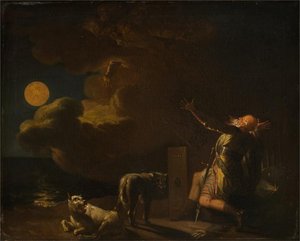
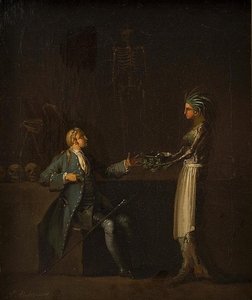
11Apollo charging the Parcae to visit Ceres, who has fled from the Earth (1809) od Nicolai Abraham AbildgaardApollo charging the Parcae to visit Ceres, who has fled from the Earth1809 · Statens Museum For Kunst 12Christian III Succouring Denmark (1780) od Nicolai Abraham AbildgaardChristian III Succouring Denmark1780 · Statens Museum For Kunst 13Christian III Succouring Denmark (1780) od Nicolai Abraham AbildgaardChristian III Succouring Denmark1780 · Statens Museum For Kunst 14The Construction of Copenhagen´s Dock in the Reign of Christian VI (1786) od Nicolai Abraham AbildgaardThe Construction of Copenhagen´s Dock in the Reign of Christian VI1786 · Statens Museum For Kunst 15The Prayers of the Potuans at the Feast of the Unfathomable God (1785) od Nicolai Abraham AbildgaardThe Prayers of the Potuans at the Feast of the Unfathomable God1785 · Statens Museum For Kunst 16A farewell scene (1783) od Nicolai Abraham AbildgaardA farewell scene1783 · Nivaagaards Malerisamling 17Rome as Ruler of the World (1784) od Nicolai Abraham AbildgaardRome as Ruler of the World1784 · Statens Museum For Kunst 18The Triumph of a Potuan, whose Reform Proposal has been Approved (1785) od Nicolai Abraham AbildgaardThe Triumph of a Potuan, whose Reform Proposal has been Approved1785 · Statens Museum For Kunst 19Absolute Monarchy Assigned to Frederik III in 1660 (1783) od Nicolai Abraham AbildgaardAbsolute Monarchy Assigned to Frederik III in 16601783 · Statens Museum For Kunst 20The Establishment of Schools (1781) od Nicolai Abraham AbildgaardThe Establishment of Schools1781 · Statens Museum For Kunst 21Asiatic Trade (1782) od Nicolai Abraham AbildgaardAsiatic Trade1782 · Statens Museum For Kunst 22Niels Klim thinks he hears the Deacon when he is awakened by a Bull (1785) od Nicolai Abraham AbildgaardNiels Klim thinks he hears the Deacon when he is awakened by a Bull1785 · Statens Museum For Kunst 23Standardization of Weights and Measures in 1683 (1784) od Nicolai Abraham AbildgaardStandardization of Weights and Measures in 16831784 · Statens Museum For Kunst 24The Foundation of the Royal Library (1783) od Nicolai Abraham AbildgaardThe Foundation of the Royal Library1783 · Statens Museum For Kunst 25Richard III wakes up from his nightmare in his tent in Bosworth (1785) od Nicolai Abraham AbildgaardRichard III wakes up from his nightmare in his tent in Bosworth1785 · Statens Museum For Kunst 26Alexander's messenger at the Persian philosopher (1785) od Nicolai Abraham AbildgaardAlexander's messenger at the Persian philosopher1785 27Alexander the Great and an officer visit Diogenes. (1785) od Nicolai Abraham AbildgaardAlexander the Great and an officer visit Diogenes.1785 28The Prince Royal Frederik awakens the sleeping Fama with the help of Clio. Study. (1783) od Nicolai Abraham AbildgaardThe Prince Royal Frederik awakens the sleeping Fama with the help of Clio. Study.1783 · The Museum of National History at Frederiksborg Castle 29Richard III Before the Battle of Bosworth (1780) od Nicolai Abraham AbildgaardRichard III Before the Battle of Bosworth1780 · Randers Kunstmuseum 30The Archangel Michael and Satan Disputing about the Body of Moses (1785) od Nicolai Abraham AbildgaardThe Archangel Michael and Satan Disputing about the Body of Moses1785 · ARoS Aarhus Kunstmuseum 31Niels Klim Receives the Homage of the Quamites. (1787) od Nicolai Abraham AbildgaardNiels Klim Receives the Homage of the Quamites.1787 · Statens Museum For Kunst 32King Priam Pleading with Achilles for the Corpse of Hector (1794) od Nicolai Abraham AbildgaardKing Priam Pleading with Achilles for the Corpse of Hector1794 · Statens Museum For Kunst 33The Foundation of the Copenhagen Fire Insurance (1786) od Nicolai Abraham AbildgaardThe Foundation of the Copenhagen Fire Insurance1786 · Statens Museum For Kunst 34Mercury by the Seashore (1794) od Nicolai Abraham AbildgaardMercury by the Seashore1794 · Statens Museum For Kunst 35Richard III (1787) od Nicolai Abraham AbildgaardRichard III1787 36Achilles and the Centaur Cheiron (1796) od Nicolai Abraham AbildgaardAchilles and the Centaur Cheiron1796 · Statens Museum For Kunst 37Thetis Immersing her Infant Son Achilles in the River Styx to Make him Invulnerable (1796) od Nicolai Abraham AbildgaardThetis Immersing her Infant Son Achilles in the River Styx to Make him Invulnerable1796 · Statens Museum For Kunst 38The Death of Achilles (1796) od Nicolai Abraham AbildgaardThe Death of Achilles1796 · Statens Museum For Kunst 39Philosophy. Allegorical figure. (1800) od Nicolai Abraham AbildgaardPhilosophy. Allegorical figure.1800 · Statens Museum For Kunst 40The Slave Davus and the Maid Mysis. From Terence´s Andria. (1804) od Nicolai Abraham AbildgaardThe Slave Davus and the Maid Mysis. From Terence´s Andria.1804 · Statens Museum For Kunst 41Christian I Raising the Province of Holstein to the State of a Duchy in 1460 (1778) od Nicolai Abraham AbildgaardChristian I Raising the Province of Holstein to the State of a Duchy in 14601778 · Statens Museum For Kunst 42Jurisprudence. Allegorical Figure (1800) od Nicolai Abraham AbildgaardJurisprudence. Allegorical Figure1800 · Statens Museum For Kunst 43Achilles and the Daughters of Lycomedes (1796) od Nicolai Abraham AbildgaardAchilles and the Daughters of Lycomedes1796 · Statens Museum For Kunst 44Theology. Allegorical figure (1800) od Nicolai Abraham AbildgaardTheology. Allegorical figure1800 · Statens Museum For Kunst 45Simo and his former slave Sosia. From Terence´s Andria. (1803) od Nicolai Abraham AbildgaardSimo and his former slave Sosia. From Terence´s Andria.1803 · Statens Museum For Kunst 46Julia and Fulvia (1800) od Nicolai Abraham AbildgaardJulia and Fulvia1800 · Národné múzeum umenia, architektúry a dizajnu 47Portrait of the artist's son Marcus Aurelius Abildgaard. (1797) od Nicolai Abraham AbildgaardPortrait of the artist's son Marcus Aurelius Abildgaard.1797 48Fingal gives his weapons to Oscar. (1796) od Nicolai Abraham AbildgaardFingal gives his weapons to Oscar.1796 · Kunsten Museum of Modern Art Aalborg 49Allegory of Philosophy (1800) od Nicolai Abraham AbildgaardAllegory of Philosophy1800 50Allegory of Protestantism (1809) od Nicolai Abraham AbildgaardAllegory of Protestantism1809 · Ribe Kunstmuseum 51The Catholic Worldview, Allegory (1809) od Nicolai Abraham AbildgaardThe Catholic Worldview, Allegory1809 · Ribe Kunstmuseum 52The Oath of Fealty in 1660 (1806) od Nicolai Abraham AbildgaardThe Oath of Fealty in 16601806 · Statens Museum For Kunst 53Odysseus Takes Counsel with Teiresias. From Homer´s Odyssey (1809) od Nicolai Abraham AbildgaardOdysseus Takes Counsel with Teiresias. From Homer´s Odyssey1809 · Statens Museum For Kunst 54Fotis sees her Lover Lucius Transformed into an Ass. Motif from Apeleius' The Golden Ass (1809) od Nicolai Abraham AbildgaardFotis sees her Lover Lucius Transformed into an Ass. Motif from Apeleius' The Golden Ass1809 · Statens Museum For Kunst 55Tarquin and the Sibyl (1809) od Nicolai Abraham AbildgaardTarquin and the Sibyl1809 · Statens Museum For Kunst 56Hierarchy at its Peak at the time of the Crusades (1784) od Nicolai Abraham AbildgaardHierarchy at its Peak at the time of the Crusades1784 · Statens Museum For Kunst 57The Revival of Learning, the Invention of Printing and Gunpowder and the Discovery of America (1784) od Nicolai Abraham AbildgaardThe Revival of Learning, the Invention of Printing and Gunpowder and the Discovery of America1784 · Statens Museum For Kunst 58Papirius and his Mother (1809) od Nicolai Abraham AbildgaardPapirius and his Mother1809 · Statens Museum For Kunst 59Alexander the Great and Diogenes. (1809) od Nicolai Abraham AbildgaardAlexander the Great and Diogenes.1809 · Kunsten Museum of Modern Art Aalborg 60Fotis sees her Lover Lucius Transformed into an Ass. Motif from Apeleius' The Golden Ass (1809) od Nicolai Abraham AbildgaardFotis sees her Lover Lucius Transformed into an Ass. Motif from Apeleius' The Golden Ass1809 · Statens Museum For Kunst 61Tibullus Lamenting outside the Door of his Beloved (1808) od Nicolai Abraham AbildgaardTibullus Lamenting outside the Door of his Beloved1808 · Statens Museum For Kunst 62Christian IV Aboard his Flagship "The Trinity" (1782) od Nicolai Abraham AbildgaardChristian IV Aboard his Flagship "The Trinity"1782 · Statens Museum For Kunst 63Two Young Men Confessing to Alexander the Great their Conspiracy against Him (1800) od Nicolai Abraham AbildgaardTwo Young Men Confessing to Alexander the Great their Conspiracy against Him1800 · Statens Museum For Kunst 64Niels Klim Attends the Sentencing of the Deceased Potuan Prince. (1785) od Nicolai Abraham AbildgaardNiels Klim Attends the Sentencing of the Deceased Potuan Prince.1785 · Statens Museum For Kunst 65The Abolition of Adscription in 1788 (1790) od Nicolai Abraham AbildgaardThe Abolition of Adscription in 17881790 · Statens Museum For Kunst 66Frederik V as Patron of Science and Arts (1787) od Nicolai Abraham AbildgaardFrederik V as Patron of Science and Arts1787 · Statens Museum For Kunst 67The Midwife Taking Leave of the Girl from Andros (from Terence's Andria ) (1801) od Nicolai Abraham AbildgaardThe Midwife Taking Leave of the Girl from Andros (from Terence's Andria )1801 · Statens Museum For Kunst 68Nature Untamed (1784) od Nicolai Abraham AbildgaardNature Untamed1784 · Statens Museum For Kunst 69Hamlet Delivering a Letter Written by Himself to the Queen of Scotland (1776) od Nicolai Abraham AbildgaardHamlet Delivering a Letter Written by Himself to the Queen of Scotland1776 · Statens Museum For Kunst 70From Ludvig Holbergs´s The Journey of Niels Klim to The World Underground (1785) od Nicolai Abraham AbildgaardFrom Ludvig Holbergs´s The Journey of Niels Klim to The World Underground1785 · Statens Museum For Kunst 71Frederik II Builds Kronberg Castle at Elsinore (1781) od Nicolai Abraham AbildgaardFrederik II Builds Kronberg Castle at Elsinore1781 · Statens Museum For Kunst 72The Dying Messalina and Her Mother (1797) od Nicolai Abraham AbildgaardThe Dying Messalina and Her Mother1797 · Statens Museum For Kunst 73The Greek Poet Anacreon and Bathyll (1808) od Nicolai Abraham AbildgaardThe Greek Poet Anacreon and Bathyll1808 · Statens Museum For Kunst 74Christian I Elevates Holstein to a Duchy in 1474 (1778) od Nicolai Abraham AbildgaardChristian I Elevates Holstein to a Duchy in 14741778 · Statens Museum For Kunst 75Socrates in Prison (1784) od Nicolai Abraham AbildgaardSocrates in Prison1784 · Ny Carlsberg Glyptotek 76Niels Klim in Potu (1785) od Nicolai Abraham AbildgaardNiels Klim in Potu1785 · Statens Museum For Kunst 77Allegory on the Right of Citizenship (1790) od Nicolai Abraham AbildgaardAllegory on the Right of Citizenship1790 · Statens Museum For Kunst 78Fingal Sees the Ghosts of his Forefathers by Moonlight (1782) od Nicolai Abraham AbildgaardFingal Sees the Ghosts of his Forefathers by Moonlight1782 · Statens Museum For Kunst 79Male Figure after Michelangelo's 'Last Judgement' in the Sistine Chapel (1774) od Nicolai Abraham AbildgaardMale Figure after Michelangelo's 'Last Judgement' in the Sistine Chapel1774 · Statens Museum For Kunst 80Ismene and Antogone Plead with Theseus (1799) od Nicolai Abraham AbildgaardIsmene and Antogone Plead with Theseus1799 · Statens Museum For Kunst 81Hamlet and His Mother (1778) od Nicolai Abraham AbildgaardHamlet and His Mother1778 · Statens Museum For Kunst 82Richard III terrified by nightmarish visions. Shakespeare, Act 5, Scene 9 od Nicolai Abraham AbildgaardRichard III terrified by nightmarish visions. Shakespeare, Act 5, Scene 9Nivaagaards Malerisamling 83Amor and Psyche embracing each other od Nicolai Abraham AbildgaardAmor and Psyche embracing each otherNivaagaards Malerisamling 84Two Roman warriors watching a seated man embracing a child od Nicolai Abraham AbildgaardTwo Roman warriors watching a seated man embracing a child 85Scenes from 'Niels Klim's Subterranean Journey' od Nicolai Abraham AbildgaardScenes from 'Niels Klim's Subterranean Journey'Hamburger Kunsthalle 86Audhumla od Nicolai Abraham AbildgaardAudhumlaStatens Museum For Kunst 87The Doctor's Wife Reveals Her Husband's Intention of Anatomising Niels Klim (1787) od Nicolai Abraham AbildgaardThe Doctor's Wife Reveals Her Husband's Intention of Anatomising Niels Klim1787 · Statens Museum For Kunst 88The Finding of the Infant Moses od Nicolai Abraham AbildgaardThe Finding of the Infant MosesStatens Museum For Kunst 89Adam and Eve (1780) od Nicolai Abraham AbildgaardAdam and Eve1780 · Národné múzeum 90Catullus, and Lesbia Seeking Comfort in his Arms for the Death of her Sparrow (1809) od Nicolai Abraham AbildgaardCatullus, and Lesbia Seeking Comfort in his Arms for the Death of her Sparrow1809 · Nivaagaards Malerisamling 91A view of Schie Church in Sweden od Nicolai Abraham AbildgaardA view of Schie Church in SwedenSorø Art Museum 92Adrastos Slays Himself on Atys' Tomb od Nicolai Abraham AbildgaardAdrastos Slays Himself on Atys' TombARoS Aarhus Kunstmuseum 93Lover Pamfilus in conversation with his forslagne serve Davus od Nicolai Abraham AbildgaardLover Pamfilus in conversation with his forslagne serve DavusStatens Museum For Kunst 94Portrait of Nicolai Abraham Abildgaard od Nicolai Abraham AbildgaardPortrait of Nicolai Abraham Abildgaard 95Ossian's swansong od Nicolai Abraham AbildgaardOssian's swansongStatens Museum For Kunst 96Hamlet Shows His Mother the Ghost of His Father od Nicolai Abraham AbildgaardHamlet Shows His Mother the Ghost of His Father 97Fingal Sees the Ghosts of His Ancestors in the Moonlight od Nicolai Abraham AbildgaardFingal Sees the Ghosts of His Ancestors in the Moonlight 98Jupiter Weighing the Fate of Man od Nicolai Abraham AbildgaardJupiter Weighing the Fate of ManRibe Kunstmuseum 99Sitting male nude with the face partly covered by his raised arms od Nicolai Abraham AbildgaardSitting male nude with the face partly covered by his raised arms 100The Wounded Philoctetes (1775) od Nicolai Abraham AbildgaardThe Wounded Philoctetes1775 · National Gallery of Denmark

Slávne obrazy umelca Nicolai Abraham Abildgaard podľa jednotlivých období

Motívy, ktoré zaujali Nicolai Abraham Abildgaard

Štyri témy, ktoré sa v týchto origináloch najčastejšie vracajú, každá s jej najvychybenejším príkladom.

Múzeá, ktoré uchovávajú originály umelca Nicolai Abraham Abildgaard

8 múzeá, v ktorých sa nachádza najviac obrazov z tejto stránky.

Múzeá Mesto Diela umelca Nicolai Abraham Abildgaard Obrazy z tohto zoznamu
Statens Museum For Kunst, KodaňStatens Museum For Kunst Kodaň 70 The Greek Poet Sappho and the Girl from Mytilene, Christian V Presents Danish Law 1683, Julia and Fulvia
Nivaagaards Malerisamling, NibeNivaagaards Malerisamling Nibe 4 A farewell scene, Richard III terrified by nightmarish visions. Shakespeare, Act 5, Scene 9, Amor and Psyche embracing each other
Ribe Kunstmuseum, EsbjergRibe Kunstmuseum Esbjerg 3 Allegory of Protestantism, The Catholic Worldview, Allegory, Jupiter Weighing the Fate of Man
ARoS Aarhus Kunstmuseum, AarhusARoS Aarhus Kunstmuseum Aarhus 2 The Archangel Michael and Satan Disputing about the Body of Moses, Adrastos Slays Himself on Atys' Tomb
Kunsten Museum of Modern Art Aalborg, AalborgKunsten Museum of Modern Art Aalborg Aalborg 2 Fingal gives his weapons to Oscar., Alexander the Great and Diogenes.
The Museum of National History at Frederiksborg Castle, HillerødThe Museum of National History at Frederiksborg Castle Hillerød 2 The Prince Royal Frederik awakens the sleeping Fama with the help of Clio. Study.
Národné múzeum, StockholmNárodné múzeum Stockholm 2 Adam and Eve
Sorø Art Museum, SorøSorø Art Museum Sorø 2 A view of Schie Church in Sweden

Nicolai Abraham Abildgaard dekáda po dekáde: originál, ktorý definuje každú z nich

Diela podľa dekád

Vyberte si dekádu a pozrite si originál, ktorý ju definuje.

Otázky zberateľov o obrazoch od Nicolai Abraham Abildgaard

Ktorým dielom je Nicolai Abraham Abildgaard najznámejší/najznámejšia?Odhaľte odpoveď

The Greek Poet Sappho and the Girl from Mytilene (1809), Statens Museum For Kunst, Kodaň. Nasledujú Cupid Playing the Lyre. (1782) a Christian V Presents Danish Law 1683 (1784).

V akom veku bol/a Nicolai Abraham Abildgaard, keď vzniklo dielo The Greek Poet Sappho and the Girl from Mytilene?Odhaľte odpoveď

66 rokov: The Greek Poet Sappho and the Girl from Mytilene vzniklo v roku 1809 a Nicolai Abraham Abildgaard sa narodil/a v roku 1743.

Ktorých desať najznámejších obrazov má Nicolai Abraham Abildgaard?Odhaľte odpoveď

The Greek Poet Sappho and the Girl from Mytilene, Cupid Playing the Lyre., Christian V Presents Danish Law 1683, Julia and Fulvia, The Potuans are Surprised to see Niels Klim Genuflect in front of the Wise Prince., Frederik II Builds Kronborg Castle at Elsinore, Kulturens herredømme, Christian VII Uniting the Ducal with the Royal Part of Holstein in 1767, Magnus Stenbock Surrenders the Fortress of Tønningen to Frederik IV in 1714 a The robber's housekeeper comforts the young girl by telling the myth of Amor and Psyche. Motif from Apulejus, The Golden Donkey. Vyššie uvedené hodnotenie uvádza rok a múzeu pre každé z nich.

Koľko obrazov zanechal umenec Nicolai Abraham Abildgaard?Odhaľte odpoveď

Náš katalóg obsahuje 106 diel od umelca Nicolai Abraham Abildgaard z perioda od 1774 do 1809.

V ktorých múzeách visia majstrovské diela umelca Nicolai Abraham Abildgaard?Odhaľte odpoveď

Väčšinou v Statens Museum For Kunst (Kodaň), Nivaagaards Malerisamling (Nibe) a Ribe Kunstmuseum (Esbjerg). Tabuľka múzeí vyššie ich všetky uvádza.

V ktorých rokoch vytvoril Nicolai Abraham Abildgaard svoje najznámejšie diela?Odhaľte odpoveď

V období 1780s: 40 z 100 diel na tejto stránke bolo vytvorených vtedy, pričom Cupid Playing the Lyre. z nich.

Aké sú prvé a posledné známe originály od Nicolai Abraham Abildgaard?Odhaľte odpoveď

Na tejto stránke je najstaršie dielo z Male Figure after Michelangelo's 'Last Judgement' in the Sistine Chapel (1774) a najnovšie z The Greek Poet Sappho and the Girl from Mytilene (1809).

Aké témy si Nicolai Abraham Abildgaard najčastejšie vyberal/a?Odhaľte odpoveď

Woman (12), Drapery (10) a Shadows (9), v rámci 100 diel na tejto stránke.

Ktorú techniku používal(a) Nicolai Abraham Abildgaard najčastejšie?Odhaľte odpoveď

Oil On Canvas, pre 28 z 100 diel na tejto stránke.

Do ktorého umeleckého smeru patrí Nicolai Abraham Abildgaard?Odhaľte odpoveď

Neoclassicism a Neoclassical romanticism, podľa originálov na tejto stránke.

Aké diela umelca Nicolai Abraham Abildgaard sa nachádzajú v múzeu Statens Museum For Kunst?Odhaľte odpoveď

The Greek Poet Sappho and the Girl from Mytilene, Christian V Presents Danish Law 1683 a Julia and Fulvia: múzeá Statens Museum For Kunst, Kodaň uchovávajú 70 z diel na tejto stránke.

Nicolai Abraham Abildgaard: život a dielo

Nicolai Abraham Abildgaard – Život a Umenie

Nicolai Abraham Abildgaard, narodil sa v Kodenských kráľovských zámkoch 11. septembra 1743, ako syn Anne Margrethe (née Bastholm) a Søren Abildgaarda, ktorý bol uznávaný antikvárom a kresťanským ilustrátorom. Jeho otec ho od malička vyšíval láskou k klasickému umeniu a precíznemu pozorovaniu – hodnoty, ktoré sa stali základom jeho umeleckej cestoty. Už ako mladý muž získal prvotné školenie u miestneho kresťanského malára a následne vstúpil na Kodenskú Kráľovskú akadémiu umenia v roku 1764. Jeho talent rýchlo vynikal – od roku 1764 do 1767 pravidelne získaval uznanie a medailóny za svoju rastúcu schopnosť. Tieto skoré úspechy vrcholili štátnym stipendiumom poskytnutým v roku 1767 – rozhodujúcou príležitosťou, ktorá napokon umožnila využiť jeho potenciál až päť rokov neskôr. Jeho školenie na akadémii bolo pod vedením Johana Edvard Mandalberga a Johanna Wiedewelta, ktorí mu preniesli svoje techniky a perspektívy zároveň však vybudoval svoj vlastný jedinečný umelecký smer.

Renesancie v Říme: Zmena Perspektivy

V roku 1772 Nicolai Abildgaard napokon dosiahol svoj dlhoočakávaný sen – cestovanie do Ríma. Táto päťročná púť bola transformačná, ktorá označila zásadný zvrat v jeho umeleckej evolúcii. Ponorený do srdca klasickej antiquity, venoval sa štúdium nie len sochárskeho umenia, ale aj architektúry, dekorácie a nádherné fresky Palazzo Farnese. Jeho návštevu Nápoľska v roku 1776 doplnila spoločnosť s ďalším umelcom Jensom Juelom – zážitok, ktorý rozšíril jeho obzory. Rím však nebol len miesto technického štúdia; bol intelektuálnou probudou. Abildgaard sa venoval histórijskému maľstvu, snažil sa osvojiť jeho komplexnosť a rozprávacie síce – čoho výsledkom bolo vytvorenie obrazov bohatých na symbolizmus a emocionálne vyjadrenie. Inspiráciu čerpal z majstrov – Annibaldiho Carracciho, Rafaela, Titiana a Mikolaja Michelangelova – osvojil si ich kompozíciačné stratégie, dramatické využitie svetla a hlboké porozumenie ľudskej anatómie. Jeho umelecký postup však nebol len kopírovací činnosťou klasických majstrov; Abildgaard aktivne vyjadroval svoje vlastné hodnoty a estetické predstava. Bol to umelec, ktorý dokázal preklenúť medzinárodný rozchod medzi osvietenskými ideálmi a emocionálnou intenzitou 19. storočia. Jeho štýl predstavoval fascinujúcu kombináciu klasickej precíznosti s romantickou energiou – čoho dôkazom sú jeho tvorby, ktoré odrážajú kultúrne hodnoty doby svojho pôvodu.

Kráľovské Zakázania a Národné Rozprávanie

V roku 1780 Abildgaard získal významnú úlohu v živote Kodenského kráľovstva – pozícia hlavného historického malára. Bol povolaný vytvoriť sériu obrazov oslavujúcich históriu Dánska pre Veľký zámok Kristiana I., čo predstavovalo vrchol jeho umeleckej činnosti. Tieto obrazy neboli len jednoduché ilustrácie dejín; boli starostlivým kompozíciovým plánom navrhnutým na vyjadrenie národnej hrdosti a podporu monarchii. Abildgaard dokázal presne zachytiť historické udalosti kombinovaním ich obrazovej reprezentácie s alegorickými prvkami a odkazymi na mytológiu – čím vytvoril vizuálne pôsobivé a intelektuálne stimulujúce diela. Jeho umelecký postup však nezostával len kopírovací činnosťou klasických majstrov; Abildgaard aktivne vyjadroval svoje hodnoty a estetické predstava. Bol to umelec, ktorý dokázal preklenúť medzinárodný rozchod medzi osvietenskými ideálmi a emocionálnou intenzitou 19. storočia. Jeho tvorba odráža kultúrne hodnoty doby svojho pôvodu.

Syntéza Štýlov: Klasicizmus a Romantizmus

Nicolai Abraham Abildgaardov umelecký štýl predstavoval fascinujúcu kombináciu klasickej precíznosti s romantickou energiou – čoho dôkazom sú jeho tvorby, ktoré odrážajú kultúrne hodnoty doby svojho pôvodu. Zatiaľ čo bol založený na princípach klasickej kompozície, jasnosti a anatomickej presnosti, jeho diela boli naplnené dramatickým osvetlením bohatými farebnými škálami a pozorným sledovaním detailov – ktoré naznačovali hlbší emocionálny podtext. Jeho najvýznamnejšie diela sú napríklad „Kristianus I. Elevuje Holstein na Dukát v roku 1474“ – majestátny obraz oslavujúci históriu Dánska vykreslený klasickou precíznosťou, no zároveň nabitý pompézou a dramatickým efektom. Podobne aj „Nočná mora“ dokázala vyjadriť jeho schopnosť zobrazovať nadprirodzené udalosti s dramatickou intenzitou – čo naznačovalo vznikajúci romantizmus v európskom umení. Jeho záujem však nebol len reprodukovací činnosťou klasických majstrov; Abildgaard aktivne vyjadroval svoje hodnoty a estetické predstava. Bol to umelec, ktorý dokázal preklenúť medzinárodný rozchod medzi osvietenskými ideálmi a emocionálnou intenzitou 19. storočia. Jeho tvorba odráža kultúrne hodnoty doby svojho pôvodu. Jeho umelecký postup však nezostával len kopírovací činnosťou klasických majstrov; Abildgaard aktivne vyjadroval svoje hodnoty a estetické predstava. Bol to umelec, ktorý dokázal preklenúť medzinárodný rozchod medzi osvietenskými ideálmi a emocionálnou intenzitou 19. storočia. Jeho tvorba odráža kultúrne hodnoty doby svojho pôvodu. Jeho umelecký postup však nezostával len kopírovací činnosťou klasických majstrov; Abildgaard aktivne vyjadroval svoje hodnoty a estetické predstava. Bol to umelec, ktorý dokázal preklenúť medzinárodný rozchod medzi osvietenskými ideálmi a emocionálnou intenzitou 19. storočia. Jeho tvorba odráža kultúrne hodnoty doby svojho pôvodu. Jeho umelecký postup však nezostával len kopírovací činnosťou klasických majstrov; Abildgaard aktivne vyjadroval svoje hodnoty a estetické predstava. Bol to umelec, ktorý dokázal preklenúť medzinárodný rozchod medzi osvietenskými ideálmi a emocionálnou intenzitou 19. storočia. Jeho tvorba odráža kultúrne hodnoty doby svojho pôvodu. Jeho umelecký postup však nezostával len kopírovací činnosťou klasických majstrov; Abildgaard aktivne vyjadroval svoje hodnoty a estetické predstava. Bol to umelec, ktorý dokázal preklenúť medzinárodný rozchod medzi osvietenskými ideálmi a emocionálnou intenzitou 19. storočia. Jeho tvorba odráža kultúrne hodnoty doby svojho pôvodu. Jeho umelecký postup však nezostával len kopírovací činnosťou klasických majstrov; Abildgaard aktivne vyjadroval svoje hodnoty a estetické predstava. Bol to umelec, ktorý dokázal preklenúť medzinárodný rozchod medzi osvietenskými ideálmi a emocionálnou intenzitou 19. storočia. Jeho tvorba odráža kultúrne hodnoty doby svojho pôvodu. Jeho umelecký postup však nezostával len kopírovací činnosťou klasických majstrov; Abildgaard aktivne vyjadroval svoje hodnoty a estetické predstava. Bol to umelec, ktorý dokázal preklenúť medzinárodný rozchod medzi osvietenskými ideálmi a emocionálnou intenzitou 19. storočia. Jeho tvorba odráža kultúrne hodnoty doby svojho