Portrét Koloman Moser

100 najznámejších obrazov od umelca Koloman Moser, každý jedinečný

Aktualizované november 2026 · zoradené podľa našej miery popularity (vyhľadávanie, návštevy a objednávky pre každou prácu) · 189 dielov umelca Koloman Moser v našom katalógu

Stručne povedané

Tanec Žien Červených Kružiek (1898) je obrazom umelca Koloman Moser, ktorý priťahuje najviac pohľadov; originál sa nachádza v múzeu Secession, Viedeň. Potom sa pohľad presunie na Poster of the Beethoven sonatas evening (1908) a Drafts for the exlibris for Fritz Waerndorfer (1903). Z 189 diel umelca Koloman Moser v našom katalógu je týchto 100 najznámejších; každá z nich je jedinečným originálom prezentovaným s jeho rokom vzniku, múzeom a dôvodom, prečo pretrváva.

1868 – 1918, Viedeň Art nouveau Najviac diel: Leopold Museum

Top 10 obrazov umelca Koloman Moser podľa výberu galérie

1
Tanec Žien Červených Kružiek (1898) od Koloman Moser

Tanec Žien Červených Kružiek

1898 · Čiernobiela fotografia · Secession, Viedeň

Výstava Koloman Mosera: „Tanec Žien Červených Kružícov“ – Symbolem Vienenského Secese „Tanec Žien Červených Kružícov“ predstavuje jednu z najvýznamnejších diel Koloman Mosera, oslavu estetiky a filozofie vienenského Secese. Tento obraz vytvoril Moser v roku 1898 ako súčasť projektu obnovy kostola Steinhof – významného objektu architektúry Otto Wagnera a hlavného motívu jedného z najznámejších rakúskej mincovní štítka vydanej v roku 2005. Výstava Koloman Mosera prezentuje rozsiahlu zbierku jeho diel, ktoré odrážajú…

2
Poster of the Beethoven sonatas evening (1908) od Koloman Moser

Poster of the Beethoven sonatas evening

1908 · Print

The Poster of the Beethoven sonatas evening by Koloman Moser emerges from 1908, a moment when the air in Vienna pulses with new artistic energy. This graphic work functions as a visual invitation to a specific musical encounter. It announces an evening dedicated to the profound compositions of Ludwig van Beethoven, inviting the viewer to witness the power of his sonatas through a modern lens. The design carries the weight…

3
Drafts for the exlibris for Fritz Waerndorfer (1903) od Koloman Moser

Drafts for the exlibris for Fritz Waerndorfer

1903 · Ink On Paper

The ink flows across the paper in a rhythmic dance, capturing a moment of transition between thought and final form. In this 1903 draft for an exlibris, the lines possess a liquid quality, winding around figures with an organic grace that feels alive. Three women emerge from the composition, their bodies elongated and poised in a way that suggests a dreamlike elegance. One figure wears a crown, her presence lending…

4
Semmering Landscape od Koloman Moser

Semmering Landscape

Oil On Canvas

The landscape of the Semmering region finds a quiet, symbolic expression in this work. Mountains rise against a sky saturated with purple hues, while a rising sun casts a warm glow over the peaks. Scattered trees provide texture and depth to the composition, grounding the ethereal light in the physical reality of the terrain. Two figures are positioned within the scene—one near the center and another toward the right—offering a…

5
Loneliness (1902) od Koloman Moser

Loneliness

1902 · Watercolor

In Loneliness, Koloman Moser explores a quiet, introspective moment through the medium of watercolor. Created about 1902, this work reflects the sensibilities of the Art Nouveau style, focusing on a singular, solitary figure. A man stands beneath a tree, his head partially obscured by the foliage, creating a sense of withdrawal from the world around him. This choice of posture suggests a deep internal focus, a retreat into the self…

6
Figure study of Tristan (1915) od Koloman Moser

Figure study of Tristan

1915 · Drawing

The scene unfolds through a black and white drawing titled Figure study of Tristan. Created by Koloman Moser, this work captures a singular, quiet moment of preparation. The artist’s hand moves across the paper to document the human form, focusing on the physical presence of the subject. It is a study of light and shadow, stripped of color to emphasize the raw essence of the figure.

7
Poster for 'Prince Richard Metternich' (1899) od Koloman Moser

Poster for 'Prince Richard Metternich'

1899 · Print

In this 1899 composition, we find ourselves observing a moment of suspended motion. A single figure, draped in a flowing blue dress, appears to drift through a serene sky. There is a sense of weightlessness here, as if the subject is caught in a dance or perhaps a flight between the clouds. The lines are not merely outlines; they are sinuous, organic curves that define the movement of the fabric…

8
Self Portrait in Colonial Dress (1910) od Koloman Moser

Self Portrait in Colonial Dress

1910 · Watercolor · Kunsthistorisches Museum, Viedeň

The painting depicts a man with a mustache wearing a suit and tie, appearing to look directly at the viewer while seated. His attire is suggestive of colonial clothing. The man's facial features and outfit are rendered with significant detail. The background is somewhat blurry, depicting an indoor setting that includes two chairs, one on the left side and another toward the right, and a bowl located near the bottom…

9
Sketch for a poster of the Vienna Workshop (1904) od Koloman Moser

Sketch for a poster of the Vienna Workshop

1904 · Paper

Sketch for a poster of the Vienna Workshop, created in 1904, is a work by the Austrian artist Koloman Moser. This piece emerged during a period of significant transformation in the Viennese art scene, reflecting the shifting aesthetics of the turn of the century.

10
Am Steinhof Church, Design for the rise window (1905) od Koloman Moser

Am Steinhof Church, Design for the rise window

1905 · Gouache

The design for the rise window of Am Steinhof Church emerges from the creative mind of Koloman Moser. Created about 1905, this work captures a moment of intense artistic focus. Moser, who was born in Vienna, Austria-Hungary in 1868, brings a specific vision to this ecclesiastical design. His hand moves through the intricate patterns that define the window's structure.

Slávne obrazy umelca Koloman Moser, čísla 11 až 100

11The Rax (1912) od Koloman MoserThe Rax1912 · Leopold Museum 12Franz Dangl in Uniform (1891) od Koloman MoserFranz Dangl in Uniform1891 13Inlaid Eisler-Terramare Armoire (1903) od Koloman MoserInlaid Eisler-Terramare Armoire1903 · Leopold Museum 14Wreath bearer. Design for decorative facade of the Viennese Secession. (1897) od Koloman MoserWreath bearer. Design for decorative facade of the Viennese Secession.1897 15Cover design for Meggendorfer leaves (1895) od Koloman MoserCover design for Meggendorfer leaves1895 16Profile of a girl. Preparatory work for a decorative stain in red and green. (1897) od Koloman MoserProfile of a girl. Preparatory work for a decorative stain in red and green.1897 17Mermaid. Illustration for Jugendschatz German seals. (1896) od Koloman MoserMermaid. Illustration for Jugendschatz German seals.1896 18Reproduction template for the leaf for Gerlach's love allegories. New Series, Plate 35 (1895) od Koloman MoserReproduction template for the leaf for Gerlach's love allegories. New Series, Plate 351895 19A modern Tantalus. Illustration for 'Meggendorfer leaves'. (1895) od Koloman MoserA modern Tantalus. Illustration for 'Meggendorfer leaves'.1895 20Happy editing. Illustration with self-portrait. (1895) od Koloman MoserHappy editing. Illustration with self-portrait.1895 21The sketch of the round window art (1897) od Koloman MoserThe sketch of the round window art1897 22‘Surface Decoration,’ Cover (1902) od Koloman Moser‘Surface Decoration,’ Cover1902 · Harvard Art Museums 23Picture book for the niece of Ditha Mautner von Markhof (1904) od Koloman MoserPicture book for the niece of Ditha Mautner von Markhof1904 24Poster for the XIII. Secession (1902) od Koloman MoserPoster for the XIII. Secession1902 25Elisabeth Steindl, Niece of the Artist (1910) od Koloman MoserElisabeth Steindl, Niece of the Artist1910 26Charlotte Moser, Sister of the Artist (1910) od Koloman MoserCharlotte Moser, Sister of the Artist1910 27Rudolf Steindl, Brother-in-law of the Artist (1910) od Koloman MoserRudolf Steindl, Brother-in-law of the Artist1910 28Portrait of the painter Carl Otto Czeschka (1909) od Koloman MoserPortrait of the painter Carl Otto Czeschka1909 29Postcard with Emperor Franz Josef (1908) od Koloman MoserPostcard with Emperor Franz Josef1908 30Catalogue of the Austrian Exhibition in London (1906) od Koloman MoserCatalogue of the Austrian Exhibition in London1906 31Design for the bill of 50 crowns (1911) od Koloman MoserDesign for the bill of 50 crowns1911 32Self-Portrait (1915) od Koloman MoserSelf-Portrait1915 33Venus in the Grotto (1914) od Koloman MoserVenus in the Grotto1914 · Leopold Museum 34The Wayfarer (1914) od Koloman MoserThe Wayfarer1914 · Leopold Museum 35Stamp Design for Emperor Charles I (not accepted) (1917) od Koloman MoserStamp Design for Emperor Charles I (not accepted)1917 36Reclining Female Nude (Mileva Roller) (1912) od Koloman MoserReclining Female Nude (Mileva Roller)1912 37Three women squatting (1914) od Koloman MoserThree women squatting1914 38Kolo middle Dolomites (1912) od Koloman MoserKolo middle Dolomites1912 39Loïe Fuller in the Dance (1902) od Koloman MoserLoïe Fuller in the Dance1902 · Albertina 40Decorative Fabric [“Bird Bülow”] (1900) od Koloman MoserDecorative Fabric [“Bird Bülow”]1900 · MAK – Múzeum aplikovaného umenia 41Animal motif for a picture book (1904) od Koloman MoserAnimal motif for a picture book1904 42Marigolds (1909) od Koloman MoserMarigolds1909 · Leopold Museum 43Steinhoch church in Vienna od Koloman MoserSteinhoch church in Vienna 44Study for The Wanderer (1914) od Koloman MoserStudy for The Wanderer1914 45Illustration for the Viennese fashion magazine (1890) od Koloman MoserIllustration for the Viennese fashion magazine1890 46Male Nude Study (1888) od Koloman MoserMale Nude Study1888 47Ver Sacrum (1898) od Koloman MoserVer Sacrum1898 48Draft of the emblem by the Association of Austrian Artists Secession (1897) od Koloman MoserDraft of the emblem by the Association of Austrian Artists Secession1897 49Allegory of Ver Sacrum, sketch of illustration to Ver Sacrum, 101 1898, p.1 (1897) od Koloman MoserAllegory of Ver Sacrum, sketch of illustration to Ver Sacrum, 101 1898, p.11897 50Vignettes for the catalog Secessionausstellung, 1898 (1898) od Koloman MoserVignettes for the catalog Secessionausstellung, 18981898 51Waidmannsheil (1896) od Koloman MoserWaidmannsheil1896 52Laurel wreath (1897) od Koloman MoserLaurel wreath1897 53Serpentine dancer. Poster design for Lois Fuller. (1895) od Koloman MoserSerpentine dancer. Poster design for Lois Fuller.1895 54Landscape with Tree (1896) od Koloman MoserLandscape with Tree1896 55A decorative stain in red and green (1897) od Koloman MoserA decorative stain in red and green1897 56Pisces (1904) od Koloman MoserPisces1904 57Postcard to Carl Moll, Ver Sacrum (1897) od Koloman MoserPostcard to Carl Moll, Ver Sacrum1897 58Spring morning (1896) od Koloman MoserSpring morning1896 59Girls in henhouse (1897) od Koloman MoserGirls in henhouse1897 60A decorative stain in red and green (1898) od Koloman MoserA decorative stain in red and green1898 61Sketch of emblem to 'Ver Sacrum' (1898) od Koloman MoserSketch of emblem to 'Ver Sacrum'1898 62Square vignette (1896) od Koloman MoserSquare vignette1896 63Rudolf Steindl, a brother of the artist (1895) od Koloman MoserRudolf Steindl, a brother of the artist1895 64Iris. Illustration to a poem by Arno Holz. (1898) od Koloman MoserIris. Illustration to a poem by Arno Holz.1898 65Girl in rose (1898) od Koloman MoserGirl in rose1898 66Pieta (1895) od Koloman MoserPieta1895 67'The Rich Catch of Fish' Armchair (1900) od Koloman Moser'The Rich Catch of Fish' Armchair1900 · Los Angeles County Museum of Art 68Sketches for Eisler Terramare High Chair (1903) od Koloman MoserSketches for Eisler Terramare High Chair1903 69Purkersdorf Sanatorium Armchair (1903) od Koloman MoserPurkersdorf Sanatorium Armchair1903 70Lacquered Wood Chair (1905) od Koloman MoserLacquered Wood Chair1905 71Designs for silver brooches (1904) od Koloman MoserDesigns for silver brooches1904 72Picture book for the niece of Ditha Mautner von Markhof (1904) od Koloman MoserPicture book for the niece of Ditha Mautner von Markhof1904 73Picture book for the niece of Ditha Mautner von Markhof (1904) od Koloman MoserPicture book for the niece of Ditha Mautner von Markhof1904 74Picture book for the niece of Ditha Mautner von Markhof (1904) od Koloman MoserPicture book for the niece of Ditha Mautner von Markhof1904 75Picture book for the niece of Ditha Mautner von Markhof (1904) od Koloman MoserPicture book for the niece of Ditha Mautner von Markhof1904 76Picture book for the niece of Ditha Mautner von Markhof (1904) od Koloman MoserPicture book for the niece of Ditha Mautner von Markhof1904 77Picture book for the niece of Ditha Mautner von Markhof (1904) od Koloman MoserPicture book for the niece of Ditha Mautner von Markhof1904 78Am Steinhof Church, Design for the right side altar Guardian Angel (1904) od Koloman MoserAm Steinhof Church, Design for the right side altar Guardian Angel1904 79Picture book for the niece of Ditha Mautner von Markhof (1904) od Koloman MoserPicture book for the niece of Ditha Mautner von Markhof1904 80Am Steinhof Church, Design for the left side altar Our Lady of Mercy (1904) od Koloman MoserAm Steinhof Church, Design for the left side altar Our Lady of Mercy1904 81Picture book for the niece of Ditha Mautner von Markhof (1904) od Koloman MoserPicture book for the niece of Ditha Mautner von Markhof1904 82Picture book for the niece of Ditha Mautner von Markhof (1904) od Koloman MoserPicture book for the niece of Ditha Mautner von Markhof1904 83Church Am Steinhof, drawing of the angel in the left side window (1905) od Koloman MoserChurch Am Steinhof, drawing of the angel in the left side window1905 84Draft of furniture decoration for the bedroom of the apartment Eisler Terra Mare (1902) od Koloman MoserDraft of furniture decoration for the bedroom of the apartment Eisler Terra Mare1902 85Draft for wall decoration in the living room of the apartment in Berlin Stonborough (1904) od Koloman MoserDraft for wall decoration in the living room of the apartment in Berlin Stonborough1904 86Book cover of Austrian art of the XIX. Century (1903) od Koloman MoserBook cover of Austrian art of the XIX. Century1903 87Exlibris Adele Bloch - Bookplate with princess and frog (1905) od Koloman MoserExlibris Adele Bloch - Bookplate with princess and frog1905 88Fabric design with moving waves for Backhausen (1902) od Koloman MoserFabric design with moving waves for Backhausen1902 89Landscape with cloudy sky (1904) od Koloman MoserLandscape with cloudy sky1904 90Backhausen Interior Texiles (1899) od Koloman MoserBackhausen Interior Texiles1899 91Fabric design with floral awakening for Backhausen (1900) od Koloman MoserFabric design with floral awakening for Backhausen1900 92Backhausen Interior Texiles (1899) od Koloman MoserBackhausen Interior Texiles1899 93Am Steinhof Church, mosaic design for the main altar (1905) od Koloman MoserAm Steinhof Church, mosaic design for the main altar1905 94Design for the fabric (1902) od Koloman MoserDesign for the fabric1902 95Design for a Stage Decoration (1901) od Koloman MoserDesign for a Stage Decoration1901 96Design for the bill of 50 crowns (1902) od Koloman MoserDesign for the bill of 50 crowns1902 97Drafts for metal relief (1904) od Koloman MoserDrafts for metal relief1904 98Fabric design with trout dance for Backhausen (1899) od Koloman MoserFabric design with trout dance for Backhausen1899 99Fabric design with birds for Backhausen (1899) od Koloman MoserFabric design with birds for Backhausen1899 100Drafts for metal relief (1904) od Koloman MoserDrafts for metal relief1904

Slávne obrazy umelca Koloman Moser podľa jednotlivých období

Motívy, ktoré zaujali Koloman Moser

Štyri témy, ktoré sa v týchto origináloch najčastejšie vracajú, každá s jej najvychybenejším príkladom.

Múzeá, ktoré uchovávajú originály umelca Koloman Moser

7 múzeá, v ktorých sa nachádza najviac obrazov z tejto stránky.

Múzeá Mesto Diela umelca Koloman Moser Obrazy z tohto zoznamu
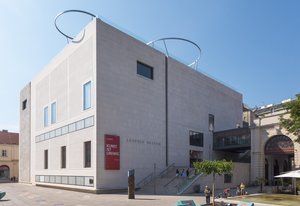
Leopold Museum, ViedeňLeopold Museum Viedeň 6 The Rax, Inlaid Eisler-Terramare Armoire, Venus in the Grotto
Secession, ViedeňSecession Viedeň 2 Tanec Žien Červených Kružiek
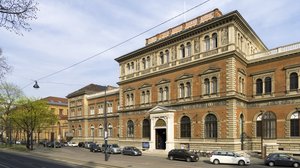
MAK – Múzeum aplikovaného umenia, ViedeňMAK – Múzeum aplikovaného umenia Viedeň 2 Decorative Fabric [“Bird Bülow”]
Kunsthistorisches Museum, ViedeňKunsthistorisches Museum Viedeň 1 Self Portrait in Colonial Dress
Harvard Art Museums, CambridgeHarvard Art Museums Cambridge 1 ‘Surface Decoration,’ Cover
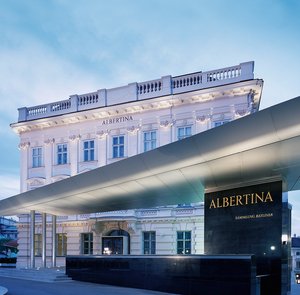
Albertina, ViedeňAlbertina Viedeň 1 Loïe Fuller in the Dance
Los Angeles County Museum of Art, Los AngelesLos Angeles County Museum of Art Los Angeles 1 'The Rich Catch of Fish' Armchair

Koloman Moser naprieč dekádami: jeden jedinečný originál pre každý

Diela podľa dekád

Vyberte si dekádu a pozrite si originál, ktorý ju definuje.

Obrazy umelca Koloman Moser: otázky pre galériu

Akým najznámejším dielom sa pýta Koloman Moser?Odhaľte odpoveď

Tanec Žien Červených Kružiek (1898), Secession, Viedeň. Nasledujú Poster of the Beethoven sonatas evening (1908) a Drafts for the exlibris for Fritz Waerndorfer (1903).

V akom veku vytvoril/a Koloman Moser dielo Tanec Žien Červených Kružiek?Odhaľte odpoveď

30 rokov: Tanec Žien Červených Kružiek vzniklo v roku 1898 a Koloman Moser sa narodil/a v roku 1868.

Ktorých desať obrazov Koloman Moser je najznámejších?Odhaľte odpoveď

Tanec Žien Červených Kružiek, Poster of the Beethoven sonatas evening, Drafts for the exlibris for Fritz Waerndorfer, Semmering Landscape, Loneliness, Figure study of Tristan, Poster for 'Prince Richard Metternich', Self Portrait in Colonial Dress, Sketch for a poster of the Vienna Workshop a Am Steinhof Church, Design for the rise window. Vyššie uvedené hodnotenie uvádza rok a múzeu pre každé z nich.

Koľko je známych diel umelca Koloman Moser?Odhaľte odpoveď

Náš katalóg obsahuje 189 diel od umelca Koloman Moser z perioda od 1888 do 1917.

Kde možno vidieť najznámejšie originály od Koloman Moser?Odhaľte odpoveď

Väčšinou v Leopold Museum (Viedeň), Secession (Viedeň) a MAK – Múzeum aplikovaného umenia (Viedeň). Tabuľka múzeí vyššie ich všetky uvádza.

V akom období vytvoril/a Koloman Moser svoje najznámejšie obrazy?Odhaľte odpoveď

V období 1900s: 47 z 100 diel na tejto stránke bolo vytvorených vtedy, pričom Poster of the Beethoven sonatas evening z nich.

Ktorý z najslávnejších obrazov autora Koloman Moser je najstarší a ktorý najnovší?Odhaľte odpoveď

Na tejto stránke je najstaršie dielo z Male Nude Study (1888) a najnovšie z Stamp Design for Emperor Charles I (not accepted) (1917).

Aké témy obľúbené Koloman Moser?Odhaľte odpoveď

Designs and sketches (14), Woman (13) a Man (11), v rámci 100 diel na tejto stránke.

S akými materiálmi mal(a) Koloman Moser najčastejšie pracuje?Odhaľte odpoveď

Oil On Canvas, pre 10 z 100 diel na tejto stránke.

Do ktorého smeru patrí tvorba umelca Koloman Moser?Odhaľte odpoveď

Art nouveau, podľa originálov na tejto stránke.

Aké originály od Koloman Moser môžem vidieť v Leopold Museum?Odhaľte odpoveď

The Rax, Inlaid Eisler-Terramare Armoire a Venus in the Grotto: múzeá Leopold Museum, Viedeň uchovávajú 5 z diel na tejto stránke.

Koloman Moser: portrét umelca

Koloman Moser: Architekt, Grafický Designer a Pionier Vídeňského Secese

Koloman Moser, narodený 30. marca 1868 v Budapešti (vtedy časťou Rakúska-Uhorska), bol nesmierne významnou osobitosťou rakúskej umeleckej scény konca 19. a začiatku 20. storočia. Jeho dielo, rozmanité a hlboko zakorenené v tradíciách, zároveň prelomové a inovatívne, ho zaradil medzi najvýznamnejších predstaviteľov Vídeňského Secese a Wiener Werkstätte. Jeho cesta k umeniu začala štúdiom na Viedeňskej akadémii a pokračovala v Kunstgewerbeschule, kde neskôr pôsobil ako učiteľ od roku 1899. Tento akademický základ významne ovplyvnil jeho rozmanitý umelecký životopis. Jeho rodinné zázemie – otca, ktorý bol administratívnym pracovníkom a matku, ktorá mala silné umelecké zameranie – ho od malička vystavilo prostrediu plnému umenia a dizajnu, čo podnietilo jeho cit pre detail a estetiku, ktoré sa stávajú charakteristickými pre jeho tvorbu.

Rozmanitost’ Umelckého Vytvorenia: Multifunkčné Zameranie

Moserova umelecká činnosť bola nesmierne rozmanitá a zahŕňala široké spektrum oblastí. Jeho najvýznamnejším prínosom je bezpochyby grafický dizajn, v ktorom sa mu podarilo vytvoriť jedinečné vzory pre poštové známky, ilustrácie do časopisov a ďalšie tlačné materiály. Charakteristické pre jeho diela sú jasnosť, elegancia a inovatívne využívanie typografického umenia. Okrem grafiky sa Moser venoval aj módnemu dizajnu, tvorbe vitrážových sklá, porcelánu, keramiky, sklokeramiky, stolárskeho remesla, strieborníctva a šperkárstva. Tento rozsiahly rozsah jeho záujmov demonštruje jeho vášeň pre integráciu umenia do každodenného života a jeho schopnosť prispôsobiť sa rôznym technológiám a materiálom. Nepochybne si zaslúži uznanie aj v architektúre, kde jeho návrhy, najmä mozaika a vitráže v kostole na Steinhof viedeňskej (1904), predstavujú vrchol Art Nouveau architektúry.

Wiener Werkstätte a Spolupráci: Inštitúcia Nového Umenia

V roku 1903 sa Moser stal spoluzakladateľom Wiener Werkstätte (Vídeňskej dielne) spolu s Josefom Hoffmannom. Táto nová inštitúcia mala za cieľ spájať umelcov a remeselníkov v procese tvorby esteticky príjemných domácich potrieb. Wiener Werkstätte zdôrazňovala filozofiu “Gesamtkunstwerk” – celok umeleckého diela, kde každý aspekt objektu, od návrhu až po výrobu, bol starostlivo premyslený. Moserova účasť v Wiener Werkstätte posilnila jeho záväzky k funkčnému dizajnu a zvýšila prestíž remeselného umenia. Spolupráca s Hoffmannom bola obzvlášť plodná a ovplyvnila smerovanie mnohých projektov.

Vplyvy, Vývoj a Dielo: Inšpirácie a Zostavy

Moserova umelecká tvorba bola ovplyvnená viacerými významnými prúdy, vrátane Art Nouveau, Symbolizmu a Vídeňského Secese. Silný vplyv na jeho diela mali japonské dresecké maľby, ktoré sa prejavili v použití plochých farieb a zjednodušených tvarov. Jeho štýl sa postupne vyvíjal, stal sa čoraz abstraktnejším a geometrickým, pričom si však zachoval eleganciu a rafinovanosť. Moserovo dielo je nesmierne bohaté a rozmanité – od elegantných grafických návrhov pre tapety a obklady až po monumentalné maľby zobrazujúce prírodu a ľudské postavy. Jeho najznámejšie diela zahŕňajú “Dancer”, “Three crouching women” a “The Frog King”. Jeho prínos je oslavovaný aj na Slovensku, kde jeho návrhy boli zobrazené na austríckej 100-eurovej bankovke vydanej v roku 2005. Koloman Moser zomrel viedeňsky v roku 1918 a zanechal po sebe rozsiahle dielo, ktoré dodnes inšpiruje umelcov a dizajnérov.

Dielo na Zostatku: Pamätné Miesta a Inštalácie

Moserovo dielo je nesmierne cenené a jeho prínos pre rakúsku umeleckú scénu je nepopierateľný. Jeho návrhy sú súčasťou mnohých významných inštalácií a múzeálnych zbierok po celom svete. Jeho štýl sa stáva jedným z najvýznamnejších predstaviteľov Art Nouveau v Európe, a jeho diela sú stále aktuálne a inspiratívne.