Portrét Ferdinand Georg Waldmüller

Obrazy umelca Ferdinand Georg Waldmüller: 100 najznámejších výtvarných diel prostretých pohľadom galérie

Aktualizované november 2026 · zoradené podľa našej miery popularity (vyhľadávanie, návštevy a objednávky pre každou prácu) · 210 dielov umelca Ferdinand Georg Waldmüller v našom katalógu

Stručne povedané

Z hľadiska galérie je najznámejším obrazom umelca Ferdinand Georg Waldmüller dielo Portrait of Ludwig van Beethoven (1823), ktorého originál visí v Kunsthistorisches Museum v meste Viedeň. The young boy with the stable-lantern / The Young Stableboy with a Stable Lamp (1824) a The Actor Maximilian Korn in a Landscape (1828) dopĺňajú trojicu, ktorú pozná každé oko. Z 210 diel umelca Ferdinand Georg Waldmüller v našom katalógu prezentuje galéria nižšie 100 najznámejších, z ktorých je každá originál s uvedeným rokom vzniku, múzeom a unikátnosťou.

1793 – 1865, Viedeň Biedermeier realism Najviac diel: Bavarské štátne múzeá výtvarného umenia

Top 10 obrazov umelca Ferdinand Georg Waldmüller v galérii

1
Portrait of Ludwig van Beethoven (1823) od Ferdinand Georg Waldmüller

Portrait of Ludwig van Beethoven

1823 · Oil On Canvas · Kunsthistorisches Museum, Viedeň

A heavy, dark coat absorbs the light, framing a face etched by internal storms. The subject sits in a bust-length pose, his gaze directed toward the right, away from the viewer's immediate line of sight. Shadows pool deeply in the folds of his white neckcloth and the hollows of his cheeks, creating a sharp, three-dimensional presence. His hair, a wild, wavy mass of grey-white, catches the directional light from the…

3
The Actor Maximilian Korn in a Landscape (1828) od Ferdinand Georg Waldmüller

The Actor Maximilian Korn in a Landscape

1828 · Oil On Panel · Art Institute of Chicago, Chicago

The Actor Maximilian Korn in a Landscape is an oil on panel work created in 1828. The portrait captures a specific presence within a quiet, expansive setting. Ferdinand Georg Waldmüller, an Austrian painter, rendered the figure with a focus on the textures of the era. The subject is Maximilian Korn, a man whose likeness is fixed against the soft light of the natural world.

4
Peasant Lovers (1863) od Ferdinand Georg Waldmüller

Peasant Lovers

1863 · Wood · Städel Museum, Frankfurt

In 1863, Ferdinand Georg Waldmüller painted Peasant Lovers (Bäuerliches Liebespaar) in Austria. The work captures a tender moment between two young lovers. They are locked in an embrace amidst the quietude of a rural setting. This genre painting focuses on the intimate realities of peasant life.

5
The Interrupted Pilgrimage (The Sick Pilgrim) (1858) od Ferdinand Georg Waldmüller

The Interrupted Pilgrimage (The Sick Pilgrim)

1858 · Oil · Leopold Museum, Viedeň

The Interrupted Pilgrimage (The Sick Pilgrim) is an oil on wood painting by Ferdinand Georg Waldmüller. Created in 1858, the work captures a moment of stillness amidst a rocky landscape. The artist, Ferdinand Georg Waldmüller, was born in Vienna, Austria, in 1793. He lived until 1865, passing away in Hinterbrühl near Mödling.

6
After Confiscation (1859) od Ferdinand Georg Waldmüller

After Confiscation

1859 · Oil On Canvas · Gemäldegalerie, Dresno

Sunlight streams through an open doorway, cutting a sharp path across a crowded courtyard where life unfolds in a series of hushed, heavy moments. A group of women and children gather in this intimate space, their forms caught in a delicate dance between light and shadow. The air feels thick with the weight of their shared experience, a quiet community huddled together amidst the stone walls and textured fabrics of…

7
The Conscript’s Farewell (1854) od Ferdinand Georg Waldmüller

The Conscript’s Farewell

1854 · Leopold Museum, Viedeň

The Conscript’s Farewell is a painting by Ferdinand Georg Waldmüller. Created in 1854, this work captures a heavy moment within a farmhouse parlor. A young man, called up for military service, stands at the center of a domestic storm. He is surrounded by his family, each member caught in the gravity of his departure. The scene is a genre painting, a slice of life frozen in the quiet tension of…

8
Children at the Window (1853) od Ferdinand Georg Waldmüller

Children at the Window

1853 · Oil · Residenzgalerie, Salzbursk

In this 1853 painting, a group of five children is gathered around a window, which serves as the central focal point of the scene. The arrangement of the figures creates a sense of quiet interaction: one child stands on the left side of the window, while two children are positioned close to each other in the middle. On the right side, another child stands by the window, and a fifth…

9
Children (1834) od Ferdinand Georg Waldmüller

Children

1834 · Acrylic On Canvas · Hermitáž, Petrohrad

Ferdinand Georg Waldmüller's "Children," painted in 1834, isn’t merely a portrait; it’s a carefully constructed tableau of quiet dignity and poignant observation. The painting captures two young girls returning home from school along a winding path, bathed in the soft, diffused light characteristic of the Biedermeier style – an artistic movement deeply rooted in the appreciation of nature and the celebration of everyday life. Waldmüller, a pivotal figure within this…

10
Catharina Freifrau von Koudelka (1821) od Ferdinand Georg Waldmüller

Catharina Freifrau von Koudelka

1821 · Oil On Canvas

Catharina Freifrau von Koudelka is a portrait executed by the Austrian painter Ferdinand Georg Waldmüller. Created about 1821, the work emerged during a period of significant artistic transition in Vienna. The subject is presented with the formal dignity characteristic of the era's social hierarchies.

Obrazy umelca Ferdinand Georg Waldmüller, usporiadané od 11 do 100

11Rosina Wieser in her 83rd Year of Life (1820) od Ferdinand Georg WaldmüllerRosina Wieser in her 83rd Year of Life1820 12Portrait of Archduke Johann of Österreich in Uniform (1818) od Ferdinand Georg WaldmüllerPortrait of Archduke Johann of Österreich in Uniform1818 13Portrait of Frau Rossini (Isabella Colbran) (1818) od Ferdinand Georg WaldmüllerPortrait of Frau Rossini (Isabella Colbran)1818 14The court actress Sophie Müller (1822) od Ferdinand Georg WaldmüllerThe court actress Sophie Müller1822 15Rosina Wieser in Armchair (1822) od Ferdinand Georg WaldmüllerRosina Wieser in Armchair1822 16Portrait of a knight of the Golden fleece (1818) od Ferdinand Georg WaldmüllerPortrait of a knight of the Golden fleece1818 17Portrait of the artists mother (1818) od Ferdinand Georg WaldmüllerPortrait of the artists mother1818 18Peasant woman crosing a creek in a ravine (1818) od Ferdinand Georg WaldmüllerPeasant woman crosing a creek in a ravine1818 19Portrait of a child (1822) od Ferdinand Georg WaldmüllerPortrait of a child1822 20man with writing plate (1817) od Ferdinand Georg Waldmüllerman with writing plate1817 21Girl with flowers (1817) od Ferdinand Georg WaldmüllerGirl with flowers1817 22maid with snake (1817) od Ferdinand Georg Waldmüllermaid with snake1817 23Man with book (1817) od Ferdinand Georg WaldmüllerMan with book1817 24Christ and the Samaritan Woman at the Well (1818) od Ferdinand Georg WaldmüllerChrist and the Samaritan Woman at the Well1818 25Portrait of a Middle-Aged Lady (1828) od Ferdinand Georg WaldmüllerPortrait of a Middle-Aged Lady1828 · Bavarské štátne múzeá výtvarného umenia 26Lady in White Dress before a Wienerwald Landscape (1829) od Ferdinand Georg WaldmüllerLady in White Dress before a Wienerwald Landscape1829 27Elisabeth Waldmüller, the Mother of the Artist (1830) od Ferdinand Georg WaldmüllerElisabeth Waldmüller, the Mother of the Artist1830 28Day Laborer with His Son (1823) od Ferdinand Georg WaldmüllerDay Laborer with His Son1823 29Mrs. Theresia Rupprecht (1825) od Ferdinand Georg WaldmüllerMrs. Theresia Rupprecht1825 30Female Portrait in White Ball Toilette (1830) od Ferdinand Georg WaldmüllerFemale Portrait in White Ball Toilette1830 31Countess Széchenyi (1828) od Ferdinand Georg WaldmüllerCountess Széchenyi1828 · Cleveland Museum of Art 32Self-portrait (1828) od Ferdinand Georg WaldmüllerSelf-portrait1828 33Portr. of a gentleman with sabre (1830) od Ferdinand Georg WaldmüllerPortr. of a gentleman with sabre1830 34Portrait of a lady, half figure (1829) od Ferdinand Georg WaldmüllerPortrait of a lady, half figure1829 35portrait of a lady (1829) od Ferdinand Georg Waldmüllerportrait of a lady1829 36Cows in a meadow (1823) od Ferdinand Georg WaldmüllerCows in a meadow1823 37Little Count Esterhazy in trousers with a rabbit (1827) od Ferdinand Georg WaldmüllerLittle Count Esterhazy in trousers with a rabbit1827 38Portrait of a Cartographer with his Wife (1824) od Ferdinand Georg WaldmüllerPortrait of a Cartographer with his Wife1824 · Westfälisches Landesmuseum 39Portrait of a lady (1825) od Ferdinand Georg WaldmüllerPortrait of a lady1825 40Old soldier with children (1827) od Ferdinand Georg WaldmüllerOld soldier with children1827 41Portrait of the family Geymüller in a park (1827) od Ferdinand Georg WaldmüllerPortrait of the family Geymüller in a park1827 42two hunters in the mountains (1829) od Ferdinand Georg Waldmüllertwo hunters in the mountains1829 43Boy with a Stable Lantern (1825) od Ferdinand Georg WaldmüllerBoy with a Stable Lantern1825 44Portrait of a Woman in Riding Attire, with her Greyhound (1839) od Ferdinand Georg WaldmüllerPortrait of a Woman in Riding Attire, with her Greyhound1839 45The Engraver François Haury (1834) od Ferdinand Georg WaldmüllerThe Engraver François Haury1834 46Woman in Green, Salmon-Pink Shimmering Dress (1837) od Ferdinand Georg WaldmüllerWoman in Green, Salmon-Pink Shimmering Dress1837 47The Wife of the Court Official Josef von Stadler (1835) od Ferdinand Georg WaldmüllerThe Wife of the Court Official Josef von Stadler1835 48The Roman Ruin in Schönbrunn (1832) od Ferdinand Georg WaldmüllerThe Roman Ruin in Schönbrunn1832 49Aloisia Eltz in the Armchair (1834) od Ferdinand Georg WaldmüllerAloisia Eltz in the Armchair1834 50Josephine Schaumburg, née Stahel (1834) od Ferdinand Georg WaldmüllerJosephine Schaumburg, née Stahel1834 51A Girl Adorns the Mother of God with a Rose (1836) od Ferdinand Georg WaldmüllerA Girl Adorns the Mother of God with a Rose1836 52Old Woman with White Ribbon Cap (1832) od Ferdinand Georg WaldmüllerOld Woman with White Ribbon Cap1832 53Heinrich Werner (1830 - 1861), the son of the married couple Johann and Magdalena Werner (1835) od Ferdinand Georg WaldmüllerHeinrich Werner (1830 - 1861), the son of the married couple Johann and Magdalena Werner1835 54Count Demetrius Apraxin as a Child before a Mountain Landscape (1832) od Ferdinand Georg WaldmüllerCount Demetrius Apraxin as a Child before a Mountain Landscape1832 55The Imperial and Royal Börsenkammerrat Johann Werner (1788-1879) (1835) od Ferdinand Georg WaldmüllerThe Imperial and Royal Börsenkammerrat Johann Werner (1788-1879)1835 56Magdalena Werner (1804-1872) (1835) od Ferdinand Georg WaldmüllerMagdalena Werner (1804-1872)1835 57The Princely Esterházy Counselor Mathias Kerzmann with his second wife Maria Helena, née Mikolischütz, and daughter Maria (1835) od Ferdinand Georg WaldmüllerThe Princely Esterházy Counselor Mathias Kerzmann with his second wife Maria Helena, née Mikolischütz, and daughter Maria1835 58Lady in Cinnabar Green Dress (1838) od Ferdinand Georg WaldmüllerLady in Cinnabar Green Dress1838 59Girl's Head with Blue Headscarf (1836) od Ferdinand Georg WaldmüllerGirl's Head with Blue Headscarf1836 60Countess Dimitri Tatischeff (1838) od Ferdinand Georg WaldmüllerCountess Dimitri Tatischeff1838 · Städel Museum 61A Greek in a red coat (1839) od Ferdinand Georg WaldmüllerA Greek in a red coat1839 · Moravská galéria v Brne 62View of Ischl (1838) od Ferdinand Georg WaldmüllerView of Ischl1838 · Alte Nationalgalerie 63Am Allerseelentag (1839) od Ferdinand Georg WaldmüllerAm Allerseelentag1839 · Alte Nationalgalerie 64Portrait of a young lady with a pearl necklace (1835) od Ferdinand Georg WaldmüllerPortrait of a young lady with a pearl necklace1835 · Bavarské štátne múzeá výtvarného umenia 65Portrait of a Woman (1836) od Ferdinand Georg WaldmüllerPortrait of a Woman1836 · Bavarské štátne múzeá výtvarného umenia 66Portrait of a lady from the family of the nobles of Managetta and Lerchenau (Katharina Jackson, née Bonin-Ghibaud?) (1837) od Ferdinand Georg WaldmüllerPortrait of a lady from the family of the nobles of Managetta and Lerchenau (Katharina Jackson, née Bonin-Ghibaud?)1837 · Bavarské štátne múzeá výtvarného umenia 67Portrait of a Noblewoman Managetta von Lerchenau (1837) od Ferdinand Georg WaldmüllerPortrait of a Noblewoman Managetta von Lerchenau1837 · Bavarské štátne múzeá výtvarného umenia 68Julia Comtesse Apraxin (1835) od Ferdinand Georg WaldmüllerJulia Comtesse Apraxin1835 69Mr. Wohlleben, the brother of the Mayor of Vienna, Stephan Edler von Wohlleben (1836) od Ferdinand Georg WaldmüllerMr. Wohlleben, the brother of the Mayor of Vienna, Stephan Edler von Wohlleben1836 70Portrait of Emilie Werner (1832 - 1835), daughter of Johann and Magdalena Werner (1835) od Ferdinand Georg WaldmüllerPortrait of Emilie Werner (1832 - 1835), daughter of Johann and Magdalena Werner1835 71Emperor Ferdinand I of Austria (1839) od Ferdinand Georg WaldmüllerEmperor Ferdinand I of Austria1839 72portrait of a young lady (1839) od Ferdinand Georg Waldmüllerportrait of a young lady1839 73Portrait of Friedrich von Guaita Bürgermeister von Frankfurt/Main (1834) od Ferdinand Georg WaldmüllerPortrait of Friedrich von Guaita Bürgermeister von Frankfurt/Main1834 74Portrait of a girl (1837) od Ferdinand Georg WaldmüllerPortrait of a girl1837 75Portrait of a young gentleman in uniform (1836) od Ferdinand Georg WaldmüllerPortrait of a young gentleman in uniform1836 76Portrait of sitting lady (1837) od Ferdinand Georg WaldmüllerPortrait of sitting lady1837 77Visit of the grand Parents (1835) od Ferdinand Georg WaldmüllerVisit of the grand Parents1835 78The Beggar (1836) od Ferdinand Georg WaldmüllerThe Beggar1836 79A traveling family of beggars is rewarded by poor peasants on Christmas Eve (1834) od Ferdinand Georg WaldmüllerA traveling family of beggars is rewarded by poor peasants on Christmas Eve1834 80Three graces garlanded with roses (1836) od Ferdinand Georg WaldmüllerThree graces garlanded with roses1836 81Gustav Barth, Choir Master of the Wiener Männergesangsverein (1843) od Ferdinand Georg WaldmüllerGustav Barth, Choir Master of the Wiener Männergesangsverein1843 82Lower Austrian Peasants' Wedding (1843) od Ferdinand Georg WaldmüllerLower Austrian Peasants' Wedding1843 83Christmas Morning (1844) od Ferdinand Georg WaldmüllerChristmas Morning1844 84Gentleman in black skirt with white vest (1841) od Ferdinand Georg WaldmüllerGentleman in black skirt with white vest1841 85Portrait of a young woman. (1840) od Ferdinand Georg WaldmüllerPortrait of a young woman.1840 · Národné múzeum vo Varšave 86Women Bathing at the Brook (1848) od Ferdinand Georg WaldmüllerWomen Bathing at the Brook1848 87Lime kiln in the Hinterbrühl (1845) od Ferdinand Georg WaldmüllerLime kiln in the Hinterbrühl1845 · Liechtenstein Museum 88At the ruins of the fire (1847) od Ferdinand Georg WaldmüllerAt the ruins of the fire1847 89The bridesmaid / Wreath-Bearing Virgin (1843) od Ferdinand Georg WaldmüllerThe bridesmaid / Wreath-Bearing Virgin1843 90The Adoption. (1847) od Ferdinand Georg WaldmüllerThe Adoption.1847 · National Museum in Wrocław 91Portrait of a Lady in a Black Silk Dress Sitting on a Red Fauteuil (1850) od Ferdinand Georg WaldmüllerPortrait of a Lady in a Black Silk Dress Sitting on a Red Fauteuil1850 92Portrait of Madame Josef Bayer (1854) od Ferdinand Georg WaldmüllerPortrait of Madame Josef Bayer1854 · Petit Palais 93Palm Sunday (1853) od Ferdinand Georg WaldmüllerPalm Sunday1853 · Moravská galéria v Brne 94Brushwood collectors in the Wienerwald (1855) od Ferdinand Georg WaldmüllerBrushwood collectors in the Wienerwald1855 95Anna Bayer, the artists second wife (1850) od Ferdinand Georg WaldmüllerAnna Bayer, the artists second wife1850 96Depleted power (1854) od Ferdinand Georg WaldmüllerDepleted power1854 97Restored to New Life (1852) od Ferdinand Georg WaldmüllerRestored to New Life1852 98Old woman with children (1854) od Ferdinand Georg WaldmüllerOld woman with children1854 99Woman with child (1855) od Ferdinand Georg WaldmüllerWoman with child1855 100Homecoming into the fathers house (1855) od Ferdinand Georg WaldmüllerHomecoming into the fathers house1855

Slávne obrazy umelca Ferdinand Georg Waldmüller podľa jednotlivých období

Motívy, ktoré zaujali Ferdinand Georg Waldmüller

Štyri témy, ktoré sa v týchto origináloch najčastejšie vracajú, každá s jej najvychybenejším príkladom.

Múzeá, ktoré uchovávajú originály umelca Ferdinand Georg Waldmüller

8 múzeá, v ktorých sa nachádza najviac obrazov z tejto stránky.

Múzeá Mesto Diela umelca Ferdinand Georg Waldmüller Obrazy z tohto zoznamu
Bavarské štátne múzeá výtvarného umenia, MníchBavarské štátne múzeá výtvarného umenia Mních 11 Portrait of a Middle-Aged Lady, Portrait of a young lady with a pearl necklace, Portrait of a Woman
Alte Nationalgalerie, BerlínAlte Nationalgalerie Berlín 7 View of Ischl, Am Allerseelentag
Moravská galéria v Brne, BrnoMoravská galéria v Brne Brno 4 A Greek in a red coat, Palm Sunday
Städel Museum, FrankfurtStädel Museum Frankfurt 2 Peasant Lovers, Countess Dimitri Tatischeff
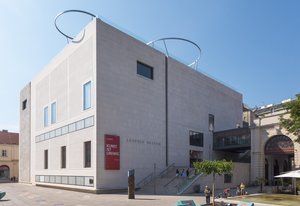
Leopold Museum, ViedeňLeopold Museum Viedeň 2 The Interrupted Pilgrimage (The Sick Pilgrim), The Conscript’s Farewell
Kunsthistorisches Museum, ViedeňKunsthistorisches Museum Viedeň 2 Portrait of Ludwig van Beethoven
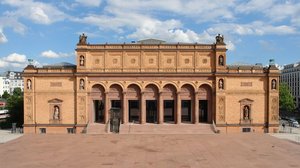
Hamburger Kunsthalle, HamburgHamburger Kunsthalle Hamburg 2 The young boy with the stable-lantern / The Young Stableboy with a Stable Lamp
Cleveland Museum of Art, ClevelandCleveland Museum of Art Cleveland 2 Countess Széchenyi

Ferdinand Georg Waldmüller, jeden ikonický obraz na každé desaťročie

Diela podľa dekád

Vyberte si dekádu a pozrite si originál, ktorý ju definuje.

Obrazy umelca Ferdinand Georg Waldmüller: odpovede galérie

Ktorý obraz od Ferdinand Georg Waldmüller je najznámejší zo všetkých?Odhaľte odpoveď

Portrait of Ludwig van Beethoven (1823), Kunsthistorisches Museum, Viedeň. Nasledujú The young boy with the stable-lantern / The Young Stableboy with a Stable Lamp (1824) a The Actor Maximilian Korn in a Landscape (1828).

Koľko rokov mal/a Ferdinand Georg Waldmüller pri dokončeni diela Portrait of Ludwig van Beethoven?Odhaľte odpoveď

30 rokov: Portrait of Ludwig van Beethoven vzniklo v roku 1823 a Ferdinand Georg Waldmüller sa narodil/a v roku 1793.

Ktorých 10 najlepších obrazov má Ferdinand Georg Waldmüller?Odhaľte odpoveď

Portrait of Ludwig van Beethoven, The young boy with the stable-lantern / The Young Stableboy with a Stable Lamp, The Actor Maximilian Korn in a Landscape, Peasant Lovers, The Interrupted Pilgrimage (The Sick Pilgrim), After Confiscation, The Conscript’s Farewell, Children at the Window, Children a Catharina Freifrau von Koudelka. Vyššie uvedené hodnotenie uvádza rok a múzeu pre každé z nich.

Koľko diel vytvoril/a Ferdinand Georg Waldmüller?Odhaľte odpoveď

Náš katalóg obsahuje 210 diel od umelca Ferdinand Georg Waldmüller z perioda od 1817 do 1863.

Kde visia najznámejšie originály umelca Ferdinand Georg Waldmüller?Odhaľte odpoveď

Väčšinou v Bavarské štátne múzeá výtvarného umenia (Mních), Alte Nationalgalerie (Berlín) a Moravská galéria v Brne (Brno). Tabuľka múzeí vyššie ich všetky uvádza.

Kedy vytvoril/a Ferdinand Georg Waldmüller svoje najznámejšie obrazy?Odhaľte odpoveď

V období 1830s: 41 z 100 diel na tejto stránke bolo vytvorených vtedy, pričom Children z nich.

Aké sú najskoršie a najneskoršie známe diela umelca Ferdinand Georg Waldmüller?Odhaľte odpoveď

Na tejto stránke je najstaršie dielo z man with writing plate (1817) a najnovšie z Peasant Lovers (1863).

K akým témamam sa Ferdinand Georg Waldmüller najčastejšie vracia?Odhaľte odpoveď

Woman (53), Man (31) a Portrait (19), v rámci 100 diel na tejto stránke.

V akom médiu tvoril/a Ferdinand Georg Waldmüller najčastejšie?Odhaľte odpoveď

Oil, pre 47 z 100 diel na tejto stránke.

S ktorým smerom je spojený/á umenec Ferdinand Georg Waldmüller?Odhaľte odpoveď

Biedermeier realism, podľa originálov na tejto stránke.

Aké originály umelca Ferdinand Georg Waldmüller má v zbierkach Bavarské štátne múzeá výtvarného umenia?Odhaľte odpoveď

Portrait of a Middle-Aged Lady, Portrait of a young lady with a pearl necklace a Portrait of a Woman: múzeá Bavarské štátne múzeá výtvarného umenia, Mních uchovávajú 5 z diel na tejto stránke.

Ferdinand Georg Waldmüller: umelec

Začiatky a formovanie umelca

Ferdinand Georg Waldmüller sa narodil 15. januára 1793 vo Viedni, v období hlbokých spoločenských zmien a umeleckého rozmachu. Jeho detstvo bolo poznamenané ťažkosťami; predčasný úmrtie jeho otca zatienilo rodinnú existenciu a mladému Ferdinandovi vložil do života skoré uvedomenie si jeho pomíjania – témy, ktorá sa neskôr hlboko odrazila v jeho tvorbe. Napriek týmto výzvam prejavoval jasný talent na kreslenie a maľovanie, čo ho viedlo k nástupu na Viedenskú akadémiu výtvarných umení v roku 1807. Jeho štúdium bolo však čiastočne prerušené, odrážajúc možno jeho neklidnú povahu alebo nespokojnosť s rigidnými akademickými obmedzeniami doby. Najprv sa venoval portrétom, spoľahlivej ceste pre začínajúceho umelca hľadajúceho podporu, no skôr ho očarili krajiny a žánrové scény – zobrazenia každodenného života – ktoré nakoniec definovali jeho umeleckú dedičstvo. Tieto prvé skúmanie položili základy štýlu charakterizovaného precíznou observáciou a hlbokým prepojením s prírodou.

Umelecká kariéra v znamení realizmu a kontroverzie

Waldmüllerova kariéra sa rozvinula ako dynamická interakcia medzi umeleckou inováciou a inštitucionálnym odporom. Počas formovania svojho štýlu si dopĺňal príjem prácou dizajnéra kulís a pokračoval v maľovaní portrétov, často na turné so svojou manželkou, speváčkou Katharinou Weidnerovou. Tento putovný život ho vystavoval rôznym prostrediam a rozširoval jeho umelecké obzory. V 20. rokoch 19. storočia začal Waldmüller vyvíjať svoj charakteristický štýl – odhodlanie sa k realistickým zobrazeniam každodenného života, najmä v vidieckych oblastiach. Nezaujímal ho idealizmus ani romantika; hľadal zachytiť svet taký, aký je, so všetkou jeho krásou a nedokonalosťami. Toto odhodlanie k realizmu mu prinieslo ako uznanie, tak aj kritiku. V roku 1819 získal miesto profesora na Akadémii výtvarných umení vo Viedni, no jeho pôsobenie bolo poznačené konfliktmi. Waldmüller horlivo obhajoval priamu observáciu z prírody – plein air maľbu – a otvorene kritizoval dôraz akadémie na formálnu inštrukciu a prísnu dodržiavanie etablovaných konvencií. Jeho vyhranené názory viedli k opakovanej konfrontácii s umeleckým establishmentom a nakoniec prispeli k jeho nútenému odchodu z akadémie v roku 1857. Časté cesty do Talianska, ktoré začali v roku 1825, a idylický región Salzkammergut hlboko ovplyvnili jeho krajinomaľbu, zdokonaľujúc jeho schopnosť zachytiť svetlo, textúru a atmosféru s pozoruhodnou presnosťou.

Témy vidieckeho života a spoločenskej kritiky

Waldmüllerova umelecká tvorba je obdivuhodne rozmanitá, zahŕňa portréty, krajiny a žánrové scény, no spája ich spoločenský motív: hlboký záujem o skutočnosť rakúskeho života 19. storočia. Diela ako Benátčanov predajca ovocia (1826), skorý príklad jeho žánrového štýlu, demonštrujú jeho schopnosť zachytiť pomíjajúce momenty každodenného života. Jeho autoportrét z roku 1828 odhaľuje hlboké porozumenie ľudskej psychológie a nuancií charakteru. Louise Mayer (1836) svedčí o jeho majstrovstve v portrétovaní, zatiaľ čo Výhľad na Ischl (1838) ukazuje jeho rozvíjajúce sa krajinárske schopnosti. No práve obrazy ako Na Dušičky (1839), Milostný list (1849) a Kúpajúce sa ženy (okolo 1848–1849) skutočne odlišili Waldmüllera. Tieto práce neboli len malebné zobrazenia vidieckeho života; boli preniknuté spoločensky kritickým pohľadom, jemne odhaľujúcimi ťažkosti, ktorým čelia obyčajní ľudia – dopad chudoby, nešťastia a komplexity rodinných vzťahov. Nebál sa zobrazovať menej glamoróznych aspektov existencie, ponúkajúc úprimnejšiu a nuancovanejšiu reprezentáciu spoločnosti, ako sa zvyčajne videlo v akademickom umení.

Dedičstvo a historický význam

Ferdinand Georg Waldmüller je oprávnene považovaný za jedného z najvýznamnejších rakúskych maliarov obdobia biedermeieru. Jeho neochvejné odhodlanie k prirodzenej observácii a plein air maľbe predpovedalo mnohé umelecké inovácie, ktoré by desaťročia neskôr charakterizovali impresionizmus. Vyzýval konvenčné zobrazenia vidieckeho života, vnášajúc do žánru často dominuje idealizovanou zobrazovateľnosťou dávku realizmu a spoločenskej kritiky. Napriek tomu, že počas svojej kariéry čelil kritike a prekážkam – vrátane núteného odchodu z akadémie – Waldmüllerova práca nakoniec získala medzinárodné uznanie, vyvrcholila vystaveniami na Svetovej výstave v Paríži (1855) a vo veľkolepom paláci (1856), kde získal uznanie od cisára Napoleona III. a kráľovnej Viktórie. Krátko pred svojou smrťou 23. augusta 1865 v Hinterbrühli bol povýšený do šľachty, čo bolo oneskorené ocenenie jeho umeleckých príspevkov. Waldmüllerovo dedičstvo presahuje jeho jednotlivé obrazy; ovplyvnil generácie umelcov svojou podrobnou realistickou maľbou, zameraním na každodenné motívy a odvážnou ochotou spochybňovať status quo. Zostáva kľúčovou postavou v rakúskej dejinách umenia – skutočným priekopníkom, ktorý pripravil cestu pre nové prístupy ku krajinárskej a žánrovej maľbe.