Portrét Dong Qichang

Obrazy umelca Dong Qichang: 54 najznámejších výtvarných diel prostretých pohľadom galérie

Aktualizované október 2026 · zoradené podľa našej miery popularity (vyhľadávanie, návštevy a objednávky pre každou prácu) · 54 dielov umelca Dong Qichang v našom katalógu

Stručne povedané

Z hľadiska galérie je najznámejším obrazom umelca Dong Qichang dielo 明 董其昌 荊谿招隱圖 卷 Invitation to Reclusion at Jingxi (1611), ktorého originál visí v Metropolitné múzeum umenia v meste New York. 明 董其昌 倣倪瓚山水圖 軸 Landscape with Trees in the Manner of Ni Zan (1301–1374) (1622) a Excerpt from Xie Huilian’s Prose Poem “On Snow” dopĺňajú trojicu, ktorú pozná každé oko. Z 54 diel umelca Dong Qichang v našom katalógu prezentuje galéria nižšie 54 najznámejších, z ktorých je každá originál s uvedeným rokom vzniku, múzeom a unikátnosťou.

1555 – 1636, Songjiang Najviac diel: Metropolitné múzeum umenia

Top 10 obrazov umelca Dong Qichang v galérii

1
明 董其昌 荊谿招隱圖 卷 Invitation to Reclusion at Jingxi (1611) od Dong Qichang

明 董其昌 荊谿招隱圖 卷 Invitation to Reclusion at Jingxi

1611 · Ink On Paper · Metropolitné múzeum umenia, New York

Snow clings to the jagged edges of the landscape, a pale weight upon the earth. In this ink-washed world, trees stand scattered like silent witnesses to the season. A few figures move through the white expanse, their presence small against the vastness of the mountains. The scene is a study in stillness, where the cold air seems to settle between the brushstrokes. It is a landscape of retreat, where the…

2
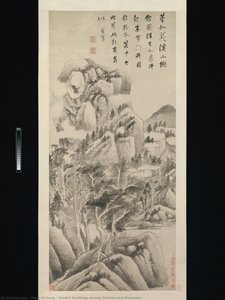
明 董其昌 倣倪瓚山水圖 軸 Landscape with Trees in the Manner of Ni Zan (1301–1374) (1622) od Dong Qichang

明 董其昌 倣倪瓚山水圖 軸 Landscape with Trees in the Manner of Ni Zan (1301–1374)

1622 · Ink On Paper · Metropolitné múzeum umenia, New York

A quiet forest breathes upon the paper, captured in a moment of profound stillness. Trees with skeletal branches and delicate leaves reach upward, their forms etched with a deliberate, calligraphic grace. This is not a scene of lush, overwhelming growth, but rather a study in sparse, rhythmic elegance. The ink flows in varying shades of grey, creating a sense of depth through the subtle interplay of light and shadow. Each…

Obrazy umelca Dong Qichang, usporiadané od 11 do 54

11Landscape in the Style of Mi Fu (1612) od Dong QichangLandscape in the Style of Mi Fu1612 · Metropolitné múzeum umenia 12Poem in Cursive Script (1622) od Dong QichangPoem in Cursive Script1622 13Poem Commemorating an Imperially Bestowed Feast (1632) od Dong QichangPoem Commemorating an Imperially Bestowed Feast1632 · Metropolitné múzeum umenia 14River and Mountains on a Clear Autumn Day (1625) od Dong QichangRiver and Mountains on a Clear Autumn Day1625 · Cleveland Museum of Art 15Poet Commemorating an Imperially Bestowed Feast (1632) od Dong QichangPoet Commemorating an Imperially Bestowed Feast1632 16Poem by Wang Wei (1632) od Dong QichangPoem by Wang Wei1632 17明 董其昌 山水圖 冊 紙本 Landscapes after old masters (1630) od Dong Qichang明 董其昌 山水圖 冊 紙本 Landscapes after old masters1630 · Metropolitné múzeum umenia 18Spring Mountains over Warm Greenery (1630) od Dong QichangSpring Mountains over Warm Greenery1630 · Metropolitné múzeum umenia 19明 董其昌 山水圖詩 冊 Landscapes and Poems (1625) od Dong Qichang明 董其昌 山水圖詩 冊 Landscapes and Poems1625 · Metropolitné múzeum umenia 20English Five character Poem in Running Script (1644) od Dong QichangEnglish Five character Poem in Running Script1644 21Misty Trees and Mountain Range (1670) od Dong QichangMisty Trees and Mountain Range1670 · Minneapolis Institute of Art 22Summer Landscape od Dong QichangSummer LandscapeMetropolitné múzeum umenia 23Autumn Mountains od Dong QichangAutumn MountainsMetropolitné múzeum umenia 24Du Fu’s Poems in Running Script (1626) od Dong QichangDu Fu’s Poems in Running Script1626 25Calligraphy after ancient masters (1600) od Dong QichangCalligraphy after ancient masters1600 26Epitaph for Wang Jihuan and his Wife, Madame Min (1622) od Dong QichangEpitaph for Wang Jihuan and his Wife, Madame Min1622 27Shaded Dwellings among Streams and Mountains (1622) od Dong QichangShaded Dwellings among Streams and Mountains1622 · Metropolitné múzeum umenia 28Steep Mountains and Silent Waters (1632) od Dong QichangSteep Mountains and Silent Waters1632 · Kimbell Art Museum 29Landscape in the Style of Ni Zan od Dong QichangLandscape in the Style of Ni Zan 30Letter od Dong QichangLetter 31River Landscape, in Ming style od Dong QichangRiver Landscape, in Ming style 32"Guitian fu" by Zhang Pingzi od Dong Qichang"Guitian fu" by Zhang Pingzi 33Scene in Jiangnan od Dong QichangScene in Jiangnan 34Letter od Dong QichangLetter 35Eight Views of Autumn Moods-8 od Dong QichangEight Views of Autumn Moods-8China Modern and Contemporary Art Document Research Center 36Eight Views of Autumn Moods-5 od Dong QichangEight Views of Autumn Moods-5China Modern and Contemporary Art Document Research Center 37Calligraphy od Dong QichangCalligraphy 38COUPLET IN RUNNING SCRIPT od Dong QichangCOUPLET IN RUNNING SCRIPT 39CALLIGRAPHY AFTER ZHONG YOU od Dong QichangCALLIGRAPHY AFTER ZHONG YOU 40CALLIGRAPHY IN CURSIVE SCRIPT od Dong QichangCALLIGRAPHY IN CURSIVE SCRIPT 41CALLIGRAPHY IN RUNNING SCRIPT od Dong QichangCALLIGRAPHY IN RUNNING SCRIPT 42LANDSCAPE od Dong QichangLANDSCAPE 43Eight Views of Autumn Moods-3 od Dong QichangEight Views of Autumn Moods-3China Modern and Contemporary Art Document Research Center 44LONELY TREES IN AN ISOLATED VILLAGE od Dong QichangLONELY TREES IN AN ISOLATED VILLAGE 45Eight Views of Autumn Moods-4 od Dong QichangEight Views of Autumn Moods-4China Modern and Contemporary Art Document Research Center 46Eight Views of Autumn Moods-2 od Dong QichangEight Views of Autumn Moods-2China Modern and Contemporary Art Document Research Center 47LETTERS od Dong QichangLETTERS 48COLLECTION OF LETTERS od Dong QichangCOLLECTION OF LETTERS 49CI POEMS IN RUNNING SCRIPT od Dong QichangCI POEMS IN RUNNING SCRIPT 50LANDSCAPE AND CALLIGRAPHY od Dong QichangLANDSCAPE AND CALLIGRAPHY 51ODE TO THE RED CLIFF IN RUNNING SCRIPT od Dong QichangODE TO THE RED CLIFF IN RUNNING SCRIPT 52Eight Views of Autumn Moods-1 od Dong QichangEight Views of Autumn Moods-1China Modern and Contemporary Art Document Research Center 53AUTUMN MOUNTAIN WITH RED TREES od Dong QichangAUTUMN MOUNTAIN WITH RED TREES 54Mountain landscape (1617) od Dong QichangMountain landscape1617 · National Gallery of Victoria

Motívy, ktoré zaujali Dong Qichang

Štyri témy, ktoré sa v týchto origináloch najčastejšie vracajú, každá s jej najvychybenejším príkladom.

Múzeá, ktoré uchovávajú originály umelca Dong Qichang

7 múzeá, v ktorých sa nachádza najviac obrazov z tejto stránky.

Múzeá Mesto Diela umelca Dong Qichang Obrazy z tohto zoznamu
Metropolitné múzeum umenia, New YorkMetropolitné múzeum umenia New York 10 明 董其昌 荊谿招隱圖 卷 Invitation to Reclusion at Jingxi, 明 董其昌 倣倪瓚山水圖 軸 Landscape with Trees in the Manner of Ni Zan (1301–1374), Landscape in the Style of Mi Fu
China Modern and Contemporary Art Document Research Center, PekingChina Modern and Contemporary Art Document Research Center Peking 7 Eight Views of Autumn Moods-6, Eight Views of Autumn Moods-8, Eight Views of Autumn Moods-5
Cleveland Museum of Art, ClevelandCleveland Museum of Art Cleveland 2 Mt. Qingbian, River and Mountains on a Clear Autumn Day
Minneapolis Institute of Art, MinneapolisMinneapolis Institute of Art Minneapolis 2 Studies of Traditional Trees and Rocks, Misty Trees and Mountain Range
Yale University Art Gallery, New HavenYale University Art Gallery New Haven 1 Reminiscence of Jian River
Kimbell Art Museum, Fort WorthKimbell Art Museum Fort Worth 1 Steep Mountains and Silent Waters
National Gallery of Victoria, MelbourneNational Gallery of Victoria Melbourne 1 Mountain landscape

Dong Qichang, jeden ikonický obraz na každé desaťročie

Diela podľa dekád

Vyberte si dekádu a pozrite si originál, ktorý ju definuje.

Obrazy umelca Dong Qichang: odpovede galérie

Ktorý obraz od Dong Qichang je najznámejší zo všetkých?Odhaľte odpoveď

明 董其昌 荊谿招隱圖 卷 Invitation to Reclusion at Jingxi (1611), Metropolitné múzeum umenia, New York. Nasledujú 明 董其昌 倣倪瓚山水圖 軸 Landscape with Trees in the Manner of Ni Zan (1301–1374) (1622) a Excerpt from Xie Huilian’s Prose Poem “On Snow”.

Koľko rokov mal/a Dong Qichang pri dokončeni diela 明 董其昌 荊谿招隱圖 卷 Invitation to Reclusion at Jingxi?Odhaľte odpoveď

56 rokov: 明 董其昌 荊谿招隱圖 卷 Invitation to Reclusion at Jingxi vzniklo v roku 1611 a Dong Qichang sa narodil/a v roku 1555.

Ktorých 10 najlepších obrazov má Dong Qichang?Odhaľte odpoveď

明 董其昌 荊谿招隱圖 卷 Invitation to Reclusion at Jingxi, 明 董其昌 倣倪瓚山水圖 軸 Landscape with Trees in the Manner of Ni Zan (1301–1374), Excerpt from Xie Huilian’s Prose Poem “On Snow”, Eight Views of Autumn Moods-6, Untitled (AQR4UL), Mt. Qingbian, Reminiscence of Jian River, Studies of Traditional Trees and Rocks, Transcription of the "Prose-poem on Promenading in the Back Garden" by Xie Tiao (464–499) and "Zuoyouming" by Cui Yuan (77–142) a 明 董其昌 溪山樾館圖 軸 紙本 Shaded Dwellings among Streams and Mountains. Vyššie uvedené hodnotenie uvádza rok a múzeu pre každé z nich.

Koľko diel vytvoril/a Dong Qichang?Odhaľte odpoveď

Náš katalóg obsahuje 54 diel od umelca Dong Qichang z perioda od 1600 do 1632.

Kde visia najznámejšie originály umelca Dong Qichang?Odhaľte odpoveď

Väčšinou v Metropolitné múzeum umenia (New York), China Modern and Contemporary Art Document Research Center (Peking) a Cleveland Museum of Art (Cleveland). Tabuľka múzeí vyššie ich všetky uvádza.

Kedy vytvoril/a Dong Qichang svoje najznámejšie obrazy?Odhaľte odpoveď

V období 1620s: 9 z 54 diel na tejto stránke bolo vytvorených vtedy, pričom 明 董其昌 倣倪瓚山水圖 軸 Landscape with Trees in the Manner of Ni Zan (1301–1374) z nich.

Aké sú najskoršie a najneskoršie známe diela umelca Dong Qichang?Odhaľte odpoveď

Na tejto stránke je najstaršie dielo z Calligraphy after ancient masters (1600) a najnovšie z Poem Commemorating an Imperially Bestowed Feast (1632).

K akým témamam sa Dong Qichang najčastejšie vracia?Odhaľte odpoveď

Chinese landscape (5), Traditional art (5) a Mountains (4), v rámci 54 diel na tejto stránke.

V akom médiu tvoril/a Dong Qichang najčastejšie?Odhaľte odpoveď

Ink On Paper, pre 2 z 54 diel na tejto stránke.

Aké originály umelca Dong Qichang má v zbierkach Metropolitné múzeum umenia?Odhaľte odpoveď

明 董其昌 荊谿招隱圖 卷 Invitation to Reclusion at Jingxi, 明 董其昌 倣倪瓚山水圖 軸 Landscape with Trees in the Manner of Ni Zan (1301–1374) a Landscape in the Style of Mi Fu: múzeá Metropolitné múzeum umenia, New York uchovávajú 10 z diel na tejto stránke.

Dong Qichang: umelec

A Life Dedicated to Ink: The World of Dong Qichang

Dong Qichang (1555–1636) was more than just a painter; he was the embodiment of the late Ming dynasty scholar-official, a man whose life was inextricably woven with calligraphy, painting, and a profound dedication to art theory. Born in Huating, near modern Shanghai, into a modest scholarly family, Dong’s early ambition lay not in artistic pursuits but in securing a position within the imperial bureaucracy. His initial attempts at the civil service examinations proved unsuccessful, largely due to his perceived clumsiness in calligraphy – an irony considering he would later become celebrated as one of China's greatest calligraphers. This setback spurred him into rigorous self-improvement, mastering not only brushwork but also the rich traditions of Chinese literary and artistic expression.

Dong’s perseverance paid off when he passed the highest level of the imperial examinations at age 34, launching a career that saw him rise through the ranks of the Ming government. However, his official life was not without its turbulence. He faced controversies stemming from his uncompromising standards and occasionally abrasive personality, leading to periods of retirement and even an incident where his home was attacked by an angry mob after he reportedly insulted women seeking redress for grievances. Despite these challenges, Dong remained steadfast in his artistic pursuits, viewing them as integral to his identity and a means of expressing his deeply held philosophical beliefs.

The Two Schools and the Southern Ideal

Dong Qichang’s most enduring legacy lies not solely in his paintings but in his groundbreaking art theory. He posited a division within Chinese landscape painting into two distinct schools: the “Northern School” and the “Southern School.” This categorization, initially suggested by his friend Mo Shilong, wasn't based on geography but rather on philosophical underpinnings rooted in Chan Buddhism. The Northern School, he argued, emphasized meticulous detail, vibrant colors, and a gradual acquisition of skill – focusing on technical proficiency and appealing to broader tastes. In contrast, the Southern School prioritized expressive brushwork, calligraphic spontaneity, and an intuitive grasp of essence, embodying the spirit of scholar-amateurs who painted for self-cultivation rather than commercial gain.

He championed the Southern School as the true heir to Chinese artistic tradition, believing its practitioners achieved a more profound understanding through direct expression. Central to this ideal was calligraphy itself – seen not merely as decorative writing but as a manifestation of the artist’s inner character and spiritual state. Dong admired masters like Mi Fu and Ni Zan, viewing them as exemplars of this individualistic style. He believed that artists should build upon the foundations laid by these predecessors, transforming tradition rather than simply imitating it, achieving a form of “sudden enlightenment” through their work.

A Unique Landscape Style: Distortion and Expression

Dong Qichang’s own paintings reflect his theoretical convictions. He deliberately avoided slickness or sentimentality, opting instead for landscapes characterized by intentionally distorted spatial features and a focus on expressive brushwork. While rooted in the traditions of earlier Yuan dynasty masters – particularly the “Four Masters” – his work was distinctly personal. He wasn't striving for photographic realism but rather for an evocation of atmosphere, mood, and spiritual resonance.

His sketchbook, containing early studies of rocks and trees, provides a rare glimpse into his analytical process. These deceptively simple sketches reveal his meticulous observation of nature and his exploration of different compositional possibilities. Mature works like “Autumn Mountains” showcase his masterful ink wash technique, creating serene landscapes that invite contemplation. His paintings often feature towering mountains shrouded in mist, winding rivers, and sparsely populated scenes – all rendered with a delicate balance of control and spontaneity.

Legacy and Influence

Dong Qichang’s influence on subsequent generations of Chinese artists was profound. His theories regarding the Northern and Southern schools became deeply ingrained in aesthetic discourse, shaping the direction of landscape painting for centuries to come. He inspired a wave of “individualist” painters who sought to emulate his expressive style and philosophical approach.

The early Qing dynasty witnessed the rise of several prominent artists – including the “Four Monks” and the “Four Wangs” – who were directly influenced by Dong’s work. Collectors, particularly those in affluent regions like Sungchiang and Yangchou, eagerly sought out his paintings and those of his followers, further solidifying his reputation as a master. Even today, Dong Qichang is revered as one of the most important figures in Chinese art history – a scholar-official whose dedication to ink and brush transformed not only painting but also the very way artists understood their place within tradition.

  • Major Themes: Scholar culture, Chan Buddhism, landscape aesthetics, individual expression
  • Influences: Zhao Mengfu, Wen Zhengming, Mi Fu, Ni Zan, Yuan Dynasty Masters
  • Key Characteristics: Distorted spatial features, expressive brushwork, ink wash technique, calligraphic spontaneity