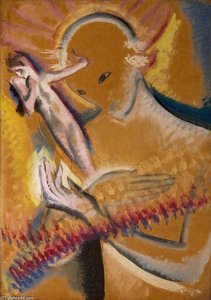
Portrét Charles Henry Sims

67 najznámejších obrazov od Charles Henry Sims, výber z galérie

Aktualizované november 2026 · zoradené podľa našej miery popularity (vyhľadávanie, návštevy a objednávky pre každou prácu) · 67 dielov umelca Charles Henry Sims v našom katalógu

Stručne povedané

Z všetkých originálov, ktoré Charles Henry Sims zanechal, je najznámejší The little faun (1905) v zbierke Fitzwilliam Museum. Hneď za ním nasledujú Bacchanalia (1900) a Sacrifice (1918). Náš katalóg obsahuje 67 diel od Charles Henry Sims; galéria si zachovala tých 67, ktoré obdivuje celý svet, pričom každý z nich je prezentovaný spolu s jeho dátumom, múzeou a príbehom.

1873 – 1928, Izolský Impressionism Najviac diel: Fitzwilliam Museum

Top 10 obrazov umelca Charles Henry Sims: výber galérie

Výber umelcov Charles Henry Sims pokračuje, od 11 do 67

Motívy, ktoré zaujali Charles Henry Sims

Štyri témy, ktoré sa v týchto origináloch najčastejšie vracajú, každá s jej najvychybenejším príkladom.

Múzeá, ktoré uchovávajú originály umelca Charles Henry Sims

5 múzeá, v ktorých sa nachádza najviac obrazov z tejto stránky.

Múzeá Mesto Diela umelca Charles Henry Sims Obrazy z tohto zoznamu
Fitzwilliam MuseumFitzwilliam Museum 2 The little faun, Study Of A Dead Rail
Hermitáž, PetrohradHermitáž Petrohrad 1 Bacchanalia
Canadian War Museum, OttawaCanadian War Museum Ottawa 1 Sacrifice
Chartwell, WesterhamChartwell Westerham 1 Two Girls Seated - Diana, And Sarah Churchill
Škótska národná galéria portrétov, EdinburghŠkótska národná galéria portrétov Edinburgh 1 George V

Charles Henry Sims rok po roku: originály, ktoré definujú každú éru

Od 1900 do 1918, Charles Henry Sims tvoril po dobu 19 rokov: výber sleduje túto dlhú kariéru rok po roku prostredníctvom jeho najlepších originálnych diel.

Diela podľa roku

Vyberte si rok a pozrite si originály.

Otázky zberateľov o obrazoch od Charles Henry Sims

Ktorým dielom je Charles Henry Sims najznámejší/najznámejšia?Odhaľte odpoveď

The little faun (1905), Fitzwilliam Museum. Nasledujú Bacchanalia (1900) a Sacrifice (1918).

V akom veku bol/a Charles Henry Sims, keď vzniklo dielo The little faun?Odhaľte odpoveď

32 rokov: The little faun vzniklo v roku 1905 a Charles Henry Sims sa narodil/a v roku 1873.

Ktorých desať najznámejších obrazov má Charles Henry Sims?Odhaľte odpoveď

The little faun, Bacchanalia, Sacrifice, Two Girls Seated - Diana, And Sarah Churchill, My Pain Beneath Thy Sheltering Hand, A Spiritual Idea, Guardian Hands, The Fountain, Saints And Sinners a Aspiration. Vyššie uvedené hodnotenie uvádza rok a múzeu pre každé z nich.

Koľko obrazov zanechal umenec Charles Henry Sims?Odhaľte odpoveď

Náš katalóg obsahuje 67 diel od umelca Charles Henry Sims z perioda od 1900 do 1918.

V ktorých múzeách visia majstrovské diela umelca Charles Henry Sims?Odhaľte odpoveď

Väčšinou v Fitzwilliam Museum, Hermitáž (Petrohrad) a Canadian War Museum (Ottawa). Tabuľka múzeí vyššie ich všetky uvádza.

Aké sú prvé a posledné známe originály od Charles Henry Sims?Odhaľte odpoveď

Na tejto stránke je najstaršie dielo z Bacchanalia (1900) a najnovšie z Sacrifice (1918).

Aké témy si Charles Henry Sims najčastejšie vyberal/a?Odhaľte odpoveď

Women (7), Children (5) a Landscape (3), v rámci 67 diel na tejto stránke.

Do ktorého umeleckého smeru patrí Charles Henry Sims?Odhaľte odpoveď

Impressionism a Expressionism, podľa originálov na tejto stránke.

Aké diela umelca Charles Henry Sims sa nachádzajú v múzeu Fitzwilliam Museum?Odhaľte odpoveď

The little faun a Study Of A Dead Rail: múzeá Fitzwilliam Museum uchovávajú 2 z diel na tejto stránke.

Charles Henry Sims: život a dielo

Charles Henry Sims (1873–1928)

Charles Henry Sims, born in Islington, London, in 1873, remains a compelling figure in British art—a painter whose journey traversed the elegance of Edwardian society to the unsettling depths of personal turmoil and ultimately, outsider artistry. His life was marked by both conventional success and profound tragedy, factors that indelibly shaped his artistic vision. Initially destined for a commercial career within his family’s drapery business, Sims defied expectations, pursuing formal training at South Kensington College of Art before honing his skills in Paris at the prestigious Académie Julian. This early exposure to European artistic currents laid the foundation for his initial acclaim as a portraitist and landscape painter, establishing him within the established art world. However, beneath this veneer of conventional achievement lay a sensibility that would increasingly diverge from accepted norms, particularly after experiencing immense personal loss during World War I.

Early Career and Artistic Training

Sims’ formative years were characterized by a blend of familial responsibility and burgeoning artistic ambition. His father operated a drapery business—a practical occupation that instilled in him a disciplined work ethic—yet Sims possessed an innate fascination with visual arts from a young age. Recognizing his talent, he secured admission to South Kensington College of Art, where he immersed himself in the study of classical painting techniques and compositional principles. Simultaneously, he traveled to Paris during 1887-8 to gain experience in commerce, but quickly turned his attention towards artistic pursuits at Académie Julian—a renowned institution that nurtured Impressionist sensibilities. This dual engagement with both craft and intellectual inquiry would prove crucial to shaping Sims’ distinctive artistic style. The influence of Impressionism is palpable throughout his early landscapes and portraits, reflecting the prevailing aesthetic trends of the time—a preference for capturing fleeting moments of light and color rather than striving for photographic realism.

Edwardian Portraiture: Delicate Brushwork and Psychological Depth

Sims swiftly gained recognition as a portraitist among London society during the Edwardian era—a period defined by aristocratic grandeur and refined sensibilities. His canvases depict subjects with remarkable accuracy, capturing not only their physical appearance but also subtle expressions of emotion and psychological nuance. He skillfully employed delicate brushstrokes and harmonious palettes to convey atmosphere and mood, creating images that resonate with a quiet elegance. Notable commissions included portraits of prominent figures—members of the Royal Family, industrialists, and artists—demonstrating Sims’ versatility as an artist and his ability to adapt to diverse stylistic demands. His meticulous attention to detail—particularly in capturing the nuances of facial expressions—established him as one of the foremost portraitists of his generation.

The Shadow of War: A Shift Towards Surrealism

The outbreak of World War I profoundly impacted Sims’ life and artistic trajectory—a transformative event that triggered a dramatic shift toward introspection and surreal expression. The devastating loss of his son during the conflict shattered his personal world, leaving him grappling with grief and disillusionment. This profound emotional upheaval fueled an urgent desire to explore themes beyond the confines of representational art—leading him to experiment with symbolic imagery and dreamlike compositions. His artistic style underwent a radical metamorphosis, abandoning Impressionistic conventions in favor of a more unsettling and psychologically charged aesthetic. Recurring motifs—such as distorted figures, fragmented landscapes, and enigmatic symbols—emerged in his paintings—reflecting the anxieties and uncertainties of the era.

The ‘Spiritual Ideas’ Series: A Bold Departure

Sims' artistic experimentation culminated in the creation of his most controversial works—the ‘Spiritual Ideas’ series (1927-28). These canvases represent a daring rejection of traditional artistic norms—a deliberate provocation against the conservative tastes of the art establishment. The series is characterized by hallucinatory imagery, distorted perspectives, and an obsessive preoccupation with religious symbolism—challenging viewers to confront profound existential questions. Critics initially dismissed these paintings as bizarre and incomprehensible—accusing Sims of indulging in mere fantasy rather than conveying genuine artistic insight. However, a growing appreciation for their emotional depth and symbolic complexity has since cemented Sims’ place as a pioneer of Surrealism—a movement that sought to liberate art from the constraints of reason and logic. Despite the rejection of these works by the Academy—which ultimately led to his resignation in 1926—Sims' legacy endures as an artist who dared to explore the darkest recesses of human consciousness.

Legacy and Recognition: An Outsider’s Perspective

Charles Henry Sims’ contribution to British art is recognized today through institutions like the Tate Gallery, which hold exemplary pieces of his oeuvre—demonstrating his enduring influence on subsequent generations of artists. His willingness to confront existential anxieties, his rejection of conventional artistic conventions, and his distinctive visual language continue to inspire contemporary creatives. The Palace of Westminster's “Building of Britain” series—a monumental fresco commissioned for the House of Commons—stands as a testament to Sims’ ambition and artistic vision—albeit one initially met with considerable skepticism. His story serves as a poignant reminder of the complex relationship between art, life, and the enduring power of individual expression—a figure who defied expectations, challenged dogma, and ultimately achieved recognition as an artist whose work transcended time.