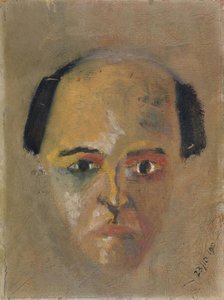
Portrét Arnold Schönberg

65 najznámejších obrazov od umelca Arnold Schönberg, každý jedinečný

Aktualizované október 2026 · zoradené podľa našej miery popularity (vyhľadávanie, návštevy a objednávky pre každou prácu) · 65 dielov umelca Arnold Schönberg v našom katalógu

Stručne povedané

Pierrot lunaire, op. 21 - Night (1912) je obrazom umelca Arnold Schönberg, ktorý priťahuje najviac pohľadov; originál sa nachádza v múzeu Arnold Schönberg Center, Viedeň. Potom sa pohľad presunie na Arnold Schönberg’s kalendár (1935) a Suite, op. 29 - Bi-directional twelve-tone row chart (1924). Z 65 diel umelca Arnold Schönberg v našom katalógu je týchto 65 najznámejších; každá z nich je jedinečným originálom prezentovaným s jeho rokom vzniku, múzeom a dôvodom, prečo pretrváva.

1874 – 1951, Viedeň Expressionism Najviac diel: Arnold Schönberg Center

Top 10 obrazov umelca Arnold Schönberg podľa výberu galérie

1
Pierrot lunaire, op. 21 - Night (1912) od Arnold Schönberg

Pierrot lunaire, op. 21 - Night

1912 · Acrylic On Canvas · Arnold Schönberg Center, Viedeň

Arnold Schönberg’s *Pierrot lunaire*, op. 21, stands as a monumental achievement in the evolution of modern music, a work born from the anxieties and aesthetic explorations of early 20th-century Europe. This particular rendition, “Night,” meticulously captured in this evocative photographic reproduction, offers a profound glimpse into Schönberg’s expressionistic vision – a world of fractured emotion, haunting beauty, and unsettling psychological depth. Composed in Berlin in 1912, the piece was commissioned…

2
Arnold Schönberg’s kalendár (1935) od Arnold Schönberg

Arnold Schönberg’s kalendár

1935 · Akryl na plátne · Arnold Schönberg Center, Viedeň

Arnold Schönberg’s Kalendář – Pohled do Světa Výtvarného Umění Arnold Schönbergův kalendář z roku 1935 představuje fascinující dokument nejen každodenních životních rytmů skladatele Arnolda Schönberga v jeho krátkodobém sídle v Hollywoodu, Kalifornii, ale také unikátní okno do estetických zájmů a kulturního prostředí doby. Tento obrazový záznam zachycený fotografem poskytuje komplexní informace o Schönbergově osobním životě a zároveň odkazuje k významným dějinným událostem – především vzestupu nacismu v Německu a následnému…

3
Suite, op. 29 - Bi-directional twelve-tone row chart (1924) od Arnold Schönberg

Suite, op. 29 - Bi-directional twelve-tone row chart

1924 · Acrylic On Canvas · Arnold Schönberg Center, Viedeň

Arnold Schönberg's "Suite, op. 29 – Bi-directional twelve-tone row chart" isn’t merely a musical score; it’s a visual manifestation of radical innovation, a testament to the composer’s relentless pursuit of sonic and artistic boundaries. Created in 1924, during a period of intense experimentation within his own compositional methods—specifically, his “Method of composing with twelve tones which are related only with one another”—this work represents a pivotal moment in 20th-century music…

4
Peace on Earth, op. 13 (1907) od Arnold Schönberg

Peace on Earth, op. 13

1907 · Black and White Photography · Arnold Schönberg Center, Viedeň

To gaze upon this depiction of Arnold Schoenberg's "Peace on Earth, op. 13" is not merely to look at an aged sheet of music; it is to encounter a preserved echo of profound human yearning. This composition, born from the charged atmosphere of early twentieth-century Europe, transcends its musical notation to become a tangible artifact of hope. The visual evidence—the sepia tones, the delicate creases, the faint patina of time…

5
Phantasy for Violin with Piano Accompaniment, op. 47 (1949) od Arnold Schönberg

Phantasy for Violin with Piano Accompaniment, op. 47

1949 · Acrylic On Canvas · Arnold Schönberg Center, Viedeň

This meticulously crafted hand-painted reproduction captures a pivotal moment in the oeuvre of Arnold Schoenberg, a composer who irrevocably altered the landscape of 20th-century music. The piece, “Phantasy for Violin with Piano Accompaniment,” op. 47, born from a commission in 1949, represents more than just a musical composition; it’s a tangible link to a brilliant mind grappling with radical innovation and profound personal transformation. The photograph itself – a stark…

6
Accompaniment to a Cinematographic Scene (1929) od Arnold Schönberg

Accompaniment to a Cinematographic Scene

1929 · Akryl na plátne · Arnold Schönberg Center, Viedeň

Komponovanie k kinematografickému filmu – Častica trochdesiatštyrť Arnold Schoenberg bol v roku 1929 povolaný Heinrichshofenovým vydavateľstvom v Magdaburgu napísať hudbu ku filmu. Kompozítor, ktorý – ako následné skúsenosti z Hollywoodu boli ukázané – by nikdy nesúhlasil hrať podriadenú úlohu režisérovi alebo producentovi umeleckého konceptu alebo vzdávať svoj právny nezávislosť predprodukčnému filmu, ignoroval možné smernice a orientoval sa výhradne podľa slov „hrozivý nebezpečenstvo, strach, katastrofa“. Ako výsledok tejto skúsenosti možno skladbu…

7
Blue Gaze (1910) od Arnold Schönberg

Blue Gaze

1910 · Oil On Board · Arnold Schönberg Center, Viedeň

“Blue Gaze,” painted in 1910 by the titan of musical innovation, Arnold Schoenberg, is more than just a portrait; it's a visceral manifestation of artistic struggle and a testament to the burgeoning power of abstraction. Created during a pivotal period in Schoenberg’s life – a time when he was simultaneously wrestling with the radical new techniques of atonality in music and exploring the uncharted territories of visual expression – this…

8
Transfer ticket for public transport in Berlin (1927) od Arnold Schönberg

Transfer ticket for public transport in Berlin

1927 · Acrylic On Canvas · Arnold Schönberg Center, Viedeň

This meticulously crafted hand-painted reproduction captures a pivotal moment in design history – the 1927 transfer ticket for the Berlin tram system, conceived by the visionary composer Arnold Schönberg. Far more than simply a means of payment, this circular artifact represents a radical shift towards efficiency and user experience, anticipating modern transit systems by nearly a century. Schönberg’s design wasn't born from artistic indulgence; it stemmed from a pragmatic desire…

9
The Musical Idea - W. A. Mozart K 465 (1934) od Arnold Schönberg

The Musical Idea - W. A. Mozart K 465

1934 · Giclée Print · Arnold Schönberg Center, Viedeň

W.A. Mozart’s K. 465, “The Musical Idea,” takes on an entirely new dimension through the lens of Arnold Schönberg's profound inquiry into musical representation. This isn’t merely a reproduction of a classical score; it’s a visual echo of Schönberg’s seminal work, "Der Musikalische Gedanke," a treatise that fundamentally shifted our understanding of composition and its relationship to logic, technique, and artistic expression. The photograph itself – a meticulously annotated music…

10
Piano Piece, op. 19/6 (1911) od Arnold Schönberg

Piano Piece, op. 19/6

1911 · Acrylic On Canvas · Arnold Schönberg Center, Viedeň

This meticulously crafted hand-painted reproduction captures Arnold Schönberg’s poignant “Piano Piece, op. 19/6,” a deceptively simple work born from a moment of profound grief and artistic experimentation. Created in 1911, shortly after the death of Gustav Mahler – a figure Schönberg deeply revered as both mentor and friend – the piece offers a rare glimpse into the composer’s emotional landscape during a period of intense creative upheaval. The image presented…

Slávne obrazy umelca Arnold Schönberg, čísla 11 až 65

11Excerpt from Arnold Schönberg’s own handwritten library catalogue: Works of Richard Strauss (1914) od Arnold SchönbergExcerpt from Arnold Schönberg’s own handwritten library catalogue: Works of Richard Strauss1914 · Arnold Schönberg Center 12Self-Portrait (1910) od Arnold SchönbergSelf-Portrait1910 · Arnold Schönberg Center 13The Biblical Way (Act I, Scene 2), Stadium (1927) od Arnold SchönbergThe Biblical Way (Act I, Scene 2), Stadium1927 · Arnold Schönberg Center 14The Lucky Hand (scene 1) (1910) od Arnold SchönbergThe Lucky Hand (scene 1)1910 · Arnold Schönberg Center 15Gertrud Schönberg (1930) od Arnold SchönbergGertrud Schönberg1930 · Arnold Schönberg Center 16Tears (1910) od Arnold SchönbergTears1910 · Arnold Schönberg Center 17Garden Scene (1907) od Arnold SchönbergGarden Scene1907 · Arnold Schönberg Center 18Playing Cards for Whist/Bridge - Jack of Spades (1910) od Arnold SchönbergPlaying Cards for Whist/Bridge - Jack of Spades1910 · Arnold Schönberg Center 19Formation scheme for the Gurrelieder (1918) od Arnold SchönbergFormation scheme for the Gurrelieder1918 · Arnold Schönberg Center 20The Lucky Hand (scene 2) (1910) od Arnold SchönbergThe Lucky Hand (scene 2)1910 · Arnold Schönberg Center 21Red Gaze (1910) od Arnold SchönbergRed Gaze1910 · Arnold Schönberg Center 22Piano Concerto, op. 42 - Programmatic keywords (1942) od Arnold SchönbergPiano Concerto, op. 42 - Programmatic keywords1942 · Arnold Schönberg Center 23Playing Cards for Whist/Bridge - King of Hearts (1910) od Arnold SchönbergPlaying Cards for Whist/Bridge - King of Hearts1910 · Arnold Schönberg Center 24Structural Functions of Harmony - Chart of the Regions (1948) od Arnold SchönbergStructural Functions of Harmony - Chart of the Regions1948 · Arnold Schönberg Center 25Interior and Portrait of a Woman (1910) od Arnold SchönbergInterior and Portrait of a Woman1910 · Arnold Schönberg Center 26Blue Self-Portrait (1910) od Arnold SchönbergBlue Self-Portrait1910 · Arnold Schönberg Center 27Self-Portrait (1918) od Arnold SchönbergSelf-Portrait1918 · Arnold Schönberg Center 28Mathilde Schönberg (1909) od Arnold SchönbergMathilde Schönberg1909 · Arnold Schönberg Center 29Expectation (Scene 3) (1911) od Arnold SchönbergExpectation (Scene 3)1911 · Arnold Schönberg Center 30Handwriting samples (1923) od Arnold SchönbergHandwriting samples1923 · Arnold Schönberg Center 31Suite for Piano, op. 25 - Prelude (1921) od Arnold SchönbergSuite for Piano, op. 25 - Prelude1921 · Arnold Schönberg Center 32Landscape (1910) od Arnold SchönbergLandscape1910 · Arnold Schönberg Center 33Erwartung, op. 17 (1909) od Arnold SchönbergErwartung, op. 171909 · Arnold Schönberg Center 34Exlibris (1910) od Arnold SchönbergExlibris1910 · Arnold Schönberg Center 35Alliance (Hands) (1910) od Arnold SchönbergAlliance (Hands)1910 · Arnold Schönberg Center 36Portrait of a Woman (1910) od Arnold SchönbergPortrait of a Woman1910 · Arnold Schönberg Center 37Koaličná šachová hra (1925) od Arnold SchönbergKoaličná šachová hra1925 · Arnold Schönberg Center 38Moses and Aron (1930) od Arnold SchönbergMoses and Aron1930 · Arnold Schönberg Center 39Playing Cards for Whist/Bridge - Queen of clubs (1909) od Arnold SchönbergPlaying Cards for Whist/Bridge - Queen of clubs1909 · Arnold Schönberg Center 40Playing card design (1910) od Arnold SchönbergPlaying card design1910 · Arnold Schönberg Center 41Brief to Wilhelm von Wymetal (1907) od Arnold SchönbergBrief to Wilhelm von Wymetal1907 · Arnold Schönberg Center 42Alexander Zemlinsky (1910) od Arnold SchönbergAlexander Zemlinsky1910 · Arnold Schönberg Center 43Green Self-Portrait (1910) od Arnold SchönbergGreen Self-Portrait1910 · Arnold Schönberg Center 44Memory of Oskar Kokoschka (1910) od Arnold SchönbergMemory of Oskar Kokoschka1910 · Arnold Schönberg Center 45Mathilde Schönberg cooking (1912) od Arnold SchönbergMathilde Schönberg cooking1912 · Arnold Schönberg Center 46Model of a set of dentures (1926) od Arnold SchönbergModel of a set of dentures1926 · Arnold Schönberg Center 47Coalition Chess - Plane (1925) od Arnold SchönbergCoalition Chess - Plane1925 · Arnold Schönberg Center 48Gaze (Karl Kraus – The Great Wall of China) (1910) od Arnold SchönbergGaze (Karl Kraus – The Great Wall of China)1910 · Arnold Schönberg Center 49Furniture design (1931) od Arnold SchönbergFurniture design1931 · Arnold Schönberg Center 50Self-Portrait (1935) od Arnold SchönbergSelf-Portrait1935 · Arnold Schönberg Center 51Self-Portrait (1922) od Arnold SchönbergSelf-Portrait1922 · Arnold Schönberg Center 52The Musical Idea - Chart of the Regions (1934) od Arnold SchönbergThe Musical Idea - Chart of the Regions1934 · Arnold Schönberg Center 53Schematic representation of European Jewry (1934) od Arnold SchönbergSchematic representation of European Jewry1934 · Arnold Schönberg Center 54Model of a chair / library ladder (1945) od Arnold SchönbergModel of a chair / library ladder1945 · Arnold Schönberg Center 55Five Pieces for Orchestra, op. 16/5 – First written copy (1909) od Arnold SchönbergFive Pieces for Orchestra, op. 16/5 – First written copy1909 · Arnold Schönberg Center 56Staffliner for drawing staves (1950) od Arnold SchönbergStaffliner for drawing staves1950 · Arnold Schönberg Center 57Mauríce Zam (1935) od Arnold SchönbergMauríce Zam1935 · Arnold Schönberg Center 58Critic I (1910) od Arnold SchönbergCritic I1910 · Arnold Schönberg Center 59Emil Hertzka (1910) od Arnold SchönbergEmil Hertzka1910 · Arnold Schönberg Center 60Speak not always of the leaves, op. 15/14 - Rozhovor s rastlinami, opus 15/14 (1909) od Arnold SchönbergSpeak not always of the leaves, op. 15/14 - Rozhovor s rastlinami, opus 15/141909 · Arnold Schönberg Center 61Music Typewriter (1909) od Arnold SchönbergMusic Typewriter1909 · Arnold Schönberg Center 62Piano Piece, op. 11/2 (1909) od Arnold SchönbergPiano Piece, op. 11/21909 · Arnold Schönberg Center 63Walking Self-Portrait (1911) od Arnold SchönbergWalking Self-Portrait1911 · Arnold Schönberg Center 64Chess Set od Arnold SchönbergChess SetArnold Schönberg Center 65Tape Dispenser (1945) od Arnold SchönbergTape Dispenser1945 · Arnold Schönberg Center

Slávne obrazy umelca Arnold Schönberg podľa jednotlivých období

Motívy, ktoré zaujali Arnold Schönberg

Štyri témy, ktoré sa v týchto origináloch najčastejšie vracajú, každá s jej najvychybenejším príkladom.

Múzeá, ktoré uchovávajú originály umelca Arnold Schönberg

Múzeum, ktoré vlastní najviac obrazov z tejto stránky.

Múzeá Mesto Diela umelca Arnold Schönberg Obrazy z tohto zoznamu
Arnold Schönberg Center, ViedeňArnold Schönberg Center Viedeň 65 Pierrot lunaire, op. 21 - Night, Arnold Schönberg’s kalendár, Suite, op. 29 - Bi-directional twelve-tone row chart

Arnold Schönberg naprieč dekádami: jeden jedinečný originál pre každý

Diela podľa dekád

Vyberte si dekádu a pozrite si originál, ktorý ju definuje.

Obrazy umelca Arnold Schönberg: otázky pre galériu

Akým najznámejším dielom sa pýta Arnold Schönberg?Odhaľte odpoveď

Pierrot lunaire, op. 21 - Night (1912), Arnold Schönberg Center, Viedeň. Nasledujú Arnold Schönberg’s kalendár (1935) a Suite, op. 29 - Bi-directional twelve-tone row chart (1924).

V akom veku vytvoril/a Arnold Schönberg dielo Pierrot lunaire, op. 21 - Night?Odhaľte odpoveď

38 rokov: Pierrot lunaire, op. 21 - Night vzniklo v roku 1912 a Arnold Schönberg sa narodil/a v roku 1874.

Ktorých desať obrazov Arnold Schönberg je najznámejších?Odhaľte odpoveď

Pierrot lunaire, op. 21 - Night, Arnold Schönberg’s kalendár, Suite, op. 29 - Bi-directional twelve-tone row chart, Peace on Earth, op. 13, Phantasy for Violin with Piano Accompaniment, op. 47, Accompaniment to a Cinematographic Scene, Blue Gaze, Transfer ticket for public transport in Berlin, The Musical Idea - W. A. Mozart K 465 a Piano Piece, op. 19/6. Vyššie uvedené hodnotenie uvádza rok a múzeu pre každé z nich.

Koľko je známych diel umelca Arnold Schönberg?Odhaľte odpoveď

Náš katalóg obsahuje 65 diel od umelca Arnold Schönberg z perioda od 1907 do 1950.

Kde možno vidieť najznámejšie originály od Arnold Schönberg?Odhaľte odpoveď

Väčšinou v Arnold Schönberg Center (Viedeň). Tabuľka múzeí vyššie ich všetky uvádza.

V akom období vytvoril/a Arnold Schönberg svoje najznámejšie obrazy?Odhaľte odpoveď

V období 1910s: 29 z 65 diel na tejto stránke bolo vytvorených vtedy, pričom Pierrot lunaire, op. 21 - Night z nich.

Ktorý z najslávnejších obrazov autora Arnold Schönberg je najstarší a ktorý najnovší?Odhaľte odpoveď

Na tejto stránke je najstaršie dielo z Peace on Earth, op. 13 (1907) a najnovšie z Staffliner for drawing staves (1950).

Aké témy obľúbené Arnold Schönberg?Odhaľte odpoveď

Atonality (12), Schoenberg (8) a Self-portrait (6), v rámci 65 diel na tejto stránke.

S akými materiálmi mal(a) Arnold Schönberg najčastejšie pracuje?Odhaľte odpoveď

Acrylic On Canvas, pre 17 z 65 diel na tejto stránke.

Do ktorého smeru patrí tvorba umelca Arnold Schönberg?Odhaľte odpoveď

Expressionism a Expressionist modernism, podľa originálov na tejto stránke.

Aké originály od Arnold Schönberg môžem vidieť v Arnold Schönberg Center?Odhaľte odpoveď

Pierrot lunaire, op. 21 - Night, Arnold Schönberg’s kalendár a Suite, op. 29 - Bi-directional twelve-tone row chart: múzeá Arnold Schönberg Center, Viedeň uchovávajú 65 z diel na tejto stránke.

Arnold Schönberg: portrét umelca

skutky mladosti a hudobné začiatky

arnold schoenberg, rakúska-americký skladateľ, sa narodil 13. septembra 1874 vo Viedni v Rakúsku. Jeho raný život bol poznačený skromným začiatkom, keďže jeho otec bol majiteľom obchodíka s obuvou. Napriek tomu ho vrodená vášeň pre hudbu pohnala k tomu, aby sa v tomto odbore väčšinou vzdelával sám.

hudobná evolúcia a významné diela

Schoenbergove rané skladby, ako napríklad verklärte nacht (1899), predstavovali syntézu brahmsovsko-wagnerského štýlu. S postupom času sa stal kľúčovou postavou druhej viedenskej školy spolu s antonom webernom a albanom bergom. Jeho kompozície, vrátane štvercového kvarteta č. 2 (1907–1908), erwartung (19om) a pierrot lunaire (1912), exemplifikovali jeho inovatívny prístup k atonalite.

učenie, emigrácia a neskorší život

Schoenberg rezignoval v pruského akadémie umení v roku 1933 v dôsledku nástupu nacistov k moci, ktorí označili jeho hudbu za „degenerovanú“. Následne vyučoval v USA, vrátane Kalifornskej univerzity v Los Angeles (1936–1944), kde sú priestory pomenované práve v jeho čest. [https://OriginalUniqueArt.com/@/arnold-schoenberg](objavte viac o Schoenbergovom živote a dielo na OriginalUniqueArt).

odkaz a vplyv

Keď sa svet dozvedal o holokauste, Schoenberg pripomenul jeho obete v skladbe a survivor from warsaw (1947). Izraelská konzervatória a akadémia hudby ho v roku 1951 zvolila za čestného prezidenta. [https://OriginalUniqueArt.com/@@/a@d3bqc7-the-museum-destroyed-by-fire-(united-states)](dozvedzte si viac o dopade jeho práce na OriginalUniqueArt). kľúčové body:
  • Schoenbergova inovatívna hudba bola medzi najvplyvnejšou a najkontroverznejšom klasickou hudbou 20. storočia.
  • Aspoň tri generácie skladateľov rozvinuli jej mierne formálne princípy.
  • Jeho estetické a hudobno-historické pohľady ovplyvnili muzikológov Theodor W. Adorno a Carla Dahlhausov.
[https://OriginalUniqueArt.com/@@/a@d3cl2x--a-journey-through-art-history-with-OriginalUniqueArt-s-extensive-collection-](preskúmajte bohatú zbierku umenia na OriginalUniqueArt, rozsiahlu od 12. do 20. storočia).