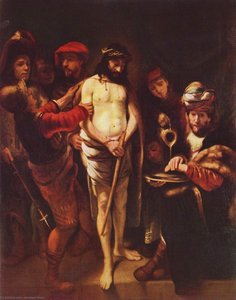
Nicolaes Maes (1634 - 1693): A Life Immersed in Dutch Light and Shadow
Nicolaes Maes, a name resonating softly within the pantheon of Dutch Golden Age masters, was born in Dordrecht in January 1634 into a world brimming with mercantile prosperity and artistic ferment. His father, Gerrit Maes, a successful cloth merchant and soap boiler, provided a comfortable upbringing, allowing young Nicolaes to pursue his burgeoning talent for painting. While early instruction came from a local artist of modest renown, the pivotal moment in Maes’s development arrived when he journeyed to Amsterdam around 1648 and entered the workshop of Rembrandt van Rijn. This apprenticeship proved transformative, imbuing him with an enduring appreciation for the dramatic interplay of light and shadow – *chiaroscuro* – and a masterful command of color that would define his early works. The influence was so profound that initial paintings, such as depictions of biblical scenes rendered with life-size figures and rich, glowing hues, were often mistakenly attributed to Rembrandt himself. These formative years laid the groundwork for a career marked by both technical brilliance and an intimate understanding of human emotion.Early Years and Rembrandt’s Influence
Nicolaes Maes's artistic journey commenced under the tutelage of Samuel van Hoogstraten, a former pupil of Rembrandt who resided in Dordrecht during Maes’ formative years (1648-1651). Although Van Hoogstraten’s instruction was modest compared to Rembrandt’s renown, it instilled in Maes a foundational understanding of drawing techniques and artistic principles. Crucially, however, Maes's path intersected with Rembrandt’s workshop around 1650, initiating an apprenticeship that would irrevocably shape his artistic vision. This relationship proved pivotal, fostering an unwavering devotion to Rembrandt’s distinctive style—particularly *chiaroscuro*, the masterful manipulation of light and dark—and cultivating a palette brimming with vibrant hues. Initial canvases produced during this period mirrored Rembrandt's aesthetic sensibilities, often eliciting comparisons and fueling speculation about attribution. These early works stand as testament to Maes’s absorption of Rembrandt’s artistic legacy, establishing him firmly within the context of Dutch Baroque painting.From Dordrecht to Amsterdam: Genre Painting Takes Root
Following his return to Dordrecht in 1654, Maes embarked on a trajectory distinct from direct emulation of Rembrandt. Instead, he honed his skills in domestic genre scenes—paintings depicting everyday life—capturing the quiet beauty and nuanced emotions inherent in the daily routines of Dutch citizens. He meticulously observed the intricacies of domestic interiors, portraying women engaged in commonplace activities such as spinning wool, preparing meals, and reading scripture with remarkable sensitivity. Maes’s fascination extended to the art of lacemaking, inspiring numerous variations on this theme—each a testament to his meticulous observation and unwavering dedication to capturing authentic human experience. These paintings transcended mere representation; they conveyed a profound understanding of psychological states and social dynamics, reflecting the spirit of the Dutch Republic during its golden age.The Rembrandt Legacy Continues: Portraiture and Artistic Innovation
Despite distancing himself from Rembrandt’s stylistic approach in his genre works, Maes retained an indelible connection to his former master's artistic principles throughout his career. This influence manifested prominently in his portraiture—particularly after 1656—where he achieved unparalleled mastery in conveying psychological depth and capturing the essence of his subjects. Like Rembrandt, Maes skillfully employed *chiaroscuro*, creating dramatic contrasts between light and shadow to illuminate facial expressions and sculpt forms with breathtaking precision. His portraits are characterized by an understated elegance and a profound empathy for his sitters—revealing not only physical likeness but also glimpses into their inner lives and social standing. Notable examples include “Portrait of Gerard Röver, Merchant and Shipowner in Amsterdam,” which exemplifies Maes’s ability to capture both dignity and psychological complexity. Furthermore, Maes demonstrated artistic innovation by adapting Rembrandt's techniques to the medium of mezzotint—a printing process that allowed for nuanced tonal gradations and exceptional detail—resulting in stunning prints like “Hieronymus van Beverningk.”A Lasting Impression: Artistic Significance and Enduring Appeal
Nicolaes Maes passed away in Amsterdam in December 1693, leaving behind a substantial body of work that continues to resonate with audiences today. His paintings stand as invaluable records of Dutch society during the Baroque era—illuminating domestic life, capturing psychological portraits, and embodying the artistic spirit of his time. Maes’s unwavering commitment to Rembrandt’s stylistic precepts—particularly *chiaroscuro*—established him as a cornerstone of Dutch Baroque painting, securing his place among the most influential artists of the seventeenth century. His meticulous observation, coupled with an intuitive understanding of human emotion, ensured that his legacy would endure for generations to come. Today, Maes's canvases reside in prestigious collections across Europe and North America, readily accessible for study and appreciation—a testament to the enduring power of his artistic vision and its profound contribution to the history of art.Вопросы и ответы
Можно ли просматривать работы Николаас Маас по технике исполнения?
На странице По технике исполнения работы Николаас Маас сгруппированы по технике исполнения.
Какие настроения передают работы Николаас Маас?
Работы Николаас Маас можно подобрать по настроению на странице Подбор по настроению, где произведения распределены в соответствии с их эмоциональной окраской.
Можно ли посетить виртуальный музей работ Николаас Маас?
Работы Николаас Маас представлены в виртуальной 3D-галерее на странице художника: Страница художника.