Jaume Mercadé i Queralt (1889–1967): A Catalan Soul Captured in Paint
Jaume Mercadé i Queralt (1889–1967) stands as a cornerstone of Spanish landscape art, forever etched in the collective memory of Catalonia for his breathtaking portrayals of its rugged coastline and tranquil rural vistas. Born into a family steeped in mercantile tradition in Barcelona, Queralt’s artistic trajectory unfolded against the backdrop of Spain's tumultuous post-war era—a formative period that profoundly shaped his distinctive style and unwavering devotion to distilling Catalan identity onto canvas.Early Influences: The Surrealist Echoes
Queralt’s initial artistic explorations were subtly influenced by the burgeoning Surrealist movement spearheaded by André Breton and Salvador Dalí. While eschewing the fantastical excesses favored by many contemporaries, Queralt prioritized a rigorous observation of the natural world—a discipline honed through years of dedicated study—resulting in an unparalleled ability to capture light and texture with breathtaking precision. This meticulous approach foreshadowed his later stylistic choices and underscored his belief that truth resided not in illusion but in careful perception.Style Development: Earthy Palette, Impressionistic Touch
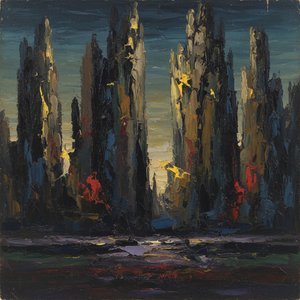
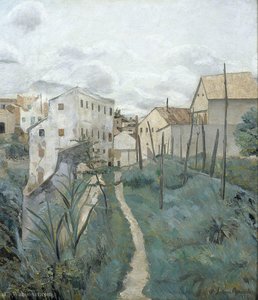
His artistic style evolved organically over time, characterized by a restrained palette dominated by earthy hues—ochres, siennas, umbers—a deliberate reflection of Catalonia’s soil tones. Rejecting flamboyant brushstrokes, Queralt favored smooth, blended surfaces that conveyed an impressionistic quality while maintaining an unwavering commitment to realism. This technique—characterized by thin glazes applied in multiple layers—allowed him to achieve remarkable luminosity and depth, capturing the ephemeral beauty of Catalan landscapes with unparalleled subtlety.Subject Matter: The Iconic Fig Tree Silhouette
Recurring motifs in Queralt’s oeuvre became synonymous with Catalan landscape art: solitary fig trees perched atop limestone cliffs overlooking the Mediterranean Sea. These compositions resonated deeply with symbolic significance—representing resilience, permanence, and the enduring spirit of Catalonia—and served as a testament to his profound connection to Catalan heritage. Each tree was rendered with painstaking detail, capturing its weathered bark and delicate foliage against the backdrop of azure skies and crashing waves.Notable Achievements: Recognition Across Disciplines
Throughout his prolific artistic career spanning decades, Queralt achieved acclaim not only as a painter but also as a goldsmith and silversmith—a dual vocation recognized with an award at the International Exhibitions of Paris (1925) and Barcelona (1929). His works gained prominence in prestigious collections across Europe and America, cementing his legacy as one of Catalonia’s most celebrated artists. Furthermore, he was honored for his contribution to Catalan culture—a celebration of its landscapes, traditions, and spirit.Legacy: An Enduring Vision
Jaume Mercadé i Queralt's artistic legacy extends far beyond the confines of art history; he embodies a profound connection to Catalan identity—a testament to his unwavering dedication to capturing the essence of Catalonia’s soul on canvas. His paintings continue to inspire viewers with their quiet grandeur and unwavering faithfulness to nature’s sublime beauty, ensuring that his vision persists as an emblem of Catalan artistic tradition for generations to come.Вопросы и ответы
Сколько работ Жауме Меркаде И Кэральт представлено в каталоге?
Вы можете просмотреть 4 произведений работ Жауме Меркаде И Кэральт на странице Все работы художника.
Где я могу найти статистику по работам Жауме Меркаде И Кэральт?
Для Жауме Меркаде И Кэральт доступна страница Статистика просмотров, где представлена статистика произведений этого художника на данный сайт.
Можно ли изучить работы Жауме Меркаде И Кэральт по темам?
Работы Жауме Меркаде И Кэральт можно изучать по темам на странице Атлас сюжетов художника.