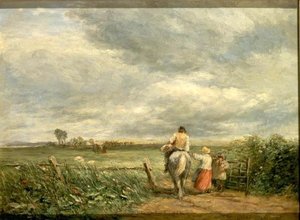
Дэвид Кокс: Жизнь в пейзаже
Ранние годы и становление мастера
- Родился: 29 апреля 1783 года, Деритонд, Бирмингмунд, Великобритания.
- Отец Дэвида Кокса был кузнецом и мастером по белой металлургии, поставлявшим детали для бирмингемской оружейной промышленности. Его мать, происходившая из фермерской семьи, отличалась глубоким образованием и сильным характером.
- Свои первые шаги в искусстве он сделал в академии Джозефа Барбера на Грейт-Чарльз-стрит, где встретил будущих единомышленников — Чарльза Барбера и Уильяма Рэдклиффа.
- В возрасте 15 лет Кокс стал учеником Альберта Филдера, бирмингемского живописца, специализировавшегося на портретных миниатюрах и декоративной росписи таких предметов, как табакерки. Это раннее обучение заложило фундамент его мастерства.
Творческий путь и развитие карьеры
- В 1804 году Кокс переехал в Лондон, где женился на Мэри Рагг, дочери своего домовладельца.
- Поездка в Уэльс в 1805 году в компании Чарльза Барбера стала поворотным моментом, положившим начало многочисленным эскизным турам, которые сопровождали его на протяжении всей жизни. Эти путешествия оказали глубочайшее влияние на его художественный стиль.
- С 1805 года он регулярно выставлялся в Королевской академии, поначалу зарабатывая на жизнь преподаванием рисования. Одним из его первых учеников в 1808 году стал полковник Х. Уинзор.
- Ранние работы Кокса были сосредоточены на детальных акварельных пейзажах, часто изображающих сельские сцены и архитектурные объекты.
Художественный стиль и источники вдохновения
- Стиль Кокса претерпел значительную эволюцию: от точных топографических описаний он перешел к более экспрессивному и атмосферному подходу.
- Влияния: Хотя вопрос о конкретных источниках вдохновения остается предметом дискуссий, в его работах прослеживается близость к голландским мастерам пейзажа XVII века и поразительная наблюдательность за природой, напоминающая манеру Констебла.
- Он снискал славу благодаря своей свободной манере письма, ярким цветам и уникальной способности улавливать изменчивость света и погоды. Его поздние работы маслом отличались особой новаторской смелостью.
Великие достижения и наследие
- К концу своей карьеры Кокс написал более 300 работ маслом, что сегодня признается «одним из величайших, но наименее узнанных достижений любого британского живописца».
- Он по праву считается одним из величайших английских пейзажистов и ключевой фигурой Золотого века английской акварели.
- Его творчество оказало значительное влияние на последующие поколения художников-пейзажистов.
- Знаковые работы: Ветер в пустоши (The Wind on the Heath), <Коттедж в Херефордшире (Cottage in Herefordshire), <Слияние Северна и Уай с Чепстоу вдали (Junction of the Severn and the Wye with Chepstow in the distance) и <Лунная ночь (Moonlight Landscape) — входят в число его самых прославленных шедевров.
Историческая значимость
- Дэвид Кокс признан ранним предвестником импрессионизма. Его стремление запечатлеть мимолетные атмосферные эффекты и свободная техника мазка предвосхитили многие приемы, которые позже станут визитной карточкой импрессионистов.
- Он сыграл решающую роль в становлении британского пейзажа как самобытного жанра, уводя его от сухой топографической точности к более экспрессивной и эмоциональной интерпретации природы.
- Его произведения продолжают восхищать современников своей красотой, чуткостью и непреходящим очарованием.
Вопросы и ответы
Известен ли Дэвид Кокс под какими-либо другими именами или псевдонимами?
Дэвид Кокс также известен как Дэвид Кокс (младший).
Насколько популярны произведения Дэвид Кокс?
Статистика работ Дэвид Кокс доступна на странице Статистика художника.
Можно ли просматривать работы Дэвид Кокс по направлениям искусства?
Работы Дэвид Кокс можно просматривать по направлениям на странице Все направления художника.