Меню
БЕСПЛАТНАЯ КОНСУЛЬТАЦИЯ ПО ИСКУССТВУ

Джон Тённил

1820 - 1914

Краткая справка

  • Art period: 19-й век
  • Room fit: гостиная
  • Museums on APS:
    • Королевская коллекция
    • Королевская коллекция
    • Королевская коллекция
    • Королевская коллекция
    • Королевская коллекция
  • Also known as: Сэр Джон Тённил
  • Nationality: Великобритания
  • Top-ranked work: The distribution of Crimean Medals on Horse Guards Parade
  • Movements: victorian illustration
  • Copyright status: Public domain
  • Развернуть подробности
  • Works on APS: 79
  • Born: 1820, Бейсвотер, Великобритания
  • Typical colors: нейтральные тона
  • Died: 1914
  • Lifespan: 94 years
  • Top 3 works:
    • The distribution of Crimean Medals on Horse Guards Parade
    • The visit of Queen Victoria and Prince Albert to Fort Pitt Military Hospital
    • The inauguration of the Scutari Monument and the Peace Trophy at the Crystal Palace, Sydenham
  • Creative periods: mature period

Тест по искусству

В каждом вопросе только один правильный ответ.

Вопрос 1:
Какая основная область искусства была для Джона Тенниеля наиболее известной?
Вопрос 2:
В каком журнале Джон Тенниель работал в качестве главного карикатуриста на протяжении более полувека?
Вопрос 3:
Какое произведение искусства Джона Тенниеля наиболее известно своими иллюстрациями?
Вопрос 4:
В каком году Джон Тенниель был награжден рыцарским званием за свои художественные достижения?
Вопрос 5:
Какая техника рисования была характерна для стиля Джона Тенниеля, особенно в его политических карикатурах?

A Life Etched in Line: The World of Sir John Tenniel

Sir John Tenniel (1820-1914) – a name synonymous with Victorian England’s most beloved visual storytellers, and particularly, the enchanting world of *Alice's Adventures in Wonderland*. Born in Bayswater, London, on February 28th, 1820, his early life held little promise of the artistic destiny that awaited him. Quiet and introspective by nature, Tenniel possessed a keen eye for detail and an extraordinary ability to capture human character – qualities that would ultimately define his remarkable career as both a political cartoonist and a master illustrator. Initially pursuing studies at the Royal Academy of Arts in 1842, he focused on replicating classical sculpture, yet found himself increasingly frustrated with the Academy’s rigid approach, preferring instead to cultivate his talent through independent observation and self-directed learning. This deliberate path shaped his unique style – a harmonious blend of precise draftsmanship and an acute understanding of human psychology and social dynamics.

From Political Satire to Wonderland's Embrace

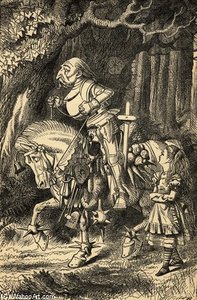
Tenniel’s rise to prominence began with his remarkable skill as a political cartoonist for *Punch* magazine, a role he held for over half a century. During this period, he became a powerful voice in shaping public opinion, offering incisive and often biting commentary on the social and political upheavals of Victorian Britain. His cartoons weren’t merely humorous; they were carefully constructed critiques, exposing hypocrisy and challenging established power structures with remarkable accuracy and wit. He possessed an uncanny ability to transform politicians and prominent figures into instantly recognizable caricatures – a testament to his keen observational skills and masterful command of line. This skill elevated political cartooning to new heights of artistic sophistication, establishing *Punch* as a leading force in British journalism. However, it is perhaps for his illustrations that Tenniel is most widely celebrated: the vivid and imaginative depictions of characters from Lewis Carroll’s *Alice's Adventures in Wonderland* (1865) and *Through the Looking-Glass, and What Alice Found There* (1871). Carroll initially envisioned illustrating the *Alice* manuscript himself, but recognized the need for a professional artist to bring his fantastical world to life. Tenniel’s collaboration with Carroll was a remarkable partnership – both men shared a passion for detail and a deep appreciation for storytelling. The resulting illustrations are iconic, capturing the whimsical absurdity of Wonderland while simultaneously conveying the underlying psychological depth of Carroll's narrative. Tenniel didn’t simply reproduce Carroll’s words; he *interpreted* them, inventing characterizations and adding layers of meaning through his distinctive visual style. His meticulous attention to detail – from the Mad Hatter’s outlandish hat to the Cheshire Cat’s enigmatic grin – cemented his place as the definitive illustrator of these beloved stories.

A Style Defined by Detail and Nuance

Tenniel's artistic style is instantly recognizable, characterized by an unwavering commitment to precision, observation, and a subtle yet powerful use of line. His illustrations are not merely drawings; they’re meticulously constructed narratives, imbued with depth and emotion. He favored a technique of delicate linework – often employing subtle shading and cross-hatching – to create the illusion of three-dimensionality and texture. This approach allowed him to convey a remarkable range of emotions and expressions, imbuing his characters with personality and believability. Influenced by earlier engravers and illustrators, Tenniel developed a distinctly personal visual language, blending realism with fantasy in a way that was both captivating and thought-provoking. He possessed an exceptional ability to capture movement and gesture – perhaps stemming from his upbringing as the son of a fencing and dancing master – bringing a dynamic energy to his compositions.

Recognition and Enduring Legacy

In 1893, Sir John Tenniel’s contributions to British art were formally recognized with a knighthood – a rare honor bestowed upon an illustrator or cartoonist at that time. This prestigious accolade reflected the growing respect accorded to visual artists who had shaped public opinion and inspired generations of readers. Beyond this formal recognition, Tenniel's legacy lies in his profound influence on subsequent illustrators and cartoonists. He not only elevated the status of satirical illustration but also demonstrated the power of visual storytelling to engage audiences and provoke thought. His illustrations for *Alice* remain beloved classics, continuing to captivate readers of all ages with their timeless charm and enduring appeal. Tenniel’s work serves as a testament to the transformative potential of art – reminding us that a single artist can leave an indelible mark on both the cultural landscape and the collective imagination.

Exploring Tenniel's World Further

To further explore the life and work of Sir John Tenniel, numerous resources are available. The Victoria and Albert Museum (V&A) offers a comprehensive online biography detailing his career and artistic influences. Wikipedia provides a detailed historical overview, while Britannica offers a biographical sketch highlighting key achievements. Collectors and enthusiasts can also find reproductions of his iconic illustrations through platforms like OriginalUniqueArt. Examining works by related artists such as Waller Hugh Paton and studying the collections at institutions like the Peter Scott Gallery in Lancaster and Sir John Soane’s Museum in London provides valuable context for understanding Tenniel's place within the broader artistic landscape of Victorian Britain. Tenniel’s enduring appeal lies not only in the beauty and skill of his illustrations but also in their ability to transport us to worlds both real and imagined – a testament to the power of art to entertain, enlighten, and inspire.