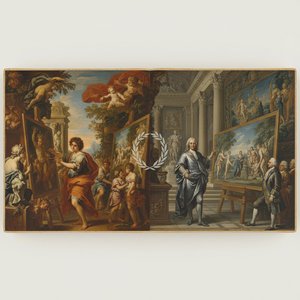
Giacomo Pavia (1655-1740): A Bolognese Baroque Visionary
Giacomo Pavia, born in Bologna in 1655, stands as a significant figure within the Italian Baroque artistic landscape. His career spanned nearly four decades, marked by prolific output and an unwavering dedication to capturing dramatic narratives and conveying profound emotion through meticulously crafted compositions. He remains a testament to the enduring power of visual storytelling during a period defined by fervent religious fervor and opulent artistic expression.Early Life and Training
Pavia’s formative years were spent under the tutelage of Giuseppe Maria Crespi and Giovanni Gioseffo dal Sole, two influential artists who championed a distinctive Baroque style characterized by dynamism and theatricality. Crespi's revolutionary approach to illusionistic painting—particularly quadratura—transformed the canvas into an immersive experience for the viewer, creating breathtaking architectural vistas within painted walls. Dal Sole’s masterful manipulation of chiaroscuro – the dramatic interplay between light and dark – imbued Pavia’s early works with a palpable sense of atmosphere and emotional intensity. These formative influences instilled in Pavia a profound understanding of Baroque technique and aesthetic principles that would permeate his entire artistic journey.Notable Works and Artistic Style
Pavia’s oeuvre encompassed a diverse range of subjects, predominantly religious paintings that reflected the spiritual fervor of the era. However, he also demonstrated considerable versatility by venturing into landscapes and genre scenes, showcasing his ability to capture both monumental grandeur and intimate human emotion. His canvases are distinguished by their bold color palettes—often utilizing vibrant hues to heighten emotional impact—and an uncanny knack for conveying psychological depth through subtle gestures and expressions.- Vision of St. Ignatius of Loyola: This monumental altarpiece exemplifies Pavia’s signature style—a dramatic depiction of Saint Ignatius's visionary experience, replete with swirling drapery and luminous color harmonies. The composition powerfully conveys the saint’s spiritual ecstasy, utilizing quadratura to expand the perceived space beyond the confines of the chapel walls.
- Landscape with Ruins: Pavia skillfully rendered the melancholic beauty of ruined landscapes, capturing atmospheric perspective and conveying a sense of timeless grandeur. He employed techniques reminiscent of Andrea Pozzo, demonstrating an acute awareness of Baroque landscape aesthetics.
- Merry Company: A lively portrayal of aristocratic revelry, showcasing Pavia’s adeptness at portraying human interaction and capturing fleeting moments of joy. The painting captures the energy and exuberance of a celebratory occasion with meticulous detail and expressive brushwork.
Influence and Legacy
Pavia's artistic legacy extends beyond his individual masterpieces. He contributed to the vibrant Bolognese Baroque tradition, fostering a stylistic continuity that resonated throughout subsequent generations of painters. His son, Lorenzo Pavia, continued the family’s artistic lineage, specializing in quadratura—a technique pioneered by Giuseppe Maria Crespi—further cementing Giacomo Pavia’s place as a pivotal figure in Italian art history. Though overshadowed by some contemporaries, Pavia remains an artist whose works continue to inspire admiration for their expressive power and technical brilliance. His paintings serve as enduring reminders of the Baroque period's preoccupation with emotion, grandeur, and illusionistic artistry – principles that would shape the artistic landscape for decades to come.Despite facing challenges during his lifetime, Giacomo Pavia’s contribution to Bolognese Baroque art is undeniable. He solidified Crespi’s innovative approach to painting and Dal Sole’s masterful use of chiaroscuro, establishing a stylistic foundation upon which future artists built their careers.