Портрет Yun Shouping

Картины Yun Shouping: 25 самых известных работ, взгляд галереи

Обновлено Ноябрь 2026 · рейтинг на основе нашего показателя популярности (количество поисковых запросов, посещений и заказов для каждой работы) · 25 работ Yun Shouping в нашем каталоге

Вкратце

По мнению экспертов галереи, самой известной картиной Yun Shouping является Untitled (D2X9GB) (701), оригинал которой находится в Метрополитен-музей, Нью-Йорк. 清 惲壽平 倣宋元山水圖 冊 Landscapes in the Manner of Song and Yuan Masters (1667) и Bamboo and Trees in a Rockery (1680) завершают трио, которое узнает каждый. Из 25 работ Yun Shouping в нашем каталоге ниже представлены 25 самых известных: каждая из них является оригиналом с указанием года создания, музея и уникальных особенностей.

1633 – 1690, Wujin District Больше всего работ: Музеи изобразительных искусств Гарварда

Топ-10 картин художника Yun Shouping в галерее

1
Untitled (D2X9GB) (701) работы Yun Shouping

Untitled (D2X9GB)

701 · Метрополитен-музей, Нью-Йорк

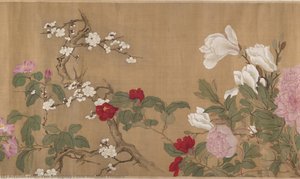
A single flowering branch extends across a muted brown field, its blossoms captured in a moment of quiet expansion. The composition relies on a delicate balance between the dark, fluid lines of the wood and the soft, luminous petals that emerge from it. Through a series of layered ink and watercolor washes, the artist achieves a sense of volume and depth, allowing the flowers to appear as if they possess…

Картины художника Yun Shouping, в рейтинге с 11 по 25

Сюжеты, которые вдохновляли Yun Shouping

Четыре темы, которые чаще всего встречаются в этих оригиналах, каждая из которых представлена своим лучшим образцом.

Музеи, в которых хранятся оригиналы работ Yun Shouping

5 музеев, в которых находится большинство картин со страницы.

Музей Город Работы Yun Shouping Картины из этого списка
Музеи изобразительных искусств Гарварда, КембриджМузеи изобразительных искусств Гарварда Кембридж 8 Landscape After Mi Fei (1051-1107), Landscape after Cao Zhibo (1272-1355), Landscape After Li Tang (ca. 1070-ca. 1150)
Метрополитен-музей, Нью-ЙоркМетрополитен-музей Нью-Йорк 7 Untitled (D2X9GB), 清 惲壽平 倣宋元山水圖 冊 Landscapes in the Manner of Song and Yuan Masters, 清 傳惲壽平 夏夜清荷圖 軸 Lotuses on a Summer Evening
Институт искусств Детройта, ДетройтИнститут искусств Детройта Детройт 1 Bamboo and Trees in a Rockery
Кливлендский музей искусств, КливлендКливлендский музей искусств Кливленд 1 Herbaceous Peony
Национальный дворецовый музей, ТайбэйНациональный дворецовый музей Тайбэй 1 Peonies

Yun Shouping, знаковые картины каждого года

19 лет творчества Yun Shouping, от 1667 до 1685: галерея прослеживает их путь год за годом через самые известные оригинальные работы.

Работы по годам

Выберите год, чтобы увидеть оригиналы.

Картины Yun Shouping: ответы галереи

Какая картина Yun Shouping является самой известной из всех?Узнать ответ

Untitled (D2X9GB) (701), Метрополитен-музей, Нью-Йорк. Далее следуют 清 惲壽平 倣宋元山水圖 冊 Landscapes in the Manner of Song and Yuan Masters (1667) и Bamboo and Trees in a Rockery (1680).

Какие 10 лучших картин принадлежат Yun Shouping?Узнать ответ

Untitled (D2X9GB), 清 惲壽平 倣宋元山水圖 冊 Landscapes in the Manner of Song and Yuan Masters, Bamboo and Trees in a Rockery, Herbaceous Peony, Landscape After Mi Fei (1051-1107), Landscape after Cao Zhibo (1272-1355), Landscape After Li Tang (ca. 1070-ca. 1150), Landscape After Oubo Laoren (Zhao Mengfu, 1254-1322), Landscape After Xu Ben (1335-1380) и Landscape After Wang Meng (ca. 1308-1385). В рейтинге выше указаны год создания и музей для каждой работы.

Сколько работ создал(а) Yun Shouping?Узнать ответ

В нашем каталоге представлено 25 работ Yun Shouping, созданных в период с 1667 по 1685.

Где висят самые известные оригинальные работы Yun Shouping?Узнать ответ

В основном в Музеи изобразительных искусств Гарварда (Кембридж), Метрополитен-музей (Нью-Йорк) и Институт искусств Детройта (Детройт). В таблице выше перечислены все музеи.

Когда Yun Shouping создал свои самые известные картины?Узнать ответ

В 1683: 8 из 25 работ на этой странице были созданы в этот период, Landscape After Mi Fei (1051-1107) из них.

Какие из самых известных работ Yun Shouping являются наиболее ранними и наиболее поздними?Узнать ответ

На этой странице самая ранняя работа датирована 清 惲壽平 倣宋元山水圖 冊 Landscapes in the Manner of Song and Yuan Masters (1667), а самая поздняя — Herbaceous Peony (1685).

К каким сюжетам Yun Shouping обращался чаще всего?Узнать ответ

Flowers (3) и Chinese landscape (2) в 25 работах на этой странице.

Какие оригинальные работы Yun Shouping хранятся в Музеи изобразительных искусств Гарварда?Узнать ответ

Landscape After Mi Fei (1051-1107), Landscape after Cao Zhibo (1272-1355) и Landscape After Li Tang (ca. 1070-ca. 1150): в коллекции Музеи изобразительных искусств Гарварда, Кембридж находится 8 работ со страницы.

Yun Shouping: художник

A Master of Blossoms and Breath

Born in the turbulent year of 1633 in Wujin, Jiangsu province, Yun Shouping—often revered by his sobriquet Nantian—emerged from a period of profound historical upheaval. As the Ming Dynasty crumbled and the Qing era took hold, Yun found himself navigating a world in transition. Though born into an impoverished family that could not afford the formal education required for the civil service examinations, he did not allow circumstance to stifle his spirit. Instead, he turned inward toward the natural world, devoting himself to the pursuit of the three perfections: painting, poetry, and calligraphy. From his earliest years, his soul was entwined with the delicate beauty of nature, a passion famously captured in his childhood compositions of poetry centered around lotus blossoms.

His artistic journey was one of remarkable evolution and profound transformation. While he initially trained in the rigorous traditions of landscape painting, a pivotal encounter with the works of the master Wang Hui altered the course of his career forever. Captivated by new possibilities, Yun transitioned from the grand vistas of mountains and rivers to the intimate, vibrant world of flora and fauna. This shift led to the founding of the Ch'ang-chou school, a movement that would redefine Chinese aesthetics for generations. He became a central figure among the celebrated Six Masters of the early Qing period, standing alongside luminaries such as Wu Li and the Four Wangs, creating a legacy that bridged the gap between classical tradition and a new, expressive vitality.

The Revolution of the Boneless Style

What truly set Yun Shouping apart from his contemporaries was his masterful command of the mogu, or "boneless" technique. Moving away from the rigid, ink-defined outlines that characterized much of traditional Chinese painting, Yun sought to capture the very essence and inner breath of his subjects through soft washes of color and delicate gradations. By imitating the 11th-century methods of Xu Xi, he achieved a sense of organic fluidity that made his flowers and birds appear to pulse with life. His palette was daring for its time; he embraced rich, saturated hues of reds and purples—colors that some traditionalists dismissed as gaudy—to convey the true splendor of a blooming peony or a sun-drenched petal.

This technique allowed him to achieve a breathtaking balance between structure and spontaneity. In his hands, a branch was not merely a line on paper, but a living limb, and a blossom was not just a shape, but a fleeting moment of seasonal beauty. His work often embodied the following characteristics:

  • Expressive Vitality: A profound ability to depict the "spirit resonance" or life force of plants and animals.
  • Coloristic Innovation: The use of vibrant, layered washes to create depth without the need for harsh borders.
  • Poetic Symbiosis: An inseparable connection between his visual imagery and the lyrical sentiment of his calligraphy and poetry.
  • Naturalism through Abstraction: A way of capturing the true likeness of nature through soft, impressionistic strokes rather than anatomical precision.

A Lasting Legacy in the Qing Dynasty

The historical significance of Yun Shouping cannot be overstated. He did not merely participate in the art of his era; he revitalized it. By breathing new life into the flower-and-bird genre, he provided a much-needed aesthetic refreshment to a landscape painting tradition that had become increasingly preoccupied with imitating ancient styles. His Ch'ang-chou school became a beacon of individual expression, emphasizing a deep, emotional connection to the natural world that resonated with the literati class. Even as his techniques were refined and passed down through generations—notably by his daughter, Bing—the core of his vision remained: a celebration of the ephemeral beauty found in the smallest corner of the earth.

Today, Yun Shouping is remembered not just as a painter of petals, but as a poet of the brush. His ability to find the infinite within the minute remains a cornerstone of Chinese art history. Through his "boneless" mastery, he taught the world that strength does not always require a hard edge, and that true beauty often resides in the softest, most delicate transitions of light and color.