Портрет Wang Yuanqi

22 самых известных картин Wang Yuanqi: подборка галереи

Обновлено Ноябрь 2026 · рейтинг на основе нашего показателя популярности (количество поисковых запросов, посещений и заказов для каждой работы) · 22 работ Wang Yuanqi в нашем каталоге

Вкратце

Из всех оригинальных работ, оставленных Wang Yuanqi, самой известной является Landscape for Zhanting (1710). Сразу за ними следуют Wangchuan Villa (1711) и Landscape (1678). В нашем каталоге представлено 22 работ Wang Yuanqi; галерея сохранила 22 самых почитаемых в мире произведений, каждое из которых сопровождается датой создания, информацией о музее и своей историей.

1642 – 1715, Taicang Больше всего работ: Метрополитен-музей

10 лучших картин Wang Yuanqi: выбор галереи

1
Landscape for Zhanting (1710) работы Wang Yuanqi

Landscape for Zhanting

1710 · Ink

In Landscape for Zhanting, the artist Wang Yuanqi presents a vast mountain range that stretches across the entire width of the silk. Snow-capped peaks rise against the sky, their white summits catching the light amidst the rugged terrain. These mountains form a heavy, continuous boundary that defines the horizon. The scale of the landscape creates a sense of immense depth, pulling the eye through layers of stone and mist.
2
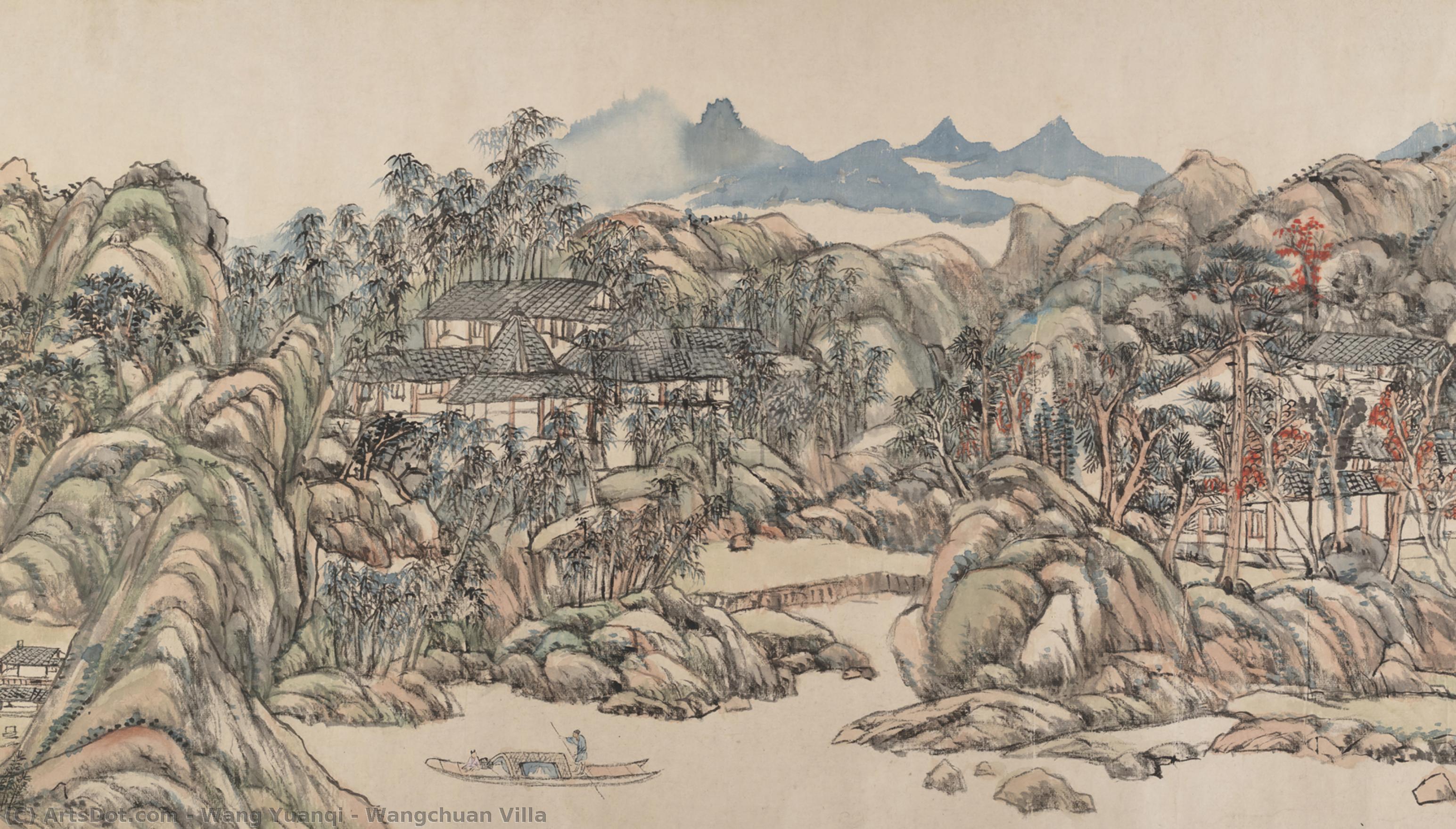
Wangchuan Villa (1711) работы Wang Yuanqi

Wangchuan Villa

1711 · Ink On Paper · Метрополитен-музей, Нью-Йорк

The handscroll titled Wangchuan Villa emerges from the brush of Wang Yuanqi, a painter who shaped the landscape traditions of the Qing Dynasty. Born in 1642 in Taicang, Jiangsu province, China, Wang Yuanqi carries the weight of a profound artistic lineage. He moves through the world of ink and color as a leading figure of the Orthodox School. His hand brings life to this specific vision of a mountain community,…

3
Landscape (1678) работы Wang Yuanqi

Landscape

1678 · Ink On Paper · Институт искусств Чикаго, Чикаго

In this vertical and expansive work, Wang Yuanqi organizes a vast, mountainous terrain through a high-distance perspective. The composition directs the eye from foreground rocky outcrops and trees upward through a series of receding mountain ridges. These paths lead toward distant, misty peaks that dissolve into the upper reaches of the frame. Small architectural structures are nestled among the cliffs, providing a sense of scale to the winding paths and…

4
Mountainous Landscape after Wang Meng (1678) работы Wang Yuanqi

Mountainous Landscape after Wang Meng

1678 · Ink On Paper · Институт искусств Чикаго, Чикаго

In Mountainous Landscape after Wang Meng, Wang Yuanqi organizes the vertical space into a series of ascending movements. The composition begins at the base with a detailed foreground of rocky outcrops and tangled trees. From this rugged foundation, the eye travels upward through a sequence of receding mountain ridges. These layers of stone and earth climb toward a towering, central peak that anchors the entire scene. This peak reaches into…

5
Free Spirits Among Streams and Mountains (1684) работы Wang Yuanqi

Free Spirits Among Streams and Mountains

1684 · Ink On Paper · Walters Art Museum, Балтимор

In 1684, Wang Yuanqi captured a classic depiction of nature in Free Spirits Among Streams and Mountains. The ink settles upon the surface to trace a landscape of rolling peaks and dense groves. Water flows through the composition, a calm body reflecting the stillness of the surrounding terrain. It is a vision of the natural world where the mountains do not merely exist but breathe through the mist.

6
清 王原祁 倣吳鎮山水圖 軸 Landscape after Wu Zhen (1695) работы Wang Yuanqi

清 王原祁 倣吳鎮山水圖 軸 Landscape after Wu Zhen

1695 · Ink On Paper · Метрополитен-музей, Нью-Йорк

Created in 1695, this hanging scroll reflects the rigorous traditions of the Qing dynasty. Wang Yuanqi, a central figure of the Orthodox School, looks backward to the Yuan dynasty to move forward. Here, the influence of Wu Zhen is palpable, particularly in the way the landscape is constructed through rhythmic, textured movements. The composition centers on a lofty mountain range, its peaks dusted with snow, rising above a verdant landscape…

7
Landscape for Zhanting (1710) работы Wang Yuanqi

Landscape for Zhanting

1710 · Ink On Paper · Метрополитен-музей, Нью-Йорк

The vertical composition of Landscape for Zhanting is dominated by a central mountain mass that rises through the upper half of the scroll. This geological formation is surrounded by undulating hills, rocky outcrops, and clusters of pine trees. The terrain is rendered in a monochromatic palette, utilizing varying shades of ink wash from deep charcoal to pale grey against a light beige substrate. Through the application of cun texture strokes,…

8
Landscape after Ni Zan (1707) работы Wang Yuanqi

Landscape after Ni Zan

1707 · Ink On Paper · Кливлендский музей искусств, Кливленд

The landscape unfolds before us through the brush of Wang Yuanqi, a painter who lived from 1642 to 1715. In this work, titled Landscape after Ni Zan, the artist reaches back through the centuries to find inspiration in the spirit of the Yuan dynasty. Created in 1707, the painting captures a quiet, scholarly seclusion that feels as present now as it did when the ink first met the silk. It…

10
Landscape after Huang Gongwang (1701) работы Wang Yuanqi

Landscape after Huang Gongwang

A vertical expanse of mist holds the mountains in a soft, grey grip. The scene unfolds in layers, guiding the eye from the textured foreground through quiet settlements toward peaks that dissolve into the pale sky. It is a world of monochrome, where the only color is the varying depth of black ink on a light substrate. The air feels heavy with moisture, as if a sudden rain has just…

Подборка Wang Yuanqi продолжается, с 11 по 22

Знаменитые картины Wang Yuanqi по периодам творчества

Сюжеты, которые вдохновляли Wang Yuanqi

Четыре темы, которые чаще всего встречаются в этих оригиналах, каждая из которых представлена своим лучшим образцом.

Музеи, в которых хранятся оригиналы работ Wang Yuanqi

8 музеев, в которых находится большинство картин со страницы.

Музей Город Работы Wang Yuanqi Картины из этого списка
Метрополитен-музей, Нью-ЙоркМетрополитен-музей Нью-Йорк 7 Wangchuan Villa, 清 王原祁 倣吳鎮山水圖 軸 Landscape after Wu Zhen, Landscape for Zhanting
Институт искусств Чикаго, ЧикагоИнститут искусств Чикаго Чикаго 3 Landscape, Mountainous Landscape after Wang Meng, Landscape after Huang Gongwang
Кливлендский музей искусств, КливлендКливлендский музей искусств Кливленд 2 Landscape after Ni Zan, Green Peaks under Clear Sky: After Huang Gongwang
Yale University Art Gallery, Нью-ХейвенYale University Art Gallery Нью-Хейвен 2 Landscape in the Style of Huang Gongwang, Landscape
Walters Art Museum, БалтиморWalters Art Museum Балтимор 1 Free Spirits Among Streams and Mountains
Институт искусств Детройта, ДетройтИнститут искусств Детройта Детройт 1 Mountain and River Landscape
Музей Гугун, ПекинМузей Гугун Пекин 1 Wang Yuanqi's Thatched Cottage Ten Records
Национальная галерея Виктории, МельбурнНациональная галерея Виктории Мельбурн 1 The Fuchun Mountians

Wang Yuanqi по десятилетиям: оригиналы, определяющие каждую эпоху

Произведения по десятилетиям

Выберите десятилетие, чтобы увидеть шедевр, определяющий его.

Вопросы коллекционеров о картинах Wang Yuanqi

Какая работа Wang Yuanqi наиболее известна?Узнать ответ

Landscape for Zhanting (1710). Далее следуют Wangchuan Villa (1711) и Landscape (1678).

Сколько лет было Wang Yuanqi, когда была создана работа Landscape for Zhanting?Узнать ответ

68 лет: Landscape for Zhanting датируется 1710 годом, а Wang Yuanqi родился в 1642.

Какие десять самых известных картин написал Wang Yuanqi?Узнать ответ

Landscape for Zhanting, Wangchuan Villa, Landscape, Mountainous Landscape after Wang Meng, Free Spirits Among Streams and Mountains, 清 王原祁 倣吳鎮山水圖 軸 Landscape after Wu Zhen, Landscape for Zhanting, Landscape after Ni Zan, Green Peaks under Clear Sky: After Huang Gongwang и Landscape after Huang Gongwang. В рейтинге выше указаны год создания и музей для каждой работы.

Сколько картин оставил(а) Wang Yuanqi?Узнать ответ

В нашем каталоге представлено 22 работ Wang Yuanqi, созданных в период с 1678 по 1712.

В каких музеях представлены шедевры Wang Yuanqi?Узнать ответ

В основном в Метрополитен-музей (Нью-Йорк), Институт искусств Чикаго (Чикаго) и Кливлендский музей искусств (Кливленд). В таблице выше перечислены все музеи.

В какие годы Wang Yuanqi написал свои самые известные работы?Узнать ответ

В 1700s: 5 из 22 работ на этой странице были созданы в этот период, Landscape after Ni Zan из них.

Каковы первые и последние известные оригинальные работы Wang Yuanqi?Узнать ответ

На этой странице самая ранняя работа датирована Landscape (1678), а самая поздняя — Landscape in the Style of Huang Gongwang (1712).

Какие сюжеты Wang Yuanqi выбирал чаще всего?Узнать ответ

Mountains (12), Trees (11) и River (7) в 22 работах на этой странице.

Какую технику чаще всего использовал(а) Wang Yuanqi?Узнать ответ

Ink On Paper, для 9 из 22 работ на этой странице.

Какие работы Wang Yuanqi представлены в Метрополитен-музей?Узнать ответ

Wangchuan Villa, 清 王原祁 倣吳鎮山水圖 軸 Landscape after Wu Zhen и Landscape for Zhanting: в коллекции Метрополитен-музей, Нью-Йорк находится 7 работ со страницы.

Wang Yuanqi: жизнь и творчество

Wang Yuanqi: A Master of Qing Dynasty Landscape

Early Life and Education

  • Wang Yuanqi (王原祁) was born in 1642 in Taicang, Jiangsu province, China.
  • He came from a family with a strong artistic tradition; his grandfather, Wang Shimin, was a renowned painter of the early Qing dynasty.
  • Yuanqi received rigorous training in painting from his grandfather, laying the foundation for his future artistic endeavors.
  • His style name was 'Mao-ching' and his sobriquet was 'Lu-t’ai'.

Career as a Court Official

  • Wang Yuanqi rose to prominence as a court official during the Qing dynasty, beginning shortly after its establishment in 1644.
  • He served with distinction and was eventually appointed curator of the imperial collection under the Kangxi Emperor.
  • This position granted him access to a vast array of artworks, further enriching his artistic knowledge and influencing his style.
  • He remained a court official throughout his long career, balancing administrative duties with his passion for painting until his death in 1715 at age 73.

Artistic Style and Influences

  • Wang Yuanqi is considered one of the “Six Masters of the early Qing period,” also known as the ‘Four Wangs, a Wu and a Yun’.
  • He was a leading figure in the 'Orthodox School' (正统派) of Chinese landscape painting.
  • His landscapes drew inspiration from Yuan dynasty artists who moved away from the highly realistic depictions favored during the Northern Song period.
  • A key influence on his work was Huang Gongwang, particularly in the use of dry brush strokes, ink washes, and a sophisticated approach to color.
  • He skillfully integrated color patterns into his compositions, complementing abstract designs with rhythmic color flows.

Major Works and Achievements

  • Notable works include Landscape in the Style of Huang Gongwang (1711), currently held in Singapore’s Asian Civilisations Museum.
  • His rendition of Wang Wei's eighth-century hand scroll, The Wang River Villa, is housed in the Metropolitan Museum of Art, New York City.
  • Other significant paintings include “The Fuchun Mountains”, “Landscape for Zhanting” and numerous landscapes after the Four Great Yuan Masters.
  • He excelled at recreating the styles of earlier masters while imbuing his works with a unique personal touch.

Historical Significance

  • Wang Yuanqi played a crucial role in shaping the development of Chinese landscape painting during the Qing dynasty.
  • His adherence to and refinement of the Orthodox School established a standard for generations of artists.
  • He helped preserve and promote traditional artistic values while also demonstrating innovative techniques in composition and color usage.
  • His work continues to be celebrated for its technical mastery, aesthetic beauty, and historical importance within the context of Chinese art history.