Портрет Василий Григорьевич Перов

100 самых известных картин Василий Григорьевич Перов: подборка галереи

Обновлено Ноябрь 2026 · рейтинг на основе нашего показателя популярности (количество поисковых запросов, посещений и заказов для каждой работы) · 170 работ Василий Григорьевич Перов в нашем каталоге

Вкратце

Из всех оригинальных работ, оставленных Василий Григорьевич Перов, самой известной является Last Journey (1865) из коллекции Государственная Третьяковская галерея, Москва. Сразу за ними следуют The farmer in the field (1876) и Boy-craftsman (1865). В нашем каталоге представлено 170 работ Василий Григорьевич Перов; галерея сохранила 100 самых почитаемых в мире произведений, каждое из которых сопровождается датой создания, информацией о музее и своей историей.

1833 – 1882, Тобольск Realism Больше всего работ: Государственная Третьяковская галерея

10 лучших картин Василий Григорьевич Перов: выбор галереи

1
Last Journey (1865) работы Василий Григорьевич Перов

Last Journey

Vasily Grigoryevich Perov's "Last Journey," painted in 1865, is a poignant masterpiece of Realism that offers a stark and unflinching portrayal of life for the peasantry in 19th-century Russia. Measuring 43 x 57 cm, this oil on canvas work transcends mere depiction; it serves as a social commentary and an emotional exploration of loss, resilience, and the burdens of rural existence.

2
The farmer in the field (1876) работы Василий Григорьевич Перов

The farmer in the field

1876 · Oil

In the heart of a sprawling, sun-drenched landscape, Vasily Grigoryevich Perov captures a profound moment of stillness in his 1876 masterpiece, The Farmer in the Field. The painting presents us with an elderly man, a figure etched by time and toil, seated upon a weathered rock amidst the vastness of a rural expanse. His long, white beard flows like a river of silver, contrasting softly against the earthy tones of…

3
Boy-craftsman (1865) работы Василий Григорьевич Перов

Boy-craftsman

1865 · Oil On Canvas

In Boy-craftsman, Vasily Perov presents a quiet, intimate moment centered on a young boy. The subject stands before a window framed by a striped awning, his gaze directed upward toward the glass. He is dressed in a dark jacket layered over a lighter-colored shirt, and his bare feet suggest a sense of unadorned reality. In one hand, he holds a plate, while the other cradles a small bird or animal,…

8
Burglary at Easter Eve (1861) работы Василий Григорьевич Перов

Burglary at Easter Eve

1861 · Oil On Canvas

In "Burglary at Easter Eve," Vasily Perov captures a moment of sudden, sharp intrusion. The scene unfolds within a modest room, where the sanctity of the holiday is fractured by a crime. Three figures occupy the space, caught in a frozen instant of domestic upheaval. Two figures remain standing, their presence looming over the quietude of the home, while a third figure is positioned kneeling on the floor. The air…

9
Procession on Easter. Sketch for the painting (1860) работы Василий Григорьевич Перов

Procession on Easter. Sketch for the painting

1860 · Charcoal

The scene unfolds within the lines of Procession on Easter. Sketch for the painting, a work that captures a fleeting moment of communal gathering. This sketch, created by the artist Vasily Perov, offers a glimpse into a world of movement and shared purpose. The year 1860 marks this specific creation, a time when the artist's hand began to trace the intricate social textures of his surroundings.

10
Organ Grinder (1863) работы Василий Григорьевич Перов

Organ Grinder

1863 · Oil

The oil painting titled Organ Grinder is a work by the Russian artist Vasily Perov. Created around 1863, this piece captures a quiet, introspective moment through the medium of oil on canvas. It reflects a period in Perov's career when he was developing the realist sensibilities that would eventually define his legacy.

Подборка Василий Григорьевич Перов продолжается, с 11 по 100

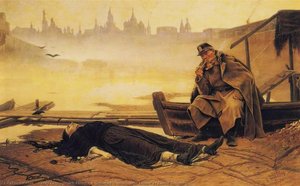
11Portrait of an Elderly Woman in a Cap (1870) работы Василий Григорьевич ПеровPortrait of an Elderly Woman in a Cap1870 · Екатеринбургский музей изобразительных искусств 12The Market in Moscow (1868) работы Василий Григорьевич ПеровThe Market in Moscow1868 13Celebration in the outskirts of Paris (1864) работы Василий Григорьевич ПеровCelebration in the outskirts of Paris1864 14Pilgrims. On a pilgrimage (1867) работы Василий Григорьевич ПеровPilgrims. On a pilgrimage1867 15Repast (1865) работы Василий Григорьевич ПеровRepast1865 16In the pawnshop (1867) работы Василий Григорьевич ПеровIn the pawnshop1867 17The arrival of a governess in a merchant's house (1866) работы Василий Григорьевич ПеровThe arrival of a governess in a merchant's house1866 18Repast (1865) работы Василий Григорьевич ПеровRepast1865 19Lent Monday (1866) работы Василий Григорьевич ПеровLent Monday1866 20Head of a Man (1870) работы Василий Григорьевич ПеровHead of a Man1870 · Метрополитен-музей 21Celebration in the outskirts of Paris (in Montmartre) (1864) работы Василий Григорьевич ПеровCelebration in the outskirts of Paris (in Montmartre)1864 22Portrait of A. A. Borisov (1869) работы Василий Григорьевич ПеровPortrait of A. A. Borisov1869 23Savoyard (1864) работы Василий Григорьевич ПеровSavoyard1864 24To the Holy Trinity (1870) работы Василий Григорьевич ПеровTo the Holy Trinity1870 25Arrival schoolgirl to a blind father (1870) работы Василий Григорьевич ПеровArrival schoolgirl to a blind father1870 26Grandfather and grandson (1871) работы Василий Григорьевич ПеровGrandfather and grandson1871 27Sad Father (1874) работы Василий Григорьевич ПеровSad Father1874 28Fedot and Arina (1873) работы Василий Григорьевич ПеровFedot and Arina1873 29Mother with sick child (1878) работы Василий Григорьевич ПеровMother with sick child1878 30Naushnitsa. Before the storm (1874) работы Василий Григорьевич ПеровNaushnitsa. Before the storm1874 31Joyful Father (1874) работы Василий Григорьевич ПеровJoyful Father1874 32Out under (1879) работы Василий Григорьевич ПеровOut under1879 33By train (1879) работы Василий Григорьевич ПеровBy train1879 34Nikita Pustosvyat. The dispute about the faith (1880) работы Василий Григорьевич ПеровNikita Pustosvyat. The dispute about the faith1880 35Modern Idyll (1880) работы Василий Григорьевич ПеровModern Idyll1880 36Walkers-seeking (1880) работы Василий Григорьевич ПеровWalkers-seeking1880 37Blessed One (1879) работы Василий Григорьевич ПеровBlessed One1879 38The girl, thrown into the water (1879) работы Василий Григорьевич ПеровThe girl, thrown into the water1879 39Portrait of a Man (1861) работы Василий Григорьевич ПеровPortrait of a Man1861 · Государственный Эрмитаж 40Self-portrait (1870) работы Василий Григорьевич ПеровSelf-portrait1870 41Incorrigible One (1873) работы Василий Григорьевич ПеровIncorrigible One1873 42Self-Educating Caretaker (1868) работы Василий Григорьевич ПеровSelf-Educating Caretaker1868 43Self-portrait (1851) работы Василий Григорьевич ПеровSelf-portrait1851 · Киевская национальная картинная галерея 44Courting an official to his daughter tailor (1862) работы Василий Григорьевич ПеровCourting an official to his daughter tailor1862 45Wanderer (1859) работы Василий Григорьевич ПеровWanderer1859 46Sermon in a Village (1861) работы Василий Григорьевич ПеровSermon in a Village1861 · Государственная Третьяковская галерея 47Portrait of an unknown (1860) работы Василий Григорьевич ПеровPortrait of an unknown1860 48Art teacher (1863) работы Василий Григорьевич ПеровArt teacher1863 49Portrait of the Artist Illarion Prianishnikov (1862) работы Василий Григорьевич ПеровPortrait of the Artist Illarion Prianishnikov1862 50Parisian promenade (1863) работы Василий Григорьевич ПеровParisian promenade1863 51Portrait of Nikolai Kridener, the Artist s Brother (1856) работы Василий Григорьевич ПеровPortrait of Nikolai Kridener, the Artist s Brother1856 52Procession on Easter (1862) работы Василий Григорьевич ПеровProcession on Easter1862 53Street musicians in Paris (1863) работы Василий Григорьевич ПеровStreet musicians in Paris1863 54Seller singers. Sketch (1863) работы Василий Григорьевич ПеровSeller singers. Sketch1863 55Tea Party at Mytishchi near Moscow (1862) работы Василий Григорьевич ПеровTea Party at Mytishchi near Moscow1862 56Portrait of E.E. Perov (1860) работы Василий Григорьевич ПеровPortrait of E.E. Perov1860 57Amateur (1862) работы Василий Григорьевич ПеровAmateur1862 58Arriving at an the inquiry (1857) работы Василий Григорьевич ПеровArriving at an the inquiry1857 59Scene on a Grave (1859) работы Василий Григорьевич ПеровScene on a Grave1859 60Art teacher (1867) работы Василий Григорьевич ПеровArt teacher1867 61Boy with raised hands, reaching out to the public (1864) работы Василий Григорьевич ПеровBoy with raised hands, reaching out to the public1864 62Merrymaking-in-Paris (1864) работы Василий Григорьевич ПеровMerrymaking-in-Paris1864 63Portrait of A.F. Pysems'kogo (1869) работы Василий Григорьевич ПеровPortrait of A.F. Pysems'kogo1869 64The boy, preparing for a fight (1866) работы Василий Григорьевич ПеровThe boy, preparing for a fight1866 65Drowned (1867) работы Василий Григорьевич ПеровDrowned1867 66Parisian rag-picker (1864) работы Василий Григорьевич ПеровParisian rag-picker1864 67Drowned (1867) работы Василий Григорьевич ПеровDrowned1867 68Small seventeen (baker) (1869) работы Василий Григорьевич ПеровSmall seventeen (baker)1869 69Christ and the Virgin at the sea (1867) работы Василий Григорьевич ПеровChrist and the Virgin at the sea1867 70Solitary Guitarist (1865) работы Василий Григорьевич ПеровSolitary Guitarist1865 71Wanderer (1870) работы Василий Григорьевич ПеровWanderer1870 72Portrait of N.F. Rezanov (1868) работы Василий Григорьевич ПеровPortrait of N.F. Rezanov1868 73Triple (1865) работы Василий Григорьевич ПеровTriple1865 74Fowler (1870) работы Василий Григорьевич ПеровFowler1870 75A Drowned Woman (Found Drowned) (1867) работы Василий Григорьевич ПеровA Drowned Woman (Found Drowned)1867 76Journey of the quarterly family on a pilgrimage. Sketch (1868) работы Василий Григорьевич ПеровJourney of the quarterly family on a pilgrimage. Sketch1868 77Portrait of F.F. Rezanov (1868) работы Василий Григорьевич ПеровPortrait of F.F. Rezanov1868 78Portrait of Feodosya Resanova (1868) работы Василий Григорьевич ПеровPortrait of Feodosya Resanova1868 79Fomushka-owl (1868) работы Василий Григорьевич ПеровFomushka-owl1868 80Portrait of Nikolai Rubinstein (1870) работы Василий Григорьевич ПеровPortrait of Nikolai Rubinstein1870 81Portrait Avdotya Kuznetsova (1870) работы Василий Григорьевич ПеровPortrait Avdotya Kuznetsova1870 82Blind Musician (1864) работы Василий Григорьевич ПеровBlind Musician1864 83Wanderer (1869) работы Василий Григорьевич ПеровWanderer1869 84On the railroad (1868) работы Василий Григорьевич ПеровOn the railroad1868 85Portrait of the Composer Anton Rubinstein (1870) работы Василий Григорьевич ПеровPortrait of the Composer Anton Rubinstein1870 86Portrait of Nikolai Lanin (1869) работы Василий Григорьевич ПеровPortrait of Nikolai Lanin1869 87Portrait of Unknown Man (1870) работы Василий Григорьевич ПеровPortrait of Unknown Man1870 88Going to the Bath House (1866) работы Василий Григорьевич ПеровGoing to the Bath House1866 89Orphans in the cemetery (1864) работы Василий Григорьевич ПеровOrphans in the cemetery1864 90Portrait of the Playwright Alexander Ostrovsky (1871) работы Василий Григорьевич ПеровPortrait of the Playwright Alexander Ostrovsky1871 91Children Sleeping (1870) работы Василий Григорьевич ПеровChildren Sleeping1870 92Organ Grinder in Paris (1864) работы Василий Григорьевич ПеровOrgan Grinder in Paris1864 93Portrait of Vasily Bezsonov (1869) работы Василий Григорьевич ПеровPortrait of Vasily Bezsonov1869 94A Drowned Woman (also known as Found Drowned) (1867) работы Василий Григорьевич ПеровA Drowned Woman (also known as Found Drowned)1867 95Vendor of Song Books (1864) работы Василий Григорьевич ПеровVendor of Song Books1864 96Arrival of a New Governess in a Merchant House (1866) работы Василий Григорьевич ПеровArrival of a New Governess in a Merchant House1866 97Students talk with the monk (1871) работы Василий Григорьевич ПеровStudents talk with the monk1871 98Fisherman (1871) работы Василий Григорьевич ПеровFisherman1871 99Pugachev escort convoys of prisoners (1875) работы Василий Григорьевич ПеровPugachev escort convoys of prisoners1875 100Portrait of a merchant S.T. Kuznetsov (1873) работы Василий Григорьевич ПеровPortrait of a merchant S.T. Kuznetsov1873

Знаменитые картины Василий Григорьевич Перов по периодам творчества

Late Period

1879 – 1880 · 3 работ в этом списке

Сюжеты, которые вдохновляли Василий Григорьевич Перов

Четыре темы, которые чаще всего встречаются в этих оригиналах, каждая из которых представлена своим лучшим образцом.

Музеи, в которых хранятся оригиналы работ Василий Григорьевич Перов

5 музеев, в которых находится большинство картин со страницы.

Музей Город Работы Василий Григорьевич Перов Картины из этого списка
Государственная Третьяковская галерея, МоскваГосударственная Третьяковская галерея Москва 9 Last Journey, Sermon in a Village
Екатеринбургский музей изобразительных искусств, ЕкатеринбургЕкатеринбургский музей изобразительных искусств Екатеринбург 1 Portrait of an Elderly Woman in a Cap
Метрополитен-музей, Нью-ЙоркМетрополитен-музей Нью-Йорк 1 Head of a Man
Государственный Эрмитаж, Санкт-ПетербургГосударственный Эрмитаж Санкт-Петербург 1 Portrait of a Man
Киевская национальная картинная галерея, КиевКиевская национальная картинная галерея Киев 1 Self-portrait

Василий Григорьевич Перов по десятилетиям: оригиналы, определяющие каждую эпоху

Произведения по десятилетиям

Выберите десятилетие, чтобы увидеть шедевр, определяющий его.

Вопросы коллекционеров о картинах Василий Григорьевич Перов

Какая работа Василий Григорьевич Перов наиболее известна?Узнать ответ

Last Journey (1865), Государственная Третьяковская галерея, Москва. Далее следуют The farmer in the field (1876) и Boy-craftsman (1865).

Сколько лет было Василий Григорьевич Перов, когда была создана работа Last Journey?Узнать ответ

32 лет: Last Journey датируется 1865 годом, а Василий Григорьевич Перов родился в 1833.

Какие десять самых известных картин написал Василий Григорьевич Перов?Узнать ответ

Last Journey, The farmer in the field, Boy-craftsman, The conversation at the round table, The funeral of a poor quarter of Paris, Teatime in Mytischi near Moscow, Paris sharmanschitsa. Sketch, Burglary at Easter Eve, Procession on Easter. Sketch for the painting и Organ Grinder. В рейтинге выше указаны год создания и музей для каждой работы.

Сколько картин оставил(а) Василий Григорьевич Перов?Узнать ответ

В нашем каталоге представлено 170 работ Василий Григорьевич Перов, созданных в период с 1851 по 1880.

В каких музеях представлены шедевры Василий Григорьевич Перов?Узнать ответ

В основном в Государственная Третьяковская галерея (Москва), Екатеринбургский музей изобразительных искусств (Екатеринбург) и Метрополитен-музей (Нью-Йорк). В таблице выше перечислены все музеи.

В какие годы Василий Григорьевич Перов написал свои самые известные работы?Узнать ответ

В 1860s: 63 из 100 работ на этой странице были созданы в этот период, Last Journey из них.

Каковы первые и последние известные оригинальные работы Василий Григорьевич Перов?Узнать ответ

На этой странице самая ранняя работа датирована Self-portrait (1851), а самая поздняя — Nikita Pustosvyat. The dispute about the faith (1880).

Какие сюжеты Василий Григорьевич Перов выбирал чаще всего?Узнать ответ

Men (27), Portraits (19) и People (10) в 100 работах на этой странице.

Какую технику чаще всего использовал(а) Василий Григорьевич Перов?Узнать ответ

Oil On Canvas, для 15 из 100 работ на этой странице.

К какому художественному направлению относится Василий Григорьевич Перов?Узнать ответ

Realism, судя по оригиналам на этой странице.

Какие работы Василий Григорьевич Перов представлены в Государственная Третьяковская галерея?Узнать ответ

Last Journey и Sermon in a Village: в коллекции Государственная Третьяковская галерея, Москва находится 2 работ со страницы.

Василий Григорьевич Перов: жизнь и творчество

A Life Etched in Realism: Vasily Perov and the Soul of Russia

Vasily Grigoryevich Perov, born Vasily Vasiliev on January 2, 1834 (December 21, 1833 Old Style) in the remote Siberian town of Tobolsk, was not merely a painter; he was a chronicler of his time, a social observer who captured the essence of Russian life with unflinching honesty and profound empathy. His early years, marked by an unconventional upbringing born from his parents’ circumstances – his father, Baron Grigory Kridener, being the provincial prosecutor for Arzamas, and his mother, Akulina Ivanova – instilled within him a keen awareness of societal inequalities and a deep connection to the lives of ordinary people. This formative experience profoundly shaped his artistic vision, leading him to reject idealized representations in favor of portraying the realities of rural Russia with stark detail and emotional resonance. The adoption of the surname “Perov,” derived from the Russian word for ‘feather,’ a subtle nod to his early aptitude for calligraphy – a skill he honed diligently – foreshadowed his dedication to meticulously documenting the world around him, often overlooked or deliberately obscured by convention. His formal artistic journey commenced at the Alexander Stupin Art School in Arzamas, where he laid the foundational skills of composition and technique before progressing to the Moscow School of Painting, Sculpture and Architecture in 1853, a pivotal period that exposed him to a broader range of artistic influences and solidified his commitment to painting.

Early Recognition and Artistic Development

Perov’s early career was marked by both critical acclaim and personal hardship. He quickly demonstrated exceptional talent, earning silver and gold medals at the Imperial Academy of Arts – awards that not only validated his abilities but also afforded him the extraordinary opportunity to study abroad in 1862. This period in Western Europe, particularly Paris and various German cities, proved transformative, exposing him to new artistic styles and broadening his perspective on the world. However, this journey was shadowed by personal tragedy; his beloved wife, Maria, succumbed to illness during his time in Europe, leaving a profound impact on his work and emotional state. Despite this sorrow, Perov continued to paint prolifically, capturing scenes of Parisian street life, portraits of musicians and performers, and landscapes that reflected the changing seasons. His paintings from this period – works like “A Meal in the Monastery” and “Troika: Apprentice Workmen Carrying Water” – reveal a growing mastery of technique and a deepening engagement with social themes. The Imperial Academy recognized his talent, awarding him the prestigious Grand Gold Medal in 1861 for "Sermon in a Village," a painting that catapulted him to national prominence and secured him a coveted scholarship to further refine his skills.

The Themes of Social Commentary

Perov’s artistic vision was fundamentally rooted in a commitment to portraying Russian society with unflinching honesty, rejecting the idealized depictions favored by many of his contemporaries. He wasn't interested in romanticizing poverty or suffering; rather, he sought to present it with dignity and empathy, forcing viewers to confront uncomfortable truths about their own society. His paintings are not merely representations of reality; they are powerful social commentaries that expose the hardships, injustices, and spiritual emptiness prevalent in 19th-century Russia. “Sermon in a Village,” for example, subtly critiques religious hypocrisy by depicting a disengaged congregation during a church service, while "The Queue at the Fountain" starkly illustrates the daily struggles of rural life. His technique was characterized by meticulous detail, somber color palettes, and a masterful use of light and shadow to create dramatic effect. He wasn’t interested in romanticizing poverty or suffering; rather, he sought to present it with dignity and empathy, forcing viewers to confront uncomfortable truths about their own society. Works like “The Last Journey,” depicting a peasant funeral procession, and "Troika: Apprentice Workmen Carrying Water" are poignant examples of his ability to evoke profound emotional responses through realistic portrayals of everyday life.

Founding a Movement: The Peredvizhniki

Perov’s dedication to realism aligned perfectly with the burgeoning spirit of artistic rebellion that led to the formation of the Peredvizhniki (Wanderers) in 1870. This collective of Russian realist painters broke away from the constraints of the Academy, establishing an independent society dedicated to exhibiting art throughout Russia—reaching audiences beyond the confines of St. Petersburg and Moscow. The Peredvizhniki aimed to bring art directly to the people, to address social issues through their work, and to promote a uniquely Russian artistic identity. Perov was not merely a member; he was a founding force, instrumental in shaping the movement’s ideals and advocating for its principles. His commitment to portraying the lives of ordinary Russians resonated deeply with the Peredvizhniki's mission, solidifying his position as a leading figure within the group. The Wanderers’ exhibitions became immensely popular, attracting large crowds and sparking important conversations about art, society, and national identity.

Legacy and Enduring Influence

Vasily Perov’s untimely death from tuberculosis in 1882 at the age of 48 marked a significant loss for Russian art. However, his legacy continued to inspire generations of artists who followed in his footsteps. His influence can be seen in the works of Ilya Repin and Vasily Surikov, both masters of realist painting who further developed the tradition he helped establish. Perov’s paintings remain relevant today not only for their artistic merit but also for their enduring social commentary. They serve as a powerful reminder of the hardships faced by ordinary people throughout history and continue to provoke empathy and understanding. His works are now housed in prominent collections, including the Tropinin and Contemporary Moscow Artists Museum, ensuring that his vision continues to resonate with audiences worldwide. *Perov’s contribution extends beyond mere artistic skill; he was a social conscience etched onto canvas, a voice for the voiceless, and a pioneer of Russian realism.* He left behind a body of work that not only documented his time but also challenged it, forever changing the landscape of Russian art.