Портрет Волкер Эванс

Картины Волкер Эванс: 50 самых известных работ, взгляд галереи

Обновлено Октябрь 2026 · рейтинг на основе нашего показателя популярности (количество поисковых запросов, посещений и заказов для каждой работы) · 50 работ Волкер Эванс в нашем каталоге

Вкратце

По мнению экспертов галереи, самой известной картиной Волкер Эванс является Roadside Stand, vicinity Birmingham, Alabama (1971), оригинал которой находится в Музей Джорджа Востона, Рочестер. Let Us Now Praise Famous Men (1936) и Havana Citizen / Citizen in Downtown Havana (1933) завершают трио, которое узнает каждый. Из 50 работ Волкер Эванс в нашем каталоге ниже представлены 50 самых известных: каждая из них является оригиналом с указанием года создания, музея и уникальных особенностей.

1903 – 1975, Сент-Луис Contemporary realism Больше всего работ: Музей Дж. Пола Гетти

Топ-10 картин художника Волкер Эванс в галерее

1
Roadside Stand, vicinity Birmingham, Alabama (1971) работы Волкер Эванс

Roadside Stand, vicinity Birmingham, Alabama

1971 · Black and White Photography · Музей Джорджа Востона, Рочестер

In the quiet, sun-drenched corners of rural Alabama, Walker Evans captured more than just a storefront; he froze a moment of profound human resilience. "Roadside Stand, vicinity Birmingham, Alabama," produced in 1971, serves as a hauntingly beautiful meditation on American identity. The photograph presents a deceptively simple tableau: a weathered structure, the home of ‘F.M. Pointer – The Old Reliable House Mover,’ where two men stand amidst their trade. There…

2
Let Us Now Praise Famous Men (1936) работы Волкер Эванс

Let Us Now Praise Famous Men

1936 · Photography · Биеннале ди Венеция, Venice

Walker Evans' "Let Us Now Praise Famous Men," born from a collaboration between the photographer and writer James Agee in 1936-37, isn’t merely a collection of photographs; it’s a profound meditation on poverty, resilience, and the fractured landscape of the American South during the Great Depression. The work, initially conceived as an article for *Fortune* magazine, ultimately transcended its journalistic origins to become a seminal text in documentary photography and…

3
Havana Citizen / Citizen in Downtown Havana (1933) работы Волкер Эванс

Havana Citizen / Citizen in Downtown Havana

1933 · Gelatin Silver Print · Музей Дж. Пола Гетти, Лос-Анджелес

Walker Evans’ “Citizen in Downtown Havana,” created in 1933, isn’t merely a photograph; it’s a distilled moment, a frozen tableau of urban life that speaks volumes about a city grappling with change and the quiet dignity of its inhabitants. Captured during a brief assignment for Carlton Beals' book *The Crime of Cuba*, this image transcends simple documentation, becoming a poignant meditation on identity, masculinity, and the subtle rhythms of daily…

4
Let Us Now Praise Famous Men (1936) работы Волкер Эванс

Let Us Now Praise Famous Men

1936 · Acrylic On Canvas · Биеннале ди Венеция, Venice

Walker Evans’s “Let Us Now Praise Famous Men,” published in 1941, isn't merely a collection of photographs; it’s a profound meditation on poverty, dignity, and the fractured American landscape during the Great Depression. Born from an assignment for *Fortune* magazine to document the lives of tenant farmers in Alabama, the project quickly transcended its initial journalistic purpose. James Agee, a young writer brimming with empathy, joined Evans, and together they…

5
Silverware (1936) работы Волкер Эванс

Silverware

1936 · Black and White Photography · Музей искусств Нельсона-Аткинса, Канзас-Сити

In the quiet, textured stillness of Walker Evans’ 1936 masterpiece, “Silverware,” we find much more than a mere photographic record of a weathered interior. It is a profound, distilled moment of American history, captured with an unwavering gaze that speaks volumes about the spirit of perseverance during the Great Depression. At first glance, the viewer is presented with a seemingly simple depiction of a wooden wall, yet beneath this surface…

6
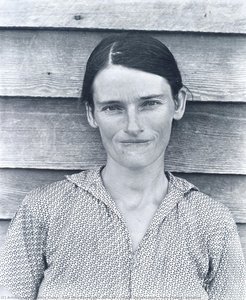
Allie Mae Burroughs, Wife of a Cotton Sharecropper, Hale County, Alabama (1936) работы Волкер Эванс

Allie Mae Burroughs, Wife of a Cotton Sharecropper, Hale County, Alabama

1936 · Acrylic On Canvas · Музей Дж. Пола Гетти, Лос-Анджелес

Walker Evans's photograph, "Allie Mae Burroughs, Wife of a Cotton Sharecropper, Hale County, Alabama," isn't merely a snapshot; it’s a poignant window into the heart of the American Depression. Captured in 1936 during his work for the Farm Security Administration, this image transcends its documentary origins to become a powerful meditation on dignity, hardship, and the quiet strength of an ordinary woman facing extraordinary circumstances. The photograph, now housed at…

7
Alabama Tenant Farmer (1936) работы Волкер Эванс

Alabama Tenant Farmer

1936 · Gelatin Silver Print · Музей Дж. Пола Гетти, Лос-Анджелес

In the quiet, monochrome stillness of Walker Evans’ “Alabama Tenant Farmer,” one finds much more than a mere documentation of a kitchen interior; one encounters a profound meditation on the human condition. Captured in 1936 amidst the dust and desperation of the Great Depression, this masterpiece serves as a poignant emblem of resilience. The photograph transports the viewer into a humble cotton farmer’s cabin in Hale County, Alabama, where the…

8
Let Us Now Praise Famous Men (1936) работы Волкер Эванс

Let Us Now Praise Famous Men

1936 · Acrylic On Canvas · Биеннале ди Венеция, Venice

Walker Evans' "Let Us Now Praise Famous Men," born from a 1936 assignment for *Fortune* magazine, isn’t merely a photographic record; it’s a profound meditation on the dignity of human existence amidst crushing poverty. Published in 1941, this seminal work transcends its documentary origins to become a hauntingly beautiful exploration of rural America during the Great Depression. Evans, initially tasked with capturing the realities of sharecropping families in Alabama, quickly…

9
Uncle Sam (1935) работы Волкер Эванс

Uncle Sam

1935 · Black and White Photography · Ogden Museum of Southern Art, Новый Орлеан

In the quiet, silvered tones of Walker Evans’s 1935 masterpiece, Uncle Sam, we are invited to step through a temporal threshold into the heart of a vanishing America. This evocative black and white photograph serves as more than a mere documentation of architecture; it is a profound meditation on existence during the Great Depression. The composition centers on a sprawling, two-story house, its weathered facade and numerous windows acting as…

10
Let Us Now Praise Famous Men (1936) работы Волкер Эванс

Let Us Now Praise Famous Men

1936 · Acrylic On Canvas · Биеннале ди Венеция, Venice

Walker Evans’s “Let Us Now Praise Famous Men,” published in 1941, stands as an unparalleled achievement in documentary photography and a cornerstone of American literature. More than just capturing the bleak realities of the Great Depression—specifically the plight of tenant farmers in Hale County, Alabama—Evans’s magnum opus delves into the profound dignity inherent within human experience even amidst crushing hardship.

Картины художника Волкер Эванс, в рейтинге с 11 по 50

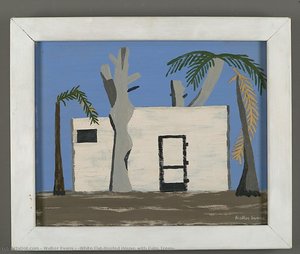
11License Photo Studio, New York (1934) работы Волкер ЭвансLicense Photo Studio, New York1934 · Музей Дж. Пола Гетти 12Water Fountain, Havana (1932) работы Волкер ЭвансWater Fountain, Havana1932 · Boca Raton Museum of Art 13Miners (1935) работы Волкер ЭвансMiners1935 · Музей Дж. Пола Гетти 14Barber Shop, New Orleans (1971) работы Волкер ЭвансBarber Shop, New Orleans1971 · Boca Raton Museum of Art 15Boarding House Porch, Birmingham, Alabama (1971) работы Волкер ЭвансBoarding House Porch, Birmingham, Alabama1971 · Boca Raton Museum of Art 16Brooklyn bridge, new york работы Волкер ЭвансBrooklyn bridge, new york 17Parked car, small town main street работы Волкер ЭвансParked car, small town main street 18Sharecropper, hale county, alabama работы Волкер ЭвансSharecropper, hale county, alabama 19Coal dock worker работы Волкер ЭвансCoal dock worker 20American legionnaire работы Волкер ЭвансAmerican legionnaire 21Interior detail, west virginia coal miner's house работы Волкер ЭвансInterior detail, west virginia coal miner's house 22Girl in Fulton Street, New York работы Волкер ЭвансGirl in Fulton Street, New York 23Roadside Sandwich Shop, Ponchatoula, Louisiana работы Волкер ЭвансRoadside Sandwich Shop, Ponchatoula, Louisiana 24Battlefield Monument, Vicksburg, MS (1936) работы Волкер ЭвансBattlefield Monument, Vicksburg, MS1936 · Ogden Museum of Southern Art 25[Landscape with Adobe Church] (1947) работы Волкер Эванс[Landscape with Adobe Church]1947 26[Red Church] (1950) работы Волкер Эванс[Red Church]1950 27[Three Director's Chairs] (1950) работы Волкер Эванс[Three Director's Chairs]1950 28[Ship's Prow] (1950) работы Волкер Эванс[Ship's Prow]1950 29[Floral Still-Life] (1950) работы Волкер Эванс[Floral Still-Life]1950 30[Shack with Broken Windows] (1950) работы Волкер Эванс[Shack with Broken Windows]1950 31[Architectural Interior] (1950) работы Волкер Эванс[Architectural Interior]1950 32[White Flat-Roofed House with Palm Trees] (1950) работы Волкер Эванс[White Flat-Roofed House with Palm Trees]1950 33[Construction Site] (1950) работы Волкер Эванс[Construction Site]1950 34The Shell House (1950) работы Волкер ЭвансThe Shell House1950 35Anna Maria, Florida (1958) работы Волкер ЭвансAnna Maria, Florida1958 36[Seashore Scene with Boardwalk] (1961) работы Волкер Эванс[Seashore Scene with Boardwalk]1961 37[Boat with Palm Trees on Shore] (1958) работы Волкер Эванс[Boat with Palm Trees on Shore]1958 38[House with Gridded Panel and Palm Trees] (1958) работы Волкер Эванс[House with Gridded Panel and Palm Trees]1958 39[Barn with Porch Addition, Old Lyme, Connecticut] (1963) работы Волкер Эванс[Barn with Porch Addition, Old Lyme, Connecticut]1963 40[Red Building in Field] (1963) работы Волкер Эванс[Red Building in Field]1963 41Main Street in a Pennsylvania Town (1971) работы Волкер ЭвансMain Street in a Pennsylvania Town1971 42Joe's auto graveyard, pennsylvania работы Волкер ЭвансJoe's auto graveyard, pennsylvania 43Kitchen wall, alabama farmstead работы Волкер ЭвансKitchen wall, alabama farmstead 44Kitchen corner, tenant farmhouse, hale county, alabama работы Волкер ЭвансKitchen corner, tenant farmhouse, hale county, alabama 45End of House on Logan Street, Charleston, South Carolina работы Волкер ЭвансEnd of House on Logan Street, Charleston, South Carolina 46Allie Mae Burroughs, Wife of a Cotton Sharecropper, Hale County, Alabama работы Волкер ЭвансAllie Mae Burroughs, Wife of a Cotton Sharecropper, Hale County, Alabama 47Main street block, selma, alabama работы Волкер ЭвансMain street block, selma, alabamaGeorgia Museum of Art 48Penny picture display, savannah, georgia работы Волкер ЭвансPenny picture display, savannah, georgia 49Negro church, south carolina работы Волкер ЭвансNegro church, south carolina 50City lunch counter, new york работы Волкер ЭвансCity lunch counter, new york

Знаменитые картины Волкер Эванс по периодам творчества

Сюжеты, которые вдохновляли Волкер Эванс

Четыре темы, которые чаще всего встречаются в этих оригиналах, каждая из которых представлена своим лучшим образцом.

Музеи, в которых хранятся оригиналы работ Волкер Эванс

7 музеев, в которых находится большинство картин со страницы.

Музей Город Работы Волкер Эванс Картины из этого списка
Музей Дж. Пола Гетти, Лос-АнджелесМузей Дж. Пола Гетти Лос-Анджелес 5 Havana Citizen / Citizen in Downtown Havana, Allie Mae Burroughs, Wife of a Cotton Sharecropper, Hale County, Alabama, Alabama Tenant Farmer
Биеннале ди Венеция, VeniceБиеннале ди Венеция Venice 4 Let Us Now Praise Famous Men, Let Us Now Praise Famous Men, Let Us Now Praise Famous Men
Boca Raton Museum of Art, Бока-РатонBoca Raton Museum of Art Бока-Ратон 3 Water Fountain, Havana, Barber Shop, New Orleans, Boarding House Porch, Birmingham, Alabama
Ogden Museum of Southern Art, Новый ОрлеанOgden Museum of Southern Art Новый Орлеан 2 Uncle Sam, Battlefield Monument, Vicksburg, MS
Музей Джорджа Востона, РочестерМузей Джорджа Востона Рочестер 1 Roadside Stand, vicinity Birmingham, Alabama
Музей искусств Нельсона-Аткинса, Канзас-СитиМузей искусств Нельсона-Аткинса Канзас-Сити 1 Silverware
Georgia Museum of Art, АфиныGeorgia Museum of Art Афины 1 Main street block, selma, alabama

Волкер Эванс, одна знаковая картина в десятилетие

Произведения по десятилетиям

Выберите десятилетие, чтобы увидеть шедевр, определяющий его.

Картины Волкер Эванс: ответы галереи

Какая картина Волкер Эванс является самой известной из всех?Узнать ответ

Roadside Stand, vicinity Birmingham, Alabama (1971), Музей Джорджа Востона, Рочестер. Далее следуют Let Us Now Praise Famous Men (1936) и Havana Citizen / Citizen in Downtown Havana (1933).

Сколько лет было Волкер Эванс, когда была завершена работа Roadside Stand, vicinity Birmingham, Alabama?Узнать ответ

68 лет: Roadside Stand, vicinity Birmingham, Alabama датируется 1971 годом, а Волкер Эванс родился в 1903.

Какие 10 лучших картин принадлежат Волкер Эванс?Узнать ответ

Roadside Stand, vicinity Birmingham, Alabama, Let Us Now Praise Famous Men, Havana Citizen / Citizen in Downtown Havana, Let Us Now Praise Famous Men, Silverware, Allie Mae Burroughs, Wife of a Cotton Sharecropper, Hale County, Alabama, Alabama Tenant Farmer, Let Us Now Praise Famous Men, Uncle Sam и Let Us Now Praise Famous Men. В рейтинге выше указаны год создания и музей для каждой работы.

Сколько работ создал(а) Волкер Эванс?Узнать ответ

В нашем каталоге представлено 50 работ Волкер Эванс, созданных в период с 1932 по 1971.

Где висят самые известные оригинальные работы Волкер Эванс?Узнать ответ

В основном в Музей Дж. Пола Гетти (Лос-Анджелес), Биеннале ди Венеция (Venice) и Boca Raton Museum of Art (Бока-Ратон). В таблице выше перечислены все музеи.

Когда Волкер Эванс создал свои самые известные картины?Узнать ответ

В 1930s: 13 из 50 работ на этой странице были созданы в этот период, Let Us Now Praise Famous Men из них.

Какие из самых известных работ Волкер Эванс являются наиболее ранними и наиболее поздними?Узнать ответ

На этой странице самая ранняя работа датирована Water Fountain, Havana (1932), а самая поздняя — Roadside Stand, vicinity Birmingham, Alabama (1971).

К каким сюжетам Волкер Эванс обращался чаще всего?Узнать ответ

Usa (7), Great depression (5) и American south (4) в 50 работах на этой странице.

В какой технике чаще всего работал(а) Волкер Эванс?Узнать ответ

Acrylic On Canvas, для 5 из 50 работ на этой странице.

С каким направлением связан Волкер Эванс?Узнать ответ

Contemporary realism и Documentary photography, судя по оригиналам на этой странице.

Какие оригинальные работы Волкер Эванс хранятся в Музей Дж. Пола Гетти?Узнать ответ

Havana Citizen / Citizen in Downtown Havana, Allie Mae Burroughs, Wife of a Cotton Sharecropper, Hale County, Alabama и Alabama Tenant Farmer: в коллекции Музей Дж. Пола Гетти, Лос-Анджелес находится 5 работ со страницы.

Волкер Эванс: художник

Walker Evans: A Witness to America’s Soul

Walker Evans, born in St. Louis in 1903, wasn't merely a photographer; he was an architect of perception, meticulously crafting images that resonated with the quiet dignity and stark realities of American life. His name is inextricably linked with the visual record of the Great Depression, but to reduce his artistic journey to this single period would be a profound injustice – it obscures the breadth of his vision and the enduring influence he exerted on photography itself. Evans’s early years were marked by constant relocation—from Toledo to Chicago, then to New York City—a restless movement that instilled in him an acute awareness of America's diverse landscapes and its people. Despite a somewhat sporadic academic record, including brief stints at Phillips Academy Andover and Williams College, his true education unfolded through self-directed study, immersing himself in the works of literary giants like T.S. Eliot, D.H. Lawrence, James Joyce, and e.e. cummings – writers who valued precision of language and a keen observation of the human condition. This intellectual foundation profoundly shaped his photographic approach.

The Seeds of a New Vision: Influences and Early Work

Evans’s artistic sensibilities were nurtured by a confluence of influences. He deeply admired Eugène Atget, whose intimate photographs of Parisian streets captured a timeless quality, and August Sander, whose portraits aimed for an objective cataloging of German society. Equally significant were the writings of American modernists—writers who championed clarity, directness, and a rejection of sentimentality. These literary and photographic models coalesced in Evans’s developing aesthetic: a commitment to visual precision, a deliberate avoidance of melodrama, and a profound respect for the dignity of ordinary subjects. His early work, produced during the late 1920s and early 1930s, often reflected this influence, featuring semi-abstract patterns derived from skyscrapers and other machine-age products—a fascination with the geometry of modern life. However, it was his time in Paris in 1926 that proved pivotal, exposing him to European artistic trends and solidifying his desire to move beyond purely decorative photography. Returning to New York City, he found work as a bookstore clerk and library assistant, providing him with ample opportunity to cultivate his passion for literature and to hone his observational skills.

Documenting America’s Hardships: The Farm Security Administration

The turning point in Evans's career arrived in 1935 when he accepted a position with the Farm Security Administration (FSA), a New Deal agency tasked with documenting the plight of rural communities during the Great Depression. Initially assigned to photograph a resettlement community in West Virginia, Evans quickly realized that his role extended far beyond simply recording statistics—he was driven by a deep empathy for the people he photographed and a desire to capture their stories with honesty and nuance. He rejected the FSA’s prescribed itineraries and ideological agenda, instead focusing on capturing the essence of American life from the simple and the ordinary. His photographs of roadside stands, small-town churches, and weathered faces became iconic representations of hardship, resilience, and the dignity of rural America. The collaboration with writer James Agee on *Let Us Now Praise Famous Men* (1941) is a testament to this commitment—a lyrical exploration of three tenant farming families in Alabama that combined stark photographs with evocative prose. This project, initially rejected by *Fortune* magazine for its unconventional length and style, remains a landmark achievement in documentary literature and photography.

Beyond the FSA: Portraits and Shifting Perspectives

Following his work with the FSA, Evans’s artistic trajectory continued to evolve. The 1938 exhibition “Walker Evans: American Photographs” at the Museum of Modern Art marked a watershed moment, solidifying his reputation as a major figure in photography and establishing a new standard for realism and objectivity. However, he resisted being confined to the role of simply a documentary photographer. He increasingly turned his attention towards portraits and street photography, capturing candid moments of urban life in New York City with an understated elegance. These later works reveal a subtle shift in focus—less concerned with social commentary and more interested in exploring the aesthetic qualities of everyday scenes. In the 1960s, Evans embraced color photography, producing vibrant images of interiors, architecture, and commonplace objects – a bold move that challenged conventional notions of photographic representation. This experimentation demonstrated a willingness to push boundaries and explore new avenues for artistic expression.

A Lasting Legacy: Influence and Enduring Power

Walker Evans’s legacy extends far beyond the iconic images he created during the Great Depression. He is widely considered one of the most important figures in the history of documentary photography, having established a new standard for realism and objectivity in photographic representation. His work profoundly influenced generations of photographers, inspiring them to look at the world with fresh eyes and to find beauty and meaning in the ordinary. His impact on social realism is undeniable, as his FSA photographs became powerful symbols of hardship and resilience during a pivotal moment in American history. But perhaps his greatest contribution lies in demonstrating how photography could serve not only as a tool for social commentary but also as a medium for aesthetic exploration. He proved that even the most seemingly mundane subjects could be transformed into works of art through careful observation, precise composition, and a commitment to visual truth. Evans’s work continues to resonate today, reminding us of the power of photography to document our world, challenge our perceptions, and connect us to the shared human experience. His photographs are not merely images; they are windows into another time, offering a profound glimpse into the soul of America.

Все 50 работ Волкер Эванс →