Портрет Утагава Хиросигэ

Картины Утагава Хиросигэ: 100 самых известных работ, взгляд галереи

Обновлено Ноябрь 2026 · рейтинг на основе нашего показателя популярности (количество поисковых запросов, посещений и заказов для каждой работы) · 353 работ Утагава Хиросигэ в нашем каталоге

Вкратце

По мнению экспертов галереи, самой известной картиной Утагава Хиросигэ является Early Department from a Daimyo, оригинал которой находится в Nakagawa-machi Bato Hiroshige Museum of Art, Нагасаки. The maple leaves of Mama, Tekona shrine and Tsugi bridge (1857) и Hakone (1834) завершают трио, которое узнает каждый. Из 353 работ Утагава Хиросигэ в нашем каталоге ниже представлены 100 самых известных: каждая из них является оригиналом с указанием года создания, музея и уникальных особенностей.

1797 – 1858, Эдо Ukiyo-e Больше всего работ: Nakagawa-machi Bato Hiroshige Museum of Art

Топ-10 картин художника Утагава Хиросигэ в галерее

1
Early Department from a Daimyo работы Утагава Хиросигэ

Early Department from a Daimyo

Woodblock Print · Nakagawa-machi Bato Hiroshige Museum of Art, Нагасаки

In the delicate dance of lines and muted pigments, Utagawa Hiroshige’s Early Department from a Daimyo invites us to step through a portal into the heart of Edo-period Japan. This exquisite woodblock print captures a moment of vibrant communal life along a bustling riverside, where the rigid structures of social hierarchy melt into the shared leisure of a sunny afternoon. As we gaze upon the scene, we are not merely…

2
The maple leaves of Mama, Tekona shrine and Tsugi bridge (1857) работы Утагава Хиросигэ

The maple leaves of Mama, Tekona shrine and Tsugi bridge

1857 · Woodblock Print · Музей Ван Гога, Амстердам

Utagawa Hiroshige (1797-1858), arguably the last titan of *ukiyo-e*, didn't merely depict landscapes; he crafted them into meditations on beauty and impermanence. “The Maple Leaves of Mama, Tekona Shrine and Tsugi Bridge,” created in 1857 during a period of significant societal transformation—the waning influence of feudal Japan as Western ideas crept in—stands as a testament to his enduring artistic legacy. More than just a visual record, it’s an embodiment of…

3
Hakone (1834) работы Утагава Хиросигэ

Hakone

1834 · Woodblock Print · Музей искусства Индианаполиса, Индианаполис

Utagawa Hiroshige’s “Hakone,” created in 1834, is more than just a landscape; it's a poetic meditation on the beauty and transience of nature within Edo-period Japan. This woodblock print, part of his renowned series "The Fifty-three Stations of the Tōkaidō," captures a specific moment along the vital trade route connecting Tokyo (then Edo) with Kyoto. However, Hiroshige elevates this seemingly simple depiction of a mountain pass into something profoundly evocative,…

4
Station 36, Goyu; Kyoka Tokaido Series (1855) работы Утагава Хиросигэ

Station 36, Goyu; Kyoka Tokaido Series

1855 · Woodblock Print · Музей искусства Индианаполиса, Индианаполис

In the delicate interplay of ink and paper, Utagawa Hiroshige’s "Station 36, Goyu; Kyoka Tokaido Series" offers much more than a mere topographical record of a journey. Completed in 1855, this exquisite woodblock print serves as a profound distillation of Edo-period sensibilities, capturing a yearning for tranquility amidst the burgeoning dynamism of a Japan in transition. As the nation stood at a pivotal crossroads between ancient feudal traditions and the…

5
Фушими, станция №51 (1842) работы Утагава Хиросигэ

Фушими, станция №51

1842 · Гравюра на дереве · Музей искусства Индианаполиса, Индианаполис

Фуюми, станция №51 – Шедевр Эдо эпохи Хирошиги Хирошиге Утагава (1797–1858) был одним из самых выдающихся художников эпохи Эдо и последним великим мастером японской гравюры на дереве *укиё-э*. Его творчество не просто воспроизводило окружающий мир, а наполняло его поэтическим духом, который глубоко резонировал как в Японии того времени, так и впоследствии во всем западном искусстве. Жизнь Хирошиге переплелась с периодом относительного мира и процветания при Токугава сёгунате – эпохе социальных…

6
Ichikoku Bridge in the Eastern Capital (Tōto: Ichikoku bashi) (1858) работы Утагава Хиросигэ

Ichikoku Bridge in the Eastern Capital (Tōto: Ichikoku bashi)

1858 · Woodblock Print · Музей искусства Индианаполиса, Индианаполис

The Ichikoku Bridge spans a quiet stretch of water in the Eastern Capital. Beneath its wooden arch, two boats drift through the current. People move across the structure, some carrying backpacks and others clutching small handbags. A mountain rises in the distance, watching over the scene. Trees frame the edges of the view, their leaves casting shadows near the water's edge.

7
Shinagawa Sunrise from the series Fifty-three Stations on the Tokaido Road (1834) работы Утагава Хиросигэ

Shinagawa Sunrise from the series Fifty-three Stations on the Tokaido Road

1834 · Woodblock Print · Hill-Stead Museum, Фармингтон

In the soft, burgeoning light of a nineteenth-century morning, Utagawa Hiroshige invites us to witness a moment of profound stillness along the Tōkaidō road. Shinagawa Sunrise is not merely a depiction of a coastal village; it is a masterclass in the art of atmosphere. As the sun begins its ascent, the boundary between the heavens and the earth dissolves into a luminous haze. The water of the bay reflects a…

8
The Rokugo River Ferry, Kawasaki, from the series the Fifty-three Stations of the Tokaido (Hoeido edition ) работы Утагава Хиросигэ

The Rokugo River Ferry, Kawasaki, from the series the Fifty-three Stations of the Tokaido (Hoeido edition )

Woodblock Print · Nakagawa-machi Bato Hiroshige Museum of Art, Нагасаки

In the delicate dance of woodblock printing, few masters captured the ephemeral beauty of Japanese life as profoundly as Utagawa Hiroshige. His masterpiece, The Rokugo River Ferry, Kawasaki, serves as a breathtaking window into the Edo period, inviting the viewer to step onto the bustling banks of one of the most vital crossings on the Tokaido road. This evocative scene from his legendary series, The Fifty-three Stations of the Tokaido,…

9
Itsukushima in Aki Province (1858) работы Утагава Хиросигэ

Itsukushima in Aki Province

1858 · Woodblock Print · Бруклинский музей, Бруклин

In the delicate interplay of mist and water, Itsukushima in Aki Province offers more than a mere glimpse of a Japanese landmark; it provides a profound meditation on the ephemeral nature of existence. Created by the legendary ukiyo-e master Ando Hiroshige in 1858, this woodcut print captures the spiritual essence of the Itsukushima shrine area with a poetic sensitivity that remains unparalleled. As one gazes upon the composition, the eye…

10
Tenryu River Ferry Crossing, Mitsuke, from the series The Fifty-three Stations of the Tokaido (Gyosho Edition) работы Утагава Хиросигэ

Tenryu River Ferry Crossing, Mitsuke, from the series The Fifty-three Stations of the Tokaido (Gyosho Edition)

Woodblock Print · Nakagawa-machi Bato Hiroshige Museum of Art, Нагасаки

The woodblock print depicts a section of the Tenryu River near the station of Mitsuke. In the center of the composition, a large sandbank divides the water into two distinct currents. Several small wooden boats occupy the river, with figures positioned within them to manage the crossing. Some vessels are moored directly against the central sandbank, while others navigate the moving water. The far shore is visible in the distance,…

Картины художника Утагава Хиросигэ, в рейтинге с 11 по 100

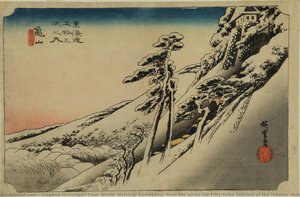
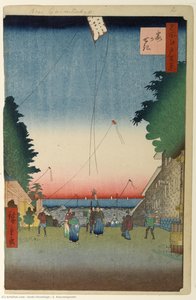
11Пароход и виноградные лозы (1800) работы Утагава ХиросигэПароход и виноградные лозы1800 · Музей искусства Индианаполиса 12The Pine Woods of Miho in Suruga Province (Suruga Miho no matsubara) (1858) работы Утагава ХиросигэThe Pine Woods of Miho in Suruga Province (Suruga Miho no matsubara)1858 · Музей искусства Индианаполиса 1362 (55) Komakata Hall and Azuma Bridge (1857) работы Утагава Хиросигэ62 (55) Komakata Hall and Azuma Bridge1857 · Бруклинский музей 14Evening Snow at Kanbara (1834) работы Утагава ХиросигэEvening Snow at Kanbara1834 · Лос-Анджелесский музей округа Лос-Анджелес 15Dawn in the licensed quarters (1857) работы Утагава ХиросигэDawn in the licensed quarters1857 · Галерея Нового Южного Уэльса 16Night View of Saruwakacho работы Утагава ХиросигэNight View of Saruwakacho 17Station 28, Fukuroi (1855) работы Утагава ХиросигэStation 28, Fukuroi1855 · Музей искусства Индианаполиса 18Evening Snow at Asakusa or Woman with Umbrella from the series Eight Views of the Environs of Edo (1800) работы Утагава ХиросигэEvening Snow at Asakusa or Woman with Umbrella from the series Eight Views of the Environs of Edo1800 · Hill-Stead Museum 19Keishi (Kyoto), Capital (1834) работы Утагава ХиросигэKeishi (Kyoto), Capital1834 · Музей искусства Индианаполиса 20Hara: View of Ashitakayama and Fuji (1855) работы Утагава ХиросигэHara: View of Ashitakayama and Fuji1855 · Музей искусства Индианаполиса 21Yokkaichi (Station #44) (1834) работы Утагава ХиросигэYokkaichi (Station #44)1834 · Музей искусства Индианаполиса 22Desolate Wintry Scene, Hamamatsu, from the series the Fifty-three Stations of the Tokaido (Hoeido edition) работы Утагава ХиросигэDesolate Wintry Scene, Hamamatsu, from the series the Fifty-three Stations of the Tokaido (Hoeido edition)Nakagawa-machi Bato Hiroshige Museum of Art 23Noge and Yokohama in Musashi Province (Musashi, Noge, Yokohama) (1858) работы Утагава ХиросигэNoge and Yokohama in Musashi Province (Musashi, Noge, Yokohama)1858 · Музей искусства Индианаполиса 24Wild sea breaking on the rocks (1856) работы Утагава ХиросигэWild sea breaking on the rocks1856 25Ширазуга, Шиоми-зака зу (1833) работы Утагава ХиросигэШиразуга, Шиоми-зака зу1833 · Музей искусства Индианаполиса 26Mt.Fuji on the Left, Yoshiwara, from the series the Fifty-three Stations of the Tokaido (Hoeido edition) работы Утагава ХиросигэMt.Fuji on the Left, Yoshiwara, from the series the Fifty-three Stations of the Tokaido (Hoeido edition)Nakagawa-machi Bato Hiroshige Museum of Art 27Tsukuda Offing in the Eastern Capital (Tōto: Tsukuda oki) (1858) работы Утагава ХиросигэTsukuda Offing in the Eastern Capital (Tōto: Tsukuda oki)1858 · Музей искусства Индианаполиса 28Kawachi (1853) работы Утагава ХиросигэKawachi1853 · Музей искусства Индианаполиса 29The Dye Craft Shops of Arimatsu, Narumi, from the series The Fifty-three Stations of the Tokaido (Gyosho edition) работы Утагава ХиросигэThe Dye Craft Shops of Arimatsu, Narumi, from the series The Fifty-three Stations of the Tokaido (Gyosho edition)Nakagawa-machi Bato Hiroshige Museum of Art 30View of Shiomi Slope, Shirasuka, from the series The Fifty-three Stations of the Tokaido (Gyosho edition) работы Утагава ХиросигэView of Shiomi Slope, Shirasuka, from the series The Fifty-three Stations of the Tokaido (Gyosho edition)Nakagawa-machi Bato Hiroshige Museum of Art 31Entrance to Enoshima in Sagami Province (Sagami Enoshima iriguchi) (1858) работы Утагава ХиросигэEntrance to Enoshima in Sagami Province (Sagami Enoshima iriguchi)1858 · Музей искусства Индианаполиса 32Morning Mist, Mishima, from the series the Fifty-three Stations of the Tokaido (Hoeido edition ) работы Утагава ХиросигэMorning Mist, Mishima, from the series the Fifty-three Stations of the Tokaido (Hoeido edition )Nakagawa-machi Bato Hiroshige Museum of Art 33The Imagire Sea Ferry, Maisaka, from the series The Fifty-three Stations of the Tokaido (Gyosho edition) работы Утагава ХиросигэThe Imagire Sea Ferry, Maisaka, from the series The Fifty-three Stations of the Tokaido (Gyosho edition)Nakagawa-machi Bato Hiroshige Museum of Art 34Sukiya Riverbank in the Eastern Capital (Tōto sukiya kaigan) (1858) работы Утагава ХиросигэSukiya Riverbank in the Eastern Capital (Tōto sukiya kaigan)1858 · Музей искусства Индианаполиса 35Satta Pass, Yui, from the series the Fifty-three Stations of the Tokaido (Hoeido edition) работы Утагава ХиросигэSatta Pass, Yui, from the series the Fifty-three Stations of the Tokaido (Hoeido edition)Nakagawa-machi Bato Hiroshige Museum of Art 36True View of Imagire, Maisaka, from the series the Fifty-three Stations of the Tokaido (Hoeido edition) работы Утагава ХиросигэTrue View of Imagire, Maisaka, from the series the Fifty-three Stations of the Tokaido (Hoeido edition)Nakagawa-machi Bato Hiroshige Museum of Art 37Clear Winter Morning, Kameyama, from the series the Fifty-three Stations of the Tokaido (Hoeido edition) работы Утагава ХиросигэClear Winter Morning, Kameyama, from the series the Fifty-three Stations of the Tokaido (Hoeido edition)Nakagawa-machi Bato Hiroshige Museum of Art 38The Tenryu River, Mitsuke, from the series the Fifty-three Stations of the Tokaido (Hoeido edition) работы Утагава ХиросигэThe Tenryu River, Mitsuke, from the series the Fifty-three Stations of the Tokaido (Hoeido edition)Nakagawa-machi Bato Hiroshige Museum of Art 39The Seven-ri Ferry Crossing, Kuwana, from the series the Fifty-three Stations of the Tokaido (Hoeido edition) работы Утагава ХиросигэThe Seven-ri Ferry Crossing, Kuwana, from the series the Fifty-three Stations of the Tokaido (Hoeido edition)Nakagawa-machi Bato Hiroshige Museum of Art 40Aronia and Bullfinch работы Утагава ХиросигэAronia and Bullfinch 41Лебеди возвращаются в Катату (1834) работы Утагава ХиросигэЛебеди возвращаются в Катату1834 · Музей искусства Индианаполиса 42Yugyoji Temple, Fujisawa, from the series the Fifty-three Stations of the Tokaido (Hoeido edition) работы Утагава ХиросигэYugyoji Temple, Fujisawa, from the series the Fifty-three Stations of the Tokaido (Hoeido edition)Nakagawa-machi Bato Hiroshige Museum of Art 43Travellers and Soliciting Women, Goyu, from the series the Fifty-three Stations of the Tokaido (Hoeido edition) работы Утагава ХиросигэTravellers and Soliciting Women, Goyu, from the series the Fifty-three Stations of the Tokaido (Hoeido edition)Nakagawa-machi Bato Hiroshige Museum of Art 44The Totoumi Bank of the Oi River, Kanaya, from the series the Fifty-three Stations of the Tokaido (Hoeido edition) работы Утагава ХиросигэThe Totoumi Bank of the Oi River, Kanaya, from the series the Fifty-three Stations of the Tokaido (Hoeido edition)Nakagawa-machi Bato Hiroshige Museum of Art 45The Suruga Bank of the Oi River, Shimada, from the series the Fifty-three Stations of the Tokaido (Hoeido edition) работы Утагава ХиросигэThe Suruga Bank of the Oi River, Shimada, from the series the Fifty-three Stations of the Tokaido (Hoeido edition)Nakagawa-machi Bato Hiroshige Museum of Art 46Kyoka Tokaido Series, Kanagawa (Yokohama) работы Утагава ХиросигэKyoka Tokaido Series, Kanagawa (Yokohama)Музей искусства Индианаполиса 47Distant View of Miho, Ejiri, from the series the Fifty-three Stations of the Tokaido (Hoeido edition) работы Утагава ХиросигэDistant View of Miho, Ejiri, from the series the Fifty-three Stations of the Tokaido (Hoeido edition)Nakagawa-machi Bato Hiroshige Museum of Art 48Mt. Fuji in the Morning, Hara, from the series the Fifty-three Stations of the Tokaido (Hoeido edition) работы Утагава ХиросигэMt. Fuji in the Morning, Hara, from the series the Fifty-three Stations of the Tokaido (Hoeido edition)Nakagawa-machi Bato Hiroshige Museum of Art 49A Horse Fair, Chiriu, from the series the Fifty-three Stations of the Tokaido (Hoeido edition) работы Утагава ХиросигэA Horse Fair, Chiriu, from the series the Fifty-three Stations of the Tokaido (Hoeido edition)Nakagawa-machi Bato Hiroshige Museum of Art 50Wakasa (1853) работы Утагава ХиросигэWakasa1853 · Музей искусства Индианаполиса 51Distant View of Mt.Akiba, Kakegawa, from the series the Fifty-three Stations of the Tokaido (Hoeido edition) работы Утагава ХиросигэDistant View of Mt.Akiba, Kakegawa, from the series the Fifty-three Stations of the Tokaido (Hoeido edition)Nakagawa-machi Bato Hiroshige Museum of Art 52The Ichiri-Han Sea Ferry, Arai, from the series The Fifty-three Stations of the Tokaido (Gyosho edition) работы Утагава ХиросигэThe Ichiri-Han Sea Ferry, Arai, from the series The Fifty-three Stations of the Tokaido (Gyosho edition)Nakagawa-machi Bato Hiroshige Museum of Art 53Gateway Entrance to the Atsuta Shrine on the Beach, Miya, from the series The Fifty-three Stations of the Tokaido (Gyosho edition) работы Утагава ХиросигэGateway Entrance to the Atsuta Shrine on the Beach, Miya, from the series The Fifty-three Stations of the Tokaido (Gyosho edition)Nakagawa-machi Bato Hiroshige Museum of Art 54Akasaka, from the series The Fifty-three Stations of the Tokaido (Gyosho edition) работы Утагава ХиросигэAkasaka, from the series The Fifty-three Stations of the Tokaido (Gyosho edition)Nakagawa-machi Bato Hiroshige Museum of Art 55The Sakawa River, Odawara, from the series the Fifty-three Stations of the Tokaido (Hoeido edition) работы Утагава ХиросигэThe Sakawa River, Odawara, from the series the Fifty-three Stations of the Tokaido (Hoeido edition)Nakagawa-machi Bato Hiroshige Museum of Art 56A Footpath between Ricefield, Hiratsuka, from the series the Fifty-three Stations of the Tokaido (Hoeido edition) работы Утагава ХиросигэA Footpath between Ricefield, Hiratsuka, from the series the Fifty-three Stations of the Tokaido (Hoeido edition)Nakagawa-machi Bato Hiroshige Museum of Art 57Awa Province: Whirlpool at Naruto (1853) работы Утагава ХиросигэAwa Province: Whirlpool at Naruto1853 5873 The City Flourishing, the Tanabata Festival (1857) работы Утагава Хиросигэ73 The City Flourishing, the Tanabata Festival1857 59Sarugababa Plain, Futagawa, from the series the Fifty-three Stations of the Tokaido (Hoeido edition) работы Утагава ХиросигэSarugababa Plain, Futagawa, from the series the Fifty-three Stations of the Tokaido (Hoeido edition)Nakagawa-machi Bato Hiroshige Museum of Art 60Local Specialty Teahouse, Mariko, from the series the Fifty-three Stations of the Tokaido (Hoeido edition) работы Утагава ХиросигэLocal Specialty Teahouse, Mariko, from the series the Fifty-three Stations of the Tokaido (Hoeido edition)Nakagawa-machi Bato Hiroshige Museum of Art 61Sakanoshita работы Утагава ХиросигэSakanoshitaМузей искусства Индианаполиса 62Станция 23 Фудзида работы Утагава ХиросигэСтанция 23 ФудзидаМузей искусства Индианаполиса 63Marsh Grasses and Mandarin Ducks работы Утагава ХиросигэMarsh Grasses and Mandarin Ducks 6450th station, Minakuchi работы Утагава Хиросигэ50th station, Minakuchi 65Sakanoshita: the Throwing Away the Brush Peak (1834) работы Утагава ХиросигэSakanoshita: the Throwing Away the Brush Peak1834 · Бруклинский музей 66Shibaura Bay of Musashi Province (801) работы Утагава ХиросигэShibaura Bay of Musashi Province801 · Метрополитен-музей 67Koyurugi Beach of Sagami Province (801) работы Утагава ХиросигэKoyurugi Beach of Sagami Province801 · Метрополитен-музей 68Honmoku Bay of Musashi Province (801) работы Утагава ХиросигэHonmoku Bay of Musashi Province801 · Метрополитен-музей 69Untitled (Two Rabbits, Pampas Grass, and Full Moon) (1851) работы Утагава ХиросигэUntitled (Two Rabbits, Pampas Grass, and Full Moon)1851 7011. Kiyomizu Hall and Shinobazu Pond at Ueno (1857) работы Утагава Хиросигэ11. Kiyomizu Hall and Shinobazu Pond at Ueno1857 7185. Kinokuni Hill and Distant View of Akasaka and the Tameike Pond (1857) работы Утагава Хиросигэ85. Kinokuni Hill and Distant View of Akasaka and the Tameike Pond1857 7276 Bamboo Quay by Kyōbashi Bridge (1857) работы Утагава Хиросигэ76 Bamboo Quay by Kyōbashi Bridge1857 7358 (52) Sudden Shower over Shin-Ōhashi bridge and Atake (1857) работы Утагава Хиросигэ58 (52) Sudden Shower over Shin-Ōhashi bridge and Atake1857 · Tokyo Fuji Art Museum 74103. Senju Great Bridge (1857) работы Утагава Хиросигэ103. Senju Great Bridge1857 7518. The Ōji Inari Shrine (1857) работы Утагава Хиросигэ18. The Ōji Inari Shrine1857 76113. Aoi Slope Outside Toranomon Gate (1857) работы Утагава Хиросигэ113. Aoi Slope Outside Toranomon Gate1857 77114. Bikuni Bridge in Snow (1857) работы Утагава Хиросигэ114. Bikuni Bridge in Snow1857 7870 (60) The Mouth of the Nakagawa River (1857) работы Утагава Хиросигэ70 (60) The Mouth of the Nakagawa River1857 792. Kasumigaseki (1857) работы Утагава Хиросигэ2. Kasumigaseki1857 8015. Suwa Bluff in Nippori (1857) работы Утагава Хиросигэ15. Suwa Bluff in Nippori1857 8163 (69) The Ayase River and Kanegafuchi (1857) работы Утагава Хиросигэ63 (69) The Ayase River and Kanegafuchi1857 82115. The Takata Riding Grounds (1857) работы Утагава Хиросигэ115. The Takata Riding Grounds1857 8386. Naitō Shinjuku in Yotsuya (1857) работы Утагава Хиросигэ86. Naitō Shinjuku in Yotsuya1857 8416. Flower Park and Dangozaka Slope in Sendagi (1857) работы Утагава Хиросигэ16. Flower Park and Dangozaka Slope in Sendagi1857 8568 (59) Open Garden at the Hachiman Shrine in Fukagawa (1857) работы Утагава Хиросигэ68 (59) Open Garden at the Hachiman Shrine in Fukagawa1857 8610. Sunrise at Kanda Myōjin Shrine (1857) работы Утагава Хиросигэ10. Sunrise at Kanda Myōjin Shrine1857 87Peach and Long-tailed Bird работы Утагава ХиросигэPeach and Long-tailed Bird 88Golden Pheasant in Bracken работы Утагава ХиросигэGolden Pheasant in Bracken 89The Imado Bridge at the Foot of Mount Matsuchi (801) работы Утагава ХиросигэThe Imado Bridge at the Foot of Mount Matsuchi801 · Метрополитен-музей 90Dog (1858) работы Утагава ХиросигэDog1858 · Музей искусства Индианаполиса 91118. Kitsunebi on New Year's Night Under the Enoki Tree near Ōji (1857) работы Утагава Хиросигэ118. Kitsunebi on New Year's Night Under the Enoki Tree near Ōji1857 92109. Minami Shinagawa and Samezu Coast (1857) работы Утагава Хиросигэ109. Minami Shinagawa and Samezu Coast1857 93Night View of Matsuchiyama and the San (1857) работы Утагава ХиросигэNight View of Matsuchiyama and the San1857 · Лос-Анджелесский музей округа Лос-Анджелес 94Akasaka, No. 37 работы Утагава ХиросигэAkasaka, No. 37Музей искусства Индианаполиса 95Shiojiri Pass in Shinano Province (Shinano Shiojiritōge) (1858) работы Утагава ХиросигэShiojiri Pass in Shinano Province (Shinano Shiojiritōge)1858 · Музей искусства Индианаполиса 96Yoshiwara работы Утагава ХиросигэYoshiwaraМузей искусства Индианаполиса 97Fuchu, No. 20 работы Утагава ХиросигэFuchu, No. 20Музей искусства Индианаполиса 98Woman Walking in the Snow (1850) работы Утагава ХиросигэWoman Walking in the Snow1850 · Метрополитен-музей 9982. Moon Viewing (1857) работы Утагава Хиросигэ82. Moon Viewing1857 100Station 27, Kakegawa (1855) работы Утагава ХиросигэStation 27, Kakegawa1855 · Музей искусства Индианаполиса

Знаменитые картины Утагава Хиросигэ по периодам творчества

Сюжеты, которые вдохновляли Утагава Хиросигэ

Четыре темы, которые чаще всего встречаются в этих оригиналах, каждая из которых представлена своим лучшим образцом.

Музеи, в которых хранятся оригиналы работ Утагава Хиросигэ

8 музеев, в которых находится большинство картин со страницы.

Музей Город Работы Утагава Хиросигэ Картины из этого списка
Nakagawa-machi Bato Hiroshige Museum of Art, НагасакиNakagawa-machi Bato Hiroshige Museum of Art Нагасаки 30 Early Department from a Daimyo, The Rokugo River Ferry, Kawasaki, from the series the Fifty-three Stations of the Tokaido (Hoeido edition ), Tenryu River Ferry Crossing, Mitsuke, from the series The Fifty-three Stations of the Tokaido (Gyosho Edition)
Музей искусства Индианаполиса, ИндианаполисМузей искусства Индианаполиса Индианаполис 35 Hakone, Station 36, Goyu; Kyoka Tokaido Series, Фушими, станция №51
Метрополитен-музей, Нью-ЙоркМетрополитен-музей Нью-Йорк 8 Shibaura Bay of Musashi Province, Koyurugi Beach of Sagami Province, Honmoku Bay of Musashi Province
Бруклинский музей, БруклинБруклинский музей Бруклин 4 Itsukushima in Aki Province, 62 (55) Komakata Hall and Azuma Bridge, Sakanoshita: the Throwing Away the Brush Peak
Hill-Stead Museum, ФармингтонHill-Stead Museum Фармингтон 3 Shinagawa Sunrise from the series Fifty-three Stations on the Tokaido Road, Evening Snow at Asakusa or Woman with Umbrella from the series Eight Views of the Environs of Edo
Лос-Анджелесский музей округа Лос-Анджелес, Лос-АнджелесЛос-Анджелесский музей округа Лос-Анджелес Лос-Анджелес 2 Evening Snow at Kanbara, Night View of Matsuchiyama and the San
Музей Ван Гога, АмстердамМузей Ван Гога Амстердам 1 The maple leaves of Mama, Tekona shrine and Tsugi bridge
Галерея Нового Южного Уэльса, СиднейГалерея Нового Южного Уэльса Сидней 1 Dawn in the licensed quarters

Утагава Хиросигэ, одна знаковая картина в десятилетие

Произведения по десятилетиям

Выберите десятилетие, чтобы увидеть шедевр, определяющий его.

Картины Утагава Хиросигэ: ответы галереи

Какая картина Утагава Хиросигэ является самой известной из всех?Узнать ответ

Early Department from a Daimyo, Nakagawa-machi Bato Hiroshige Museum of Art, Нагасаки. Далее следуют The maple leaves of Mama, Tekona shrine and Tsugi bridge (1857) и Hakone (1834).

Какие 10 лучших картин принадлежат Утагава Хиросигэ?Узнать ответ

Early Department from a Daimyo, The maple leaves of Mama, Tekona shrine and Tsugi bridge, Hakone, Station 36, Goyu; Kyoka Tokaido Series, Фушими, станция №51, Ichikoku Bridge in the Eastern Capital (Tōto: Ichikoku bashi), Shinagawa Sunrise from the series Fifty-three Stations on the Tokaido Road, The Rokugo River Ferry, Kawasaki, from the series the Fifty-three Stations of the Tokaido (Hoeido edition ), Itsukushima in Aki Province и Tenryu River Ferry Crossing, Mitsuke, from the series The Fifty-three Stations of the Tokaido (Gyosho Edition). В рейтинге выше указаны год создания и музей для каждой работы.

Сколько работ создал(а) Утагава Хиросигэ?Узнать ответ

В нашем каталоге представлено 353 работ Утагава Хиросигэ, созданных в период с 1833 по 1858.

Где висят самые известные оригинальные работы Утагава Хиросигэ?Узнать ответ

В основном в Nakagawa-machi Bato Hiroshige Museum of Art (Нагасаки), Музей искусства Индианаполиса (Индианаполис) и Метрополитен-музей (Нью-Йорк). В таблице выше перечислены все музеи.

Когда Утагава Хиросигэ создал свои самые известные картины?Узнать ответ

В 1850s: 44 из 100 работ на этой странице были созданы в этот период, The maple leaves of Mama, Tekona shrine and Tsugi bridge из них.

Какие из самых известных работ Утагава Хиросигэ являются наиболее ранними и наиболее поздними?Узнать ответ

На этой странице самая ранняя работа датирована Ширазуга, Шиоми-зака зу (1833), а самая поздняя — Ichikoku Bridge in the Eastern Capital (Tōto: Ichikoku bashi) (1858).

К каким сюжетам Утагава Хиросигэ обращался чаще всего?Узнать ответ

Landscape (35), Edo period (30) и Japanese landscape (27) в 100 работах на этой странице.

В какой технике чаще всего работал(а) Утагава Хиросигэ?Узнать ответ

Woodblock Print, для 89 из 100 работ на этой странице.

С каким направлением связан Утагава Хиросигэ?Узнать ответ

Ukiyo-e, судя по оригиналам на этой странице.

Какие оригинальные работы Утагава Хиросигэ хранятся в Nakagawa-machi Bato Hiroshige Museum of Art?Узнать ответ

Early Department from a Daimyo, The Rokugo River Ferry, Kawasaki, from the series the Fifty-three Stations of the Tokaido (Hoeido edition ) и Tenryu River Ferry Crossing, Mitsuke, from the series The Fifty-three Stations of the Tokaido (Gyosho Edition): в коллекции Nakagawa-machi Bato Hiroshige Museum of Art, Нагасаки находится 29 работ со страницы.

Утагава Хиросигэ: художник

A Poetic Vision of Edo Japan: The Life and Art of Utagawa Hiroshige

Utagawa Hiroshige, born Andō Tokutarō in 1797 in the bustling city of Edo (modern Tokyo), stands as a pivotal figure in the world of *ukiyo-e*, or “pictures of the floating world.” Though deeply rooted in the traditions of Japanese woodblock printing, Hiroshige transcended mere replication, imbuing his landscapes with a poetic sensibility that resonated profoundly both within Japan and, later, across the Western art world. His life unfolded during a period of relative peace and prosperity under the Tokugawa shogunate, yet also one marked by increasing social change and eventual westernization – forces that would ultimately contribute to the decline of *ukiyo-e* even as they amplified Hiroshige’s enduring legacy. Initially destined for a more conventional path within a samurai family—his father served as a fire warden—Hiroshige's artistic inclinations led him to apprenticeship under Utagawa Toyohiro, a master of the Utagawa school. This proved a crucial turning point, steering him away from the popular depictions of courtesans and actors favored by many *ukiyo-e* artists toward a focus on landscape, a genre he would ultimately redefine.

Early Years and Artistic Training

Hiroshige’s early artistic development was shaped by his family background and formal training. Born into a samurai lineage—his grandfather had served as an archery instructor for the Tsugaru clan—he initially seemed destined for a life of bureaucratic service, but his innate talent for art quickly became apparent. At the age of twelve, following the tragic loss of both his parents, he entered the studio of Utagawa Toyohiro, a respected master of the Utagawa school known for his portraits and scenes from daily life. This apprenticeship provided him with a solid foundation in traditional *ukiyo-e* techniques, including woodblock carving, printing, and composition. However, it was during this period that Hiroshige began to develop his own distinctive style, moving beyond the conventional subjects of the school and gravitating towards the burgeoning interest in landscape prints—a genre still considered somewhat niche at the time. He initially adopted the *nom d’artiste* “Hiroshige,” a name that would become synonymous with his artistic identity.

The Rise of Landscape Ukiyo-e

The late Edo period witnessed a shift in Japanese art, driven by factors such as increased travel and trade, and a growing appreciation for nature. While traditional *ukiyo-e* continued to thrive on depictions of courtesans, actors, and urban scenes, a new interest emerged in capturing the beauty of the natural world—mountains, rivers, forests, and seasonal landscapes. Hiroshige was at the forefront of this movement, skillfully blending Western artistic principles with Japanese aesthetics. He drew inspiration from Chinese landscape painting, particularly its emphasis on atmospheric perspective and the use of subtle color gradations to convey mood and atmosphere. His early works, such as *Famous Places in the Eastern Capital*, demonstrated his mastery of these techniques, creating images that were both visually stunning and emotionally evocative.

Masterpieces: The Fifty-Three Stations and Beyond

Hiroshige’s most celebrated achievement is undoubtedly *The Fifty-three Stations of the Tōkaidō* (1833–1834). This monumental series documented a journey along the main road connecting Edo and Kyoto, not as a straightforward travelogue but as a collection of carefully crafted vignettes—each print capturing a specific moment in time and place. Hiroshige’s approach was revolutionary; he didn't simply depict the stations themselves, but rather the atmosphere surrounding them – rain-swept roads, misty mountains, bustling marketplaces. His use of *bokashi*, or multiple blocks for a single color, created subtle gradations of tone that enhanced the sense of depth and realism. Similarly, his series *One Hundred Famous Views of Edo* (1856–1858) offered intimate glimpses into the life and landscapes of his beloved city, showcasing his ability to capture both the grandeur and the everyday details of Edo’s urban environment. These works are not merely representations of places; they are poetic evocations of mood, atmosphere, and time.

Influence and Legacy

Despite the decline of *ukiyo-e* following Hiroshige's death in 1858, his influence on Western art was profound. During the late 19th century, Japanese prints flooded Europe, sparking a phenomenon known as *Japonisme*. Artists such as Édouard Manet, Claude Monet, and Edgar Degas were captivated by the bold compositions, flattened perspectives, and unconventional color schemes of *ukiyo-e*, incorporating these elements into their own work. Vincent van Gogh was particularly enthralled with Hiroshige’s prints, creating copies of several, including “Flowering Plum Tree after Hiroshige,” demonstrating his deep admiration for the Japanese master's use of color and composition. Hiroshige’s legacy extends far beyond painting; it can be seen in architecture, design, and even literature. His serene landscapes continue to inspire awe and contemplation, reminding us of the beauty and transience of the natural world. He remains a pivotal figure in the history of art, bridging East and West through his poetic vision of Japan.

Notable Works

  • The Fifty-three Stations of the Tōkaidō: Hiroshige’s most famous series, documenting a journey along the main road between Edo and Kyoto.
  • One Hundred Famous Views of Edo: A captivating portrayal of life and landscapes in his beloved city.
  • Influence on Vincent van Gogh's Japonaiserie Series: Including “Flowering Plum Tree after Hiroshige,” demonstrating Van Gogh’s deep admiration for the Japanese master.