Портрет Тео ван Дусбург

Картины Тео ван Дусбург: 100 самых известных работ, взгляд галереи

Обновлено Ноябрь 2026 · рейтинг на основе нашего показателя популярности (количество поисковых запросов, посещений и заказов для каждой работы) · 225 работ Тео ван Дусбург в нашем каталоге

Вкратце

По мнению экспертов галереи, самая известная картина Тео ван Дусбург — это Counter composition XV (1925). Rhythm of a Russian Dance и Troelstra (1910) завершают трио, которое узнает каждый. Из 225 работ Тео ван Дусбург в нашем каталоге ниже представлены 100 самых известных: каждая из них является оригиналом с указанием года создания, музея и уникальных особенностей.

1883 – 1931, Утрехт De stijl Больше всего работ: Centraal Museum

Топ-10 картин художника Тео ван Дусбург в галерее

1
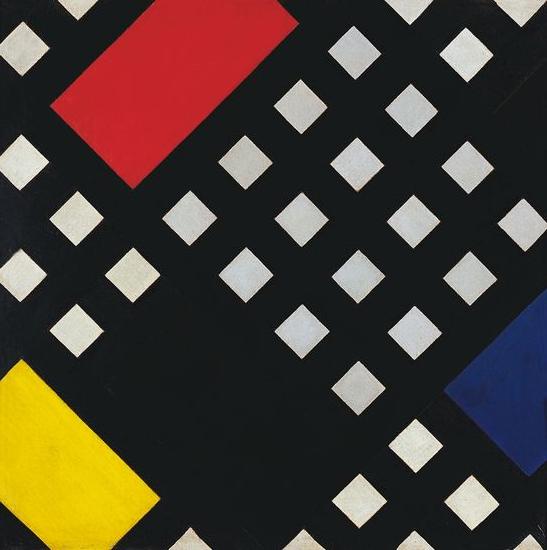
Counter composition XV (1925) работы Тео ван Дусбург

Counter composition XV

1925 · Acrylic On Canvas

Theo van Doesburg's "Counter Composition XV," painted in 1925, isn’t merely a painting; it’s a distilled essence of the De Stijl movement – a radical declaration of order and universal harmony. This deceptively simple work, executed against a stark white canvas, pulsates with an underlying tension born from the careful orchestration of geometric forms and primary colors. It represents a pivotal moment in 20th-century art, moving beyond representational imagery to…

2
Rhythm of a Russian Dance работы Тео ван Дусбург

Rhythm of a Russian Dance

Oil On Canvas

The composition consists of an arrangement of intersecting horizontal and vertical lines that form a series of rectangular and square shapes. These geometric forms overlap across the canvas, creating a sense of depth through visual layering rather than traditional perspective. The color palette is restricted to white, black, blue, pink, and gold or yellow hues. Each color is applied in flat planes with minimal shading, resulting in a smooth and…

3
Troelstra (1910) работы Тео ван Дусбург

Troelstra

1910 · Charcoal

The artwork Troelstra is a monochromatic portrait rendered in charcoal on paper, dating to 1910. The composition is tightly focused on the head and shoulders of the subject, creating an intimate and close-up view. The man's face occupies the majority of the frame, characterized by an asymmetrical arrangement where features are not proportionally accurate. A collar or cravat is visible around the neck, providing a sense of formality to the…

4
Study for Composition VIII (The Cow) (1918) работы Тео ван Дусбург

Study for Composition VIII (The Cow)

1918 · Oil

A cow is reduced to a series of intersecting planes. In this 1918 study, the animal is no longer a creature of flesh and breath, but a rhythmic arrangement of vertical and horizontal lines. The subject is stripped of its organic curves, replaced by the sharp precision of a geometric skeleton. Green blocks of color anchor the composition, cutting through a field of white and black. There is a tension…

5
Composition (The Cow) (1917) работы Тео ван Дусбург

Composition (The Cow)

1917 · Pencil

The eye meets Composition (The Cow), a work that captures a moment of radical transformation. Created by the artist Theo van Doesburg, this piece emerges from 1917, a time when the boundaries of representation begin to fracture. The subject, a cow, exists here not as a living creature of flesh and breath, but as a series of energetic, geometric investigations. It is a study of form that seeks to find…

6
Composition (1923) работы Тео ван Дусбург

Composition

1923 · Oil On Canvas

The canvas known as Composition emerges from the mind of Theo van Doesburg, a work that captures a specific moment in 1923. This piece exists as a precise arrangement of form and color, born from a period of intense creative focus. The artist, Theo van Doesburg, brings a sense of equilibrium to the surface, translating abstract thought into a tangible presence. It is a work that demands attention through its…

7
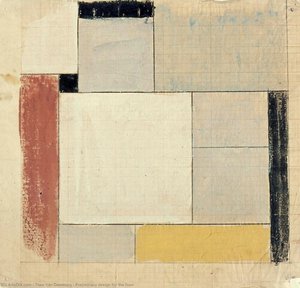
Preliminary design for the floor (1923) работы Тео ван Дусбург

Preliminary design for the floor

1923 · Pencil

The gaze meets Preliminary design for the floor, a work that breathes with the structured intent of Theo van Doesburg. Created in 1923, this piece exists as a vision for a specific space: a tiled floor intended for the De Vonk holiday home located in Noordwijkerhout. It is a moment of pure architectural thought captured on paper, where the abstract becomes a tangible plan for a lived environment.

8
Composition (1931) работы Тео ван Дусбург

Composition

1931 · Oil

The painting titled Composition is a work by the artist Theo van Doesburg. Created in 1931, this piece occupies a small, intimate space of 31 x 24 cm. It exists as a quiet arrangement of form and color, captured within its rectangular boundaries.

9
Portrait of a man with hat (1908) работы Тео ван Дусбург

Portrait of a man with hat

1908 · Oil On Board · Музей Кунстмузеум Де Гааг, Гаага

The portrait presents a close-up, bust-length view of a man wearing a hat. The subject's face occupies the central portion of the frame, positioned slightly to the left. The lighting is low-key, catching the left side of the forehead and the cheek, while the remaining features recede into deep shadow. This use of chiaroscuro creates a sense of depth through the contrast between light and dark. The color palette is…

Картины художника Тео ван Дусбург, в рейтинге с 11 по 100

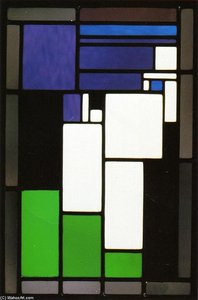
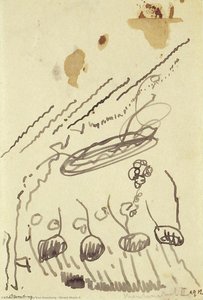
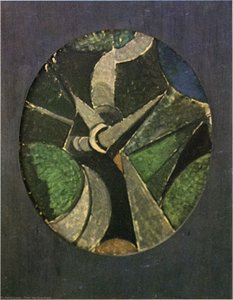
11Portrait of Agnita Feis (1904) работы Тео ван ДусбургPortrait of Agnita Feis1904 · Centraal Museum 12Female Nude (1904) работы Тео ван ДусбургFemale Nude1904 13Portrait of a Man with Hat (1909) работы Тео ван ДусбургPortrait of a Man with Hat1909 14Portrait of a Man with Hat (1908) работы Тео ван ДусбургPortrait of a Man with Hat1908 15Portrait of Christian Leibbrandt (1908) работы Тео ван ДусбургPortrait of Christian Leibbrandt1908 16Portrait of Agnita Feis (1906) работы Тео ван ДусбургPortrait of Agnita Feis1906 · Centraal Museum 17Smiling man (self-portrait?) (1907) работы Тео ван ДусбургSmiling man (self-portrait?)1907 · Centraal Museum 18Workman head (1906) работы Тео ван ДусбургWorkman head1906 · Centraal Museum 19Man with moustache and cap (self-portrait?) (1907) работы Тео ван ДусбургMan with moustache and cap (self-portrait?)1907 · Centraal Museum 20Portrait of a boy en profil (1906) работы Тео ван ДусбургPortrait of a boy en profil1906 · Centraal Museum 21Workmanshead (1906) работы Тео ван ДусбургWorkmanshead1906 · Centraal Museum 22Portrait of Agnita Feis with closed eyes (1906) работы Тео ван ДусбургPortrait of Agnita Feis with closed eyes1906 · Centraal Museum 23Portrait of een man met baret (1908) работы Тео ван ДусбургPortrait of een man met baret1908 24Don Juan (1910) работы Тео ван ДусбургDon Juan1910 25Burgerman (1910) работы Тео ван ДусбургBurgerman1910 26Archangel (1910) работы Тео ван ДусбургArchangel1910 27Abraham Kuyper (1910) работы Тео ван ДусбургAbraham Kuyper1910 28Farmer (1910) работы Тео ван ДусбургFarmer1910 29Alderman of education (1910) работы Тео ван ДусбургAlderman of education1910 30Quérido (1910) работы Тео ван ДусбургQuérido1910 31Frederik van Eeden (1910) работы Тео ван ДусбургFrederik van Eeden1910 32Old Faun (self portrait) (1909) работы Тео ван ДусбургOld Faun (self portrait)1909 33Dutch peasent girl (1913) работы Тео ван ДусбургDutch peasent girl1913 · Centraal Museum 34Portrait of A. J. J. de Winter (1916) работы Тео ван ДусбургPortrait of A. J. J. de Winter1916 35Study for Composition VIII (The Cow) (1917) работы Тео ван ДусбургStudy for Composition VIII (The Cow)1917 36Beggar (1914) работы Тео ван ДусбургBeggar1914 · Centraal Museum 37Abstract portrait (1915) работы Тео ван ДусбургAbstract portrait1915 · Museum de Lakenhal 38Portrait of Nelly van Doesburg (1899-1975) (1922) работы Тео ван ДусбургPortrait of Nelly van Doesburg (1899-1975)1922 · Museum de Lakenhal 39Self portrait (1928) работы Тео ван ДусбургSelf portrait1928 · Centraal Museum 40Nelly van Doesburg Viewed from behind, and a harbor scene (1924) работы Тео ван ДусбургNelly van Doesburg Viewed from behind, and a harbor scene1924 41Dancing man from sketchbook 60 (1931) работы Тео ван ДусбургDancing man from sketchbook 601931 42Archer (1919) работы Тео ван ДусбургArcher1919 · Музей изящных искусств Будапешта 43Tripartite stained glass window работы Тео ван ДусбургTripartite stained glass window 44Self portrait with hat (1909) работы Тео ван ДусбургSelf portrait with hat1909 · Centraal Museum 45Café Aubette, Strasbourg, France (Preliminary color scheme for ceiling and short walls of ballroom) (1927) работы Тео ван ДусбургCafé Aubette, Strasbourg, France (Preliminary color scheme for ceiling and short walls of ballroom)1927 · Музей современного искусства (MoMA) 46Self portrait with hat (1909) работы Тео ван ДусбургSelf portrait with hat1909 47Composition I (still life) (1916) работы Тео ван ДусбургComposition I (still life)1916 · Музей Крёллер-Мюллера 48Landscape (1901) работы Тео ван ДусбургLandscape1901 49Figure on Bridge in Forest (1903) работы Тео ван ДусбургFigure on Bridge in Forest1903 50Woman in Landscape (1903) работы Тео ван ДусбургWoman in Landscape1903 · Centraal Museum 51Figure on a Bridge in a Forest (1903) работы Тео ван ДусбургFigure on a Bridge in a Forest1903 · Centraal Museum 52Landscape (1901) работы Тео ван ДусбургLandscape1901 · Centraal Museum 53River Landscape with Steeple and Mill (1900) работы Тео ван ДусбургRiver Landscape with Steeple and Mill1900 54A Child (1904) работы Тео ван ДусбургA Child1904 55Landscape with hay cart, church towers and windmill (1901) работы Тео ван ДусбургLandscape with hay cart, church towers and windmill1901 · Centraal Museum 56Still Life (1906) работы Тео ван ДусбургStill Life1906 57Tree (1906) работы Тео ван ДусбургTree1906 · Centraal Museum 58Banister post, Huis De Lange, Alkmaar работы Тео ван ДусбургBanister post, Huis De Lange, Alkmaar 59Portrait of Nelly van Doesburg работы Тео ван ДусбургPortrait of Nelly van Doesburg 60Self portrait (1906) работы Тео ван ДусбургSelf portrait1906 61Cover of ''The masks'' (1910) работы Тео ван ДусбургCover of ''The masks''1910 62The discarded basket (1913) работы Тео ван ДусбургThe discarded basket1913 · Centraal Museum 63Haystacks (1913) работы Тео ван ДусбургHaystacks1913 · Centraal Museum 64Study for Composition X (1917) работы Тео ван ДусбургStudy for Composition X1917 65Composition VI (on black fond) (1917) работы Тео ван ДусбургComposition VI (on black fond)1917 66Composition (The Cow) (1917) работы Тео ван ДусбургComposition (The Cow)1917 67Composition (The Cow) (8) (1917) работы Тео ван ДусбургComposition (The Cow) (8)1917 68Cover of "Balance" by J. Elgenhuis (1916) работы Тео ван ДусбургCover of "Balance" by J. Elgenhuis1916 69Composition (The Cow) (1917) работы Тео ван ДусбургComposition (The Cow)1917 70Composition (The Cow) (1917) работы Тео ван ДусбургComposition (The Cow)1917 71Composition (The Cow) (1917) работы Тео ван ДусбургComposition (The Cow)1917 72Krishna playing a flute (1916) работы Тео ван ДусбургKrishna playing a flute1916 73Lena in interieur (1917) работы Тео ван ДусбургLena in interieur1917 74Colour design for a chimney (1917) работы Тео ван ДусбургColour design for a chimney1917 75Design for a tile floor, and entrance hall (1917) работы Тео ван ДусбургDesign for a tile floor, and entrance hall1917 76Stained glass composition ''Woman'' (1917) работы Тео ван ДусбургStained glass composition ''Woman''1917 77Potrait of Evert Rinsema (1915) работы Тео ван ДусбургPotrait of Evert Rinsema1915 78Abstract church (1915) работы Тео ван ДусбургAbstract church1915 79Dance II (1917) работы Тео ван ДусбургDance II1917 80Street Music I (1915) работы Тео ван ДусбургStreet Music I1915 81Dance I (1917) работы Тео ван ДусбургDance I1917 82Street Music II (1915) работы Тео ван ДусбургStreet Music II1915 83Design for a tile floor, and entrance hall (1917) работы Тео ван ДусбургDesign for a tile floor, and entrance hall1917 84Leaded glass composition I (1917) работы Тео ван ДусбургLeaded glass composition I1917 85The Cardplayers (1916) работы Тео ван ДусбургThe Cardplayers1916 86Composition with window with coloured glass III (1917) работы Тео ван ДусбургComposition with window with coloured glass III1917 87Composition II (Still life) (1916) работы Тео ван ДусбургComposition II (Still life)1916 88Landscape (1916) работы Тео ван ДусбургLandscape1916 89Portrait of Lena Milius (1915) работы Тео ван ДусбургPortrait of Lena Milius1915 90Dunes and sea (1912) работы Тео ван ДусбургDunes and sea1912 · Музей Крёллер-Мюллера 91Still Life with Bottle (1919) работы Тео ван ДусбургStill Life with Bottle1919 · Museum de Lakenhal 92Still Life (1918) работы Тео ван ДусбургStill Life1918 93Plastic garden (Vases) (1919) работы Тео ван ДусбургPlastic garden (Vases)1919 94Study for Rhythm of a Russian Dance (1918) работы Тео ван ДусбургStudy for Rhythm of a Russian Dance1918 95Study for Rhythm of a Russian Dance (1918) работы Тео ван ДусбургStudy for Rhythm of a Russian Dance1918 96Landscape (study for composition XII) (1918) работы Тео ван ДусбургLandscape (study for composition XII)1918 97Composition in gray (Rag Time) (1919) работы Тео ван ДусбургComposition in gray (Rag Time)1919 · Музей Соломона Р. Гуггенхайма 98Cover design for magazine ''Klei'' (1920) работы Тео ван ДусбургCover design for magazine ''Klei''1920 99Cover of ''Classic, Modern, Baroque'' (1920) работы Тео ван ДусбургCover of ''Classic, Modern, Baroque''1920 100Cover of ''Three lectures about the new art'' (1919) работы Тео ван ДусбургCover of ''Three lectures about the new art''1919

Знаменитые картины Тео ван Дусбург по периодам творчества

Сюжеты, которые вдохновляли Тео ван Дусбург

Четыре темы, которые чаще всего встречаются в этих оригиналах, каждая из которых представлена своим лучшим образцом.

Музеи, в которых хранятся оригиналы работ Тео ван Дусбург

7 музеев, в которых находится большинство картин со страницы.

Музей Город Работы Тео ван Дусбург Картины из этого списка
Centraal Museum, УтрехтCentraal Museum Утрехт 33 Self-portrait with beard, Portrait of Agnita Feis, Portrait of Agnita Feis
Museum de Lakenhal, ЛейденMuseum de Lakenhal Лейден 9 Abstract portrait, Portrait of Nelly van Doesburg (1899-1975), Still Life with Bottle
Музей Крёллер-Мюллера, ОттерлоМузей Крёллер-Мюллера Оттерло 12 Composition I (still life), Dunes and sea
Музей современного искусства (MoMA), Нью-ЙоркМузей современного искусства (MoMA) Нью-Йорк 9 Café Aubette, Strasbourg, France (Preliminary color scheme for ceiling and short walls of ballroom)
Музей Кунстмузеум Де Гааг, ГаагаМузей Кунстмузеум Де Гааг Гаага 4 Portrait of a man with hat
Музей Соломона Р. Гуггенхайма, Нью-ЙоркМузей Соломона Р. Гуггенхайма Нью-Йорк 3 Composition in gray (Rag Time)
Музей изящных искусств Будапешта, БудапештМузей изящных искусств Будапешта Будапешт 1 Archer

Тео ван Дусбург, одна знаковая картина в десятилетие

Произведения по десятилетиям

Выберите десятилетие, чтобы увидеть шедевр, определяющий его.

Картины Тео ван Дусбург: ответы галереи

Какая картина Тео ван Дусбург является самой известной из всех?Узнать ответ

Counter composition XV (1925). Далее следуют Rhythm of a Russian Dance и Troelstra (1910).

Сколько лет было Тео ван Дусбург, когда была завершена работа Counter composition XV?Узнать ответ

42 лет: Counter composition XV датируется 1925 годом, а Тео ван Дусбург родился в 1883.

Какие 10 лучших картин принадлежат Тео ван Дусбург?Узнать ответ

Counter composition XV, Rhythm of a Russian Dance, Troelstra, Study for Composition VIII (The Cow), Composition (The Cow), Composition, Preliminary design for the floor, Composition, Portrait of a man with hat и Self-portrait with beard. В рейтинге выше указаны год создания и музей для каждой работы.

Сколько работ создал(а) Тео ван Дусбург?Узнать ответ

В нашем каталоге представлено 225 работ Тео ван Дусбург, созданных в период с 1900 по 1931.

Где висят самые известные оригинальные работы Тео ван Дусбург?Узнать ответ

В основном в Centraal Museum (Утрехт), Museum de Lakenhal (Лейден) и Музей Крёллер-Мюллера (Оттерло). В таблице выше перечислены все музеи.

Когда Тео ван Дусбург создал свои самые известные картины?Узнать ответ

В 1910s: 56 из 100 работ на этой странице были созданы в этот период, Troelstra из них.

Какие из самых известных работ Тео ван Дусбург являются наиболее ранними и наиболее поздними?Узнать ответ

На этой странице самая ранняя работа датирована River Landscape with Steeple and Mill (1900), а самая поздняя — Composition (1931).

К каким сюжетам Тео ван Дусбург обращался чаще всего?Узнать ответ

Men (12), Designs and sketches (11) и Characters (8) в 100 работах на этой странице.

В какой технике чаще всего работал(а) Тео ван Дусбург?Узнать ответ

Oil On Canvas, для 3 из 100 работ на этой странице.

С каким направлением связан Тео ван Дусбург?Узнать ответ

De stijl, судя по оригиналам на этой странице.

Какие оригинальные работы Тео ван Дусбург хранятся в Centraal Museum?Узнать ответ

Self-portrait with beard, Portrait of Agnita Feis и Portrait of Agnita Feis: в коллекции Centraal Museum, Утрехт находится 20 работ со страницы.

Тео ван Дусбург: художник

The Architect of Abstraction: A Life in Geometric Harmony

Theo van Doesburg, born Christian Emil Marie Küpper in 1883 in Utrecht, Netherlands, wasn’t merely a painter; he was a revolutionary force who fundamentally reshaped the very foundations of modern art. His journey began amidst the lingering echoes of Impressionism and Post-Impressionism – initially mirroring styles reminiscent of Vincent van Gogh – both in subject matter and emotional intensity. However, this early phase served as a crucial prelude, a necessary stepping stone toward the radical transformation that would define his enduring legacy. A pivotal moment arrived in 1913 with his encounter with Wassily Kandinsky’s *Rückblicke*. This text ignited within van Doesburg a profound realization: true artistic expression lay not in replicating the external world but in channeling an inner, spiritual reality through pure abstraction. It was this conviction that birthed Neoplasticism – more commonly known as De Stijl – a movement he founded and fiercely championed, becoming its most ardent advocate.

Forging a New Visual Language: The Principles of De Stijl

De Stijl wasn’t simply an artistic style; it was a comprehensive philosophical manifesto translated into visual form. Van Doesburg believed in stripping art down to its most essential elements – straight lines, right angles, and the primary colors of red, yellow, and blue, alongside black, white, and gray. This austere palette wasn't born from limitation but from a desire for universality—a belief that these fundamental forms resonated with an underlying cosmic order. He envisioned a *total* work of art, extending beyond the canvas to encompass architecture, design, and even everyday objects. Collaboration was key; van Doesburg worked closely with architects like J.J.P. Oud and Gerrit Rietveld, designing stained glass windows, furniture, and entire interiors that embodied the principles of De Stijl. His collaborations extended to fellow artists such as Piet Mondrian, with whom he co-founded the influential journal *De Stijl*, a platform for disseminating their ideas and attracting like-minded creatives. However, despite their shared origins, tensions arose between van Doesburg and Mondrian regarding the rigidity of Neoplasticism. Van Doesburg introduced “Elementarism” in 1926, advocating for diagonal lines and more dynamic compositions – a departure that ultimately led to a schism within the movement, revealing his restless spirit and constant pursuit of artistic evolution.

The Early Years & Influences: From Impressionism to Kandinsky

Van Doesburg’s early artistic development was deeply influenced by the vibrant colors and emotional intensity of Vincent van Gogh. His initial paintings often depicted landscapes and portraits imbued with a sense of melancholy and introspection, mirroring Van Gogh's expressive brushstrokes and use of color. However, this early phase served as a crucial prelude, a necessary stepping stone toward the radical transformation that would define his enduring legacy. The turning point came in 1913 with his encounter with Wassily Kandinsky’s *Rückblicke*. This text, exploring the spiritual dimension of art and advocating for abstraction, profoundly impacted van Doesburg's artistic vision. He began to experiment with simplified forms and non-representational imagery, moving away from traditional subject matter and seeking a more direct connection to inner experience. The influence of Japanese prints – particularly their use of flat planes of color and geometric patterns – also played a significant role in shaping his aesthetic sensibilities.

A Revolutionary Movement: The Birth of De Stijl

De Stijl, meaning “The Style,” emerged as a multifaceted movement encompassing painting, architecture, design, and typography. It wasn’t merely an artistic style; it was a comprehensive philosophical manifesto translated into visual form. Van Doesburg believed in stripping art down to its most essential elements – straight lines, right angles, and the primary colors of red, yellow, and blue, alongside black, white, and gray. This austere palette wasn't born from limitation but from a desire for universality—a belief that these fundamental forms resonated with an underlying cosmic order. He envisioned a *total* work of art, extending beyond the canvas to encompass architecture, design, and even everyday objects. The core tenets of De Stijl were rigorously defined: absolute geometric abstraction, the use of primary colors and neutral tones, and a rejection of illusionistic space. The group’s journal, *De Stijl*, became a vital vehicle for disseminating these ideas and attracting like-minded creatives, fostering a vibrant intellectual community dedicated to exploring the possibilities of pure abstraction.

Beyond Painting: A Multifaceted Artistic Vision

While celebrated as a painter, van Doesburg’s artistic pursuits were remarkably diverse. He was a prolific writer, poet, and critic, using his pen to articulate the theoretical underpinnings of De Stijl and challenge conventional notions of art. His engagement with Dadaism in the early 1920s further broadened his artistic horizons, leading to experimental works that incorporated collage and typography. This period also saw him teaching at the Bauhaus, where he shared his ideas with a new generation of artists and designers. He wasn’t content to remain within the confines of traditional art forms; van Doesburg actively sought to integrate art into everyday life, believing it had the power to transform society. His designs for interiors and furniture weren't merely aesthetic exercises but attempts to create harmonious living spaces that reflected the principles of De Stijl. A prime example is his collaboration with Sophie Taeuber-Arp and Georges Vantongerloo on designing artist residences, showcasing a holistic approach to artistic creation – an attempt to build a world *in* the image of his ideals.

Legacy & Enduring Influence: A Pioneer of Modernism

Theo van Doesburg’s life was tragically cut short in 1931 at the age of 47, yet his impact on modern art remains profound. De Stijl, though relatively short-lived as a cohesive movement, exerted an enormous influence on subsequent artistic developments, including Bauhaus design, Minimalism, and Constructivism. His emphasis on geometric abstraction, pure color, and functionalism continues to resonate with artists and designers today. His work serves as a reminder that art is not merely about representation but about the exploration of fundamental forms and ideas. Van Doesburg’s legacy extends beyond his paintings and designs; it lies in his unwavering commitment to artistic innovation and his belief in the transformative power of abstraction. His vision of a unified, harmonious world – expressed through the language of De Stijl – continues to inspire those who seek to create a more beautiful and meaningful environment.

Key Works & Lasting Impact

  • Study for Simultaneous Compositions XXII (1922): A quintessential example of Neoplasticism, showcasing the movement’s signature geometric forms and limited color palette.
  • Composition with half values (1928): Demonstrates van Doesburg's exploration of tonal variations within the De Stijl aesthetic.
  • Dancers (1917-1918): Represents a transitional phase in his work, blending figurative elements with emerging abstract tendencies.
  • Collaboration on *De Stijl* journal: A crucial platform for disseminating the movement’s ideas and fostering dialogue among artists and intellectuals.
  • Elementarism (1926): Van Doesburg's attempt to inject dynamism into Neoplasticism, introducing diagonal lines and a more fluid approach to composition.