Портрет Ян Асселин

Картины Ян Асселин: 76 самых известных работ, взгляд галереи

Обновлено Ноябрь 2026 · рейтинг на основе нашего показателя популярности (количество поисковых запросов, посещений и заказов для каждой работы) · 84 работ Ян Асселин в нашем каталоге

Вкратце

По мнению экспертов галереи, самой известной картиной Ян Асселин является Угроза лебедю (1652), оригинал которой находится в Рейксмюзеум, Амстердам. King Gustav Adolf II of Sweden in the Battle of Lutzen, 1632 (1634) и Landscape with a Bridge in the Italian Countryside (1652) завершают трио, которое узнает каждый. Из 84 работ Ян Асселин в нашем каталоге ниже представлены 76 самых известных: каждая из них является оригиналом с указанием года создания, музея и уникальных особенностей.

1610 – 1652, Дьеп Золотой век голландской живописи Больше всего работ: Рейксмюзеум

Топ-10 картин художника Ян Асселин в галерее

1
Угроза лебедю (1652) работы Ян Асселин

Угроза лебедю

1652 · Масло на холсте · Рейксмюзеум, Амстердам

это картина маслом на холсте, созданная художником Яном Асселейном. Завершенная около 1650 года, эта работа запечатлела белого лебедя в момент яростной обороны. Птица расправляет крылья и шипит, защищая свое гнездо от приближающейся собаки. Это противостояние между ослепительно белым оперением и наступающей угрозой составляет основу драматического напряжения всего полотна.

2
King Gustav Adolf II of Sweden in the Battle of Lutzen, 1632 (1634) работы Ян Асселин

King Gustav Adolf II of Sweden in the Battle of Lutzen, 1632

1634 · Oil On Canvas · Statens Museum For Kunst, Копенгаген

Jan Asselijn's “King Gustav Adolf II of Sweden in the Battle of Lutzen, 1632” isn’t merely a painting; it’s a visceral plunge into the heart of a pivotal moment in European history. Completed in 1634, this monumental work captures the chaotic fury and strategic brilliance of the Battle of Lutzen, fought on August 17th of that year, a clash that cemented Gustav Adolf II's reputation as a military genius and…

3
Landscape with a Bridge in the Italian Countryside (1652) работы Ян Асселин

Landscape with a Bridge in the Italian Countryside

1652 · Oil On Canvas · Cannon Hall Museum, Barnsley

A stone bridge with arched spans anchors this serene landscape, crossing a calm body of water that reflects the soft, overcast sky. To the left, a solitary figure sits upon a barrel, watching the quiet movement of the scene. On the right, the composition gathers around a horse and carriage; a person guides the animal toward the water's edge while another observer stands nearby. A dog occupies the foreground, grounding…

4
King Gustav Adolf II in the Battle of Lutzen on November 6,1632 (1632) работы Ян Асселин

King Gustav Adolf II in the Battle of Lutzen on November 6,1632

The air is thick with the scent of wet earth and sulfur. In the center of the chaos, King Gustav Adolf II of Sweden rides a horse through the fray, his sword a flash of cold light against the darkening sky. The Battle of Lutzen is not a quiet affair; it is a collision of muscle and metal. Soldiers on foot and mounted on horseback press against one another in…

5
Four Figures (1615) работы Ян Асселин

Four Figures

1615 · Oil · Groeningemuseum, Брюгге

In Four Figures, Jan Asselijn organizes a group of men in period attire within a dimly lit, atmospheric setting. The composition centers on this cluster of figures, who are arranged in a loose, triangular formation. This structural choice draws the viewer's eye toward the middle of the group, where the subjects interact in a moment of quietude. One man is captured drinking from a vessel, while another stands holding a…

6
King Gustav Adolf II of Sweden, Battle near Lutzen 1632 (1635) работы Ян Асселин

King Gustav Adolf II of Sweden, Battle near Lutzen 1632

1635 · Oil On Panel · Gemäldegalerie, Берлин

The artwork titled King Gustav Adolf II of Sweden, Battle near Lutzen 1632 is a work by the artist Jan Asselijn. Dated about 1635, this oil on panel painting belongs to the genre of military history. The subject matter focuses on the Battle of Lützen, a significant conflict from the Thirty Years' War. The scene captures the king amidst the movement of a large-scale military engagement.

7
The Tiber River with the Ponte Molle at Sunset (1650) работы Ян Асселин

The Tiber River with the Ponte Molle at Sunset

The sun hangs low over the horizon, casting a sharp, golden light through the four massive stone arches of the Ponte Molle. This light slices through the atmosphere, painting the sky in a gradient that shifts from a warm, glowing amber on the right to a pale, tranquil aquamarine as the eye moves toward the left. The river below remains placid, reflecting the changing colors of the sky, while the…

8
Ruined Building with Shepherd and Sheep (1646) работы Ян Асселин

Ruined Building with Shepherd and Sheep

1646 · Oil On Panel

Ruined Building with Shepherd and Sheep is an artwork by Jan Asselijn. This piece belongs to the Dutch Golden Age and the Italianate landscape style of the Early Modern period. The subject matter focuses on a pastoral landscape that incorporates ruins and sheep. The composition integrates elements of nature, shepherds, and weathered stone structures within a single scene.

9
Italian Landscape (1638) работы Ян Асселин

Italian Landscape

1638 · Oil On Canvas · Statens Museum For Kunst, Копенгаген

The artwork titled Italian Landscape is a painting by the Dutch Golden Age painter Jan Asselijn. Created in 1638, this work represents a specific period in the artist's career. Asselijn was born in Dieppe, France, around 1610, before his family relocated to Amsterdam. His development as a painter was shaped by the artistic environment of the Dutch Golden Age, a time when landscape painting was evolving toward more atmospheric depictions.

10
Fight against Robbers (1638) работы Ян Асселин

Fight against Robbers

1638 · Oil On Panel · Statens Museum For Kunst, Копенгаген

A violent skirmish unfolds across a rugged, rocky landscape, captured in a dramatic monochrome palette. The composition relies on a sharp diagonal arrangement, pulling the eye from the foreground into a chaotic center-right where figures engage in combat. Mounted riders and infantrymen clash amidst dense foliage and spindly, skeletal trees. The atmosphere is heavy with mist and swirling smoke, creating a sense of tension and movement. Light filters through an…

Картины художника Ян Асселин, в рейтинге с 11 по 76

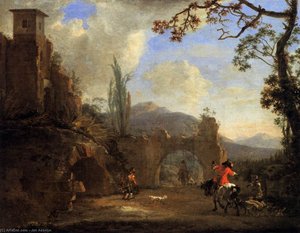
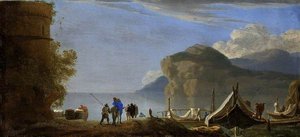
11Lion Hunting (1640) работы Ян АсселинLion Hunting1640 · Musée Fabre 12Italianate landscape with travellers by a stream with cattle (1652) работы Ян АсселинItalianate landscape with travellers by a stream with cattle1652 13Italian Landscape with a view from a Grotto (1639) работы Ян АсселинItalian Landscape with a view from a Grotto1639 · Национальный музей Швеции 14Landscape with Ruins and Hunting Party (1645) работы Ян АсселинLandscape with Ruins and Hunting Party1645 · Academy of Fine Arts Vienna 15PAYSAGE AVEC UN TROUPEAU TRAVERSANT UNE RIVIERE работы Ян АсселинPAYSAGE AVEC UN TROUPEAU TRAVERSANT UNE RIVIEREЛувр 16River Bank with Herdsmen (1650) работы Ян АсселинRiver Bank with Herdsmen1650 · Academy of Fine Arts Vienna 17Coastal Scene with Resting Riders (detail) (1652) работы Ян АсселинCoastal Scene with Resting Riders (detail)1652 · Academy of Fine Arts Vienna 18Imaginary Italian Landscape (1652) работы Ян АсселинImaginary Italian Landscape1652 · Mauritshuis Royal Picture Gallery 19Landscape with a Cowherd (1594) работы Ян АсселинLandscape with a Cowherd1594 20Italianate Landscape (1631) работы Ян АсселинItalianate Landscape1631 · Баварские государственные живописные коллекции 21Cavalry Engagement (1635) работы Ян АсселинCavalry Engagement1635 22Peasants by a River Bank (1639) работы Ян АсселинPeasants by a River Bank1639 · Yale University Art Gallery 23Mountain - landscape (1639) работы Ян АсселинMountain - landscape1639 24Riders Gallopping towards the Gates of the Fortress (1645) работы Ян АсселинRiders Gallopping towards the Gates of the Fortress1645 · Государственный Эрмитаж 25Winter Landscape (1645) работы Ян АсселинWinter Landscape1645 · Государственный Эрмитаж 26Nocturnal Crayfishing (1638) работы Ян АсселинNocturnal Crayfishing1638 · Statens Museum For Kunst 27Vesuvius Erupting at Nightfall (1638) работы Ян АсселинVesuvius Erupting at Nightfall1638 · Statens Museum For Kunst 28Head of an Ox (1647) работы Ян АсселинHead of an Ox1647 · Musée des Beaux-Arts 29Catching Crayfish (1645) работы Ян АсселинCatching Crayfish1645 · Музей дворца короля Яна III в Виланове 30Ford between High Cliffs (1644) работы Ян АсселинFord between High Cliffs1644 · Национальная галерея в Праге 31Peasants and Cattle beside a Tower (1646) работы Ян АсселинPeasants and Cattle beside a Tower1646 32Winter landscape with huntsmen on a bridge (1647) работы Ян АсселинWinter landscape with huntsmen on a bridge1647 · Fondation Custodia 33A rocky mountain valley with shepherds and cattle (1645) работы Ян АсселинA rocky mountain valley with shepherds and cattle1645 · Staatliche Kunsthalle Karlsruhe 34Italian Landscape (1640) работы Ян АсселинItalian Landscape1640 · Государственный музей изобразительных искусств имени А. С. Пушкина 35Frozen Moat outside City Walls (1647) работы Ян АсселинFrozen Moat outside City Walls1647 · Worcester Art Museum 36Italianate Landscape with Drovers, Cattle and Sheep beside Ruins (1647) работы Ян АсселинItalianate Landscape with Drovers, Cattle and Sheep beside Ruins1647 · Fogg Museum of Art 37Italianate Landscape with a River and an Arched Bridge (1648) работы Ян АсселинItalianate Landscape with a River and an Arched Bridge1648 · Staatsgalerie Schleissheim 38Southern Landscape with Cattle near Ruins (1650) работы Ян АсселинSouthern Landscape with Cattle near Ruins1650 · National Museum in Wrocław 39View of the Solario Bridge on the Teverone (1650) работы Ян АсселинView of the Solario Bridge on the Teverone1650 40Head of a lowing Ox (1650) работы Ян АсселинHead of a lowing Ox1650 · Государственный музей Швериنا 41Italianate landscape with bridge near Tivoli (1649) работы Ян АсселинItalianate landscape with bridge near Tivoli1649 42River Landscape with the Fort Saint-Jean and the Chateau Pierre-Scize in Lyon (1650) работы Ян АсселинRiver Landscape with the Fort Saint-Jean and the Chateau Pierre-Scize in Lyon1650 · Yale University Art Gallery 43The restoration of the Diemerdijk or Muiderdijk near Amsterdam in 1651 (1651) работы Ян АсселинThe restoration of the Diemerdijk or Muiderdijk near Amsterdam in 16511651 · Gemäldegalerie 44Breach of a Dyke by Storm Surge on March 5 1651 (1651) работы Ян АсселинBreach of a Dyke by Storm Surge on March 5 16511651 · Gemäldegalerie 45The Breach of the Sint Anthonisdijk in 1651 (1652) работы Ян АсселинThe Breach of the Sint Anthonisdijk in 16511652 · Амстердамский музей 46The Breach of the Saint Anthony’s Dike near Amsterdam, Jan Asselijn, 1651 (1651) работы Ян АсселинThe Breach of the Saint Anthony’s Dike near Amsterdam, Jan Asselijn, 16511651 47Drovers with Cattle under an Arch of the Colosseum in Rome, Jan Asselijn, 1640 - 1652 (1652) работы Ян АсселинDrovers with Cattle under an Arch of the Colosseum in Rome, Jan Asselijn, 1640 - 16521652 · Рейксмюзеум 48A Mediterranean Coastal View with Shipping and Mariners by a Fort (1650) работы Ян АсселинA Mediterranean Coastal View with Shipping and Mariners by a Fort1650 49A Mediterranean Coastal View with Shipping and Mariners by a Fort (1650) работы Ян АсселинA Mediterranean Coastal View with Shipping and Mariners by a Fort1650 50River Landscape with the Church of Santi Giovanni e Paolo (1650) работы Ян АсселинRiver Landscape with the Church of Santi Giovanni e Paolo1650 51Landscape with a Drover (1649) работы Ян АсселинLandscape with a Drover1649 · Holburne Museum 52Landscape with a Bridge in the Italian Countryside (1652) работы Ян АсселинLandscape with a Bridge in the Italian Countryside1652 · Cannon Hall Museum 53Coastal Scene with Resting Riders (1652) работы Ян АсселинCoastal Scene with Resting Riders1652 · Academy of Fine Arts Vienna 54PAYSAGE AVEC UNE TOUR работы Ян АсселинPAYSAGE AVEC UNE TOURЛувр 55RUINE ET CABANE DE BERGERS работы Ян АсселинRUINE ET CABANE DE BERGERSЛувр 56LANDSCAPE WITH A DEPARTURE FOR A HUNT работы Ян АсселинLANDSCAPE WITH A DEPARTURE FOR A HUNT 57Muleteers beside an Italian Ruin (1650) работы Ян АсселинMuleteers beside an Italian Ruin1650 · Рейксмюзеум 58Hangout in Italy (1620) работы Ян АсселинHangout in Italy1620 · Рейксмюзеум 59Herders with Their Animals under an Arch of the Colosseum in Rome (1652) работы Ян АсселинHerders with Their Animals under an Arch of the Colosseum in Rome1652 · Рейксмюзеум 60Hunting Company out of Rome (1652) работы Ян АсселинHunting Company out of Rome1652 · Рейксмюзеум 61Бродяги перед римской литейной печью (1638) работы Ян АсселинБродяги перед римской литейной печью1638 · Academy of Fine Arts Vienna 62Asselijn - (50Riverbank) работы Ян АсселинAsselijn - (50Riverbank) 63Asselijn ruin работы Ян АсселинAsselijn ruinРейксмюзеум 64Italian Coast Scene работы Ян АсселинItalian Coast Scene 65Italian Landscape with Two Horsemen and Figures on a Road работы Ян АсселинItalian Landscape with Two Horsemen and Figures on a Road 66Italian Landscape with the Church of Sts. Giovanni e Paolo in Rome работы Ян АсселинItalian Landscape with the Church of Sts. Giovanni e Paolo in RomeМузей изящных искусств Будапешта 67Mountainous Landscape работы Ян АсселинMountainous Landscape 68A rocky river landscape with travellers in the foreground and ships beyond работы Ян АсселинA rocky river landscape with travellers in the foreground and ships beyond 69A Landscape with Peasants (also known as Landscape with Herdsmen Fording a River) работы Ян АсселинA Landscape with Peasants (also known as Landscape with Herdsmen Fording a River)Ascott House 70A Cavalier on Horseback Before a Landscape работы Ян АсселинA Cavalier on Horseback Before a Landscape 71Landscape with shepherds and their flock crossing the Ponte Acquoria near Tivoli работы Ян АсселинLandscape with shepherds and their flock crossing the Ponte Acquoria near Tivoli 72an italianate river landscape with herders on a path with their flock and donkeys, classical ruins on a hilltop beyond работы Ян Асселинan italianate river landscape with herders on a path with their flock and donkeys, classical ruins on a hilltop beyondMinneapolis Institute of Art 73Italian Coast Scene работы Ян АсселинItalian Coast SceneФитцвильямский колледж 74Italian Landscape работы Ян АсселинItalian LandscapeФитцвильямский колледж 75Italian Landscape with the Ruins of a Roman Bridge and Aqueduct работы Ян АсселинItalian Landscape with the Ruins of a Roman Bridge and AqueductРейксмюзеум 76Cavalry Attack at Sunset, Jan Asselijn, 1646 (1646) работы Ян АсселинCavalry Attack at Sunset, Jan Asselijn, 16461646 · Рейксмюзеум

Знаменитые картины Ян Асселин по периодам творчества

Сюжеты, которые вдохновляли Ян Асселин

Четыре темы, которые чаще всего встречаются в этих оригиналах, каждая из которых представлена своим лучшим образцом.

Музеи, в которых хранятся оригиналы работ Ян Асселин

8 музеев, в которых находится большинство картин со страницы.

Музей Город Работы Ян Асселин Картины из этого списка
Рейксмюзеум, АмстердамРейксмюзеум Амстердам 9 Угроза лебедю, Drovers with Cattle under an Arch of the Colosseum in Rome, Jan Asselijn, 1640 - 1652, Muleteers beside an Italian Ruin
Statens Museum For Kunst, КопенгагенStatens Museum For Kunst Копенгаген 5 King Gustav Adolf II of Sweden in the Battle of Lutzen, 1632, Italian Landscape, Fight against Robbers
Academy of Fine Arts Vienna, ВенаAcademy of Fine Arts Vienna Вена 5 Landscape with Ruins and Hunting Party, River Bank with Herdsmen, Coastal Scene with Resting Riders (detail)
Gemäldegalerie, БерлинGemäldegalerie Берлин 3 King Gustav Adolf II of Sweden, Battle near Lutzen 1632, The restoration of the Diemerdijk or Muiderdijk near Amsterdam in 1651, Breach of a Dyke by Storm Surge on March 5 1651
Лувр, ПарижЛувр Париж 3 PAYSAGE AVEC UN TROUPEAU TRAVERSANT UNE RIVIERE, PAYSAGE AVEC UNE TOUR, RUINE ET CABANE DE BERGERS
Cannon Hall Museum, BarnsleyCannon Hall Museum Barnsley 2 Landscape with a Bridge in the Italian Countryside, Landscape with a Bridge in the Italian Countryside
Yale University Art Gallery, Нью-ХейвенYale University Art Gallery Нью-Хейвен 2 Peasants by a River Bank, River Landscape with the Fort Saint-Jean and the Chateau Pierre-Scize in Lyon
Государственный Эрмитаж, Санкт-ПетербургГосударственный Эрмитаж Санкт-Петербург 2 Riders Gallopping towards the Gates of the Fortress, Winter Landscape

Ян Асселин, одна знаковая картина в десятилетие

Произведения по десятилетиям

Выберите десятилетие, чтобы увидеть шедевр, определяющий его.

Картины Ян Асселин: ответы галереи

Какая картина Ян Асселин является самой известной из всех?Узнать ответ

Угроза лебедю (1652), Рейксмюзеум, Амстердам. Далее следуют King Gustav Adolf II of Sweden in the Battle of Lutzen, 1632 (1634) и Landscape with a Bridge in the Italian Countryside (1652).

Сколько лет было Ян Асселин, когда была завершена работа Угроза лебедю?Узнать ответ

42 лет: Угроза лебедю датируется 1652 годом, а Ян Асселин родился в 1610.

Какие 10 лучших картин принадлежат Ян Асселин?Узнать ответ

Угроза лебедю, King Gustav Adolf II of Sweden in the Battle of Lutzen, 1632, Landscape with a Bridge in the Italian Countryside, King Gustav Adolf II in the Battle of Lutzen on November 6,1632, Four Figures, King Gustav Adolf II of Sweden, Battle near Lutzen 1632, The Tiber River with the Ponte Molle at Sunset, Ruined Building with Shepherd and Sheep, Italian Landscape и Fight against Robbers. В рейтинге выше указаны год создания и музей для каждой работы.

Сколько работ создал(а) Ян Асселин?Узнать ответ

В нашем каталоге представлено 84 работ Ян Асселин, созданных в период с 1620 по 1652.

Где висят самые известные оригинальные работы Ян Асселин?Узнать ответ

В основном в Рейксмюзеум (Амстердам), Statens Museum For Kunst (Копенгаген) и Academy of Fine Arts Vienna (Вена). В таблице выше перечислены все музеи.

Когда Ян Асселин создал свои самые известные картины?Узнать ответ

В 1650s: 24 из 76 работ на этой странице были созданы в этот период, Угроза лебедю из них.

Какие из самых известных работ Ян Асселин являются наиболее ранними и наиболее поздними?Узнать ответ

На этой странице самая ранняя работа датирована Hangout in Italy (1620), а самая поздняя — Угроза лебедю (1652).

К каким сюжетам Ян Асселин обращался чаще всего?Узнать ответ

Landscape (26), Ruins (7) и Figures (6) в 76 работах на этой странице.

В какой технике чаще всего работал(а) Ян Асселин?Узнать ответ

Oil On Canvas, для 11 из 76 работ на этой странице.

С каким направлением связан Ян Асселин?Узнать ответ

Золотой век голландской живописи и Baroque, судя по оригиналам на этой странице.

Какие оригинальные работы Ян Асселин хранятся в Рейксмюзеум?Узнать ответ

Угроза лебедю, Drovers with Cattle under an Arch of the Colosseum in Rome, Jan Asselijn, 1640 - 1652 и Muleteers beside an Italian Ruin: в коллекции Рейксмюзеум, Амстердам находится 9 работ со страницы.

Ян Асселин: художник

A Life Forged in Landscape: The World of Jan Asselijn

Jan Asselin, born around 1610 in Dieppe, France, embarked on an artistic journey marked by profound shifts in religious belief and a fervent embrace of burgeoning landscape painting techniques. His family, Huguenots fleeing persecution, relocated to Amsterdam in 1621—a vibrant epicenter of commerce and artistic innovation during the Dutch Golden Age—a move that irrevocably shaped his formative years. This relocation immediately immersed young Jean into an environment where capturing the grandeur and subtlety of nature was rapidly transforming from traditional depictions toward scenes brimming with atmospheric depth and emotional resonance. Initially apprenticed to Jan Martszen the Younger, Asselijn honed his skills in battle paintings before discovering his true passion: meticulously portraying the splendor and drama of both natural vistas and animal life—a pursuit that would define his artistic trajectory.

The Italianate Embrace & The Bentvueghels

Like many ambitious Northern European painters of his era, Asselijn recognized the importance of refinement through exposure to Italy. Likely arriving sometime after 1635, he wholeheartedly adopted *Italianate* style—a genre distinguished by sun-drenched landscapes bathed in golden light, classical ruins standing proudly against azure skies, and pastoral scenes imbued with a palpable sense of romanticism. He joined the ranks of the *Bentvueghels*, a peculiar society comprised of Dutch and Flemish artists residing in Rome. These “Birds of a Feather” defied convention—embracing audacious nicknames, prioritizing direct observation of life over studio work, and upholding an uncompromising commitment to artistic authenticity. Within this spirited community, Asselijn earned the moniker "Krabbetje"—meaning "little crab"—due to a congenital deformity affecting his hand—yet he flourished creatively nonetheless. He absorbed the stylistic innovations championed by Pieter van Laer (Bamboccio), whose depictions of Roman peasant life and landscapes powerfully resonated with Asselijn’s own evolving artistic vision. This period constituted an indispensable catalyst in shaping his ability to convey atmosphere, light, and narrative within his canvases—a hallmark that would characterize his oeuvre for decades to come.

Mastering Light & Symbolism: Key Works

Returning to Amsterdam after considerable travel experience, Asselijn brought with him a refined technique and a distinctive artistic voice. His paintings are characterized by exceptional clarity of execution and masterful manipulation of light—qualities that swiftly garnered admiration from his peers and cemented his reputation as one of the era’s foremost landscape artists. While he produced historical and battle scenes alongside his landscapes, it was his depictions of rural life and animal studies that truly distinguished him from contemporaries. The Threatened Swan, completed around 1640, stands as Asselijn's magnum opus—a monumental achievement that transcends mere visual representation. More than simply capturing the beauty of waterfowl in flight, this painting became a potent emblem of Dutch national resilience against external pressures during a turbulent period marked by military conflict and political instability. The swan’s defiant posture—facing down an encroaching predator with unwavering determination—served as an allegorical invocation of Johan de Witt—a prominent Dutch statesman—and encapsulated the anxieties prevalent throughout the nation at that time. Furthermore, intriguing additions to the canvas—inscription “Holland” on one of the eggs and “Enemy of the state” positioned beside a menacing dog—underscored the painting’s profound political significance and cemented its place as an enduring symbol of Dutch patriotism. Other notable masterpieces include Cavalry Charge at Sunset—a testament to his formative training in battle art—and evocative portrayals of rural life, such as Drovers with Cattle Under An Arch of The Colosseum—which seamlessly blend Italianate landscape aesthetics with meticulous animal studies—demonstrating Asselijn’s unparalleled capacity for capturing both visual splendor and nuanced narrative. Finally, The Breach of Saint Anthony's Dike Near Amsterdam exemplifies his ability to depict a pivotal moment in Dutch history—the calamitous failure of the dike defenses during a devastating flood—reflecting the constant vulnerability faced by the Dutch people and highlighting the ingenuity required for safeguarding their land.

Influence & Legacy: A Lasting Impression

Jan Asselijn’s influence extended far beyond his own prolific artistic output. He was revered by fellow artists, notably Rembrandt van Rijn—who even created etchings depicting Asselijn at work—a gesture that subtly acknowledged the artist's physical disability and conveyed respect for his dedication to craft. Moreover, he served as a mentor to Frederik de Moucheron—another accomplished Dutch landscape painter who championed the Italianate style and disseminated its principles throughout Europe. Asselijn’s innovative approach to light and atmosphere profoundly impacted subsequent generations of painters—inspiring them to prioritize naturalism and imbue their canvases with emotional depth—leaving an indelible mark on the trajectory of European art history. His enduring legacy is secured through the preservation of his artworks in prestigious institutions such as the Rijksmuseum in Amsterdam, ensuring that his vision continues to captivate audiences worldwide.