Портрет Frederick Sommer

Картины Frederick Sommer: 37 самых известных работ, взгляд галереи

Обновлено Октябрь 2026 · рейтинг на основе нашего показателя популярности (количество поисковых запросов, посещений и заказов для каждой работы) · 37 работ Frederick Sommer в нашем каталоге

Вкратце

По мнению экспертов галереи, самой известной картиной Frederick Sommer является Lee Nevin (1960), оригинал которой находится в Музей современного искусства (MoMA), Нью-Йорк. I Adore You (1947) и Livia (1948) завершают трио, которое узнает каждый. Из 37 работ Frederick Sommer в нашем каталоге ниже представлены 37 самых известных: каждая из них является оригиналом с указанием года создания, музея и уникальных особенностей.

1905 – 1999 Surrealism Больше всего работ: Музей современного искусства (MoMA)

Топ-10 картин художника Frederick Sommer в галерее

1
Lee Nevin (1960) работы Frederick Sommer

Lee Nevin

1960 · Acrylic On Canvas · Музей современного искусства (MoMA), Нью-Йорк

Lee Nevin by Frederick Sommer Frederick Sommer’s “Lee Nevin” stands as a poignant testament to the artist's exploration of vulnerability and introspection amidst the stark beauty of the American desert landscape. Executed in 1965, this gelatin silver print captures a moment of quiet contemplation—a woman gazing downwards with her hand resting on her forehead—against an abstracted architectural backdrop that speaks volumes about both form and emotion. Subject Matter: The artwork…

8
Untitled (1962) работы Frederick Sommer

Untitled

In this evocative 1962 photographic print by Frederick Sommer, the boundaries between the physical body and the ethereal atmosphere dissolve into a singular, haunting vision. The artwork presents an untitled nude female figure, rendered not through the lens of sharp realism, but through a soft-focus abstraction that transforms the human form into a poetic arrangement of light and shadow. As the eye wanders across the composition, the subject appears to…

9
Giant (1947) работы Frederick Sommer

Giant

1947 · Black and White Photography · Музей современного искусства (MoMA), Нью-Йорк

In the hauntingly beautiful realm of Frederick Sommer’s "Giant," created in 1947, viewers are invited into a dreamscape where the boundaries between the organic and the mechanical dissolve. This striking photograph is far more than a mere documentation of a sculpture; it is a carefully orchestrated visual narrative that captures a profound sense of surrealist wonder. At its heart, the composition presents two substantial, rounded forms—reminiscent of stylized heads or…

Картины художника Frederick Sommer, в рейтинге с 11 по 37

Сюжеты, которые вдохновляли Frederick Sommer

Четыре темы, которые чаще всего встречаются в этих оригиналах, каждая из которых представлена своим лучшим образцом.

Музеи, в которых хранятся оригиналы работ Frederick Sommer

2 музеев, в которых находится большинство картин со страницы.

Музей Город Работы Frederick Sommer Картины из этого списка
Музей современного искусства (MoMA), Нью-ЙоркМузей современного искусства (MoMA) Нью-Йорк 3 Lee Nevin, Untitled, Giant
Лос-Анджелесский музей округа Лос-Анджелес, Лос-АнджелесЛос-Анджелесский музей округа Лос-Анджелес Лос-Анджелес 1 The Thief Greater Than His Loot

Frederick Sommer, одна знаковая картина в десятилетие

Произведения по десятилетиям

Выберите десятилетие, чтобы увидеть шедевр, определяющий его.

Картины Frederick Sommer: ответы галереи

Какая картина Frederick Sommer является самой известной из всех?Узнать ответ

Lee Nevin (1960), Музей современного искусства (MoMA), Нью-Йорк. Далее следуют I Adore You (1947) и Livia (1948).

Сколько лет было Frederick Sommer, когда была завершена работа Lee Nevin?Узнать ответ

55 лет: Lee Nevin датируется 1960 годом, а Frederick Sommer родился в 1905.

Какие 10 лучших картин принадлежат Frederick Sommer?Узнать ответ

Lee Nevin, I Adore You, Livia, Valise d'Adam, Untitled (Nude out of focus), Lee Nevin, Lee Nevin, Untitled, Giant и Max Ernst. В рейтинге выше указаны год создания и музей для каждой работы.

Сколько работ создал(а) Frederick Sommer?Узнать ответ

В нашем каталоге представлено 37 работ Frederick Sommer, созданных в период с 1939 по 1965.

Где висят самые известные оригинальные работы Frederick Sommer?Узнать ответ

В основном в Музей современного искусства (MoMA) (Нью-Йорк) и Лос-Анджелесский музей округа Лос-Анджелес (Лос-Анджелес). В таблице выше перечислены все музеи.

Когда Frederick Sommer создал свои самые известные картины?Узнать ответ

В 1940s: 6 из 37 работ на этой странице были созданы в этот период, I Adore You из них.

Какие из самых известных работ Frederick Sommer являются наиболее ранними и наиболее поздними?Узнать ответ

На этой странице самая ранняя работа датирована Untitled (Amputated Foot) (1939), а самая поздняя — Untitled (Nude out of focus) (1965).

К каким сюжетам Frederick Sommer обращался чаще всего?Узнать ответ

Desert landscape (3), Anatomy illustration (3) и Black and white (2) в 37 работах на этой странице.

С каким направлением связан Frederick Sommer?Узнать ответ

Surrealism, судя по оригиналам на этой странице.

Какие оригинальные работы Frederick Sommer хранятся в Музей современного искусства (MoMA)?Узнать ответ

Lee Nevin, Untitled и Giant: в коллекции Музей современного искусства (MoMA), Нью-Йорк находится 3 работ со страницы.

Frederick Sommer: художник

Frederick Sommer: A Desert Visionary

Frederick Sommer (1905 – 1999) stands as a singular figure in American photography and visual art, recognized for his hauntingly beautiful desert landscapes and his pioneering exploration of photographic techniques. Born in Cornell University where he met Frances Elisabeth Watson—whom he married in 1928—Sommer’s life was marked by intellectual curiosity and artistic dedication, culminating in the establishment of the Center for Creative Photography at Arizona State University alongside Ansel Adams, Harry Callahan, Wynn Bullock, and Aaron Siskind. This collaborative endeavor cemented his legacy as a champion of experimental photography and fostered a vibrant community of artists committed to pushing creative boundaries.
  • Early Life & Tuberculosis Diagnosis:
  • Sommer’s artistic journey began unexpectedly in 1931 when he was diagnosed with tuberculosis. Seeking solace and expression amidst illness, he turned to photography as a medium—a decision that profoundly shaped his artistic vision. This formative experience instilled within him a sensitivity to vulnerability and resilience, themes that would permeate much of his subsequent work.
  • The Advent of Photography & Influences:
  • Photography’s transformative power captivated Sommer, leading him to acquire an 8×10 Century Universal Camera in 1938. Inspired by the monumental landscapes of Ansel Adams—particularly Yosemite Valley’s El Capitan and Half Dome—Sommer embarked on a quest to capture the grandeur and subtle complexities of the American desert. His artistic sensibilities were further enriched by collaborations with luminaries like Max Ernst, Aaron Siskind, Richard Nickel, and Minor White, who shared his fascination for exploring unconventional photographic approaches.

Desert Landscapes & Surreal Composition

Sommer’s photographs are characterized by an arresting stillness—a deliberate rejection of conventional compositional strategies. Rather than striving for dramatic vistas or theatrical lighting effects, he favored horizonless landscapes and jarred subjects—techniques that demanded meticulous observation and a profound understanding of visual perception. As Robert C. Morgan eloquently described, Sommer's images “were sommer’s seemingly infinite desert landscapes, some of which he referred to as 'constellations.'" These compositions weren’t merely representations of the natural world; they functioned as meditations on solitude, contemplation, and the sublime—reflecting a deep engagement with existential themes.
  • Innovative Techniques & Collage Exploration:
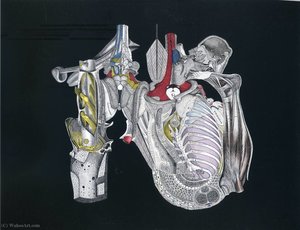
  • Sommer relentlessly pursued new methods of artistic expression, experimenting with cliché-verre negatives and pushing the boundaries of photographic printing. Notably, he transitioned to collage in his final years—creating intricate assemblages based on anatomical illustrations—a stylistic choice that underscored his enduring interest in exploring visual metaphors and conveying complex ideas.
  • Institutional Recognition & Legacy:
  • His contribution to photography was formally acknowledged through the founding of the Center for Creative Photography, a testament to his unwavering belief in collaborative artistic endeavors. Sommer’s archive—containing extensive photographic negatives and correspondence—became an invaluable resource for scholars and artists alike, furthering the dissemination of experimental photographic practices.

Musical Score Drawings & Artistic Dialogue

Beyond his monumental desert landscapes, Sommer produced a series of drawings inspired by musical scores—a practice that reveals his artistic sensitivity to rhythm, texture, and visual harmony. These compositions weren’t intended as literal transcriptions of music; instead, they functioned as symbolic representations of emotional states and intellectual concepts—demonstrating Sommer's ability to translate abstract ideas into tangible forms.
  • Notable Collaborations & Artistic Influences:
  • Sommer’s artistic journey intersected with the careers of influential figures such as Ansel Adams, Harry Callahan, Wynn Bullock, and Aaron Siskind, fostering a dynamic exchange of ideas and techniques. His work continues to inspire artists today—serving as a reminder that true innovation arises from embracing unconventional approaches and engaging in meaningful dialogue across disciplines.

Concluding Reflections: A Master’s Enduring Vision

Frederick Sommer passed away in 1999, leaving behind an extraordinary artistic legacy. His photographs—particularly his desert landscapes—remain among the most evocative and intellectually stimulating images of the twentieth century—a testament to his unwavering commitment to artistic exploration and his profound understanding of the human condition. Today’s reproductions of Sommer's work continue to captivate audiences worldwide—affirming his enduring influence on American art history.