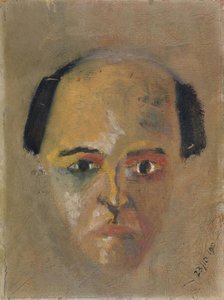
Портрет Арнольд Шёнберг

65 самых известных картин Арнольд Шёнберг, каждая из которых уникальна

Обновлено Ноябрь 2026 · рейтинг на основе нашего показателя популярности (количество поисковых запросов, посещений и заказов для каждой работы) · 65 работ Арнольд Шёнберг в нашем каталоге

Вкратце

Pierrot lunaire, op. 21 - Night (1912) — это самая популярная картина Арнольд Шёнберг; оригинал находится в Arnold Schönberg Center, Вена. Затем взгляд переходит на Календарь Арнольда Шёнберга (1935) и Suite, op. 29 - Bi-directional twelve-tone row chart (1924). Из 65 работ Арнольд Шёнберг в нашем каталоге эти 65 являются самыми известными: каждая из них — уникальный оригинал с указанием года создания, музея и причины ее бессмертия.

1874 – 1951, Вена Expressionism Больше всего работ: Arnold Schönberg Center

Топ-10 картин Арнольд Шёнберг глазами галереи

1
Pierrot lunaire, op. 21 - Night (1912) работы Арнольд Шёнберг

Pierrot lunaire, op. 21 - Night

1912 · Acrylic On Canvas · Arnold Schönberg Center, Вена

Arnold Schönberg’s *Pierrot lunaire*, op. 21, stands as a monumental achievement in the evolution of modern music, a work born from the anxieties and aesthetic explorations of early 20th-century Europe. This particular rendition, “Night,” meticulously captured in this evocative photographic reproduction, offers a profound glimpse into Schönberg’s expressionistic vision – a world of fractured emotion, haunting beauty, and unsettling psychological depth. Composed in Berlin in 1912, the piece was commissioned…

2
Календарь Арнольда Шёнберга (1935) работы Арнольд Шёнберг

Календарь Арнольда Шёнберга

1935 · Черно-белая фотография · Arnold Schönberg Center, Вена

Арт Эссе: Календарь Арнольда Шёнберга – Символ Инновации и Домашнего Спокойствия Календарь Арнольда Шёнберга, созданный в 1935 году художником Гертрудой Шёнберг и опубликованный издательством Белмонт Мьюзик Пиблешерс, представляет собой не просто средство организации времени, а удивительный объект искусства и культурного наследия. Этот винтажный фотоснимок запечатлевает сцену из жизни семьи Шёнбергов в Лос-Анджелесе того времени – Арнольда и Гертруды, где он водит автомобиль, а она сидит на заднем сиденье рядом с…

3
Suite, op. 29 - Bi-directional twelve-tone row chart (1924) работы Арнольд Шёнберг

Suite, op. 29 - Bi-directional twelve-tone row chart

1924 · Acrylic On Canvas · Arnold Schönberg Center, Вена

Arnold Schönberg's "Suite, op. 29 – Bi-directional twelve-tone row chart" isn’t merely a musical score; it’s a visual manifestation of radical innovation, a testament to the composer’s relentless pursuit of sonic and artistic boundaries. Created in 1924, during a period of intense experimentation within his own compositional methods—specifically, his “Method of composing with twelve tones which are related only with one another”—this work represents a pivotal moment in 20th-century music…

4
Peace on Earth, op. 13 (1907) работы Арнольд Шёнберг

Peace on Earth, op. 13

1907 · Black and White Photography · Arnold Schönberg Center, Вена

To gaze upon this depiction of Arnold Schoenberg's "Peace on Earth, op. 13" is not merely to look at an aged sheet of music; it is to encounter a preserved echo of profound human yearning. This composition, born from the charged atmosphere of early twentieth-century Europe, transcends its musical notation to become a tangible artifact of hope. The visual evidence—the sepia tones, the delicate creases, the faint patina of time…

5
Phantasy for Violin with Piano Accompaniment, op. 47 (1949) работы Арнольд Шёнберг

Phantasy for Violin with Piano Accompaniment, op. 47

1949 · Acrylic On Canvas · Arnold Schönberg Center, Вена

This meticulously crafted hand-painted reproduction captures a pivotal moment in the oeuvre of Arnold Schoenberg, a composer who irrevocably altered the landscape of 20th-century music. The piece, “Phantasy for Violin with Piano Accompaniment,” op. 47, born from a commission in 1949, represents more than just a musical composition; it’s a tangible link to a brilliant mind grappling with radical innovation and profound personal transformation. The photograph itself – a stark…

6
Accompaniment to a Cinematographic Scene, op. 34 - Аккомпанемент к киносценике, оп. 34 (1929) работы Арнольд Шёнберг

Accompaniment to a Cinematographic Scene, op. 34 - Аккомпанемент к киносценике, оп. 34

1929 · Черно-белая фотография · Arnold Schönberg Center, Вена

Accompaniment to a Cinematographic Scene, op. 34 – Размышления о музыкальном сопровождении фильма Arnold Schoenberg был одним из первых модернистов, который преобразовал практику гармонии в классическую музыку XX века и центральной фигурой его музыки является использование мотивов как средство единства формы. Он сформулировал концепции развивающей вариации, освобождения диссонанса и «единство музыкального пространства». Его музыка оказала огромное влияние на последующих поколений композиторов и продолжает вдохновлять художников и музыкантов по всему миру.…

7
Blue Gaze (1910) работы Арнольд Шёнберг

Blue Gaze

1910 · Oil On Board · Arnold Schönberg Center, Вена

“Blue Gaze,” painted in 1910 by the titan of musical innovation, Arnold Schoenberg, is more than just a portrait; it's a visceral manifestation of artistic struggle and a testament to the burgeoning power of abstraction. Created during a pivotal period in Schoenberg’s life – a time when he was simultaneously wrestling with the radical new techniques of atonality in music and exploring the uncharted territories of visual expression – this…

8
Transfer ticket for public transport in Berlin (1927) работы Арнольд Шёнберг

Transfer ticket for public transport in Berlin

1927 · Acrylic On Canvas · Arnold Schönberg Center, Вена

This meticulously crafted hand-painted reproduction captures a pivotal moment in design history – the 1927 transfer ticket for the Berlin tram system, conceived by the visionary composer Arnold Schönberg. Far more than simply a means of payment, this circular artifact represents a radical shift towards efficiency and user experience, anticipating modern transit systems by nearly a century. Schönberg’s design wasn't born from artistic indulgence; it stemmed from a pragmatic desire…

9
The Musical Idea - W. A. Mozart K 465 (1934) работы Арнольд Шёнберг

The Musical Idea - W. A. Mozart K 465

1934 · Giclée Print · Arnold Schönberg Center, Вена

W.A. Mozart’s K. 465, “The Musical Idea,” takes on an entirely new dimension through the lens of Arnold Schönberg's profound inquiry into musical representation. This isn’t merely a reproduction of a classical score; it’s a visual echo of Schönberg’s seminal work, "Der Musikalische Gedanke," a treatise that fundamentally shifted our understanding of composition and its relationship to logic, technique, and artistic expression. The photograph itself – a meticulously annotated music…

10
Piano Piece, op. 19/6 (1911) работы Арнольд Шёнберг

Piano Piece, op. 19/6

1911 · Acrylic On Canvas · Arnold Schönberg Center, Вена

This meticulously crafted hand-painted reproduction captures Arnold Schönberg’s poignant “Piano Piece, op. 19/6,” a deceptively simple work born from a moment of profound grief and artistic experimentation. Created in 1911, shortly after the death of Gustav Mahler – a figure Schönberg deeply revered as both mentor and friend – the piece offers a rare glimpse into the composer’s emotional landscape during a period of intense creative upheaval. The image presented…

Знаменитые картины Арнольд Шёнберг, с 11 по 65

11Excerpt from Arnold Schönberg’s own handwritten library catalogue: Works of Richard Strauss (1914) работы Арнольд ШёнбергExcerpt from Arnold Schönberg’s own handwritten library catalogue: Works of Richard Strauss1914 · Arnold Schönberg Center 12Self-Portrait (1910) работы Арнольд ШёнбергSelf-Portrait1910 · Arnold Schönberg Center 13The Biblical Way (Act I, Scene 2), Stadium (1927) работы Арнольд ШёнбергThe Biblical Way (Act I, Scene 2), Stadium1927 · Arnold Schönberg Center 14The Lucky Hand (scene 1) (1910) работы Арнольд ШёнбергThe Lucky Hand (scene 1)1910 · Arnold Schönberg Center 15Gertrud Schönberg (1930) работы Арнольд ШёнбергGertrud Schönberg1930 · Arnold Schönberg Center 16Tears (1910) работы Арнольд ШёнбергTears1910 · Arnold Schönberg Center 17Garden Scene (1907) работы Арнольд ШёнбергGarden Scene1907 · Arnold Schönberg Center 18Playing Cards for Whist/Bridge - Jack of Spades (1910) работы Арнольд ШёнбергPlaying Cards for Whist/Bridge - Jack of Spades1910 · Arnold Schönberg Center 19Formation scheme for the Gurrelieder (1918) работы Арнольд ШёнбергFormation scheme for the Gurrelieder1918 · Arnold Schönberg Center 20The Lucky Hand (scene 2) (1910) работы Арнольд ШёнбергThe Lucky Hand (scene 2)1910 · Arnold Schönberg Center 21Red Gaze (1910) работы Арнольд ШёнбергRed Gaze1910 · Arnold Schönberg Center 22Piano Concerto, op. 42 - Programmatic keywords (1942) работы Арнольд ШёнбергPiano Concerto, op. 42 - Programmatic keywords1942 · Arnold Schönberg Center 23Playing Cards for Whist/Bridge - King of Hearts (1910) работы Арнольд ШёнбергPlaying Cards for Whist/Bridge - King of Hearts1910 · Arnold Schönberg Center 24Structural Functions of Harmony - Chart of the Regions (1948) работы Арнольд ШёнбергStructural Functions of Harmony - Chart of the Regions1948 · Arnold Schönberg Center 25Interior and Portrait of a Woman (1910) работы Арнольд ШёнбергInterior and Portrait of a Woman1910 · Arnold Schönberg Center 26Blue Self-Portrait (1910) работы Арнольд ШёнбергBlue Self-Portrait1910 · Arnold Schönberg Center 27Self-Portrait (1918) работы Арнольд ШёнбергSelf-Portrait1918 · Arnold Schönberg Center 28Mathilde Schönberg (1909) работы Арнольд ШёнбергMathilde Schönberg1909 · Arnold Schönberg Center 29Expectation (Scene 3) (1911) работы Арнольд ШёнбергExpectation (Scene 3)1911 · Arnold Schönberg Center 30Handwriting samples (1923) работы Арнольд ШёнбергHandwriting samples1923 · Arnold Schönberg Center 31Suite for Piano, op. 25 - Prelude (1921) работы Арнольд ШёнбергSuite for Piano, op. 25 - Prelude1921 · Arnold Schönberg Center 32Landscape (1910) работы Арнольд ШёнбергLandscape1910 · Arnold Schönberg Center 33Erwartung, op. 17 (1909) работы Арнольд ШёнбергErwartung, op. 171909 · Arnold Schönberg Center 34Exlibris (1910) работы Арнольд ШёнбергExlibris1910 · Arnold Schönberg Center 35Alliance (Hands) (1910) работы Арнольд ШёнбергAlliance (Hands)1910 · Arnold Schönberg Center 36Portrait of a Woman (1910) работы Арнольд ШёнбергPortrait of a Woman1910 · Arnold Schönberg Center 37Коалиционная шахматная партия (1925) работы Арнольд ШёнбергКоалиционная шахматная партия1925 · Arnold Schönberg Center 38Moses and Aron (1930) работы Арнольд ШёнбергMoses and Aron1930 · Arnold Schönberg Center 39Playing Cards for Whist/Bridge - Queen of clubs (1909) работы Арнольд ШёнбергPlaying Cards for Whist/Bridge - Queen of clubs1909 · Arnold Schönberg Center 40Playing card design (1910) работы Арнольд ШёнбергPlaying card design1910 · Arnold Schönberg Center 41Brief to Wilhelm von Wymetal (1907) работы Арнольд ШёнбергBrief to Wilhelm von Wymetal1907 · Arnold Schönberg Center 42Alexander Zemlinsky (1910) работы Арнольд ШёнбергAlexander Zemlinsky1910 · Arnold Schönberg Center 43Green Self-Portrait (1910) работы Арнольд ШёнбергGreen Self-Portrait1910 · Arnold Schönberg Center 44Memory of Oskar Kokoschka (1910) работы Арнольд ШёнбергMemory of Oskar Kokoschka1910 · Arnold Schönberg Center 45Mathilde Schönberg cooking (1912) работы Арнольд ШёнбергMathilde Schönberg cooking1912 · Arnold Schönberg Center 46Model of a set of dentures (1926) работы Арнольд ШёнбергModel of a set of dentures1926 · Arnold Schönberg Center 47Coalition Chess - Plane (1925) работы Арнольд ШёнбергCoalition Chess - Plane1925 · Arnold Schönberg Center 48Gaze (Karl Kraus – The Great Wall of China) (1910) работы Арнольд ШёнбергGaze (Karl Kraus – The Great Wall of China)1910 · Arnold Schönberg Center 49Furniture design (1931) работы Арнольд ШёнбергFurniture design1931 · Arnold Schönberg Center 50Self-Portrait (1935) работы Арнольд ШёнбергSelf-Portrait1935 · Arnold Schönberg Center 51Self-Portrait (1922) работы Арнольд ШёнбергSelf-Portrait1922 · Arnold Schönberg Center 52The Musical Idea - Chart of the Regions (1934) работы Арнольд ШёнбергThe Musical Idea - Chart of the Regions1934 · Arnold Schönberg Center 53Schematic representation of European Jewry (1934) работы Арнольд ШёнбергSchematic representation of European Jewry1934 · Arnold Schönberg Center 54Model of a chair / library ladder (1945) работы Арнольд ШёнбергModel of a chair / library ladder1945 · Arnold Schönberg Center 55Five Pieces for Orchestra, op. 16/5 – First written copy (1909) работы Арнольд ШёнбергFive Pieces for Orchestra, op. 16/5 – First written copy1909 · Arnold Schönberg Center 56Staffliner for drawing staves (1950) работы Арнольд ШёнбергStaffliner for drawing staves1950 · Arnold Schönberg Center 57Мауриц Зам (1935) работы Арнольд ШёнбергМауриц Зам1935 · Arnold Schönberg Center 58Critic I (1910) работы Арнольд ШёнбергCritic I1910 · Arnold Schönberg Center 59Emil Hertzka (1910) работы Арнольд ШёнбергEmil Hertzka1910 · Arnold Schönberg Center 60Говори не всегда о листьях, оп. 15/14 (1909) работы Арнольд ШёнбергГовори не всегда о листьях, оп. 15/141909 · Arnold Schönberg Center 61Music Typewriter (1909) работы Арнольд ШёнбергMusic Typewriter1909 · Arnold Schönberg Center 62Piano Piece, op. 11/2 (1909) работы Арнольд ШёнбергPiano Piece, op. 11/21909 · Arnold Schönberg Center 63Walking Self-Portrait (1911) работы Арнольд ШёнбергWalking Self-Portrait1911 · Arnold Schönberg Center 64Chess Set работы Арнольд ШёнбергChess SetArnold Schönberg Center 65Tape Dispenser (1945) работы Арнольд ШёнбергTape Dispenser1945 · Arnold Schönberg Center

Знаменитые картины Арнольд Шёнберг по периодам творчества

Сюжеты, которые вдохновляли Арнольд Шёнберг

Четыре темы, которые чаще всего встречаются в этих оригиналах, каждая из которых представлена своим лучшим образцом.

Музеи, в которых хранятся оригиналы работ Арнольд Шёнберг

1 музеев, в которых находится больше всего картин со страницы.

Музей Город Работы Арнольд Шёнберг Картины из этого списка
Arnold Schönberg Center, ВенаArnold Schönberg Center Вена 65 Pierrot lunaire, op. 21 - Night, Календарь Арнольда Шёнберга, Suite, op. 29 - Bi-directional twelve-tone row chart

Арнольд Шёнберг сквозь десятилетия: по одному уникальному оригиналу на каждое десятилетие

Произведения по десятилетиям

Выберите десятилетие, чтобы увидеть шедевр, определяющий его.

Картины Арнольд Шёнберг: вопросы к галерее

Какая работа Арнольд Шёнберг является самой известной?Узнать ответ

Pierrot lunaire, op. 21 - Night (1912), Arnold Schönberg Center, Вена. Далее следуют Календарь Арнольда Шёнберга (1935) и Suite, op. 29 - Bi-directional twelve-tone row chart (1924).

В каком возрасте Арнольд Шёнберг создал(а) Pierrot lunaire, op. 21 - Night?Узнать ответ

38 лет: Pierrot lunaire, op. 21 - Night датируется 1912 годом, а Арнольд Шёнберг родился в 1874.

Какие десять картин Арнольд Шёнберг являются самыми известными?Узнать ответ

Pierrot lunaire, op. 21 - Night, Календарь Арнольда Шёнберга, Suite, op. 29 - Bi-directional twelve-tone row chart, Peace on Earth, op. 13, Phantasy for Violin with Piano Accompaniment, op. 47, Accompaniment to a Cinematographic Scene, op. 34 - Аккомпанемент к киносценике, оп. 34, Blue Gaze, Transfer ticket for public transport in Berlin, The Musical Idea - W. A. Mozart K 465 и Piano Piece, op. 19/6. В рейтинге выше указаны год создания и музей для каждой работы.

Сколько известно работ Арнольд Шёнберг?Узнать ответ

В нашем каталоге представлено 65 работ Арнольд Шёнберг, созданных в период с 1907 по 1950.

Где можно увидеть подлинники, созданные Арнольд Шёнберг?Узнать ответ

В основном в Arnold Schönberg Center (Вена). В таблице выше перечислены все музеи.

В какой период Арнольд Шёнберг создал свои самые известные картины?Узнать ответ

В 1910s: 29 из 65 работ на этой странице были созданы в этот период, Pierrot lunaire, op. 21 - Night из них.

Какая из знаменитых картин Арнольд Шёнберг была написана раньше, а какая — позже?Узнать ответ

На этой странице самая ранняя работа датирована Peace on Earth, op. 13 (1907), а самая поздняя — Staffliner for drawing staves (1950).

Какие сюжеты предпочитал Арнольд Шёнберг?Узнать ответ

Arnold schoenberg (10), Atonality (10) и Schoenberg (8) в 65 работах на этой странице.

Какими материалами чаще всего пользовался Арнольд Шёнберг?Узнать ответ

Acrylic On Canvas, для 17 из 65 работ на этой странице.

К какому направлению относится творчество Арнольд Шёнберг?Узнать ответ

Expressionism и Expressionist modernism, судя по оригиналам на этой странице.

Какие оригинальные работы Арнольд Шёнберг можно увидеть в Arnold Schönberg Center?Узнать ответ

Pierrot lunaire, op. 21 - Night, Календарь Арнольда Шёнберга и Suite, op. 29 - Bi-directional twelve-tone row chart: в коллекции Arnold Schönberg Center, Вена находится 65 работ со страницы.

Арнольд Шёнберг: портрет художника

ранние годы и музыкальные истоки

Арнольд Шёнберг, австро-американский композитор, родился 13 сентября 1874 года в Вене, Австрия. Его ранние годы были отмечены скромным происхождением: его отец был владельцем обувного магазина. Несмотря на это, врожденная страсть Шёнберга к музыке побудила его во многом самостоятельно освоить эту сложную область искусства.

музыкальная эволюция и выдающиеся произведения

Ранние работы Шёнберга, такие как «Verklärte Nacht» (Преображенная ночь, 1899), демонстрировали синтез традиций Брамса и Вагнера. По мере своего творческого развития он стал центральной фигурой Второй венской школы наряду с Антоном Веберном и Альбаном Бергом. Его композиции, включая Струнный квартет № 2 (1907–1908), «Erwartung» (Ожидание, 1909) и «Pierrot Lunaire» (Лунный Пьеро, 1912), стали воплощением его новаторского подхода к атональности.

преподавание, эмиграция и поздние годы

В 1933 году Шёнберг был вынужден покинуть Прусскую академию искусств из-за прихода нацистов к власти, которые заклеймили его музыку как «дегенеративную». Впоследствии он преподавал в США, в том числе в Калифорнийском университете в Лос-Анджелесе (1936–1944), чьи учебные корпуса названы в его честь. [https://OriginalUniqueArt.com/@/arnold-schoenberg](узнайте больше о жизни и творчестве Шёнберга на OriginalUniqueArt).
  • Шёнберг исследовал возможности киномузыки и писал более тональную музыку, завершив свою Камерную симфонию № 2 в 1939 году.
  • Он сатирически изобразил фашистских тиранов в «Оде Наполеону» (1942), вдохновленной Байроном.
  • Послевоенная Вена предложила ему почетное гражданство, но в этот период он был болен, что нашло отражение в его Струнном трио (1946).

наследие и влияние

Когда мир узнал о трагедии Холокоста, Шёнберг увековечил память его жертв в произведении «Выживший из Варшавы» (1947). В 1951 году Израильская консерватория и академия музыки избрала его почетным президентом. [https://OriginalUniqueArt.com/@@/a@d3bqc7-the-museum-destroyed-by-fire-(united-states)](узнайте больше о влиянии его творчества на OriginalUniqueArt). Ключевые моменты:
  • Инновационная музыка Шёнберга была одной из самых влиятельных и дискуссионных в классической музыке XX века.
  • Как минимум три поколения композиторов развивали её строгие формальные принципы.
  • Его эстетические и музыковедческие взгляды оказали глубокое влияние на таких теоретиков, как Теодор В. Адорно и Карл Далхаус.
[https://OriginalUniqueArt.com/@@/a@d3cl2x--a-journey-through-art-history-with-OriginalUniqueArt-s-extensive-collection-](исследуйте обширную коллекцию произведений искусства на OriginalUniqueArt, охватывающую период с XII по XX век).