Портрет Ансельм Фейербах

Картины Ансельм Фейербах: 100 самых известных работ, взгляд галереи

Обновлено Ноябрь 2026 · рейтинг на основе нашего показателя популярности (количество поисковых запросов, посещений и заказов для каждой работы) · 128 работ Ансельм Фейербах в нашем каталоге

Вкратце

По мнению экспертов галереи, самая известная картина Ансельм Фейербах — это Orpheus and Eurydike (1869). Portrait of an Older Gentleman (1852) и Kinderständchen (1860) завершают трио, которое узнает каждый. Из 128 работ Ансельм Фейербах в нашем каталоге ниже представлены 100 самых известных: каждая из них является оригиналом с указанием года создания, музея и уникальных особенностей.

1829 – 1880, Шпайер Romanticism Больше всего работ: Баварские государственные живописные коллекции

Топ-10 картин художника Ансельм Фейербах в галерее

1
Orpheus and Eurydike (1869) работы Ансельм Фейербах

Orpheus and Eurydike

1869 · Oil On Canvas

In this 1869 mythological painting, Orpheus and Eurydike appear caught in a moment of profound tension. The artist, Anselm Feuerbach, captures the figures as they navigate the heavy atmosphere of a tragic legend. Orpheus, the legendary musician, stands with his lyre, his presence defined by the weight of the myth that surrounds him. Beside him, Eurydike moves through the scene, her presence tied to the sorrow of her fate. The…

2
Portrait of an Older Gentleman (1852) работы Ансельм Фейербах

Portrait of an Older Gentleman

1852 · Oil On Canvas · Staatliche Kunsthalle Karlsruhe, Карлсруэ

In Portrait of an Older Gentleman by Anselm Feuerbach, the subject is captured in a close-up, bust-length view. He sits centered against a dark, indistinct background that offers no distraction from his presence. The composition relies on a muted and earthy color palette, where deep blacks, browns, and ochres settle into the shadows. This somber arrangement focuses entirely on the weight of the man's character. The style is realistic, prioritizing…

4
Iphigenie II (1871) работы Ансельм Фейербах

Iphigenie II

1871 · Oil · Staatsgalerie Stuttgart, Штутгарт

The salt spray hangs in the air as a woman sits alone upon the earth, her presence a quiet anchor against the rhythmic movement of the sea. She wears a white dress that spills around her, its folds catching the light in a way that suggests the stillness of carved stone. Her hands are clasped tightly against her chest, a gesture of inward focus that pulls the viewer into her…

7
The Artist's Step-mother, Henriette Feuerbach (1878) работы Ансельм Фейербах

The Artist's Step-mother, Henriette Feuerbach

Henriette Feuerbach sits in a three-quarter profile, her presence defined by a somber, steady gaze. The portrait, executed in 1878, captures the subject in her later years, presenting a face of pale, luminous skin against a dark, atmospheric background. Her attire, a heavy black mourning garment, is rendered with meticulous attention to the tactile quality of lace and fabric. The lighting, descending from the upper left, carves deep shadows into…

8
English The Judgement of Paris Deutsch Das Urteil des Paris Русский Суд Париса (1870) работы Ансельм Фейербах

English The Judgement of Paris Deutsch Das Urteil des Paris Русский Суд Париса

In the grand tapestry of nineteenth-century art, few works capture the ethereal tension between classical grace and Romantic passion as profoundly as Anselm Feuerbach’s The Judgement of Paris. Created in 1870, this breathtaking oil painting serves as a window into a world where gods and mortals intersect amidst a lush, idyllic landscape. The scene depicts the pivotal moment of mythological destiny: the selection of the most beautiful goddess. As Venus,…

10
Samson and Delila (Copy after Rubens) (1848) работы Ансельм Фейербах

Samson and Delila (Copy after Rubens)

1848 · Oil

This black and white reproduction of a dramatic, high-contrast painting depicts the biblical scene of Samson and Delilah. The composition is dynamic and crowded, characterized by intense movement and emotional turmoil. The subject matter captures the moment of Samson's betrayal or capture, with a central muscular male figure (Samson) being restrained or attacked by several men, while a woman (Delilah) watches from a seated position on the left. The perspective…

Картины художника Ансельм Фейербах, в рейтинге с 11 по 100

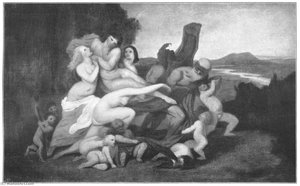
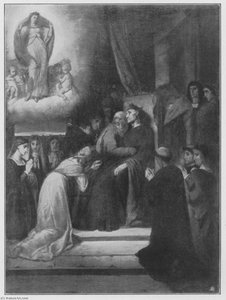
11Allegorie (1847) работы Ансельм ФейербахAllegorie1847 12Bacchuszug (1847) работы Ансельм ФейербахBacchuszug1847 13Diana, Emerging from her Bath, Surrounded by Nymphs (1854) работы Ансельм ФейербахDiana, Emerging from her Bath, Surrounded by Nymphs1854 · Баварские государственные живописные коллекции 14Gypsy with Tambourine* (1854) работы Ансельм ФейербахGypsy with Tambourine*1854 · Staatliche Kunsthalle Karlsruhe 15Youthful Self-Portrait (1852) работы Ансельм ФейербахYouthful Self-Portrait1852 · Staatliche Kunsthalle Karlsruhe 16Portrait (of the author?) (1854) работы Ансельм ФейербахPortrait (of the author?)1854 17Flower girl (1854) работы Ансельм ФейербахFlower girl1854 · Staatliche Kunsthalle Karlsruhe 18Drei weibliche Gestalten an einem kleinen See (1855) работы Ансельм ФейербахDrei weibliche Gestalten an einem kleinen See1855 19Zigeuner (1854) работы Ансельм ФейербахZigeuner1854 20Rokokodamen am Wasser (1854) работы Ансельм ФейербахRokokodamen am Wasser1854 21Landschaft mit Wasserfall (1855) работы Ансельм ФейербахLandschaft mit Wasserfall1855 22Landschaft mit badenden Frauen (1854) работы Ансельм ФейербахLandschaft mit badenden Frauen1854 23Blumenmädchen (1854) работы Ансельм ФейербахBlumenmädchen1854 24Damenbildnis (1854) работы Ансельм ФейербахDamenbildnis1854 25Tänzerin (dekoratives Panneau) (1854) работы Ансельм ФейербахTänzerin (dekoratives Panneau)1854 26Bildnis des Geheimrats Prof. Umbreit (1853) работы Ансельм ФейербахBildnis des Geheimrats Prof. Umbreit1853 27Der Tod des Pietro Aretino (1854) работы Ансельм ФейербахDer Tod des Pietro Aretino1854 28Bildnis des Prof. C. Cannstatt (1850) работы Ансельм ФейербахBildnis des Prof. C. Cannstatt1850 29Mädchen, um einen toten Vogel trauernd (1854) работы Ансельм ФейербахMädchen, um einen toten Vogel trauernd1854 30Untitled (AQR3R6) (1854) работы Ансельм ФейербахUntitled (AQR3R6)1854 31Versuchung des heiligen Antonius (1854) работы Ансельм ФейербахVersuchung des heiligen Antonius1854 32Hafis in der Schenke (1852) работы Ансельм ФейербахHafis in der Schenke1852 33Pietà (1854) работы Ансельм ФейербахPietà1854 34The Golden Age (1857) работы Ансельм ФейербахThe Golden Age1857 · Баварские государственные живописные коллекции 35Portrait of the Photographer Reitmayer (1860) работы Ансельм ФейербахPortrait of the Photographer Reitmayer1860 36Musical Poetry (1856) работы Ансельм ФейербахMusical Poetry1856 · Staatliche Kunsthalle Karlsruhe 37Nanna (1861) работы Ансельм ФейербахNanna1861 · Старая национальная галерея 38Iphigenie (1862) работы Ансельм ФейербахIphigenie1862 · Гессенский государственный музей в Дармштадте 39Pietà (1863) работы Ансельм ФейербахPietà1863 · Баварские государственные живописные коллекции 40Madonna (1863) работы Ансельм ФейербахMadonna1863 · Баварские государственные живописные коллекции 41Portrait of a Roman Woman  (Nanna) (1862) работы Ансельм ФейербахPortrait of a Roman Woman (Nanna)1862 · Schackgalerie 42Nanna (1862) работы Ансельм ФейербахNanna1862 43Portrait of Nanna Risi (1861) работы Ансельм ФейербахPortrait of Nanna Risi1861 · Staatliche Kunsthalle Karlsruhe 44Kinder am Wasser (1859) работы Ансельм ФейербахKinder am Wasser1859 45Bildnis Allgeyers (1857) работы Ансельм ФейербахBildnis Allgeyers1857 · Баварские государственные живописные коллекции 46Kinder am Springbrunnen (1859) работы Ансельм ФейербахKinder am Springbrunnen1859 47Dantes Tod (1858) работы Ансельм ФейербахDantes Tod1858 48Maria mit dem Kind (1860) работы Ансельм ФейербахMaria mit dem Kind1860 49Der Herbst (Balgende Buben mit Früchten) (1860) работы Ансельм ФейербахDer Herbst (Balgende Buben mit Früchten)1860 50Die Schauspielszene aus Hamlet (1858) работы Ансельм ФейербахDie Schauspielszene aus Hamlet1858 51Dante mit Virgil in der Unterwelt (1857) работы Ансельм ФейербахDante mit Virgil in der Unterwelt1857 · Баварские государственные живописные коллекции 52Laura in the Church (1865) работы Ансельм ФейербахLaura in the Church1865 · Баварские государственные живописные коллекции 53Henriette Feuerbach, the Stepmother of the Artist (1871) работы Ансельм ФейербахHenriette Feuerbach, the Stepmother of the Artist1871 54Lucrezia Borgia; Portrait of a Roman woman in white tunic and red robe (1864) работы Ансельм ФейербахLucrezia Borgia; Portrait of a Roman woman in white tunic and red robe1864 · Штедель-Музей 55Two ladies in a landscape (1867) работы Ансельм ФейербахTwo ladies in a landscape1867 · Старая национальная галерея 56Musizierende Kinder, von einer Nymphe belauscht (1864) работы Ансельм ФейербахMusizierende Kinder, von einer Nymphe belauscht1864 · Баварские государственные живописные коллекции 57Self-portrait with cigarette (1871) работы Ансельм ФейербахSelf-portrait with cigarette1871 58The Symposium (1871) работы Ансельм ФейербахThe Symposium1871 · Старая национальная галерея 59Sleeping Nymph (1870) работы Ансельм ФейербахSleeping Nymph1870 · Germanisches Nationalmuseum 60Spring Scene (1868) работы Ансельм ФейербахSpring Scene1868 · Старая национальная галерея 61Mutter mit Kind (1867) работы Ансельм ФейербахMutter mit Kind1867 62Lesbia mit dem Vogel (1868) работы Ансельм ФейербахLesbia mit dem Vogel1868 63Ricordo di Tivoli (1867) работы Ансельм ФейербахRicordo di Tivoli1867 64Das Urteil des Paris (1870) работы Ансельм ФейербахDas Urteil des Paris1870 65Untitled (AQR3NQ) (1864) работы Ансельм ФейербахUntitled (AQR3NQ)1864 · Баварские государственные живописные коллекции 66Orpheus (1869) работы Ансельм ФейербахOrpheus1869 67Bildnis der Stiefmutter des Künstlers (1867) работы Ансельм ФейербахBildnis der Stiefmutter des Künstlers1867 68Im Frühling. (Sechs Damen im Freien.) (1868) работы Ансельм ФейербахIm Frühling. (Sechs Damen im Freien.)1868 69Self-Portrait with Cigarette (1875) работы Ансельм ФейербахSelf-Portrait with Cigarette1875 70Self-Portrait (1878) работы Ансельм ФейербахSelf-Portrait1878 · Staatliche Kunsthalle Karlsruhe 71Sturz der Titanen (1874) работы Ансельм ФейербахSturz der Titanen1874 72Landschaft mit Ziegen (1873) работы Ансельм ФейербахLandschaft mit Ziegen1873 73Deutsch Zigeunertanz (1853) работы Ансельм ФейербахDeutsch Zigeunertanz1853 · Гамбургская художественная галерея 74Untitled (AQR3NN) (1852) работы Ансельм ФейербахUntitled (AQR3NN)1852 · Kunsthalle Mannheim 75German Titanensturz работы Ансельм ФейербахGerman Titanensturz 76The Judgment of Paris (1870) работы Ансельм ФейербахThe Judgment of Paris1870 · Гамбургская художественная галерея 77Mythologische Szene (Siegfrieds Tod ) (1846) работы Ансельм ФейербахMythologische Szene (Siegfrieds Tod )1846 78Rock cleft with cows (1855) работы Ансельм ФейербахRock cleft with cows1855 · Старая национальная галерея 79girls bathing in the evening (1854) работы Ансельм Фейербахgirls bathing in the evening1854 80Untitled (AQR3QJ) (1854) работы Ансельм ФейербахUntitled (AQR3QJ)1854 81Untitled (AQR3P4) (1851) работы Ансельм ФейербахUntitled (AQR3P4)1851 82Männlicher Halbakt (1851) работы Ансельм ФейербахMännlicher Halbakt1851 83Young witch who is led to the stake (1851) работы Ансельм ФейербахYoung witch who is led to the stake1851 · Germanisches Nationalmuseum 84Hafis vor der Schenke (1852) работы Ансельм ФейербахHafis vor der Schenke1852 · Kunsthalle Mannheim 85Untitled (AQR3SW) (1856) работы Ансельм ФейербахUntitled (AQR3SW)1856 86Deutsch Garten des Ariost (1863) работы Ансельм ФейербахDeutsch Garten des Ariost1863 · Schackgalerie 87Landscape with Waterfall (1865) работы Ансельм ФейербахLandscape with Waterfall1865 · Баварские государственные живописные коллекции 88Coast near Porto d'Anzio (1866) работы Ансельм ФейербахCoast near Porto d'Anzio1866 · Staatliche Kunsthalle Karlsruhe 89Landschaft (1871) работы Ансельм ФейербахLandschaft1871 90Untitled (AQR3R4) (1864) работы Ансельм ФейербахUntitled (AQR3R4)1864 · Schackgalerie 91Medea (1870) работы Ансельм ФейербахMedea1870 92Untitled (AQR3S8) (1866) работы Ансельм ФейербахUntitled (AQR3S8)1866 · Schackgalerie 93Kinder am Strande (1867) работы Ансельм ФейербахKinder am Strande1867 · Museum Georg Schäfer 94Italiano Paolo e Francesca (1864) работы Ансельм ФейербахItaliano Paolo e Francesca1864 · Schackgalerie 95Francesca da Rimini (1864) работы Ансельм ФейербахFrancesca da Rimini1864 · Баварские государственные живописные коллекции 96Musizierende Kinder (1864) работы Ансельм ФейербахMusizierende Kinder1864 · Kunstmuseum Moritzburg 97Gastmahl des Plato (1869) работы Ансельм ФейербахGastmahl des Plato1869 · Staatliche Kunsthalle Karlsruhe 98German Pfingstrosen (Päonien) Peonies (1871) работы Ансельм ФейербахGerman Pfingstrosen (Päonien) Peonies1871 · Новая Пинакотека 99Untitled (AQR3Q6) (1875) работы Ансельм ФейербахUntitled (AQR3Q6)1875 100Untitled (AQR3PA) (1880) работы Ансельм ФейербахUntitled (AQR3PA)1880

Знаменитые картины Ансельм Фейербах по периодам творчества

Сюжеты, которые вдохновляли Ансельм Фейербах

Четыре темы, которые чаще всего встречаются в этих оригиналах, каждая из которых представлена своим лучшим образцом.

Музеи, в которых хранятся оригиналы работ Ансельм Фейербах

8 музеев, в которых находится большинство картин со страницы.

Музей Город Работы Ансельм Фейербах Картины из этого списка
Баварские государственные живописные коллекции, МюнхенБаварские государственные живописные коллекции Мюнхен 12 Diana, Emerging from her Bath, Surrounded by Nymphs, The Golden Age, Pietà
Staatliche Kunsthalle Karlsruhe, КарлсруэStaatliche Kunsthalle Karlsruhe Карлсруэ 10 Portrait of an Older Gentleman, Gypsy with Tambourine*, Youthful Self-Portrait
Старая национальная галерея, БерлинСтарая национальная галерея Берлин 8 Self-portrait, Self-portrait as a boy, The Artist's Step-mother, Henriette Feuerbach
Schackgalerie, МюнхенSchackgalerie Мюнхен 15 Portrait of a Roman Woman (Nanna), Deutsch Garten des Ariost, Untitled (AQR3R4)
Гамбургская художественная галерея, ГамбургГамбургская художественная галерея Гамбург 3 English The Judgement of Paris Deutsch Das Urteil des Paris Русский Суд Париса, Deutsch Zigeunertanz, The Judgment of Paris
Germanisches Nationalmuseum, НюрнбергGermanisches Nationalmuseum Нюрнберг 2 Sleeping Nymph, Young witch who is led to the stake
Нижнесаксонский государственный музей Ганновер, ГанноверНижнесаксонский государственный музей Ганновер Ганновер 3 Kinderständchen
Staatsgalerie Stuttgart, ШтутгартStaatsgalerie Stuttgart Штутгарт 1 Iphigenie II

Ансельм Фейербах, одна знаковая картина в десятилетие

Произведения по десятилетиям

Выберите десятилетие, чтобы увидеть шедевр, определяющий его.

Картины Ансельм Фейербах: ответы галереи

Какая картина Ансельм Фейербах является самой известной из всех?Узнать ответ

Orpheus and Eurydike (1869). Далее следуют Portrait of an Older Gentleman (1852) и Kinderständchen (1860).

Сколько лет было Ансельм Фейербах, когда была завершена работа Orpheus and Eurydike?Узнать ответ

40 лет: Orpheus and Eurydike датируется 1869 годом, а Ансельм Фейербах родился в 1829.

Какие 10 лучших картин принадлежат Ансельм Фейербах?Узнать ответ

Orpheus and Eurydike, Portrait of an Older Gentleman, Kinderständchen, Iphigenie II, Self-portrait, Self-portrait as a boy, The Artist's Step-mother, Henriette Feuerbach, English The Judgement of Paris Deutsch Das Urteil des Paris Русский Суд Париса, Selfportrait и Samson and Delila (Copy after Rubens). В рейтинге выше указаны год создания и музей для каждой работы.

Сколько работ создал(а) Ансельм Фейербах?Узнать ответ

В нашем каталоге представлено 128 работ Ансельм Фейербах, созданных в период с 1845 по 1880.

Где висят самые известные оригинальные работы Ансельм Фейербах?Узнать ответ

В основном в Баварские государственные живописные коллекции (Мюнхен), Staatliche Kunsthalle Karlsruhe (Карлсруэ) и Старая национальная галерея (Берлин). В таблице выше перечислены все музеи.

Когда Ансельм Фейербах создал свои самые известные картины?Узнать ответ

В 1850s: 40 из 100 работ на этой странице были созданы в этот период, Portrait of an Older Gentleman из них.

Какие из самых известных работ Ансельм Фейербах являются наиболее ранними и наиболее поздними?Узнать ответ

На этой странице самая ранняя работа датирована Self-portrait as a boy (1845), а самая поздняя — Untitled (AQR3PA) (1880).

К каким сюжетам Ансельм Фейербах обращался чаще всего?Узнать ответ

Woman (35), Man (21) и Drapery (14) в 100 работах на этой странице.

В какой технике чаще всего работал(а) Ансельм Фейербах?Узнать ответ

Oil On Canvas, для 51 из 100 работ на этой странице.

С каким направлением связан Ансельм Фейербах?Узнать ответ

Romanticism и Neoclassicism, судя по оригиналам на этой странице.

Какие оригинальные работы Ансельм Фейербах хранятся в Баварские государственные живописные коллекции?Узнать ответ

Diana, Emerging from her Bath, Surrounded by Nymphs, The Golden Age и Pietà: в коллекции Баварские государственные живописные коллекции, Мюнхен находится 11 работ со страницы.

Ансельм Фейербах: художник

The Poet of Classical Form: The Life and Vision of Anselm Feuerbach

Anselm Feuerbach (1829-1880) stands as a monumental figure in the tapestry of German Romanticism and Neoclassicism, embodying a rare and harmonious fusion of these two powerful artistic currents. Born in Speyer to an intellectually profound lineage—his father, Joseph Anselm Ritter von Feuer डूबing, was a renowned archaeologist—Feuerbach was destined for a life steeped in the study of antiquity. This ancestral connection to the classical world profoundly shaped his artistic sensibilities from his earliest years. His formal education began at the Düsseldorf Academy between 1845 and 1848, where the rigorous tutelage of masters such as Johann Wilhelm Schirmer and Wilhelm von Schadow instilled in him a foundational understanding of classical aesthetics and the meticulous precision of sculptural craftsmanship.

The trajectory of his development was marked by a restless search for a visual language that could bridge the gap between the emotional depth of Romanticism and the structural purity of Neoclassicism. After honing his skills at the Munich Academy, Feuerbach sought inspiration beyond German borders, establishing himself in Antwerp to master the vibrant Venetian colorism under Gustave Wappers. His journey through Paris in 1851 provided a pivotal moment of artistic breakthrough; it was here that he produced Hafiz at the Fountain (1852). This breathtaking work, which infused Arabic poetry with classical idealism, served as a testament to his unique ability to synthesize disparate cultural influences into a singular, transcendent vision.

A Pilgrimage Through Light and Antiquity

Driven by an insatiable fascination with the Italian Renaissance, Feuerbach embarked on a spiritual and artistic pilgrimage to Italy. His immersion in Venice allowed him to absorb the expressive dynamism and rich palette of the Venetian masters, while his time in Florence and Rome cemented his dedication to humanist ideals. During his long residency in Rome, which lasted until 1873, he became a central figure among the Deutschrömer—a group of German artists living in Italy that included luminaries like Arnold Böcklin and Hans von Marées. This period was characterized by an intense focus on the dignity of the human form and the evocative power of mythological themes.

His technique was a sophisticated blend of several key elements:

  • Classical Idealism: A commitment to the purity of line and the balanced composition found in Greek antiquity.
  • Venetian Colorism: The use of luminous, emotive color to breathe life into static forms.
  • Poetic Narrative: An ability to translate literary themes, from Greek myths to Persian poetry, into visual masterpieces.

Legacy and Historical Significance

The work of Anselm Feuerbach remains a profound meditation on the enduring beauty of the classical past. He did not merely imitate the ancients; rather, he reinterpreted their spirit for a modern era, creating compositions that feel both timeless and deeply personal. His paintings, often characterized by elegant figure compositions and a sense of melancholic stillness, continue to captivate audiences with their quiet intensity. By weaving together the structural rigor of Neoclassicism with the soulful lyricism of Romanticism, Feuerbach secured his place as one of the most significant painters of the 19th century, leaving behind a legacy that celebrates the eternal dialogue between humanity and myth.