


1


Обновлено Октябрь 2026 · рейтинг на основе нашего показателя популярности (количество поисковых запросов, посещений и заказов для каждой работы) · 36 работ Alan Davie в нашем каталоге
Вкратце
По мнению экспертов галереи, самая известная картина Alan Davie — это Woman Arranging Flowers (1945). Untitled Abstract и Self Portrait with Brushes (1937) завершают трио, которое узнает каждый. Из 36 работ Alan Davie в нашем каталоге ниже представлены 36 самых известных: каждая из них является оригиналом с указанием года создания, музея и уникальных особенностей.


 Joe's Magic Lantern1961
12
 Joe's Lucky Dip1961
13
 Keep Your Fingers Crossed1961
14
 Hopi Studies No.32, Opus 0.11731991 · University of Hertfordshire
15
 Hopi Studies No.30 (Big Blue) (Opus O.1171)1991
16
 Homage to an Earth Goddess No.61992
17
 Symbols in a Landscape1994 · The Pier Arts Centre
18
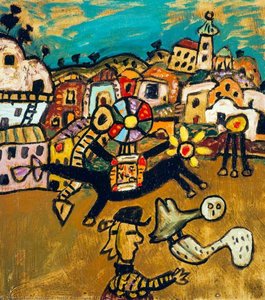 Village Witch (Opus O.1263)1994
19
 Magic Casket1997 · Национальная галерея современного искусства Эдинбурга
20
 Celtic Landscape (Dreamscape)1996 · The Pier Arts Centre
21
 Magic Landscape (Opus O.1337)1996
22
 The Alchemist's Mirror No.1 (Opus 1357)1997
23
 Cosmic Signals I2000
24
 Cosmic Signals No.72000
25
 The Golden Palace1999
26
 Magician's Mirror No.22000 · The Mercer Art Gallery
27
 Serpent's Idea of a Horse2000
28
 The Magician's Mirror No.3 (Opus 1450)2000
29
 Without Devices2004 · Pembroke College Oxford Jcr Art Collection
30
 Around and Around in the PinkНациональная галерея Канады
31
 Kaleidoscope for a Parrot
32
 Prize for a Serpent
33
 Flowers on a TableThe Fleming Collection
34Prophet in a Tree, 1963Фитцвильямский колледж
35
 Double MonumentRobinson College
36
 Hallucination with Monster and Cock
8 музеев, в которых находится большинство картин со страницы.
| Музей | Город | Работы Alan Davie | Картины из этого списка |
|---|---|---|---|
 The Pier Arts Centre |
Stromness | 2 | Symbols in a Landscape, Celtic Landscape (Dreamscape) |
 University of Hertfordshire |
North Hatley | 1 | Hopi Studies No.32, Opus 0.1173 |
 Национальная галерея современного искусства Эдинбурга |
Эдинбург | 1 | Magic Casket |
 The Mercer Art Gallery |
Harrogate | 1 | Magician's Mirror No.2 |
 Pembroke College Oxford Jcr Art Collection |
Oxford | 1 | Without Devices |
 Национальная галерея Канады |
Оттава | 1 | Around and Around in the Pink |
 The Fleming Collection |
London | 1 | Flowers on a Table |
 Фитцвильямский колледж |
Кембридж | 1 | Prophet in a Tree, 1963 |
Выберите десятилетие, чтобы увидеть шедевр, определяющий его.
Woman Arranging Flowers (1945). Далее следуют Untitled Abstract и Self Portrait with Brushes (1937).
25 лет: Woman Arranging Flowers датируется 1945 годом, а Alan Davie родился в 1920.
Woman Arranging Flowers, Untitled Abstract, Self Portrait with Brushes, The Saint, Entrance to a Paradise, Jingling Space, Ram Grip, Piggy Chain, Joy Bag No. 1 и Entrance For A Red Temple No. 4. В рейтинге выше указаны год создания и музей для каждой работы.
В нашем каталоге представлено 36 работ Alan Davie, созданных в период с 1937 по 2004.
В основном в The Pier Arts Centre (Stromness), University of Hertfordshire (North Hatley) и Национальная галерея современного искусства Эдинбурга (Эдинбург). В таблице выше перечислены все музеи.
В 1990s: 10 из 36 работ на этой странице были созданы в этот период, Hopi Studies No.32, Opus 0.1173 из них.
На этой странице самая ранняя работа датирована Self Portrait with Brushes (1937), а самая поздняя — Without Devices (2004).
Abstract expressionism, судя по оригиналам на этой странице.
Symbols in a Landscape и Celtic Landscape (Dreamscape): в коллекции The Pier Arts Centre, Stromness находится 2 работ со страницы.

