
1


Обновлено Ноябрь 2026 · рейтинг на основе нашего показателя популярности (количество поисковых запросов, посещений и заказов для каждой работы) · 2 работ Samuel Joseph May в нашем каталоге
Вкратце
Из всех оригинальных работ, оставленных Samuel Joseph May, самой известной является Monument to Wilberforce (detail) (1833) из коллекции Вестминстерское аббатство, Лондон. В нашем каталоге представлено 2 работ Samuel Joseph May; галерея сохранила 2 самых почитаемых в мире произведений, каждое из которых сопровождается датой создания, информацией о музее и своей историей.
2 музеев, в которых находится большинство картин со страницы.
| Музей | Город | Работы Samuel Joseph May | Картины из этого списка |
|---|---|---|---|
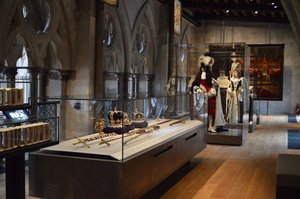 Вестминстерское аббатство |
Лондон | 1 | Monument to Wilberforce (detail) |
 Milwaukee Institute of Art - Design |
Milwaukee | 1 | MIAD Industrial Design Senior Exhibition Project |
1833 — это год создания каждой датированной работы Samuel Joseph May в этой подборке: перед вами они, отсортированные по степени известности.
Выберите год, чтобы увидеть оригиналы.
Monument to Wilberforce (detail) (1833)
36 лет: Monument to Wilberforce (detail) датируется 1833 годом, а Samuel Joseph May родился в 1797.
В нашем каталоге представлено 2 работ художника Samuel Joseph May.
В основном в Вестминстерское аббатство (Лондон) и Milwaukee Institute of Art - Design (Milwaukee). В таблице выше перечислены все музеи.
In the tapestry of nineteenth-century American history, few figures weave together the threads of spiritual conviction and social activism as intricately as Samuel Joseph May. Born in 1797 into the prestigious Sewall lineage of Boston, May’s early life was shaped by a profound intersection of privilege and tragedy. The untimely loss of his brother, Edward, during their childhood served as a transformative crucible, instilling in him a lifelong mission to rectify the world's injustices. This deep-seated desire for spiritual redemption led him toward the halls of Harvard, where he graduated from Divinity School in 1820, emerging not merely as a theologian but as a man prepared to use every medium—be it the pulpit, the pen, or the architectural blueprint—to champion the cause of human dignity.
May’s intellectual development was deeply rooted in the Unitarian tradition, nurtured by the guidance of luminaries such as Noah Worcester and James Freeman. These mentors instilled in him a philosophy of peaceful opposition, a principle that would become the cornerstone of his activism. As he moved through his early ministry at Chauncy Place Church, May’s voice grew resonant within the movements for education, women's rights, and most notably, the abolition of slavery. He possessed a rare ability to bridge the gap between abstract moral theory and tangible social reform, arguing passionately that the fundamental rights of humanity must always supersede the legalistic rights of property.
While history often remembers May as a reformer, his creative spirit found expression in the physical world through his work as an architect and industrial designer. He believed that grand gestures could serve as powerful symbols for burgeoning social movements. This conviction culminated in one of his most enduring legacies: the Monument to Wilberforce. Erected in London in 1833, this towering granite edifice was far more than a feat of masonry; it was a soaring testament to the abolitionist cause, designed to embody the permanence and strength of the fight against oppression. Through such monumental design, May sought to capture the very essence of moral triumph in stone.
Beyond his architectural pursuits, May’s influence extended into the realm of industrial innovation and economic justice. He was a visionary who looked toward the future of labor, advocating for minimum wages and legal constraints on the accumulation of wealth to protect the working classes. His work reflected a belief that progress was not merely technological but deeply ethical. In his eyes, the design of our physical structures and the organization of our industries were inseparable from the moral character of our society.
The historical significance of Samuel Joseph May lies in his refusal to compartmentalize his talents. He did not see a distinction between the sermon and the structure, or between theological truth and social equity. His life was a continuous effort to harmonize the spiritual with the material. As the brother of Abby May Alcott—the mother of the celebrated novelist Louisa May Alcott—he belonged to a family of profound intellectual and creative influence that helped shape the American literary and social landscape.
Today, we look back at May as a pioneer who utilized every tool at his disposal to advocate for a more just world. His achievements include:
Though he passed away in 1871, the echoes of his monumental vision remain. Samuel Joseph May remains a testament to the idea that art, architecture, and activism can converge to create a lasting impact on the conscience of a nation.
