Портрет Robert Brough

33 самых известных картин Robert Brough: подборка галереи

Обновлено Ноябрь 2026 · рейтинг на основе нашего показателя популярности (количество поисковых запросов, посещений и заказов для каждой работы) · 44 работ Robert Brough в нашем каталоге

Вкратце

Из всех оригинальных работ, оставленных Robert Brough, самой известной является The Artist at Seventeen Years of Age (1889). Сразу за ними следуют Monsignor Charles Tochetti (1897) и Sir James Murray (1850–1933) (1903). В нашем каталоге представлено 44 работ Robert Brough; галерея сохранила 33 самых почитаемых в мире произведений, каждое из которых сопровождается датой создания, информацией о музее и своей историей.

1872 – 1905, Invergordon Больше всего работ: Эдинбургский колледж искусств

10 лучших картин Robert Brough: выбор галереи

1
The Artist at Seventeen Years of Age (1889) работы Robert Brough

The Artist at Seventeen Years of Age

1889 · Oil On Canvas

In this 1889 oil on canvas, we find a young Robert Brough looking back at himself. It is a close-up, bust-length portrait that captures the artist at seventeen, a period of profound transition. The grayscale tones and muted palette lend the work a certain melancholy, as if we are witnessing a private thought caught in mid-air. There is a stillness here, a sense of a soul contemplating its own direction…

2
Monsignor Charles Tochetti (1897) работы Robert Brough

Monsignor Charles Tochetti

1897 · Oil On Canvas

In this 1897 portrait, we find ourselves in a quiet, intimate encounter with Monsignor Charles Tochetti. The subject is presented in a close-up, three-quarter view, his presence filling the frame with a sense of settled dignity. There is a profound stillness here, a moment captured where the light catches the deep lines of a life lived with purpose. The background remains dark and indistinct, a deliberate choice that pushes the…

3
Sir James Murray (1850–1933) (1903) работы Robert Brough

Sir James Murray (1850–1933)

1903 · Oil On Canvas

The portrait of Sir James Murray, executed in 1903, presents a formal study of the subject in a monochromatic palette. He is positioned slightly to the left of the center, facing forward with a direct gaze directed toward the viewer. The figure is dressed in a dark suit, which provides a solid, structured silhouette against the background. A doorway is visible behind him on the right, creating a receding plane…

4
Mrs Nicol of Roscobie (1905) работы Robert Brough

Mrs Nicol of Roscobie

1905 · Oil On Canvas

A seated woman occupies the center of this 1897 oil on canvas, her gaze directed toward the viewer from a position of relaxed formality. She sits within an indistinct interior, the background rendered in soft, blended brushstrokes that lack sharp definition. The composition is anchored by the subject's upper body, while elements of her immediate surroundings provide subtle narrative cues:

5
John Hay (1871) работы Robert Brough

John Hay

1871 · Oil On Canvas

In this intimate portrait titled John Hay, the artist Robert Brough turns his attention to the quiet dignity of an older man. The subject is presented with a heavy, prominent beard and mustache that frame a face marked by experience. It is a study of character, captured around about 1871. The sitter's presence is immediate, commanding the space with a sense of introspection and a certain weight of years.

6
Untitled (1892) работы Robert Brough

Untitled

1892 · Oil

In this work, the artist explores the intersection of the physical and the psychological. The man's posture and the presence of the wooden tool suggest a narrative that remains just out of reach, leaving the observer to wonder about the purpose of his stance and the nature of his solitude. The composition avoids the clutter of a domestic setting, focusing entirely on the relationship between the body, the object, and…

7
Dolce pomum (1892) работы Robert Brough

Dolce pomum

1892 · Oil

Painted in 1892, this work reflects the shifting artistic sensibilities of the late Victorian period. It moves away from the strict, formal portraiture of the past toward a more emotive and atmospheric approach. There is a subtle tension here between the structured dignity of traditional portraiture and the looser, more spontaneous brushwork influenced by contemporary movements. The painting does not merely document a likeness; it seeks to capture a mood,…

8
Mary Dallas Ross (c.1881–1936) (1892) работы Robert Brough

Mary Dallas Ross (c.1881–1936)

1892 · Oil On Canvas

The portrait of Mary Dallas Ross (c.1881–1936) emerges from the canvas as a quiet encounter with a life caught in a moment of stillness. Painted by Robert Brough in 1892, this work captures the subject with a sense of poise that feels immediate, as if the viewer has just stepped into the room. The oil on canvas presents a study of character, where the artist's hand translates the presence of…

9
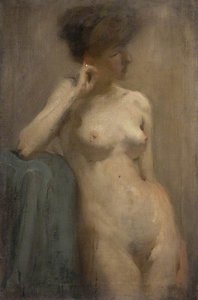
Female Nude with Brass Urn (1892) работы Robert Brough

Female Nude with Brass Urn

1892 · Oil On Canvas · Эдинбургский колледж искусств, Эдинбург

The gaze meets Female Nude with Brass Urn, a work that captures a singular, quiet moment in time. Painted by Robert Brough, this piece emerges from the canvas as an intimate study of form and light. The artist, Robert Brough, brings a sense of presence to the subject, freezing a fleeting instant of poise and determination within the frame. It is an oil on canvas that holds the viewer in…

10
View of Elgin, Moray (1894) работы Robert Brough

View of Elgin, Moray

1894 · Oil

The painting presents a landscape centered on a river flowing through a terrain of green grass and scattered trees. Several boats rest upon the water's surface, their forms positioned at different intervals along the river. Near the water's edge, a single figure stands, oriented toward the river. The sky occupies the upper portion of the canvas, filled with a layer of clouds that creates a sense of depth. Along the…

Подборка Robert Brough продолжается, с 11 по 33

Знаменитые картины Robert Brough по периодам творчества

Сюжеты, которые вдохновляли Robert Brough

Четыре темы, которые чаще всего встречаются в этих оригиналах, каждая из которых представлена своим лучшим образцом.

Музеи, в которых хранятся оригиналы работ Robert Brough

7 музеев, в которых находится большинство картин со страницы.

Музей Город Работы Robert Brough Картины из этого списка
Эдинбургский колледж искусств, ЭдинбургЭдинбургский колледж искусств Эдинбург 2 Female Nude with Brass Urn, Nude Study Female
Университет Абердина, АмстердамУниверситет Абердина Амстердам 1 John Thomson
Национальная галерея Шотландии, ЭдинбургНациональная галерея Шотландии Эдинбург 1 William Dallas Ross (d.1931)
West Lothian Council, ЛивингстонWest Lothian Council Ливингстон 1 John Adrian Louis (1860–1908), 7th Earl of Hopetoun and 1st Marquis of Linlithgow
Mintlaw Discovery Centre, ПитерхедMintlaw Discovery Centre Питерхед 1 Reverend Dr James Stewart (1830–1917), Minister of Peterhead (1864–1917) (unfinished)
Dundee Art Gallery And Museum, ДандиDundee Art Gallery And Museum Данди 1 Mary Dallas Ross
The Fleming Collection, ЛондонThe Fleming Collection Лондон 1 Fieldworkers

Robert Brough по десятилетиям: оригиналы, определяющие каждую эпоху

Произведения по десятилетиям

Выберите десятилетие, чтобы увидеть шедевр, определяющий его.

Вопросы коллекционеров о картинах Robert Brough

Какая работа Robert Brough наиболее известна?Узнать ответ

The Artist at Seventeen Years of Age (1889). Далее следуют Monsignor Charles Tochetti (1897) и Sir James Murray (1850–1933) (1903).

Сколько лет было Robert Brough, когда была создана работа The Artist at Seventeen Years of Age?Узнать ответ

17 лет: The Artist at Seventeen Years of Age датируется 1889 годом, а Robert Brough родился в 1872.

Какие десять самых известных картин написал Robert Brough?Узнать ответ

The Artist at Seventeen Years of Age, Monsignor Charles Tochetti, Sir James Murray (1850–1933), Mrs Nicol of Roscobie, John Hay, Untitled, Dolce pomum, Mary Dallas Ross (c.1881–1936), Female Nude with Brass Urn и View of Elgin, Moray. В рейтинге выше указаны год создания и музей для каждой работы.

Сколько картин оставил(а) Robert Brough?Узнать ответ

В нашем каталоге представлено 44 работ Robert Brough, созданных в период с 1889 по 1905.

В каких музеях представлены шедевры Robert Brough?Узнать ответ

В основном в Эдинбургский колледж искусств (Эдинбург), Университет Абердина (Амстердам) и Национальная галерея Шотландии (Эдинбург). В таблице выше перечислены все музеи.

В какие годы Robert Brough написал свои самые известные работы?Узнать ответ

В 1890s: 17 из 33 работ на этой странице были созданы в этот период, Monsignor Charles Tochetti из них.

Каковы первые и последние известные оригинальные работы Robert Brough?Узнать ответ

На этой странице самая ранняя работа датирована The Artist at Seventeen Years of Age (1889), а самая поздняя — Mrs Nicol of Roscobie (1905).

Какие сюжеты Robert Brough выбирал чаще всего?Узнать ответ

Man (14), Woman (14) и Chair (11) в 33 работах на этой странице.

Какую технику чаще всего использовал(а) Robert Brough?Узнать ответ

Oil On Canvas, для 21 из 33 работ на этой странице.

Какие работы Robert Brough представлены в Эдинбургский колледж искусств?Узнать ответ

Female Nude with Brass Urn и Nude Study Female: в коллекции Эдинбургский колледж искусств, Эдинбург находится 2 работ со страницы.

Robert Brough: жизнь и творчество

The Luminous Legacy of Robert Brough

In the annals of Scottish art history, few names evoke such a poignant sense of fleeting brilliance as Robert Brough. A painter whose life was tragically brief, spanning only from 1872 to 1905, Brough managed to capture the very essence of Victorian Aberdeen with a sensitivity that transcended the rigid academicism of his era. Born near Invergordon in the rugged beauty of Ross and Cromarty, he carried within him a vision that sought to bridge the gap between the venerable traditions of his homeland and the burgeoning modernism sweeping through Europe. His work remains a testament to a soul caught between the structured dignity of the past and the vibrant, emotive possibilities of the future.

Brough’s artistic journey was deeply rooted in the soil of Scottish tradition, yet it was never confined by it. His formal training at the Glasgow School of Art provided him with a formidable technical foundation, most notably through his studies under the influence of the legendary portraitist Henry Raeburn. From this encounter, Brough inherited a profound respect for the psychological depth of his subjects and a mastery of capturing authentic human emotion. However, where his predecessors might have sought a static perfection, Brough pursued something far more elusive: the atmospheric mood. He looked toward the Parisian avant-garde, absorbing the light-drenched lessons of Impressionism and the dreamlike enigmas of Symbolism, weaving these international influences into the fabric of his Scottish sensibilities.

A Symphony of Color and Emotion

As Brough established himself within the artistic circles of Aberdeen, his style underwent a remarkable evolution, moving away from mere representation toward a more expressive, visceral language. He became a master of color, utilizing a palette that could shift from somber, muted tones to sudden, breathtaking bursts of luminosity. His canvases were not merely depictions of people or scenes; they were vessels for feeling. In his portraits, one finds an intimate connection with the sitter, achieved through delicate brushstrokes and a sophisticated use of light that seems to pulse with life.

This mastery is perhaps most evident in his celebrated works, where the boundaries between reality and imagination begin to blur:

  • Dolly Crombie (1896): A stunning oil on canvas that exemplifies his ability to create intimacy. Through a careful arrangement of flowers and soft light, Brough captures a moment of quiet reflection, drawing the viewer into a private, serene world.
  • Fantaisie en Folie (1897): A piece that showcases his imaginative depth, where symbolism and composition invite the observer to ponder the deeper, perhaps more whimsical, meanings hidden within the domestic scene.
  • John Hay (1871): A poignant study of age and character, demonstrating his skill in using expressive realism to convey the dignity of the human experience.

Historical Significance and Enduring Spirit

Though his career was cut short by his untimely death at the age of thirty-two, Robert Brough left behind an oeuvre that continues to resonate with a singular, haunting beauty. He was an artist who refused to be stagnant, constantly experimenting with the interplay of light and shadow to express the inner complexities of his subjects. His ability to blend the formal requirements of portraiture with the emotive freedom of modern movement allowed him to document Victorian society not just as it appeared, but as it felt.

Today, Brough is remembered not merely as a regional painter, but as a visionary Scot who dared to infuse traditional subjects with a modern, luminous spirit. His works, held in prestigious collections such as Tate Britain, serve as vital links to a transformative period in art history. To look upon a Brough painting is to witness the struggle and the triumph of an artist striving to capture the ephemeral—the fleeting light, the passing emotion, and the enduring soul of a changing world.