Early Life and Artistic Beginnings
Robert Bryden, born in the small mining village of Coylton, South Ayrshire, on June 11th, 1865, emerged from a landscape deeply etched by both
natural beauty and
industrial labor. His father’s profession as a colliery manager instilled an early awareness of the working lives that shaped Scotland, a theme that would subtly permeate his later artistic endeavors. Educated at Ayr Academy, Bryden initially embarked on a practical path, apprenticing with Hunter & Morris, architects in Ayr. However, this foray into technical drawing soon gave way to a burgeoning passion for art, leading him to London in pursuit of formal training. For fifteen years, he immersed himself in the artistic milieu of the capital, studying at both the Royal College of Art and the prestigious Royal Academy Schools. This period was crucial in honing his skills in painting,
engraving, and sculpture—the three disciplines that would define his prolific career.
A Wanderer’s Eye: European Influences
Bryden's artistic development wasn’t confined to the London studio; he recognized the importance of firsthand observation and embarked on extensive travels throughout Europe. Italy, Spain, and Egypt beckoned, offering a wealth of visual inspiration that would later inform his depictions of light, form, and atmosphere. These journeys weren’t merely about replicating scenes but absorbing the essence of different cultures and landscapes. He returned to Scotland with a refined technique and a broadened perspective, ready to translate his experiences onto canvas and into sculpted forms. This period was formative, allowing him to move beyond academic constraints and develop a distinctive style rooted in
realism yet imbued with a poetic sensibility.
Capturing Ayrshire: A Celebration of Scottish Life
Upon settling back in his native Ayrshire, Bryden dedicated himself to documenting the region’s unique character. He became renowned for his evocative portrayals of
rural life, historical sites, and the
everyday scenes that often went unnoticed. His work wasn't simply picturesque; it was a celebration of Scottish heritage, capturing the spirit of the land and its people with
meticulous detail. A significant portion of his output involved
etching, particularly a series illustrating the poetry of
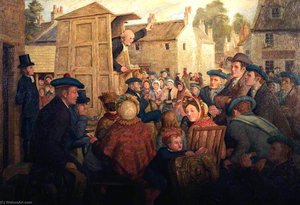
Robert Burns. Works like “The Jolly Beggars,” “
The Holy Fair,” and “Tam o’ Shanter” brought the Bard's verses to life through Bryden’s skillful renderings, demonstrating a deep connection to Scotland’s literary tradition. He also produced several volumes titled "Ayrshire Monuments", showcasing local castles such as Fairlie, Glengarnock, and Kilbirnie.
From Etchings to Bronze: A Multifaceted Legacy
As his career progressed, Bryden increasingly turned towards sculpture, expanding his artistic repertoire beyond painting and
engraving. He skillfully crafted wooden figures, each imbued with a sense of character and narrative depth. However, it was his bronze memorial panels that cemented his legacy. Notably, he created portraits of
William Wallace and Robert the Bruce for Ayr Town Hall—powerful tributes to Scotland’s national heroes. These sculptures weren't merely historical representations; they were embodiments of Scottish identity and resilience.
His ability to seamlessly transition between mediums, from delicate etchings to monumental bronze works, underscored his versatility and artistic mastery.
Historical Significance and Enduring Appeal
Robert Bryden’s work stands as a valuable record of southwest Scotland's
cultural heritage during the late 19th and early 20th centuries. His paintings, engravings, and sculptures offer a glimpse into a world undergoing transformation—a time when traditional
rural life coexisted with burgeoning industrialization.
He was granted the title of Royal Engraver in 1899, acknowledging his exceptional skill and contribution to the art form. Today, Bryden’s pieces are held in esteemed collections such as the
Ashmolean Museum, Oxford,
the Hunterian Museum, Glasgow, and the British Museum, ensuring that his evocative depictions of Scottish life continue to captivate audiences for generations to come. His paintings aren't just historical artifacts; they are windows into a bygone era, imbued with a sense of nostalgia, pride, and artistic brilliance.