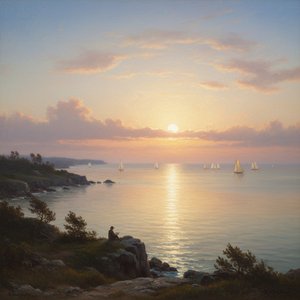
Ричард Уилсон: Пионер британской пейзажной живописи
Ранние годы и обучение
Ричард Уилсон родился 24 июля 1713 года в Ислингтоне, Великобритания. Детали его ранней жизни остаются скудными, однако считается, что он получил фундаментальную художественную подготовку. Первые навыки Уилсона, вероятно, были развиты благодаря самообразованию и пристальному наблюдеandom, а также, возможно, под влиянием других мастеров той эпохи. Его работы демонстрируют глубокое понимание классических техник, что свидетельствует о сознательном стремлении мастера к освоению основополагающих принципов искусства.
Творческий путь и развитие
Творческий путь Уилсона разделился на два отчетливых этапа. Он начинал свою карьеру как портретист, но постепенно перешел к пейзажу — жанру, которым он прославлен сегодня. Этот переход стал поворотным моментом в истории британского искусства. Его пейзажи не были просто изображениями природы; это были тщательно выстроенные композиции, наполненные атмосферой и глубоким чувством.
- Ранние влияния: Вначале в портретах Уилсона прослеживалось влияние таких признанных мастеров, как Годфри Кнеллер.
- <Переход к пейзажу: Его путешествие в Италию (около 1752 года) стало преображающим. Знакомство с итальянизированными ландшафтами и работами Клода Лоррена оказало глубокое воздействие на его стиль.
- <Зрелый стиль: Уилсон разработал уникально британский подход к пейзажу, сочетая классические идеалы со специфическими чертами английской сельской местности.
Влияния и художественный стиль
Наиболее значимым влиянием на Ричарда Уилсона стал Томас Гейнсборо. Он восхищался способностью Гейнсборо улавливать свет и атмосферу, перенося подобные приемы в свои собственные полотна. Тем не менее, Уилсон выделился более строгой композиционной структурой и бóльшим акцентом на идеализированной красоте.
- Классическая композиция: В своих пейзажах Уилсон часто применял классические принципы баланса и гармонии.
- Воздушная перспектива: Он мастерски использовал воздушную перспективу для создания ощущения глубины и бескрайнего пространства.
- Золотой свет: Его картины характеризуются теплым, золотистым светом, который пробуждает чувство безмятежности.
Знаковые работы и достижения
Несколько произведений служат истинным воплощением мастерства Уилсона.
- Мелеагр и Аталанта (ок. 1743 г.): Эта картина демонстрирует его умение уловить саму суть британской природы.
- <Дозор в Хенгё (1756-57 гг.): Шедевр, демонстрирующий способность Уилсона достигать идеального баланса между светом, цветом и композицией.
- <Множество других пейзажей: Он создал обширное наследие, запечатлев различные уголки Британии и Италии.
Историческая значимость и наследие
Ричард Уилсон считается ключевой фигурой в развитии британской пейзажной живописи. Он проложил путь для будущих поколений художников, включая Фрэнсиса Коттеса, продемонстрировав художественный потенциал английского ландшафта. Его стремление запечатлеть красоту и покой природы помогло сформировать самобытную британскую традицию пейзажного искусства.
- Разрыв с портретом: Фокус Уилсона на пейзаже бросил вызов господству портретного жанра в британском искусстве того времени.
- <Национальная идентичность: Его картины способствовали росту национального самосознания и гордости за красоту Британских островов.
- <Непреходящее влияние: Творчество Уилсона продолжает вдохновлять художников и ценителей искусства и сегодня, закрепляя его место как важнейшей фигуры в истории мирового искусства.
Музейные коллекции
Работы Уилсона можно найти в крупнейших музеях мира, включая:
- Тейт Британия, Лондон, Великобритания
- Галерея Уокера, Ливерпуль, Великобритания
- Национальный музей Уэльса, Кардифф, Великобритания
Вопросы и ответы
Где я могу посмотреть работы Richard Wilson, распределенные по настроению?
Страница Комната настроения художника Richard Wilson — это раздел, где произведения автора распределены по настроению.
Как мне найти работы Richard Wilson в определенной цветовой гамме?
Работы Richard Wilson можно просмотреть по цветовой палитре на странице По цветовым палитрам художника.
Есть ли общий обзор всех сюжетов, которые писал Richard Wilson?
Работы Richard Wilson можно изучать по темам на странице Атлас сюжетов художника.